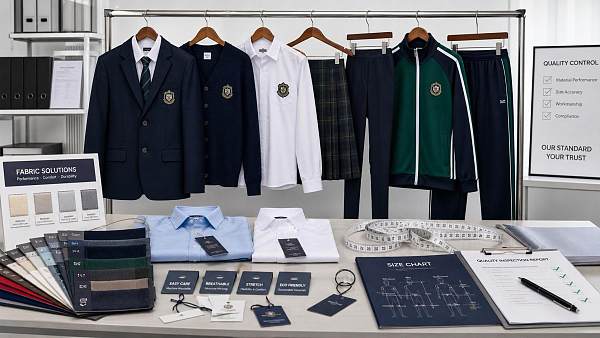
How to Choose Custom Hotel Uniforms: Fabric, Branding, Comfort, and Durability
How to Choose Custom Hotel Uniforms: Fabric, Branding, Comfort, and Durability
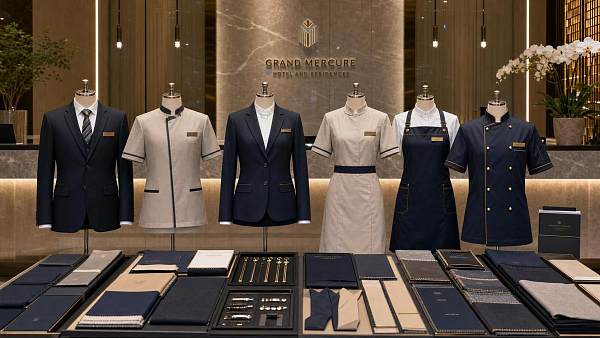
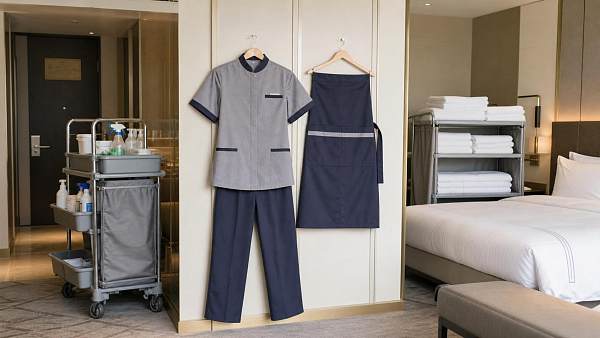
Choosing custom hotel uniforms is about more than appearance.
It shapes guest perception, daily staff comfort, and long-term operating cost.
In practice, a uniform program touches branding, maintenance, procurement planning, and service consistency.
That is why custom hotel uniforms should be evaluated as an operational asset, not a simple apparel purchase.
The best decision usually comes from balancing fabric performance, fit, durability, supplier capability, and brand presentation across every department.
Start with the hotel’s service environment
Before comparing styles, define where the uniforms will be used.
Front desk, concierge, housekeeping, kitchen, banquet, spa, and maintenance teams all face different conditions.
A single design language may work across the property.
Still, each role needs different fabric weight, mobility, stain resistance, and care requirements.
This is where many uniform projects lose value.
They prioritize visual consistency but ignore how staff actually move, lift, bend, stand, or work in changing temperatures.
A practical sourcing brief should include:
- Department-specific job tasks
- Indoor and outdoor working conditions
- Local climate and seasonality
- Expected shift length
- Laundry method and replacement cycle
- Brand positioning, from business hotel to luxury resort
Choose fabric based on performance, not just feel
Fabric is the core decision in custom hotel uniforms.
It determines comfort, appearance retention, wash behavior, and overall lifespan.
Natural fibers often feel premium, but they may wrinkle easily or shrink after repeated laundering.
Synthetic blends usually improve durability, shape retention, and drying speed.
The right answer depends on role, usage frequency, and care infrastructure.
Common fabric choices for custom hotel uniforms
- Cotton blends: breathable and familiar, suitable for reception, concierge, and guest-facing roles.
- Polyester blends: durable, wrinkle-resistant, and cost-efficient for high-volume use.
- Stretch fabrics: useful where movement matters, especially housekeeping and food service.
- Wool blends: refined appearance for luxury properties, though cost and care demands are higher.
- Moisture-management textiles: ideal for warm climates, outdoor staff, or long shifts.
Ask suppliers for fabric composition, GSM, abrasion resistance, colorfastness, and shrinkage data.
These details matter more than a polished sample swatch.
A fabric that looks excellent on day one can perform poorly after fifty industrial wash cycles.
Protect brand identity without sacrificing practicality
Custom hotel uniforms should reflect the property’s service promise.
A city business hotel may need sharp, understated tailoring.
A resort may lean toward relaxed silhouettes, lighter fabrics, and regionally inspired details.
Luxury properties often want elevated finishes, but overdesign can create daily wear issues.
Branding works best when it is visible, restrained, and functional.
Focus on branding elements that scale well operationally:
- Color palette aligned with interior and service identity
- Embroidery placement that remains neat after washing
- Trim, piping, or buttons that support the brand but stay easy to replace
- Consistent visual hierarchy between management and operational teams
- Culturally appropriate styling for international guest environments
Brand-led uniform design should also consider recruitment and retention.
When staff feel presentable and comfortable, service confidence usually improves in a visible way.
Comfort is a sourcing requirement, not a soft preference
Comfort directly affects productivity, morale, and presentation.
In custom hotel uniforms, poor fit often causes faster wear, awkward movement, and lower staff acceptance.
This becomes expensive when garments need early replacement or redesign.
Comfort should be tested in motion, not judged only on a fitting room sample.
What to check during wear trials
- Breathability during long shifts
- Range of motion in shoulders, waist, and knees
- Pocket placement and utility
- Closure strength, including zippers and buttons
- Heat retention in hot service zones
- Fit consistency across body types and gender options
Recent sourcing trends show a stronger demand for inclusive sizing and modern tailoring.
That also means custom hotel uniforms should support comfort without making the design look overly casual.
Durability drives total cost of ownership
The purchase price alone does not show real value.
Procurement decisions should compare total cost of ownership across the garment lifecycle.
Custom hotel uniforms that resist fading, pilling, seam failure, and shape loss usually reduce replacement frequency.
That savings becomes significant at scale.
Ask for lab test reports and production quality standards before approving bulk orders.
Assess supplier capability beyond the sample stage
A polished prototype does not guarantee reliable delivery.
For custom hotel uniforms, supplier evaluation should cover manufacturing discipline, communication quality, and replenishment support.
This is especially important for hotel groups with multiple properties or phased rollouts.
Review these points before final supplier selection:
- Experience with hospitality uniform programs
- OEM or ODM flexibility
- Minimum order quantity and repeat order policy
- Size grading accuracy
- Lead time for initial order and replenishment
- Compliance documentation and quality control procedures
- Ability to maintain color and trim consistency over time
In real procurement cycles, replenishment is often where supplier weakness appears first.
A good partner should support the full program, not only the launch order.
Build a smarter evaluation framework
A structured scorecard helps compare options objectively.
This is useful when multiple stakeholders are involved, including operations, HR, branding, and finance.
For custom hotel uniforms, a balanced evaluation model prevents style from dominating the decision.
- Define department requirements and wear conditions.
- Shortlist fabrics based on test data and care demands.
- Review design alignment with hotel brand standards.
- Conduct real wear trials with representative staff.
- Compare supplier quality systems and replenishment capability.
- Estimate lifecycle cost, not just unit price.
This approach gives clearer justification for final approval.
It also reduces the risk of a uniform program that looks strong on paper but struggles in daily operations.
Final decision: choose custom hotel uniforms that work every day
The most effective custom hotel uniforms do four things well.
They express the brand clearly, support comfort, survive repeated use, and stay manageable to source and maintain.
That combination creates stronger service presentation and better long-term value.
When evaluating custom hotel uniforms, start with operational reality, then validate every design choice through performance data and wear testing.
A disciplined selection process usually leads to fewer replacements, smoother supplier coordination, and more consistent brand delivery.
For hotels investing in guest experience, that is where a uniform program starts to pay back in visible and practical terms.
Search News
Hot Articles
Popular Tags
Need ExpertConsultation?
Connect with our specialized leisureengineering team for procurementstrategies.
Recommended News
 Sep 21, 2026How Schools Can Cut Printing Costs When Buying Ink Cartridges in BulkSchool ink cartridges wholesale made smarter: cut printing costs with fleet planning, cost-per-page comparisons, reliable suppliers, and inventory controls.● Institutional Buyer
 Sep 17, 2026How to Source Wholesale Packing Tape Without Compromising Carton Seal StrengthWholesale packing tape sourcing guide: compare adhesive, backing, carton conditions, and real-world trials to reduce costs while maintaining reliable carton seal strength.● Institutional Buyer
 Sep 05, 2026How to Buy Geometry Sets in Bulk for Schools: A Practical Procurement ChecklistGeometry sets bulk buying guide for schools: compare safety, quality, compliance, packaging, supplier reliability, and total cost for smarter procurement.● Institutional Buyer
 Aug 31, 2026Microscope Slides Market Outlook: Demand Drivers, Segments, and Sourcing RisksExplore the microscope slides market: key demand drivers, product segments, quality risks, and sourcing strategies for reliable laboratory supply.● Institutional Buyer
 Aug 30, 2026Microscope Slides HS Code: How Importers Classify Laboratory Glass Slides CorrectlyMicroscope slides HS code guide: learn how to classify laboratory glass slides accurately, verify materials, avoid customs delays, and improve import compliance.● Institutional Buyer
 Aug 29, 2026How to Choose Graduation Tassels With Year Charms for Large School OrdersGraduation tassels with year charm: learn how to specify colors, materials, packaging, proofs, and delivery timelines for accurate large school orders.● Institutional Buyer
 Aug 11, 2026How to Choose Alphabet Educational Posters for Different Classroom Age GroupsAlphabet educational posters should match how each age group learns. Discover how to choose safer, clearer, curriculum-ready designs for preschool to primary classrooms.● Institutional Buyer
 Aug 05, 2026How to Evaluate a Marching Band Uniform Manufacturer for Quality and On-Time DeliveryMarching band uniform manufacturer selection starts with delivery risk. Learn how to compare quality, sizing, compliance, and capacity for reliable, on-time orders.● Institutional Buyer
 Jul 20, 2026How to Evaluate a Stationery Distributor for Bulk Office and School Supply PurchasingStationery distributor selection affects cost, delivery, and compliance. Learn how to evaluate suppliers for bulk office and school supply purchasing with confidence.● Institutional Buyer
 Jul 18, 2026How to Choose Custom Hotel Uniforms: Fabric, Branding, Comfort, and DurabilityCustom hotel uniforms guide: learn how to choose the right fabric, branding, comfort, and durability to improve staff performance, strengthen hotel image, and reduce long-term costs.● Institutional Buyer
 Jul 15, 2026How to Choose a Clear Pencil Cases Manufacturer for School and Retail OrdersClear pencil cases manufacturer selection made simple: learn how to compare quality, compliance, customization, pricing, and lead times for school and retail orders.● Institutional Buyer
 Jul 14, 2026How to Evaluate a Hole Punches Wholesale Supplier for Quality, MOQ, and Lead TimeHole punches wholesale supplier selection starts with quality, MOQ, and lead time. Learn practical checks, warning signs, and sourcing tips to reduce risk and buy smarter.● Institutional Buyer
 Jul 13, 2026Wholesale Erasers and Sharpeners: How to Compare Materials, Packaging, and MOQWholesale erasers and sharpeners buying guide: compare materials, packaging, and MOQ to cut risk, improve quality, and choose suppliers with better value.● Institutional Buyer
 Jul 10, 2026Custom Housekeeping Uniforms: What Fabrics and Features Hold Up in Daily Hotel Use?Custom housekeeping uniforms that last: discover the best fabrics, stretch, stain resistance, and hotel-ready features to cut replacement costs and keep staff polished daily.● Institutional Buyer
 Jul 08, 2026Fast Warm Up Laminator Buying Guide: Speed, Film Thickness, and Use Case ExplainedFast warm up laminator buying guide covering warm-up speed, film thickness, and real use cases. Compare specs, avoid buying mistakes, and choose the right model with confidence.● Institutional Buyer
 Jul 08, 2026How to Choose School Supplies for Campuses by Grade Level, Budget, and Daily UseSchool supplies for campuses made simple: learn how to choose by grade level, budget, durability, and daily use to reduce waste, improve sourcing, and support every classroom.● Institutional Buyer
 Jul 05, 2026How to Choose Branded Office Stationery for Corporate Use and Budget ControlBranded office stationery buying guide: learn how to balance quality, customization, supplier comparison, and budget control for consistent branding and smarter corporate sourcing.● Institutional Buyer
 Jul 01, 2026Paper Guillotines Buying Guide: Manual vs Electric, Cut Size, and Safety FeaturesPaper guillotines buying guide covering manual vs electric models, cut size, and safety features. Compare costs, productivity, and key specs to choose the right machine.● Institutional Buyer
 Jun 29, 2026Bingo Cages and Balls: Sizes, Materials, and What Affects Game VisibilityBingo cages and balls guide: compare sizes, materials, contrast, and durability to improve visibility, fairness, and long-term value in commercial and event play.● Institutional Buyer
 Jun 25, 2026School Uniforms in Europe: Materials, Sizing, and Compliance Points for Bulk OrdersSchool uniforms Europe sourcing guide: compare materials, sizing accuracy, and EU compliance points for bulk orders to reduce risk, improve durability, and choose suppliers with confidence.● Institutional Buyer
 Jun 23, 2026Wholesale Playing Cards Casino Buying Guide: Paper Stock, Finish, Security, and MOQWholesale playing cards casino buying guide covering paper stock, finish, security features, and MOQ. Compare suppliers smarter, reduce sourcing risk, and choose casino-grade decks with confidence.● Institutional Buyer
 Jun 22, 2026Eco Friendly Office Stationery: What to Check Before Buying for Daily Business UseEco friendly office stationery buying guide for businesses: learn how to check materials, certifications, durability, supplier reliability, and total cost before choosing daily office supplies.● Institutional Buyer
 Jun 21, 2026How to Choose Custom Promotional Pens for Trade Shows, Schools, and Corporate GiveawaysCustom promotional pens: learn how to choose the right styles for trade shows, schools, and corporate giveaways with tips on quality, branding, durability, and sourcing.● Institutional Buyer
 Jun 16, 2026Microscope Slides Wholesale Buying Guide: Glass Types, Sizes, and MOQ FactorsMicroscope slides wholesale buying guide covering glass types, standard sizes, MOQ factors, and quality risks—compare smarter, reduce waste, and choose reliable bulk supply.● Institutional Buyer