How to Choose Wholesale Playing Cards for Casino Use: Materials, Finish, and MOQ
How to Choose Wholesale Playing Cards for Casino Use: Materials, Finish, and MOQ
Choosing wholesale playing cards casino buyers can trust involves more than finding the lowest quote.
In casino settings, cards affect game flow, dealer comfort, table image, and replacement cost.
That is why sourcing teams should compare material structure, finish, print control, security features, and MOQ before placing volume orders.
A good supply decision supports smooth gameplay, protects brand standards, and reduces waste across long operating cycles.
This guide breaks down how to evaluate wholesale playing cards casino programs for cost, durability, and long-term reliability.
Why casino card sourcing is different
Casino cards face heavier use than retail deck products.
They are shuffled constantly, handled by multiple players, and exposed to humidity, oils, and table friction every day.
More importantly, casinos need consistent slide, snap, opacity, and print registration from batch to batch.
Even small variation can affect dealing speed or visual quality under bright table lighting.
In actual purchasing work, this means a wholesale playing cards casino order should be treated as an operational consumable, not a simple promotional print item.
- Performance matters as much as unit price.
- Supplier consistency matters as much as design options.
- Replacement frequency matters as much as MOQ.
Start with material: paper, plastic, or composite
Material choice sets the baseline for feel, lifespan, and cost.
When comparing wholesale playing cards casino suppliers, ask what stock structure they actually use, not only the thickness number.
Paper-based casino cards
Paper cards are common for many gaming applications.
They usually offer a familiar snap and lower initial cost.
However, lower-grade paper stock can absorb moisture faster and lose stiffness sooner.
PVC or full plastic cards
Plastic cards usually last longer and resist spills better.
They are often suitable for humid locations or long-shift table use.
The trade-off is higher unit cost and, sometimes, a different handling feel.
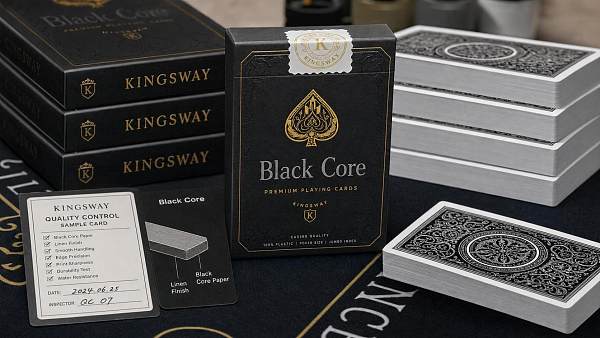
Composite or black core stock
Composite constructions can balance feel, opacity, and durability.
Black core layers are especially useful when casinos want to prevent light show-through.
For many buyers, this is where the best wholesale playing cards casino value appears.
- Ask for GSM, caliper, and stock composition together.
- Request opacity data, especially for baccarat and poker use.
- Compare real handling samples instead of choosing by spec sheet alone.
Finish affects gameplay more than many buyers expect
Surface finish controls slide, shuffle response, and hand feel.
This is one of the most important checkpoints in any wholesale playing cards casino sourcing process.
Linen finish
Linen finish adds texture and helps cards separate smoothly.
It is often preferred when tables need controlled grip without feeling sticky.
Smooth or glossy finish
Smooth finishes can look sharp and premium.
But if the coating is too slick, stacks may shift too easily during fast dealing.
Matte or performance coating
Matte coatings can reduce glare under casino lighting.
This supports readability for dealers, cameras, and pit supervisors.
From a practical view, buyers should not approve finish based only on photos.
They should test shuffling, fanning, edge wear, and slide resistance with physical samples.
Print quality, color control, and security details
Casinos cannot afford weak print control.
Misregistration, uneven borders, or color drift can reduce brand quality and create gameplay concerns.
A dependable wholesale playing cards casino supplier should explain tolerances, proofing methods, and quality checks clearly.
- Check edge alignment and centered pips.
- Check color consistency across reorder batches.
- Check ink adhesion after repeated shuffle cycles.
- Check opacity under strong backlight.
Security features may also matter, depending on table policies.
These can include custom backs, serial coding, UV elements, cut-card compatibility, or anti-counterfeit marks.
The more branded the card program becomes, the more valuable traceability becomes as well.
How to evaluate MOQ without hurting cost control
MOQ is not just a number on a quotation.
It affects storage, cash flow, reorder timing, and the total landed cost of a wholesale playing cards casino program.
A low MOQ may look attractive, but it can come with higher unit pricing or weaker process control.
A high MOQ may reduce piece cost, yet increase dead stock risk if artwork or table standards change.
Questions worth asking suppliers
- Is MOQ based on one artwork, one color set, or one packaging type?
- Can the order split into multiple deck designs within one production run?
- Does a repeat order keep the same MOQ?
- Are there stock materials available for faster replenishment?
In many cases, the best answer is not the lowest MOQ.
It is the MOQ that matches monthly consumption, storage capacity, and supplier stability.
Compare total value, not only deck price
Deck price alone rarely tells the full sourcing story.
A lower-priced wholesale playing cards casino offer may become more expensive if cards wear out faster or create more rejects.
This is where experienced teams often build a simple cost-per-use model.
That model usually reveals whether a premium card actually lowers long-term operating cost.
Supplier checks that reduce sourcing risk
Even the right card specification can fail if the supplier lacks control.
Before confirming a wholesale playing cards casino partner, verify operational basics carefully.
- Review sample consistency across at least two batches.
- Confirm lead times for first orders and repeat orders.
- Ask about defect handling and replacement policy.
- Check export packaging for moisture and compression protection.
- Confirm whether OEM or custom branding files are archived securely.
For international sourcing, communication speed matters too.
Fast, precise answers usually signal stronger project management and fewer production surprises.
A practical shortlisting process
To make supplier comparison easier, use a structured review path.
- Define game type, usage volume, and target lifespan.
- Shortlist material options for handling and durability.
- Test finish performance with real shuffle and deal trials.
- Review print quality, opacity, and security details.
- Compare MOQ, lead time, and repeat-order flexibility.
- Calculate landed cost and estimated cost per use.
This approach keeps the decision grounded in operational value, not just quote comparison.
Final takeaway
The best wholesale playing cards casino choice balances material quality, finish performance, print consistency, and MOQ discipline.
In real purchasing decisions, the winner is rarely the cheapest deck on paper.
It is the supplier and specification that keep tables running smoothly, support brand standards, and control replacement cost over time.
If you are reviewing wholesale playing cards casino options now, start with samples, test under real conditions, and negotiate MOQ around actual usage patterns.
That simple shift leads to stronger sourcing outcomes and fewer surprises after rollout.
Search News
Hot Articles
Popular Tags
Need ExpertConsultation?
Connect with our specialized leisureengineering team for procurementstrategies.
Recommended News
 Oct 19, 2026Choosing a Wholesale Chef Coat Supplier: MOQs, Samples, and Lead TimesChoose a wholesale chef coats supplier with confidence. Compare MOQs, test samples, and verify lead times to avoid excess stock, control costs, and keep your kitchen team ready.● Institutional Buyer
 Sep 21, 2026How Schools Can Cut Printing Costs When Buying Ink Cartridges in BulkSchool ink cartridges wholesale made smarter: cut printing costs with fleet planning, cost-per-page comparisons, reliable suppliers, and inventory controls.● Institutional Buyer
 Sep 17, 2026How to Source Wholesale Packing Tape Without Compromising Carton Seal StrengthWholesale packing tape sourcing guide: compare adhesive, backing, carton conditions, and real-world trials to reduce costs while maintaining reliable carton seal strength.● Institutional Buyer
 Sep 05, 2026How to Buy Geometry Sets in Bulk for Schools: A Practical Procurement ChecklistGeometry sets bulk buying guide for schools: compare safety, quality, compliance, packaging, supplier reliability, and total cost for smarter procurement.● Institutional Buyer
 Aug 31, 2026Microscope Slides Market Outlook: Demand Drivers, Segments, and Sourcing RisksExplore the microscope slides market: key demand drivers, product segments, quality risks, and sourcing strategies for reliable laboratory supply.● Institutional Buyer
 Aug 30, 2026Microscope Slides HS Code: How Importers Classify Laboratory Glass Slides CorrectlyMicroscope slides HS code guide: learn how to classify laboratory glass slides accurately, verify materials, avoid customs delays, and improve import compliance.● Institutional Buyer
 Aug 29, 2026How to Choose Graduation Tassels With Year Charms for Large School OrdersGraduation tassels with year charm: learn how to specify colors, materials, packaging, proofs, and delivery timelines for accurate large school orders.● Institutional Buyer
 Aug 11, 2026How to Choose Alphabet Educational Posters for Different Classroom Age GroupsAlphabet educational posters should match how each age group learns. Discover how to choose safer, clearer, curriculum-ready designs for preschool to primary classrooms.● Institutional Buyer
 Aug 05, 2026How to Evaluate a Marching Band Uniform Manufacturer for Quality and On-Time DeliveryMarching band uniform manufacturer selection starts with delivery risk. Learn how to compare quality, sizing, compliance, and capacity for reliable, on-time orders.● Institutional Buyer
 Jul 20, 2026How to Evaluate a Stationery Distributor for Bulk Office and School Supply PurchasingStationery distributor selection affects cost, delivery, and compliance. Learn how to evaluate suppliers for bulk office and school supply purchasing with confidence.● Institutional Buyer
 Jul 18, 2026How to Choose Custom Hotel Uniforms: Fabric, Branding, Comfort, and DurabilityCustom hotel uniforms guide: learn how to choose the right fabric, branding, comfort, and durability to improve staff performance, strengthen hotel image, and reduce long-term costs.● Institutional Buyer
 Jul 15, 2026How to Choose a Clear Pencil Cases Manufacturer for School and Retail OrdersClear pencil cases manufacturer selection made simple: learn how to compare quality, compliance, customization, pricing, and lead times for school and retail orders.● Institutional Buyer
 Jul 14, 2026How to Evaluate a Hole Punches Wholesale Supplier for Quality, MOQ, and Lead TimeHole punches wholesale supplier selection starts with quality, MOQ, and lead time. Learn practical checks, warning signs, and sourcing tips to reduce risk and buy smarter.● Institutional Buyer
 Jul 13, 2026Wholesale Erasers and Sharpeners: How to Compare Materials, Packaging, and MOQWholesale erasers and sharpeners buying guide: compare materials, packaging, and MOQ to cut risk, improve quality, and choose suppliers with better value.● Institutional Buyer
 Jul 10, 2026Custom Housekeeping Uniforms: What Fabrics and Features Hold Up in Daily Hotel Use?Custom housekeeping uniforms that last: discover the best fabrics, stretch, stain resistance, and hotel-ready features to cut replacement costs and keep staff polished daily.● Institutional Buyer
 Jul 08, 2026Fast Warm Up Laminator Buying Guide: Speed, Film Thickness, and Use Case ExplainedFast warm up laminator buying guide covering warm-up speed, film thickness, and real use cases. Compare specs, avoid buying mistakes, and choose the right model with confidence.● Institutional Buyer
 Jul 08, 2026How to Choose School Supplies for Campuses by Grade Level, Budget, and Daily UseSchool supplies for campuses made simple: learn how to choose by grade level, budget, durability, and daily use to reduce waste, improve sourcing, and support every classroom.● Institutional Buyer
 Jul 05, 2026How to Choose Branded Office Stationery for Corporate Use and Budget ControlBranded office stationery buying guide: learn how to balance quality, customization, supplier comparison, and budget control for consistent branding and smarter corporate sourcing.● Institutional Buyer
 Jul 01, 2026Paper Guillotines Buying Guide: Manual vs Electric, Cut Size, and Safety FeaturesPaper guillotines buying guide covering manual vs electric models, cut size, and safety features. Compare costs, productivity, and key specs to choose the right machine.● Institutional Buyer
 Jun 29, 2026Bingo Cages and Balls: Sizes, Materials, and What Affects Game VisibilityBingo cages and balls guide: compare sizes, materials, contrast, and durability to improve visibility, fairness, and long-term value in commercial and event play.● Institutional Buyer
 Jun 25, 2026School Uniforms in Europe: Materials, Sizing, and Compliance Points for Bulk OrdersSchool uniforms Europe sourcing guide: compare materials, sizing accuracy, and EU compliance points for bulk orders to reduce risk, improve durability, and choose suppliers with confidence.● Institutional Buyer
 Jun 23, 2026Wholesale Playing Cards Casino Buying Guide: Paper Stock, Finish, Security, and MOQWholesale playing cards casino buying guide covering paper stock, finish, security features, and MOQ. Compare suppliers smarter, reduce sourcing risk, and choose casino-grade decks with confidence.● Institutional Buyer
 Jun 22, 2026Eco Friendly Office Stationery: What to Check Before Buying for Daily Business UseEco friendly office stationery buying guide for businesses: learn how to check materials, certifications, durability, supplier reliability, and total cost before choosing daily office supplies.● Institutional Buyer
 Jun 21, 2026How to Choose Custom Promotional Pens for Trade Shows, Schools, and Corporate GiveawaysCustom promotional pens: learn how to choose the right styles for trade shows, schools, and corporate giveaways with tips on quality, branding, durability, and sourcing.● Institutional Buyer