Are midi cables bulk orders really cheaper over time?
For procurement teams managing long-term audio supply needs, the real question is not just unit price but total value. Are midi cables bulk purchases truly more cost-effective over time when quality consistency, supplier reliability, shipping efficiency, and replacement rates are considered? This guide explores the financial and operational factors buyers should evaluate before committing to large-volume sourcing decisions.
What does “cheaper over time” mean for midi cables bulk sourcing?
Lower unit cost is only one part of the answer.
For midi cables bulk decisions, long-term value depends on total landed cost, failure rate, storage impact, and reorder efficiency.
A bulk order may look cheaper on paper, yet become expensive after damage, compatibility issues, or slow replacement cycles.
Over time, the strongest savings usually come from predictable quality and reduced operational friction.
This matters across hotels, event venues, education spaces, studios, and integrated commercial environments.
- Unit price per cable
- Shipping cost per delivered piece
- Import duties and compliance expenses
- Warranty claims and replacement frequency
- Labor time caused by failures or inconsistency
- Inventory carrying cost
When these factors are modeled together, midi cables bulk orders can be cheaper, but not automatically.
When are midi cables bulk orders actually more cost-effective?
Bulk buying works best when demand is stable and specifications are unlikely to change quickly.
Facilities with repeated installations often gain the most from midi cables bulk sourcing.
Examples include music classrooms, rental fleets, worship venues, show control systems, and branded retail experiences.
Signs that bulk purchasing may save money
- Consumption is predictable across quarters.
- Cable lengths and connector formats are standardized.
- One supplier can support repeat batches.
- Shipping by carton or pallet greatly lowers freight per unit.
- Internal storage conditions protect stock quality.
Situations where bulk may not be cheaper
- Specifications are still being tested.
- Project timelines are uncertain.
- The use case requires mixed cable lengths.
- Demand is seasonal and hard to forecast.
- Supplier quality history is not yet verified.
In short, midi cables bulk ordering favors operational stability more than opportunistic discount hunting.
How do quality consistency and failure rates change the true cost?
A cheap cable that fails early is rarely cheap in commercial use.
MIDI systems often support performances, automation, synchronized lighting, and educational setups.
A single weak connector can interrupt a chain, create troubleshooting time, and reduce confidence in the installed system.
That is why midi cables bulk sourcing must include quality assurance standards.
Important quality checkpoints
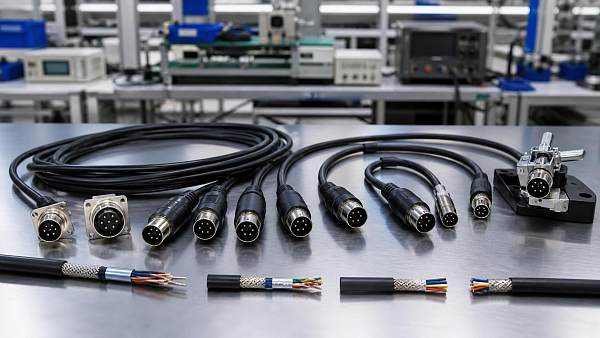
- Connector pin alignment and secure molding
- Strain relief durability
- Conductor and shielding consistency
- Packaging protection during transit
- Batch traceability and inspection records
If failure rates drop from 4% to 1%, total ownership cost changes dramatically.
Savings appear not only in replacements, but also in reduced downtime, labor, and support overhead.
For this reason, a slightly higher initial price may outperform the lowest quote over twelve months.
How do shipping, inventory, and lead times affect midi cables bulk value?
Freight economics often make midi cables bulk orders attractive.
Consolidated shipments can reduce cost per piece, simplify customs handling, and improve receiving efficiency.
However, large-volume buying creates inventory responsibilities that smaller orders avoid.
Bulk order advantages
- Lower freight per unit
- Fewer urgent air shipments
- Better production slot planning
- Reduced administrative reorder work
Bulk order risks
- Capital tied up in stock
- Storage space pressure
- Slow-moving items if project scope changes
- Exposure to one defective production batch
A practical middle path is staged delivery under one negotiated contract.
This approach preserves midi cables bulk pricing while reducing warehouse burden and forecast risk.
What should be compared before choosing a supplier?
Price comparisons without supplier context can be misleading.
For midi cables bulk programs, supplier capability often determines whether savings remain stable after the first shipment.
Key comparison points
- Consistency across batches and production dates.
- Testing methods for continuity and connector accuracy.
- Ability to provide different lengths or private labeling.
- Packaging options for warehouse or retail handling.
- Responsiveness to defects, shortages, or urgent replenishment.
- Compliance documentation for target export markets.
The best supplier is not always the lowest-cost source.
The better choice is often the one with predictable service, lower defect exposure, and scalable communication.
Requesting pre-shipment inspections and retaining golden samples can protect future midi cables bulk orders.
What common mistakes make bulk cable buying more expensive?
Several avoidable errors can erase the expected savings from midi cables bulk purchasing.
Frequent cost traps
- Buying before confirming actual annual usage.
- Ignoring connector durability in high-use settings.
- Overlooking packaging damage during sea transport.
- Failing to define acceptable quality limits.
- Choosing one oversized order instead of phased release.
- Not calculating the cost of emergency replacements.
Another mistake is treating all MIDI cables as equal.
In commercial environments, repeated plugging, movement, and storage conditions can expose weak construction quickly.
The result is hidden cost that never appears in the initial quote.
How can buyers decide whether midi cables bulk is the right strategy now?
A simple decision framework can reduce risk and improve timing.
If most answers are yes, midi cables bulk buying is likely to produce long-term savings.
If several answers are no, a hybrid sourcing plan may be safer.
That could include trial batches, fixed pricing agreements, and scheduled releases over several months.
Final answer: are midi cables bulk orders really cheaper over time?
Yes, midi cables bulk orders are often cheaper over time when demand is stable, quality is verified, and delivery planning is disciplined.
They become even more cost-effective when freight efficiency, lower reorder frequency, and reduced downtime are included.
But bulk ordering is not automatically the best option.
Without strong quality control and realistic forecasting, the lower price can be offset by excess stock and replacement costs.
The smartest next step is to compare at least two supply models.
Estimate annual usage, test sample batches, and calculate total landed cost before locking in a large purchase.
That process will show whether midi cables bulk sourcing supports reliable long-term value in your commercial audio strategy.
Search News
Hot Articles
- Restaurant FurnitureFast-Casual Restaurant Interiors: Design Choices That Improve Speed and Guest FlowOct 04, 2026
- Outdoor RidesHow to Select Leisure Park Equipment for Safe, High-Throughput Visitor AreasOct 03, 2026
- Fashion & Gem JewelryDiamond Tester Wholesale: How to Vet Accuracy, Calibration, and MOQ Before OrderingOct 02, 2026
Popular Tags
Need ExpertConsultation?
Connect with our specialized leisureengineering team for procurementstrategies.
Recommended News
 Sep 11, 2026How to Choose Touring Instrument Cases for Flights, Trucks, and Daily Load-InsInstrument cases for touring: learn how to balance flight protection, truck durability, weight, fit, and serviceable hardware for safer, faster load-ins.● Pro Audio Engineer
 Sep 07, 2026How to Choose Wood Frame Tambourines for Sound Quality and Long-Term UseWood frame tambourines: learn how to compare frame construction, jingle tone, head options, durability, and supplier quality for reliable long-term performance.● Pro Audio Engineer
 Sep 05, 2026How Often Should Music Education Equipment Be Serviced?How often should music education equipment be serviced? Explore practical schedules, maintenance tips, and lifecycle planning to keep instruments and audio systems reliable.● Pro Audio Engineer
 Aug 21, 2026How to Choose Marching Band Drums for Sound Projection, Weight, and DurabilityMarching band drums buying guide: learn how to balance sound projection, weight, and durability for better field performance, easier carrying, and longer-lasting value.● Pro Audio Engineer
 Aug 09, 2026How to Evaluate a MIDI Cable Manufacturer for Audio Quality and OEM ReliabilityMIDI cable manufacturer evaluation guide: learn how to assess signal stability, connector quality, OEM process control, and batch consistency to reduce failures and source with confidence.● Pro Audio Engineer
 Aug 08, 2026How to Evaluate a Trumpets OEM Manufacturer for Quality, MOQ, and Custom DesignTrumpets OEM manufacturer selection starts with quality, MOQ, and custom design control. Learn how to compare suppliers, reduce sourcing risk, and choose a reliable long-term factory partner.● Pro Audio Engineer
 Jul 27, 2026How to Source Conga Drums in Bulk for Schools, Bands, and Event ProgramsConga drums bulk sourcing for schools, bands, and event programs made easier. Learn how to compare quality, durability, compliance, and total cost before you place a large order.● Pro Audio Engineer
 Jul 24, 2026How to Choose Low Dust Violin Rosin for Cleaner Practice and Better Bow ControlLow dust violin rosin buying guide: learn how to compare formula, climate fit, grip, and string compatibility for cleaner practice, better bow control, and smarter purchase decisions.● Pro Audio Engineer
 Jul 15, 2026Plastic Tambourines Bulk Buying Guide: Sizes, Materials, and MOQ QuestionsPlastic tambourines bulk buying guide covering sizes, ABS vs PP materials, sound consistency, customization, and MOQ questions to help buyers cut risk and choose the right supplier.● Pro Audio Engineer
 Jul 13, 2026Acoustic Guitars Wholesale China: How to Evaluate Build Quality and OEM OptionsAcoustic guitars wholesale China guide: learn how to assess build quality, factory consistency, and OEM options to choose reliable suppliers and reduce sourcing risk.● Pro Audio Engineer
 Jul 12, 2026Mini Effect Pedals Wholesale: MOQ, OEM Options, Testing, and Supplier ComparisonMini effect pedals wholesale guide covering MOQ, OEM options, testing standards, and supplier comparison to help buyers reduce risk, improve margins, and choose reliable partners.● Pro Audio Engineer
 Jul 11, 2026DJ Turntables OEM Guide: Key Torque, Drive, and Build Specs to CompareDJ turntables OEM guide covering torque, drive type, speed stability, platter build, and manufacturing consistency. Compare the specs that impact performance, reliability, and sourcing confidence.● Pro Audio Engineer
 Jul 08, 2026Guitar Capos Wholesale: What Materials, Clamp Types, and MOQ Terms Should You Compare?Guitar capos wholesale buying starts with more than price. Compare materials, clamp types, quality checks, and MOQ terms to reduce returns, protect margins, and choose a supplier with confidence.● Pro Audio Engineer
 Jul 07, 2026Birch Drum Kits Manufacturer Comparison: Shell Construction, Hardware Quality, and OEM OptionsBirch drum kits manufacturer comparison covering shell construction, hardware quality, and OEM options to help buyers reduce sourcing risk and choose reliable suppliers.● Pro Audio Engineer
 Jul 06, 2026Spruce Top Acoustic Guitars Explained: Tone, Wood Grades, and Who They Suit BestSpruce top acoustic guitars explained: compare tone, wood grades, and build quality to find the best fit for players, retailers, and commercial buyers.● Pro Audio Engineer
 Jun 30, 2026Xylophones and Glockenspiels: Key Differences in Range, Tone, and Classroom UseXylophones and glockenspiels compared: discover key differences in range, tone, durability, and classroom use to choose the right instrument for teaching, buying, or school programs.● Pro Audio Engineer
 Jun 25, 2026Musical Instrument Industry Report: Key Market Segments, Demand Drivers, and Price TrendsMusical instrument industry report covering key market segments, demand drivers, and price trends. Explore sourcing risks, premium growth, and where buyer demand is shifting next.● Pro Audio Engineer
 Jun 23, 2026Metronomes and Tuners Explained: Types, Key Features, and Who Needs BothMetronomes and tuners explained: compare types, key features, and who needs both. Learn how to choose the right tool for better timing, pitch, and practical daily use.● Pro Audio Engineer
 Jun 22, 2026How the Musical Instrument Industry Supply Chain Affects Lead Times, Cost, and QualityMusical instrument industry supply chain trends now shape lead times, cost, and quality. Discover how smarter sourcing and supplier transparency reduce risk and improve buying outcomes.● Pro Audio Engineer
 Jun 20, 2026DJ Headphones Wholesale Buying Guide: OEM Options, MOQ, and Audio Specs to CompareDJ headphones wholesale guide covering OEM options, MOQ strategy, and key audio specs. Compare build quality, compliance, and total cost to source smarter and reduce returns.● Pro Audio Engineer
 Jun 19, 2026Acoustic Guitars Wholesale: 7 Specs Buyers Should Compare Before Placing an OrderAcoustic guitars wholesale buyers can compare 7 key specs before ordering, from tonewoods and playability to OEM, packaging, and QC, to reduce risk and protect margins.● Pro Audio Engineer
 Jun 15, 2026Tambourines Bulk Buying Guide: Materials, Sound Quality, and Pack Size DifferencesTambourines bulk buying guide covering material choices, sound consistency, and pack size differences. Compare suppliers smarter, reduce risk, and choose the best fit for schools, retail, and events.● Pro Audio Engineer
 Jun 14, 2026Professional Musical Instruments Explained: Types, Skill Levels, and Buying CriteriaProfessional musical instruments explained: discover key types, ideal skill levels, and practical buying criteria to choose reliable, high-performance instruments with confidence.● Pro Audio Engineer
 Jun 10, 2026Drum Kits Manufacturer Comparison: What to Check Before OEM or Bulk OrdersDrum kits manufacturer comparison guide for OEM and bulk buyers: check quality, compliance, lead times, packaging, and true cost before placing large orders.● Pro Audio Engineer