Geometry sets wholesale: which pieces matter most in real use
When evaluating geometry sets wholesale, buyers quickly discover that real-world usefulness depends less on the number of pieces and more on which tools truly support daily classroom, office, and institutional needs. This guide explores the essential components that matter most in practical use, helping sourcing professionals compare options with greater clarity, cost control, and long-term value.
What matters most in geometry sets wholesale buying?
For information-driven buyers, geometry sets wholesale is not simply a low-cost stationery category. It sits at the intersection of usability, durability, safety, packaging efficiency, and institutional procurement logic. A school system, training center, office supply distributor, or campus project team may all buy geometry tools, but their priorities differ. The smartest sourcing decision starts with understanding real use, not catalogue quantity.
In practice, many wholesale bundles look attractive because they include many pieces, bright colors, or bonus accessories. Yet high piece count can hide weak core tools. A compass that slips, a ruler with unclear markings, or a protractor that cracks after a few weeks can make a larger set less valuable than a simpler one. Buyers comparing geometry sets wholesale should therefore rank function before assortment.
- Core measurement accuracy affects classroom outcomes, technical drawing tasks, and user confidence.
- Material strength influences replacement rates, especially in high-volume school distribution.
- Safe edge finishing, hinge stability, and packaging quality matter for institutional acceptance.
- Standardization across batches supports easier inventory planning and fewer complaints.
This is where a sourcing-oriented platform such as GCT adds value. Instead of treating geometry sets as a generic commodity, GCT frames the category through practical procurement filters: scenario fit, product consistency, supplier capability, and cross-border delivery reliability for office and educational supply channels.
Which pieces actually matter in real use?
The answer depends on who will use the set, but several tools repeatedly prove essential across schools, tutoring centers, design classrooms, and institutional supply programs. In geometry sets wholesale evaluation, the most valuable pieces are those used often, not those included only for marketing appeal.
The five pieces most buyers should prioritize
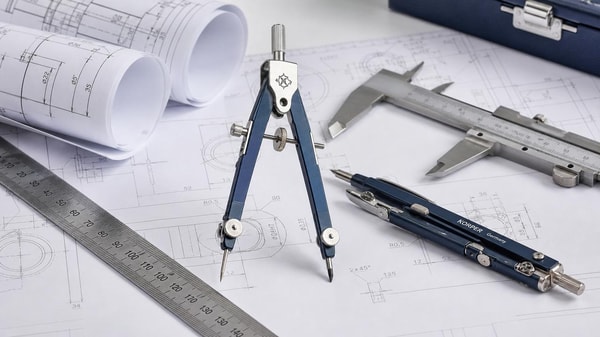
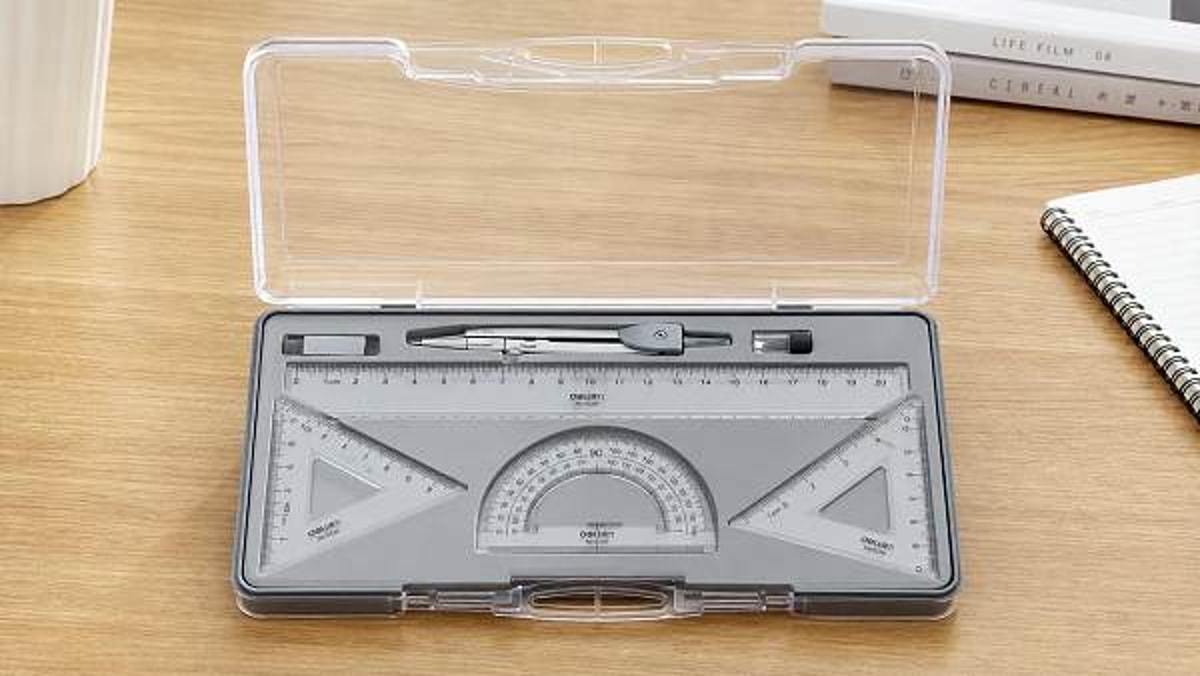
- Compass: The most common failure point. Look for stable leg tension, easy pencil attachment, and smooth circle rotation.
- Ruler: Clear graduations, straight edges, and crack resistance matter more than decorative styling.
- Protractor: Readability from both directions improves usability for younger students and mixed learning levels.
- Set squares: Usually a 45-degree and a 30/60-degree triangle. These are essential for angle work and line construction.
- Protective case: Often underestimated, yet crucial for reducing loss, damage, and scattered inventory.
By contrast, mini sharpeners, decorative stickers, low-grade erasers, or novelty inserts may increase visual appeal but often add little long-term value. In geometry sets wholesale, these extras should never compensate for weak fundamentals.
The table below helps buyers separate essential tools from optional additions when comparing wholesale geometry kits for schools, distributors, or institutional tenders.
The key takeaway is clear: the most effective geometry sets wholesale packages focus on a dependable compass, readable measuring tools, and durable storage. Extra pieces can be useful, but only after these basics are proven.
How do use scenarios change the right geometry set?
A common procurement mistake is assuming one geometry set fits every channel. Real demand varies by age group, budget tier, and learning environment. Buyers who define the use case first usually avoid overspecification and unnecessary spend.
School distribution programs
For primary and lower secondary education, simplicity is often best. Tools should be easy to read, safe to handle, and hard to break. Sharp metal parts, overly small accessories, or complex cases may create more support issues than benefits. In this segment, geometry sets wholesale value comes from consistency, not premium presentation.
Tutoring centers and private education
Private learning centers may prefer better-looking kits because presentation influences parent perception. However, the tools still need to survive repeated handling. Transparent measuring surfaces, clean printing, and color coding can improve teaching efficiency if they do not reduce clarity.
Office and institutional supply channels
In office and training environments, geometry sets are often used less frequently but must remain functional over time. A compact case, standardized packaging, and reliable replenishment matter more than child-oriented styling. Institutional buyers also tend to ask more questions about labeling, carton efficiency, and replacement support.
The following comparison table supports geometry sets wholesale selection by application scenario.
This comparison shows why geometry sets wholesale should be sourced as a use-case product, not as a one-style-fits-all stationery item. Matching the set to the environment improves both budget control and end-user satisfaction.
What technical details should wholesale buyers check first?
Information researchers often ask for a simple shortcut: which specifications are most predictive of real quality? While full technical evaluation depends on supplier documentation and sample review, a few checks reveal a great deal.
- Scale print clarity: Graduations should remain legible under classroom lighting and after repeated handling.
- Material choice: Standard plastics may lower cost, while stronger formulations usually reduce cracking and edge wear.
- Compass joint stability: Loose joints reduce drawing accuracy and create frustration quickly.
- Edge finish: Smooth finishing supports safer handling, especially for younger users.
- Case closure quality: Weak locking systems increase missing-part complaints during distribution.
If the buyer is comparing multiple geometry sets wholesale suppliers, requesting a pre-shipment sample or pilot batch can uncover issues not visible in specification sheets. GCT’s sourcing perspective is especially useful here because product evaluation is linked to real deployment conditions, not just product listings.
A practical evaluation checklist
- Confirm whether scale markings are printed or molded, and ask how they perform after repeated use.
- Check whether compass pencils or leads are standardized for easy replacement.
- Review packaging dimensions for master carton efficiency and shipping cost control.
- Ask if mixed-color production affects lead time or batch consistency.
- Verify whether the supplier can keep the same specification over repeat orders.
How should buyers compare cost versus long-term value?
Price remains important in geometry sets wholesale, but the lowest unit cost is not always the most economical result. If breakage rates are high, markings fade quickly, or parts go missing in transit, replacement and complaint handling can erase the initial savings.
A more useful method is to compare landed value. That includes not only ex-factory price, but also packaging efficiency, damage risk, expected replacement frequency, and how well the set aligns with the actual use environment.
The table below gives a practical framework for judging geometry sets wholesale cost options beyond sticker price.
For many institutional programs, the balanced standard set is the best purchasing outcome. It avoids premium overdesign while still protecting function. Buyers exploring geometry sets wholesale should ask not only “How cheap is it?” but also “How many interventions will this product create after delivery?”
What about compliance, safety, and documentation?
Although geometry sets are relatively simple products, compliance still matters, especially when shipments are destined for schools, public procurement, or regulated retail channels. Buyers should not assume that a basic stationery item requires no documentation.
Common checkpoints
- Material safety declarations may be requested for institutional procurement.
- Labeling requirements can vary by destination market and sales channel.
- Age suitability, sharp-point warnings, or packaging marks may be relevant depending on the product design.
- Carton labeling and packing lists should support receiving efficiency for schools and distributors.
For buyers managing cross-border geometry sets wholesale projects, the practical issue is not only whether documents exist, but whether they align with the destination market’s procurement and import expectations. GCT’s industry-centered sourcing approach helps narrow this gap by connecting product selection with real commercial delivery requirements.
Common mistakes buyers make when sourcing geometry sets wholesale
Even experienced buyers can misjudge this category because geometry sets look simple. Yet several repeat mistakes create avoidable cost and operational friction.
- Choosing by piece count alone: More items do not mean better practical value.
- Ignoring case durability: Broken packaging leads to missing tools, even if the tools themselves are acceptable.
- Skipping sample review: Product images rarely reveal weak print quality or unstable compass joints.
- Using one specification for all channels: School tenders, office resale, and training centers often need different set configurations.
- Underestimating replenishment planning: Repeat orders are easier when the supplier can maintain the same components over time.
Most of these mistakes come from treating geometry sets wholesale as a commodity purchase instead of a scenario-based sourcing decision. Once end use, damage risk, and support burden are considered, selection becomes much clearer.
FAQ: the questions information researchers ask most often
How many pieces should a wholesale geometry set include?
There is no universal ideal number. For most school and institutional use, a practical set with a compass, ruler, protractor, two set squares, and a protective case covers the majority of needs. Additional items are only useful when they serve a defined teaching or supply purpose.
Which part fails most often in geometry sets wholesale orders?
The compass is usually the most sensitive component because it combines moving parts, pressure points, and user handling variation. If the hinge loosens or the pencil holder slips, the entire set feels poor quality. That is why sample testing should focus heavily on compass performance.
Are premium materials always worth the extra cost?
Not always. For low-intensity use or strict budget projects, a standard durable set may be sufficient. Premium materials make more sense where breakage rates, repeat handling, or brand presentation carry greater operational cost. The decision should follow the use scenario, not marketing language alone.
What should buyers ask suppliers before placing a bulk order?
Ask about material consistency, scale readability, sample availability, packaging dimensions, repeat-order stability, lead time, and any documentation required by the destination market. In geometry sets wholesale, these questions reveal far more than a unit-price quote on its own.
Why work with GCT for geometry sets wholesale research and sourcing support?
Buyers in office and educational supplies increasingly need more than product lists. They need sourcing intelligence that connects product design, user experience, compliance expectations, and supply reliability. GCT supports that process by translating broad market options into clearer procurement choices for commercial and institutional environments.
If you are reviewing geometry sets wholesale for school supply programs, distributor channels, campus projects, or private education networks, GCT can help you move from generic comparison to decision-ready evaluation. You can consult on component priorities, specification matching, packaging logic, delivery timing, sample support, customization possibilities, documentation questions, and quotation planning based on your target market and application scenario.
That makes the buying process more efficient and far less uncertain. Instead of sorting through oversized assortments and unclear product claims, you can focus on the geometry set pieces that matter most in real use and build a sourcing decision around measurable commercial value.
Search News
Hot Articles
Popular Tags
Need ExpertConsultation?
Connect with our specialized leisureengineering team for procurementstrategies.
Recommended News
 May 06, 2026Wholesale children books: how to judge value beyond unit priceWholesale children books should be judged by more than unit price. Discover how to compare quality, safety, content value, and supplier reliability for smarter buying.● Institutional Buyer
 May 06, 2026Math manipulatives bulk orders that support mixed-age classroomsMath manipulatives bulk solutions for mixed-age classrooms: compare durable, age-flexible, safety-focused options that improve teaching continuity, reduce waste, and simplify school purchasing.● Institutional Buyer
 May 06, 2026Wholesale compasses and dividers that stay accurate over timeWholesale compasses and dividers built for lasting accuracy. Discover how to evaluate hinge stability, material quality, and batch consistency to reduce replacement costs.● Institutional Buyer
 May 06, 2026Marching band uniforms that look sharp without raising repair billsMarching band uniforms that stay sharp and lower repair costs. Compare fabrics, construction, and supplier reliability to choose durable, budget-smart uniforms.● Institutional Buyer
 May 06, 2026Geometry sets wholesale: which pieces matter most in real useGeometry sets wholesale buying is easier when you know which pieces truly matter. Discover the essential tools, quality checks, and sourcing tips that improve value and reduce replacement costs.● Institutional Buyer
 May 06, 2026Clear pencil cases that last longer in busy school settingsClear pencil cases built for busy schools: discover how durable materials, safer construction, and reliable suppliers help cut replacements, support inspections, and improve long-term value.● Institutional Buyer
 May 06, 2026Flash cards manufacturer questions that affect print consistencyFlash cards manufacturer selection affects color accuracy, material stability, and batch consistency. Learn the key sourcing questions that help reduce risk and ensure reliable print quality.● Institutional Buyer
 May 06, 2026What makes educational posters bulk orders worth the priceEducational posters bulk orders cost more upfront, but they cut unit prices, improve classroom consistency, and last longer. See why schools and institutions view them as a smart investment.● Institutional Buyer
 May 06, 2026Why wholesale erasers and sharpeners vary so much in qualityWholesale erasers and sharpeners vary in quality due to materials, blade engineering, safety compliance, and production control. Learn how to source smarter and reduce risk.● Institutional Buyer
 May 05, 2026Shandong Lions Reject Tao Hanlin’s Retirement — Implications for Sportswear OEMsSportswear OEMs: Shandong Lions’ rejection of Tao Hanlin’s retirement signals growing buyer focus on supplier longevity, stability & cultural trust in global sourcing.● Institutional Buyer
 May 05, 2026Custom promotional pens that get used instead of thrown awayCustom promotional pens that people actually keep: learn how to choose quality, comfortable, brand-right pens that boost visibility, reduce waste, and deliver better long-term value.● Institutional Buyer
 May 05, 2026Custom graduation gowns: why fabric choice changes event photosCustom graduation gowns look dramatically different on camera depending on fabric. Learn how sheen, drape, and wrinkle resistance shape photo quality and smarter sourcing.● Institutional Buyer
 May 05, 2026Ballpoint pens bulk: why writing distance changes buyer satisfactionBallpoint pens bulk buyers often overlook writing distance, yet it strongly shapes user satisfaction, brand perception, and reorder value across offices, schools, promotions, and service counters.● Institutional Buyer
 May 05, 2026Watercolor paints bulk: student use reveals quality fastWatercolor paints bulk for schools: see how student use quickly exposes pigment, packaging, and durability issues. Learn what buyers should check before sourcing at scale.● Institutional Buyer
 May 05, 2026Wholesale sticky notes: which paper grades actually stay putWholesale sticky notes buyers: learn which paper grades truly stay put. Compare economy, office, premium, and recycled options to improve adhesion, writing quality, and repeat orders.● Institutional Buyer
 May 05, 2026Highlighter markers wholesale: why ink consistency matters moreHighlighter markers wholesale buyers should look beyond price: consistent ink flow improves writing performance, reduces complaints, and supports stronger repeat orders. Learn what reliable sourcing really requires.● Institutional Buyer
 May 05, 2026Wholesale school backpacks: when low price leads to high returnsWholesale school backpacks may look cost-saving, but low prices often mean higher returns, complaints, and hidden procurement costs. Learn how to compare suppliers smarter.● Institutional Buyer
 May 05, 2026Art supplies wholesale trends schools are paying attention toArt supplies wholesale trends schools are watching now: safer materials, smarter bulk buying, sustainable options, and reliable suppliers that protect budgets and improve classroom outcomes.● Institutional Buyer
 May 05, 2026Colored pencils wholesale: which specs matter beyond color countColored pencils wholesale buyers should look beyond color count. Compare core strength, pigment quality, safety, wood, and packaging to source better products with confidence.● Institutional Buyer
 May 05, 2026School uniforms wholesale: what causes fit issues at scaleSchool uniforms wholesale fit issues often start with sizing gaps, fabric behavior, and weak supplier coordination. Learn the key causes and how buyers can reduce returns and protect uniform program quality.● Institutional Buyer
 May 05, 2026Graduation caps and tassels: matching colors is harder than it looksGraduation caps and tassels are harder to match than they seem. Learn how to control color standards, supplier quality, and bulk order accuracy for flawless ceremony delivery.● Institutional Buyer
 May 05, 2026Why some dry erase boards bulk orders fail in daily useDry erase boards bulk orders can fail fast in real use. Learn what causes ghosting, warping, weak mounting, and short lifespan—and how to source boards that truly fit schools, offices, hotels, and healthcare.● Institutional Buyer
 May 04, 2026PU Leather Journals: Why Some Covers Peel Too SoonPU leather journals can look elegant and affordable, but why do some peel so quickly? Discover the real causes, warning signs, and smarter buying tips before you choose.● Institutional Buyer
 May 04, 2026Retractable Badge Reels: The Small Item That Fails FirstRetractable badge reels fail faster than many workplace accessories. Learn what causes breakage, how to source durable options, and how to cut replacement costs.● Institutional Buyer