Wholesale compasses and dividers that stay accurate over time
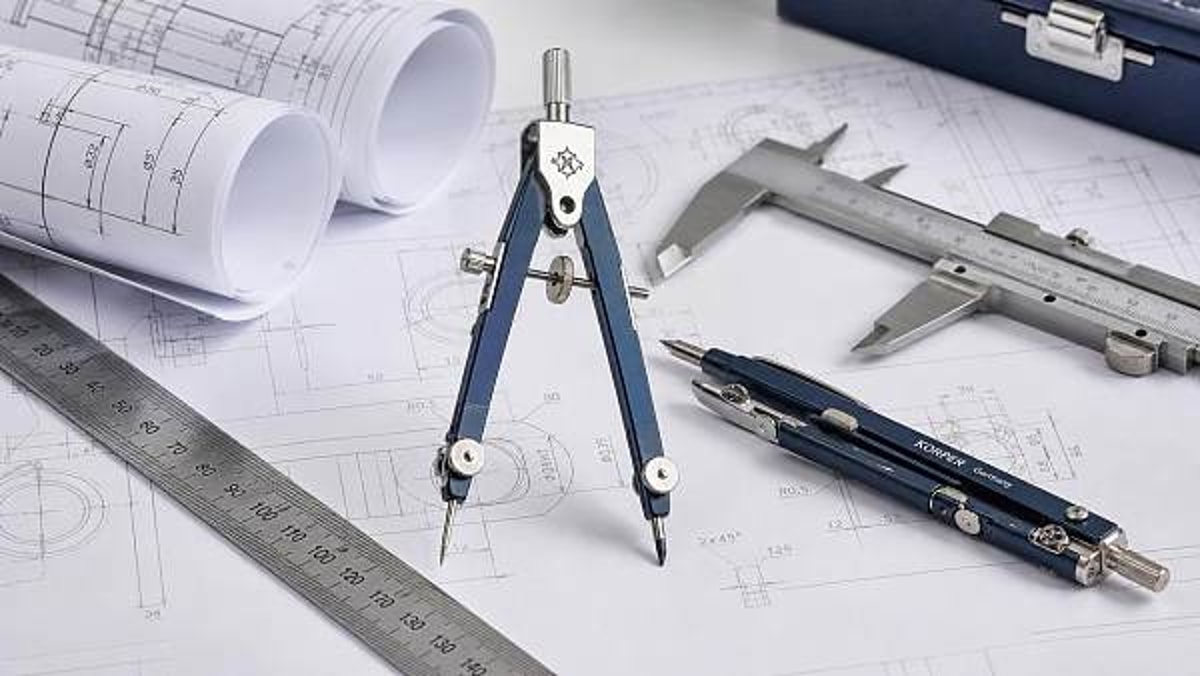
For technical evaluators, choosing wholesale compasses and dividers is not just about price—it is about long-term precision, material stability, and manufacturing consistency. This guide explores how accurate drafting and measuring tools perform over time, what quality indicators matter most in bulk sourcing, and how reliable suppliers help institutions and commercial buyers reduce replacement costs while maintaining exact standards.
Why long-term accuracy has become a stronger buying signal
The market for wholesale compasses and dividers is changing in a way that matters directly to technical evaluators. Buyers in education, engineering support, architecture training, industrial marking, and specialty office supply channels are no longer satisfied with tools that feel acceptable on day one. The more important question is how those tools behave after repeated opening and closing cycles, transport across climates, and daily use by different skill levels. In practical terms, the trend is moving from short-term purchase cost to lifecycle reliability.
This shift is driven by several visible signals. Institutions are under pressure to reduce waste and replacement frequency. Procurement teams increasingly need evidence that a compass hinge will not loosen prematurely, that divider legs will remain aligned, and that surface finishing will resist corrosion in storage. At the same time, product comparison has become more technical. Instead of choosing by appearance alone, evaluators are asking for tolerances, alloy details, assembly methods, and batch consistency records.
For suppliers, this means that wholesale compasses and dividers are now judged less as simple stationery items and more as precision-use instruments within a broader commercial quality framework. That is especially true in schools with STEM programs, training centers, vocational institutes, and commercial distributors that sell to professional users.
What is changing in demand for wholesale compasses and dividers
Demand is not disappearing, but it is becoming more selective. Basic low-cost sets still have a place in high-volume entry-level channels, yet growth in evaluation standards is strongest where buyers must justify performance over time. Technical evaluators are increasingly separating products into use cases: classroom general use, exam environments, design studios, workshop layout, and premium institutional procurement. Each use case places different stress on durability and precision retention.
Another trend is the preference for tools that combine mechanical stability with easier maintenance. Replaceable pencil inserts, secure tightening systems, smoother joint resistance, and protective packaging are now seen as operational advantages rather than small extras. In bulk procurement, even minor design improvements can reduce complaint rates, simplify inventory planning, and lower hidden costs.
The main drivers behind this quality shift
Several forces are pushing the market toward better-performing wholesale compasses and dividers. First, institutional buyers face tighter accountability. Whether the purchaser is a school network, a training provider, or a specialist distributor, there is increasing demand to prove that procurement decisions support long-term value. Low initial prices lose their appeal when tools loosen, misalign, or corrode within a short period.
Second, user expectations have risen. Even in educational settings, users are accustomed to better product consistency. A compass that cannot hold radius settings or a divider that slips under light pressure creates immediate dissatisfaction and, in some cases, undermines measurement accuracy in learning or technical work.
Third, supply chains have become more transparent. Evaluators now compare manufacturers more easily, and online product claims are tested against peer reviews, sample evaluations, and third-party sourcing experience. In this environment, factories that invest in stable production methods gain a visible advantage.
Finally, there is a broader commercial move toward standardization. Buyers want fewer product surprises. That makes process control, repeatable assembly, and documented material selection more important than before.
Where long-term precision is won or lost
For technical evaluators, the most useful trend insight is that long-term accuracy usually fails in predictable places. Precision retention is rarely about one feature alone. It is the result of how materials, joint design, machining, and finishing work together over time. When reviewing wholesale compasses and dividers, several areas deserve close attention.
Joint and hinge performance
The hinge determines whether the set radius or spacing remains stable in use. If friction is too low, the legs drift. If it is inconsistent, the tool becomes difficult to adjust accurately. Evaluators should look for smooth resistance, minimal side play, and secure fastening that survives repeated movement. Riveted and screw-based systems can both work well, but execution quality matters more than the basic format.
Leg straightness and tip alignment
A small alignment issue may not be obvious in a casual inspection, but over time it affects circle accuracy, spacing transfer, and user confidence. Consistent leg geometry across bulk units is therefore a strong indicator of process control. For dividers, point symmetry and hardness are particularly important where repeated marking is expected.
Material stability and finish quality
Nickel-plated steel, stainless steel, zinc alloy components, and mixed-material constructions all appear in the market. The trend is not that one material automatically wins, but that buyers increasingly want material choice to match use conditions. Humid storage, frequent transport, and high-contact educational environments place extra pressure on coating durability and corrosion resistance. A weak finish can undermine otherwise acceptable tool geometry.
Accessory retention and replaceable parts
If pencil holders loosen or replacement parts vary in fit, precision drops during normal use. Well-designed wholesale compasses and dividers often show their value in these small details. Technical evaluators increasingly treat accessory fit as part of the accuracy system, not a separate issue.
How the shift affects different buyers and channels
The move toward durability and accuracy does not affect every buyer in the same way. Understanding these differences helps evaluators build better specifications and avoid overbuying or underbuying.
What technical evaluators should test before approving a supplier
As the market matures, sample inspection alone is no longer enough. A polished sample can hide unstable mass production. Evaluators sourcing wholesale compasses and dividers should combine physical testing with process review. The objective is to confirm whether quality is designed into the production system rather than selectively shown in pre-shipment samples.
A practical evaluation framework should include opening-closing cycle testing, hinge torque consistency checks, point alignment review, corrosion observation after exposure to typical storage conditions, and packaging drop resistance for bulk transport. It is also useful to inspect multiple units from different production moments, not only one curated sample set.
On the process side, evaluators should ask how the manufacturer controls leg symmetry, verifies fastening pressure, manages plating quality, and handles nonconforming units. When a supplier can explain these controls clearly, confidence in future batches improves significantly.
Signals that a supplier is prepared for the next stage of demand
The strongest suppliers in wholesale compasses and dividers are adapting to more technical conversations with buyers. They are prepared to discuss material grades, test routines, and tolerance consistency instead of relying only on broad claims such as “good quality” or “factory price.” This shift is important because the market increasingly rewards transparency.
Useful positive signals include clear product segmentation by application, stable OEM or ODM capability, traceable batch management, low-variation assembly output, and the willingness to provide multi-unit samples for evaluation. Suppliers that support specification alignment early in the sourcing process help reduce misunderstandings later. That is especially valuable for commercial buyers balancing cost, performance, and brand reputation.
How to judge the next 12 to 24 months
Looking ahead, the likely direction is not a dramatic reinvention of the product category, but a steady separation between low-control commodity output and better-managed precision-oriented supply. Buyers will continue to ask more from suppliers, especially where institutional procurement and technical education overlap. The result is a market where documented consistency becomes a competitive asset.
Technical evaluators should keep watching four signals: whether factories are improving process transparency, whether material and finish choices are becoming more application-specific, whether packaging is being engineered for lower transit damage, and whether repeat orders maintain the same performance profile as initial samples. Those signals reveal whether a supplier can support long-term sourcing, not just one successful shipment.
Practical recommendations for sourcing decisions now
If your organization is evaluating wholesale compasses and dividers today, the best response to market change is to tighten the link between specification and intended use. Define the accuracy retention level required, identify the expected usage cycle, and separate must-have features from cosmetic preferences. Then test supplier claims against actual unit behavior over time.
It is also wise to shift negotiations away from unit price alone. Ask what controls keep the hinge stable, what inspection points guard leg alignment, and what corrective actions are used when batches drift. In many cases, a modestly higher purchase price results in lower replacement volume, fewer user complaints, and better overall value.
For organizations that need to make repeated or cross-regional purchases, standardizing an evaluation checklist can create a stronger internal benchmark. This helps ensure that future procurement decisions remain consistent even when buyers, budgets, or sourcing regions change.
Final assessment for commercial buyers
The real trend in wholesale compasses and dividers is not simply higher quality in a general sense. It is a sharper market distinction between tools that only look acceptable at delivery and tools that remain accurate through real use. For technical evaluators, that distinction should shape every sourcing conversation.
If your business wants to judge how this trend affects current procurement, focus on a few key questions: Which failure points are creating replacement cost today? Which applications require the highest stability over time? Can your current supplier prove batch consistency, material suitability, and repeatable assembly quality? The answers will clarify whether your next sourcing step should be cost compression, specification refinement, or supplier upgrade.
In a market where accuracy over time is becoming the true benchmark, better decisions come from evaluating wholesale compasses and dividers as long-term performance assets rather than simple commodity items.
Search News
Hot Articles
Popular Tags
Need ExpertConsultation?
Connect with our specialized leisureengineering team for procurementstrategies.
Recommended News
 May 06, 2026Wholesale children books: how to judge value beyond unit priceWholesale children books should be judged by more than unit price. Discover how to compare quality, safety, content value, and supplier reliability for smarter buying.● Institutional Buyer
 May 06, 2026Math manipulatives bulk orders that support mixed-age classroomsMath manipulatives bulk solutions for mixed-age classrooms: compare durable, age-flexible, safety-focused options that improve teaching continuity, reduce waste, and simplify school purchasing.● Institutional Buyer
 May 06, 2026Wholesale compasses and dividers that stay accurate over timeWholesale compasses and dividers built for lasting accuracy. Discover how to evaluate hinge stability, material quality, and batch consistency to reduce replacement costs.● Institutional Buyer
 May 06, 2026Marching band uniforms that look sharp without raising repair billsMarching band uniforms that stay sharp and lower repair costs. Compare fabrics, construction, and supplier reliability to choose durable, budget-smart uniforms.● Institutional Buyer
 May 06, 2026Geometry sets wholesale: which pieces matter most in real useGeometry sets wholesale buying is easier when you know which pieces truly matter. Discover the essential tools, quality checks, and sourcing tips that improve value and reduce replacement costs.● Institutional Buyer
 May 06, 2026Clear pencil cases that last longer in busy school settingsClear pencil cases built for busy schools: discover how durable materials, safer construction, and reliable suppliers help cut replacements, support inspections, and improve long-term value.● Institutional Buyer
 May 06, 2026Flash cards manufacturer questions that affect print consistencyFlash cards manufacturer selection affects color accuracy, material stability, and batch consistency. Learn the key sourcing questions that help reduce risk and ensure reliable print quality.● Institutional Buyer
 May 06, 2026What makes educational posters bulk orders worth the priceEducational posters bulk orders cost more upfront, but they cut unit prices, improve classroom consistency, and last longer. See why schools and institutions view them as a smart investment.● Institutional Buyer
 May 06, 2026Why wholesale erasers and sharpeners vary so much in qualityWholesale erasers and sharpeners vary in quality due to materials, blade engineering, safety compliance, and production control. Learn how to source smarter and reduce risk.● Institutional Buyer
 May 05, 2026Shandong Lions Reject Tao Hanlin’s Retirement — Implications for Sportswear OEMsSportswear OEMs: Shandong Lions’ rejection of Tao Hanlin’s retirement signals growing buyer focus on supplier longevity, stability & cultural trust in global sourcing.● Institutional Buyer
 May 05, 2026Custom promotional pens that get used instead of thrown awayCustom promotional pens that people actually keep: learn how to choose quality, comfortable, brand-right pens that boost visibility, reduce waste, and deliver better long-term value.● Institutional Buyer
 May 05, 2026Custom graduation gowns: why fabric choice changes event photosCustom graduation gowns look dramatically different on camera depending on fabric. Learn how sheen, drape, and wrinkle resistance shape photo quality and smarter sourcing.● Institutional Buyer
 May 05, 2026Ballpoint pens bulk: why writing distance changes buyer satisfactionBallpoint pens bulk buyers often overlook writing distance, yet it strongly shapes user satisfaction, brand perception, and reorder value across offices, schools, promotions, and service counters.● Institutional Buyer
 May 05, 2026Watercolor paints bulk: student use reveals quality fastWatercolor paints bulk for schools: see how student use quickly exposes pigment, packaging, and durability issues. Learn what buyers should check before sourcing at scale.● Institutional Buyer
 May 05, 2026Wholesale sticky notes: which paper grades actually stay putWholesale sticky notes buyers: learn which paper grades truly stay put. Compare economy, office, premium, and recycled options to improve adhesion, writing quality, and repeat orders.● Institutional Buyer
 May 05, 2026Highlighter markers wholesale: why ink consistency matters moreHighlighter markers wholesale buyers should look beyond price: consistent ink flow improves writing performance, reduces complaints, and supports stronger repeat orders. Learn what reliable sourcing really requires.● Institutional Buyer
 May 05, 2026Wholesale school backpacks: when low price leads to high returnsWholesale school backpacks may look cost-saving, but low prices often mean higher returns, complaints, and hidden procurement costs. Learn how to compare suppliers smarter.● Institutional Buyer
 May 05, 2026Art supplies wholesale trends schools are paying attention toArt supplies wholesale trends schools are watching now: safer materials, smarter bulk buying, sustainable options, and reliable suppliers that protect budgets and improve classroom outcomes.● Institutional Buyer
 May 05, 2026Colored pencils wholesale: which specs matter beyond color countColored pencils wholesale buyers should look beyond color count. Compare core strength, pigment quality, safety, wood, and packaging to source better products with confidence.● Institutional Buyer
 May 05, 2026School uniforms wholesale: what causes fit issues at scaleSchool uniforms wholesale fit issues often start with sizing gaps, fabric behavior, and weak supplier coordination. Learn the key causes and how buyers can reduce returns and protect uniform program quality.● Institutional Buyer
 May 05, 2026Graduation caps and tassels: matching colors is harder than it looksGraduation caps and tassels are harder to match than they seem. Learn how to control color standards, supplier quality, and bulk order accuracy for flawless ceremony delivery.● Institutional Buyer
 May 05, 2026Why some dry erase boards bulk orders fail in daily useDry erase boards bulk orders can fail fast in real use. Learn what causes ghosting, warping, weak mounting, and short lifespan—and how to source boards that truly fit schools, offices, hotels, and healthcare.● Institutional Buyer
 May 04, 2026PU Leather Journals: Why Some Covers Peel Too SoonPU leather journals can look elegant and affordable, but why do some peel so quickly? Discover the real causes, warning signs, and smarter buying tips before you choose.● Institutional Buyer
 May 04, 2026Retractable Badge Reels: The Small Item That Fails FirstRetractable badge reels fail faster than many workplace accessories. Learn what causes breakage, how to source durable options, and how to cut replacement costs.● Institutional Buyer