Math manipulatives bulk orders that support mixed-age classrooms
For schools, distributors, and program coordinators planning mixed-age learning environments, choosing the right math manipulatives bulk strategy can directly affect teaching flexibility, cost control, and classroom engagement. From early numeracy tools to advanced hands-on resources, understanding product variety, safety standards, and sourcing options helps buyers make smarter purchasing decisions for diverse educational settings.
In mixed-age classrooms, one purchasing mistake can create a chain of operational issues: materials that suit ages 5–6 may not challenge learners aged 9–10, while advanced kits can be unsafe or underused in early years settings. For institutional buyers, the goal is not simply to order more units. It is to build a scalable, durable, and age-flexible resource library that works across multiple teaching levels, storage systems, and budget cycles.
A well-planned math manipulatives bulk program supports curriculum continuity, simplifies replenishment, and reduces fragmented spending across semesters. For distributors and procurement teams serving schools, after-school centers, and educational groups, success depends on balancing 4 key factors: pedagogical range, compliance, packaging efficiency, and supplier reliability. The sections below outline how buyers can assess these factors with practical B2B criteria.
Why mixed-age classrooms require a different bulk purchasing model
Traditional classroom supply lists often assume a narrow age band, but mixed-age environments rarely operate that way. A single room may include 2–4 developmental stages, each needing different levels of tactile complexity, visual guidance, and challenge progression. That makes math manipulatives bulk planning more strategic than standard single-grade purchasing.
The operational reality behind age diversity
In practice, mixed-age learning groups appear in Montessori settings, international schools, tutoring centers, community programs, and transitional primary classrooms. These environments often rotate students in small groups of 6–12, which means manipulatives must withstand high-frequency handling, quick redistribution, and repeated cleaning. Product durability and modularity become as important as teaching value.
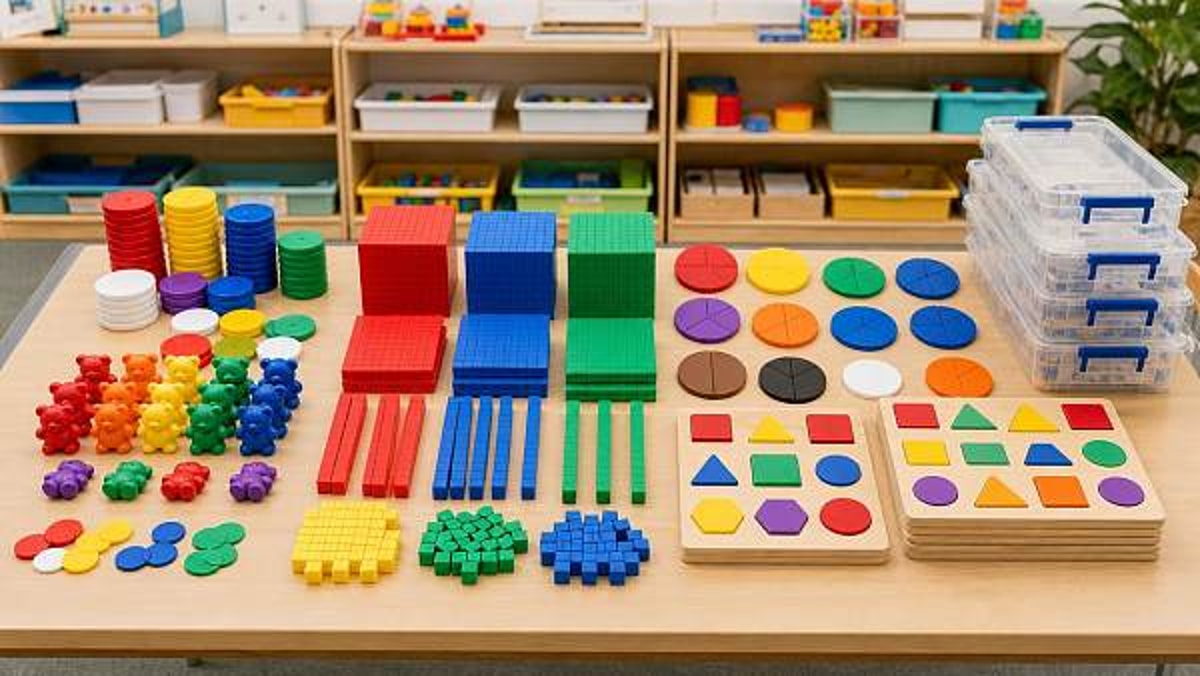
Buyers should also consider how many skill bands one product can cover. Base-ten blocks, counters, pattern blocks, and fraction circles usually support at least 3 instructional layers: introduction, guided practice, and independent exploration. By contrast, highly specialized kits may be effective for only 1 age group or 1 curriculum unit, increasing storage pressure and lowering utilization rates.
Common procurement pain points
- Overbuying narrow-use products that fit only one term or one age band
- Underestimating replacement needs for small parts lost within 3–6 months
- Choosing packaging formats unsuitable for classroom redistribution
- Mixing incompatible materials, such as heavy wood sets with fragile plastic inserts
- Purchasing non-compliant items that raise safety concerns in early learning settings
The table below shows how common manipulative categories map to mixed-age teaching needs, helping buyers create a more balanced math manipulatives bulk shortlist rather than purchasing by product popularity alone.
The strongest categories for math manipulatives bulk orders are usually those with repeat use across at least 2 grade bands and multiple lesson formats. This approach improves utilization, lowers per-lesson cost, and simplifies inventory planning over 1–2 academic years.
How to choose the right math manipulatives bulk mix
The best bulk order is rarely the one with the widest catalog. It is the one aligned with actual classroom ratios, curriculum priorities, and replenishment patterns. For institutional procurement, buyers should separate core items from supplemental items and estimate usage by student group, not just by total enrollment.
Build around 3 purchasing tiers
A practical sourcing framework uses 3 tiers. Tier 1 includes daily-use essentials such as counters, linking cubes, number lines, and dice. Tier 2 includes concept-specific resources like fraction bars, algebra tiles, and geoboards. Tier 3 includes enrichment or intervention tools used for rotating stations, assessment support, or small-group differentiation.
For many schools, a workable ratio is 50%–60% budget on Tier 1, 25%–30% on Tier 2, and 10%–20% on Tier 3. This prevents overspending on low-frequency items while keeping enough variety for differentiated instruction. In mixed-age classrooms, this ratio usually delivers better coverage than buying full equal quantities of every item.
Selection criteria that matter in B2B sourcing
- Age span coverage: Can the item be used across at least 2 learning stages?
- Piece control: Are there too many small loose parts for the intended setting?
- Material strength: Will the item survive daily use for 9–12 months?
- Cleaning tolerance: Can surfaces handle repeated wiping or sanitizing?
- Storage efficiency: Does packaging support bin-based or tray-based distribution?
Before finalizing a math manipulatives bulk order, buyers should compare not only product type but also pack configuration, replacement convenience, and classroom handling efficiency. The table below provides a practical decision matrix for educational procurement teams.
This comparison highlights a common procurement lesson: the item itself is only one part of the decision. In math manipulatives bulk purchasing, packaging logic and replenishment design often determine whether the resource remains usable after the first semester.
Safety, compliance, and material durability in educational supply sourcing
For schools and distributors, price should never be evaluated separately from safety and durability. Mixed-age settings create a higher compliance burden because younger learners may access materials intended for older students. Procurement teams should therefore screen manipulatives based on age suitability, edge design, coating stability, and small-part risk before reviewing visual appeal or unit cost.
Material choices and their trade-offs
Plastic manipulatives are often preferred for high-volume programs because they are lightweight, easy to sanitize, and efficient to ship. Wooden sets usually offer stronger tactile appeal and premium classroom aesthetics but may be heavier and more expensive in large volumes. Foam-based items can work well for younger age groups, though they may wear faster in programs with 5-day weekly handling.
A good purchasing brief should state the expected usage intensity. For example, a classroom set used 2 times per week has a different durability requirement from a district intervention kit used 4–6 times daily across multiple groups. This affects not just material choice but packaging, spare quantities, and expected replacement cycle.
Compliance checkpoints buyers should request
- Recommended age grading and warnings for small components
- Material descriptions for plastic, wood finishes, paints, or foam surfaces
- Basic test or inspection documentation relevant to educational goods
- Packaging details that prevent transit damage in larger carton quantities
- Consistency across production batches for color, count, and shape accuracy
When reviewing math manipulatives bulk suppliers, buyers should ask whether cartons are packed for direct institutional use or retail presentation. This distinction matters. Commercial education buyers typically benefit more from bulk inner packs, barcode-ready cartons, and simpler storage labeling than from shelf-focused display packaging.
Sourcing workflow, lead times, and supplier evaluation for bulk orders
Reliable sourcing is not only about securing a catalog. It is about matching demand timing with production capacity, inspection routines, and shipping windows. In office and educational supplies procurement, math manipulatives bulk projects often align with school opening cycles, grant deadlines, or annual budget release periods. Missing these windows by even 2–3 weeks can disrupt classroom readiness.
A practical 5-step procurement process
- Define student range, lesson format, and expected quantity per manipulative type.
- Separate core stock from optional enrichment items.
- Request specification sheets, pack counts, and sample confirmation when needed.
- Review lead time, replacement policy, and packaging format before order approval.
- Plan inbound receiving, classroom distribution, and reserve stock tracking.
For standard items, production and dispatch can often fall within a 2–6 week range depending on quantity, season, and customization level. Custom color assortments, private labeling, or multilingual packaging typically add 1–3 extra weeks. Buyers serving multiple campuses should also account for internal redistribution time, which can add another 5–10 business days after receipt.
Questions that reveal supplier readiness
A credible supplier should be able to explain carton configuration, pack-level counting method, acceptable quantity tolerance, and how damaged or missing pieces are handled. Buyers should also ask whether the supplier supports mixed-SKU consolidation, because combining 8–15 compatible manipulative lines into one shipment can reduce administrative complexity and improve warehouse intake efficiency.
For organizations sourcing through a B2B intelligence and trade platform such as GCT, the advantage is not just supplier visibility. It is access to commercially relevant evaluation criteria across educational supplies, from sourcing structure and packaging suitability to delivery coordination and market-fit guidance. That is especially valuable for information researchers comparing vendors before moving to formal procurement.
Common buying mistakes and how to avoid them
Even experienced buyers can oversimplify math manipulatives bulk sourcing by focusing too heavily on unit price. In reality, the lowest-cost offer can become expensive if breakage, missing parts, storage inefficiency, or limited age usability force early reordering. A more accurate assessment looks at total usable value across the academic cycle.
Mistake 1: Buying by catalog image instead of classroom workflow
A visually attractive set may still be difficult to distribute, sort, or store. If teachers need 8 minutes to prepare and 10 minutes to collect one resource, that lost time accumulates across 4–5 sessions per week. Buyers should prioritize formats that work in trays, bins, or pre-counted pouches.
Mistake 2: Ignoring reserve stock
Loose components such as counters, pegs, and small geometric pieces often experience gradual loss. Without a reserve stock of 5%–10%, schools may end up replacing full kits when only partial replenishment is needed. Reserve planning is one of the simplest ways to extend the life of a bulk order.
Mistake 3: Treating all classrooms the same
A mixed-age classroom, intervention room, and after-school lab may all need manipulatives, but not in the same volume or format. Some settings need rugged high-frequency resources; others need flexible concept kits for rotating groups of 4–6 students. Segmenting order plans by usage pattern usually improves both inventory accuracy and teaching effectiveness.
Quick checklist before final approval
- Does each major item serve at least 2 age or skill levels?
- Are pack counts matched to real classroom group sizes?
- Have safety and material details been reviewed?
- Is there a replacement or reserve stock plan?
- Can storage and redistribution be handled without extra labor burden?
For buyers evaluating math manipulatives bulk opportunities, the most effective strategy is to connect product choice with actual classroom operations. The right order supports varied age groups, reduces waste, and keeps hands-on learning accessible across the school year. If you are comparing suppliers, pack formats, or sourcing options for educational programs, GCT can help you assess commercially practical solutions with greater clarity. Contact us to discuss your requirements, request tailored sourcing support, or explore more education supply solutions.
Search News
Hot Articles
Popular Tags
Need ExpertConsultation?
Connect with our specialized leisureengineering team for procurementstrategies.
Recommended News
 May 06, 2026Wholesale children books: how to judge value beyond unit priceWholesale children books should be judged by more than unit price. Discover how to compare quality, safety, content value, and supplier reliability for smarter buying.● Institutional Buyer
 May 06, 2026Math manipulatives bulk orders that support mixed-age classroomsMath manipulatives bulk solutions for mixed-age classrooms: compare durable, age-flexible, safety-focused options that improve teaching continuity, reduce waste, and simplify school purchasing.● Institutional Buyer
 May 06, 2026Wholesale compasses and dividers that stay accurate over timeWholesale compasses and dividers built for lasting accuracy. Discover how to evaluate hinge stability, material quality, and batch consistency to reduce replacement costs.● Institutional Buyer
 May 06, 2026Marching band uniforms that look sharp without raising repair billsMarching band uniforms that stay sharp and lower repair costs. Compare fabrics, construction, and supplier reliability to choose durable, budget-smart uniforms.● Institutional Buyer
 May 06, 2026Geometry sets wholesale: which pieces matter most in real useGeometry sets wholesale buying is easier when you know which pieces truly matter. Discover the essential tools, quality checks, and sourcing tips that improve value and reduce replacement costs.● Institutional Buyer
 May 06, 2026Clear pencil cases that last longer in busy school settingsClear pencil cases built for busy schools: discover how durable materials, safer construction, and reliable suppliers help cut replacements, support inspections, and improve long-term value.● Institutional Buyer
 May 06, 2026Flash cards manufacturer questions that affect print consistencyFlash cards manufacturer selection affects color accuracy, material stability, and batch consistency. Learn the key sourcing questions that help reduce risk and ensure reliable print quality.● Institutional Buyer
 May 06, 2026What makes educational posters bulk orders worth the priceEducational posters bulk orders cost more upfront, but they cut unit prices, improve classroom consistency, and last longer. See why schools and institutions view them as a smart investment.● Institutional Buyer
 May 06, 2026Why wholesale erasers and sharpeners vary so much in qualityWholesale erasers and sharpeners vary in quality due to materials, blade engineering, safety compliance, and production control. Learn how to source smarter and reduce risk.● Institutional Buyer
 May 05, 2026Shandong Lions Reject Tao Hanlin’s Retirement — Implications for Sportswear OEMsSportswear OEMs: Shandong Lions’ rejection of Tao Hanlin’s retirement signals growing buyer focus on supplier longevity, stability & cultural trust in global sourcing.● Institutional Buyer
 May 05, 2026Custom promotional pens that get used instead of thrown awayCustom promotional pens that people actually keep: learn how to choose quality, comfortable, brand-right pens that boost visibility, reduce waste, and deliver better long-term value.● Institutional Buyer
 May 05, 2026Custom graduation gowns: why fabric choice changes event photosCustom graduation gowns look dramatically different on camera depending on fabric. Learn how sheen, drape, and wrinkle resistance shape photo quality and smarter sourcing.● Institutional Buyer
 May 05, 2026Ballpoint pens bulk: why writing distance changes buyer satisfactionBallpoint pens bulk buyers often overlook writing distance, yet it strongly shapes user satisfaction, brand perception, and reorder value across offices, schools, promotions, and service counters.● Institutional Buyer
 May 05, 2026Watercolor paints bulk: student use reveals quality fastWatercolor paints bulk for schools: see how student use quickly exposes pigment, packaging, and durability issues. Learn what buyers should check before sourcing at scale.● Institutional Buyer
 May 05, 2026Wholesale sticky notes: which paper grades actually stay putWholesale sticky notes buyers: learn which paper grades truly stay put. Compare economy, office, premium, and recycled options to improve adhesion, writing quality, and repeat orders.● Institutional Buyer
 May 05, 2026Highlighter markers wholesale: why ink consistency matters moreHighlighter markers wholesale buyers should look beyond price: consistent ink flow improves writing performance, reduces complaints, and supports stronger repeat orders. Learn what reliable sourcing really requires.● Institutional Buyer
 May 05, 2026Wholesale school backpacks: when low price leads to high returnsWholesale school backpacks may look cost-saving, but low prices often mean higher returns, complaints, and hidden procurement costs. Learn how to compare suppliers smarter.● Institutional Buyer
 May 05, 2026Art supplies wholesale trends schools are paying attention toArt supplies wholesale trends schools are watching now: safer materials, smarter bulk buying, sustainable options, and reliable suppliers that protect budgets and improve classroom outcomes.● Institutional Buyer
 May 05, 2026Colored pencils wholesale: which specs matter beyond color countColored pencils wholesale buyers should look beyond color count. Compare core strength, pigment quality, safety, wood, and packaging to source better products with confidence.● Institutional Buyer
 May 05, 2026School uniforms wholesale: what causes fit issues at scaleSchool uniforms wholesale fit issues often start with sizing gaps, fabric behavior, and weak supplier coordination. Learn the key causes and how buyers can reduce returns and protect uniform program quality.● Institutional Buyer
 May 05, 2026Graduation caps and tassels: matching colors is harder than it looksGraduation caps and tassels are harder to match than they seem. Learn how to control color standards, supplier quality, and bulk order accuracy for flawless ceremony delivery.● Institutional Buyer
 May 05, 2026Why some dry erase boards bulk orders fail in daily useDry erase boards bulk orders can fail fast in real use. Learn what causes ghosting, warping, weak mounting, and short lifespan—and how to source boards that truly fit schools, offices, hotels, and healthcare.● Institutional Buyer
 May 04, 2026PU Leather Journals: Why Some Covers Peel Too SoonPU leather journals can look elegant and affordable, but why do some peel so quickly? Discover the real causes, warning signs, and smarter buying tips before you choose.● Institutional Buyer
 May 04, 2026Retractable Badge Reels: The Small Item That Fails FirstRetractable badge reels fail faster than many workplace accessories. Learn what causes breakage, how to source durable options, and how to cut replacement costs.● Institutional Buyer