Access Control Turnstiles: Why Throughput Numbers Can Mislead
When evaluating access control turnstiles, throughput figures often appear to offer a simple basis for comparison. Yet for technical evaluators, these numbers can mask critical variables such as user behavior, credential type, safety settings, and lane design. Understanding what throughput data really represents is essential for selecting a solution that performs reliably in real-world commercial environments.
In hotels, smart campuses, office complexes, leisure venues, and premium retail environments, the wrong interpretation of throughput can lead to bottlenecks, poor user experience, unnecessary capital cost, or avoidable safety interventions. For procurement teams and engineering reviewers working across international commercial projects, comparing access control turnstiles requires more than reading a brochure value such as 30, 40, or 60 persons per minute.
This article examines why published throughput numbers can be misleading, what technical variables actually govern lane performance, and how to build a more reliable evaluation framework for sourcing access control turnstiles in commercial settings where security, design, and operational continuity must work together.
What Throughput Numbers Really Mean in Access Control Turnstiles
Manufacturers usually state throughput as a maximum theoretical capacity under controlled conditions. In practice, that number often assumes a single-direction flow, compliant users, valid credentials on the first attempt, minimal luggage, and no hesitation at the lane. These assumptions rarely match a live lobby, hotel entrance, student building, or event venue during peak periods.
A turnstile rated at 40 persons per minute may only deliver 18 to 28 persons per minute in normal operation once readers, door opening time, sensor confirmation, and user reaction are included. For technical evaluators, this gap matters because hardware sizing, software logic, staffing plans, and escape route design are all affected by actual delivered throughput rather than test-bench capacity.
The difference between theoretical and operational capacity
Theoretical throughput is often measured in an ideal cycle. A user presents a credential, the lane unlocks, passage occurs without pause, and the barrier resets immediately for the next person. Depending on barrier type, this cycle may be only 1.0 to 2.5 seconds long. In a real commercial environment, however, user spacing alone can add another 1 to 3 seconds per passage.
Operational capacity includes human variation. People search for badges, switch hands to scan a phone, stop to orient themselves, or walk more slowly when carrying bags or pushing small trolleys. In a mixed-user facility, even a 0.8-second delay per person can reduce hourly lane output by hundreds of passages across a 2-hour peak window.
Why published numbers vary by product type
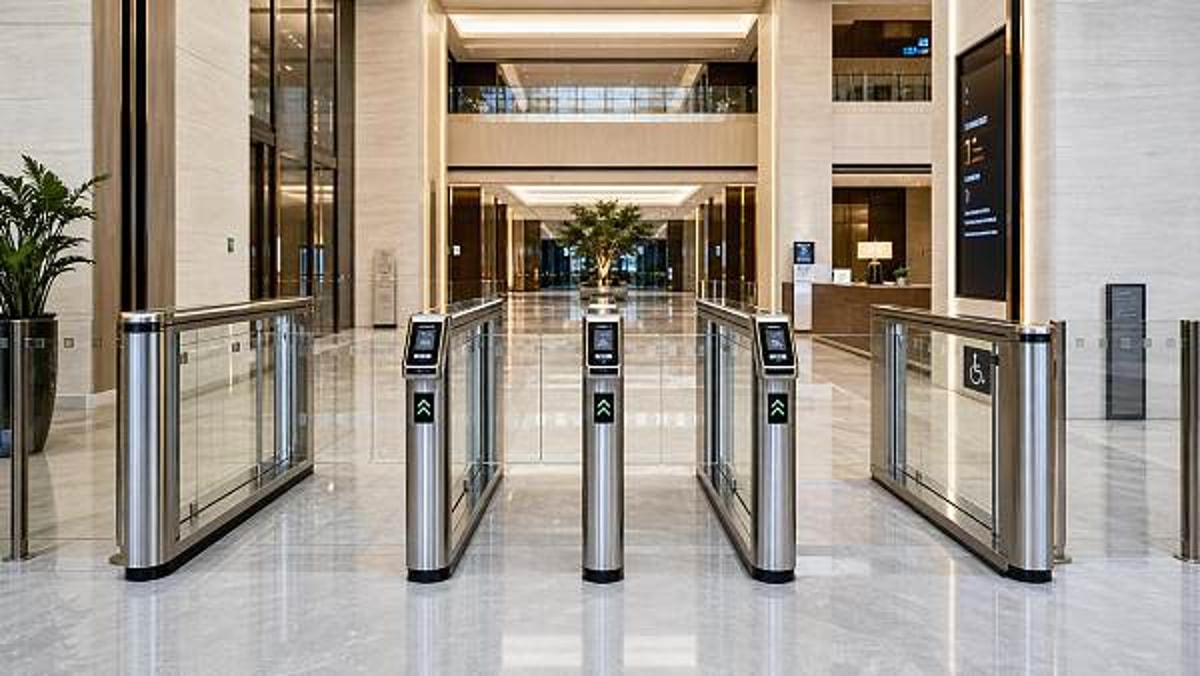
Not all access control turnstiles operate with the same barrier geometry or motion logic. Speed gates, optical lanes, tripod turnstiles, and full-height units each have different performance limits. A full-height turnstile prioritizes perimeter security and anti-tailgating resistance, while a speed gate may emphasize aesthetics and lower-friction entry in premium interior spaces.
The table below shows how typical throughput ranges differ by turnstile category in commercial applications. These are common market ranges rather than universal ratings, and actual figures depend on lane width, reader integration, and safety programming.
The main takeaway is that one published throughput number does not make one product inherently better than another. It usually reflects a different trade-off between speed, security level, user comfort, and space planning. For technical assessment, the right question is not “Which lane is fastest?” but “Which lane maintains stable throughput under our real operating conditions?”
The Variables That Distort Throughput in Real Environments
In commercial projects, measured performance depends on a chain of variables. A single weak point, such as a slow QR reader or a narrow approach path, can reduce effective throughput by 20% to 40%. Technical evaluators should therefore review the entire passage sequence instead of evaluating the cabinet and barrier mechanism alone.
Credential type and read speed
Card, mobile, QR, biometric, and visitor credential flows do not perform equally. Contactless RFID can authenticate in well under 1 second when the reader position is intuitive. QR codes may take longer because of screen brightness, angle, and scanner tolerance. Facial recognition may be fast in good lighting, but hats, masks, glare, or queue movement can slow the process.
For hospitality, mixed credential environments are common: staff cards, guest mobile credentials, and temporary visitor passes may all share the same lane. In such cases, a throughput claim based on a single credential format is not a reliable predictor of lane performance during daily operations.
Credential-related checks for evaluators
- Measure average first-read success rate over at least 100 passages.
- Test both peak and off-angle presentation behavior.
- Verify response times with online and offline validation modes.
- Check whether mobile wallet credentials perform differently from app-based QR codes.
Safety logic, sensor zones, and anti-tailgating settings
Access control turnstiles in premium commercial environments often use multiple infrared beams or sensor arrays to detect direction, unauthorized passage, and obstruction. More aggressive anti-tailgating logic improves control but can reduce speed. If the software requires strict single-person separation, close-following users may trigger barrier holds or alarms, increasing cycle time by 1 to 2 seconds.
Safety settings also matter. Barrier reopening logic, child detection, wheelchair passage mode, and slow-close settings for injury prevention all affect throughput. In campuses and public-facing venues, these parameters are often tuned more conservatively than in private staff-only areas.
Lane width, user behavior, and carried items
A 550 mm to 650 mm standard lane may perform well for staff with badges, but throughput declines when users carry luggage, instrument cases, shopping bags, or catering supplies. In hotels and mixed-use buildings, the presence of rolling baggage or housekeeping carts can disrupt queue discipline and create pauses not captured by brochure figures.
Wider accessible lanes, often 900 mm or more, are necessary for compliance and inclusivity, yet they usually move more slowly because users need extra alignment time. This does not make them inefficient; it simply means total bank throughput should be calculated across both standard and accessible lanes rather than assuming every lane performs identically.
Approach geometry and queue design
Lane performance starts before the barrier. If users approach from a 90-degree turn, emerge from elevators, or merge from two corridors, hesitation rises. Clear sightlines, 2 to 3 meters of straight approach distance, and visible reader placement can materially improve user flow. Poor geometry often causes more throughput loss than the turnstile mechanism itself.
A Better Evaluation Framework for Technical Buyers
For sourcing teams, the most useful approach is to replace a single throughput figure with a structured evaluation model. This allows fairer comparison between suppliers and helps align procurement with operations, IT, security, and design stakeholders. A robust review should combine at least 4 dimensions: throughput under load, authentication reliability, safety behavior, and maintainability.
Key questions to ask before comparing lanes
Before shortlisting access control turnstiles, technical evaluators should document the operating profile. How many users pass during the busiest 15-minute interval? What percentage use mobile credentials? How many need luggage-friendly or accessible lanes? Will the lane work in supervised or unsupervised mode? These questions often change the recommended product type more than nominal throughput ratings do.
- Define peak traffic by 15-minute and 60-minute intervals.
- Separate staff, visitor, and service-user flows.
- Map credential formats and expected exception rates.
- Confirm security response requirements for alarms and tailgating events.
- Review maintenance access, spare parts availability, and mean time to service.
A practical comparison matrix
The following matrix helps convert procurement discussions from brochure claims into operational criteria. It is especially useful for commercial projects where aesthetics, compliance, and throughput must be balanced across several stakeholder groups.
This kind of matrix shifts the decision from marketing language to measurable operational outcomes. It also helps buyers compare different access control turnstiles on the basis of business fit rather than isolated speed claims.
Recommended acceptance testing
A supplier demonstration should not stop at a showroom video. Ask for a site-relevant acceptance test with at least 3 scenarios: normal flow, peak burst flow, and exception handling. Each scenario should cover 50 to 100 consecutive passages so you can observe not just speed, but consistency, recovery behavior, and the rate of intervention.
For mixed-use commercial properties, test with real conditions: bags, wheeled items, temporary visitor credentials, and accessibility passage. If the lane supports integration with elevators, destination control, or visitor management systems, test the full workflow rather than only the barrier opening cycle.
Application-Specific Considerations Across Commercial Sectors
Access control turnstiles do not serve all commercial spaces in the same way. Throughput priorities in a luxury hotel are different from those in a campus library, a business park, or an amusement venue. Technical evaluators should tie lane selection to user profile, architectural intent, and service model.
Hotels and hospitality venues
In hospitality, appearance and guest comfort can outweigh maximum lane speed. A gate that processes 5 to 10 fewer persons per minute may still be preferable if it offers quieter movement, cleaner cabinet finishes, and smoother integration with premium interiors. Guests often carry luggage or approach in groups, so queue calmness matters as much as nominal throughput.
Office and educational facilities
Corporate and campus environments often face compressed peaks at shift start, class change, or lunch return. Here, throughput planning should focus on the busiest 10 to 20 minutes rather than daily totals. A building with 1,200 users may not require high-capacity lanes all day, but it may need enough parallel lanes to absorb a 300-person surge without queues extending into fire egress paths.
Leisure, attractions, and specialty retail
Attractions and luxury retail often combine ticketing, membership, and access control functions. QR scanning, family groups, and visitor unfamiliarity can slow passage significantly. In these settings, evaluator attention should go to lane guidance, exception handling, and staff override tools, because perceived waiting time can affect customer satisfaction even when theoretical throughput seems strong.
Common mismatch risks by sector
- Choosing high-security logic for a guest-heavy hospitality entrance and creating unnecessary friction.
- Specifying elegant speed gates for a high-abuse perimeter where full-height control is actually required.
- Sizing lanes by average daily traffic instead of peak 15-minute bursts.
- Ignoring service access and spare parts lead time in multi-site deployments.
How to Turn Throughput Data Into a Smarter Procurement Decision
The most reliable procurement decisions treat throughput as one metric among several. A practical sourcing process for access control turnstiles should combine design review, functional testing, integration validation, and lifecycle support analysis. For many commercial buyers, the lowest-risk solution is not the one with the highest headline capacity, but the one that performs predictably under mixed traffic and can be maintained with minimal disruption.
Checklist for final technical review
Before approving a specification, confirm 6 points: real-world throughput range, supported credential types, alarm logic behavior, accessible lane strategy, emergency fail-safe or fail-secure response, and service support model. If even 1 of these is unclear, the published throughput number should not be used as a decision shortcut.
For global commercial projects, it is also wise to align the lane package with local installation realities. Power quality, network architecture, humidity, cleaning procedures, and user training can all affect long-term performance. A well-matched system may deliver lower nominal throughput on paper but better total operating value over 3 to 5 years.
Throughput figures remain useful, but only when they are interpreted in context. For technical evaluators sourcing access control turnstiles, the real objective is to match lane behavior to user flow, credential mix, safety policy, and commercial design goals. If you are comparing solutions for hotels, campuses, offices, leisure venues, or specialty retail spaces, a more structured assessment will reduce specification risk and improve long-term performance. To discuss project requirements, request a tailored evaluation framework, or explore fit-for-purpose sourcing options, contact GCT to get a customized solution review.
Search News
Hot Articles
Popular Tags
Need ExpertConsultation?
Connect with our specialized leisureengineering team for procurementstrategies.
Recommended News
 May 07, 2026Access Control Turnstiles: Why Throughput Numbers Can MisleadAccess control turnstiles throughput numbers can mislead buyers. Learn what affects real lane performance and how to compare solutions for safer, smoother commercial access.● Institutional Buyer
 May 07, 2026Access Control Turnstiles: Why Throughput Numbers Can MisleadAccess control turnstiles throughput numbers can mislead buyers. Learn what affects real lane performance and how to compare solutions for safer, smoother commercial access.● Institutional Buyer
 May 06, 2026Tablet charging carts with locking doors still need these checksTablet charging carts with locking doors still need key checks. Learn how to evaluate ventilation, power safety, mobility, and compatibility before you buy.● Institutional Buyer
 May 06, 2026Document cameras for teachers: image quality or software first?Document cameras for teachers: should you prioritize image quality or software? Explore a practical checklist to compare clarity, workflow, compatibility, and long-term value.● Institutional Buyer
 May 06, 2026Smart podiums for classrooms that fit hybrid teaching betterSmart podiums for classrooms designed for hybrid teaching: compare integration, durability, ergonomics, and serviceability to choose scalable solutions that cut support issues and improve teaching efficiency.● Institutional Buyer
 May 06, 2026Chromebook charging stations and the airflow issue many missChromebook charging stations often look efficient, but airflow is the hidden factor that impacts battery life, safety, and charging performance. Learn what smart buyers should inspect before choosing.● Institutional Buyer
 May 06, 2026Language lab equipment features that improve speaking practiceLanguage lab equipment features can dramatically improve speaking practice. Discover which tools best fit schools, universities, exam centers, and training programs.● Institutional Buyer
 May 06, 2026Wireless presentation systems that solve lag in larger roomsWireless presentation systems for larger rooms: discover how to reduce lag, improve stability, strengthen security, and ensure smooth sharing across enterprise AV and IT environments.● Institutional Buyer
 May 06, 2026Tablet charging carts and the hidden issue of cable wearTablet charging carts face a hidden reliability risk: cable wear. Learn how smarter evaluation can reduce downtime, lower maintenance costs, and improve long-term device performance.● Institutional Buyer
 May 06, 2026Scientific calculators wholesale: when cheaper models cost moreScientific calculators wholesale is not just about the lowest quote. Learn how defects, compliance, batch consistency, and supplier reliability affect true cost—and how smarter sourcing protects margin.● Institutional Buyer
 May 06, 2026IOC Selects Chinese University’s Athlete Support Model as Global Procurement BenchmarkIOC adopts Chinese university's AI psychological coaching + wearable load monitoring model as global procurement benchmark — a strategic opportunity for edtech, sports health tech, and data security providers.● Institutional Buyer
 May 05, 2026Liaoning Tieren Appoints Korean Coach Xu Zhengyuan, Signals Shift in K-League Equipment ProcurementLiaoning Tieren appoints Korean coach Xu Zhengyuan — sparking interest in K-League equipment procurement and KFA 2026-certified smart training tech.● Institutional Buyer
 May 05, 2026Physics lab apparatus: where low-cost kits usually fall shortPhysics lab apparatus buying on price alone often leads to poor accuracy, weak durability, and higher lifecycle costs. Learn what low-cost kits miss and how to source safer, better-value solutions.● Institutional Buyer
 May 05, 2026School laboratory equipment: what should be replaced firstSchool laboratory equipment replacement starts with safety-critical assets. Learn what to replace first to improve compliance, reduce downtime, and maximize tight budgets.● Institutional Buyer
 May 05, 2026Thermal receipt printers: hidden upkeep costs before large rolloutThermal receipt printers may look affordable, but hidden upkeep costs can erode rollout budgets. Learn how to reduce downtime, control maintenance, and choose smarter for scale.● Institutional Buyer
 May 05, 2026Human anatomy models that improve hands-on teaching, not storageHuman anatomy models built for hands-on teaching, not storage. Discover durable, classroom-ready options that improve engagement, simplify setup, and support smarter education sourcing.● Institutional Buyer
 May 05, 2026Ceiling mount projector brackets: where installation mistakes happenCeiling mount projector brackets: discover where installation mistakes happen, how to avoid safety and alignment issues, and the checklist that helps teams deliver smoother AV projects.● Institutional Buyer
 May 05, 2026Barcode scanners for library: common issues with older systemsBarcode scanners for library upgrades can solve slow checkouts, read errors, and compatibility issues in older systems. Learn what fails first and how to choose a reliable replacement.● Institutional Buyer
 May 05, 2026What to check before ordering wholesale projector screensWholesale projector screens buyers should check material, gain, aspect ratio, installation, and supplier consistency before ordering. Reduce sourcing risk and choose reliable commercial solutions.● Institutional Buyer
 May 05, 2026Geography globes wholesale: what makes one model classroom-readyGeography globes wholesale buyers: discover what makes a model truly classroom-ready, from durability and readability to safety, compliance, and reliable bulk supply.● Institutional Buyer
 May 05, 2026Microscope slides wholesale: where quality gaps usually show upMicroscope slides wholesale buyers should watch for hidden quality gaps in flatness, edge finishing, cleanliness, and batch consistency—learn how to reduce waste and choose reliable suppliers.● Institutional Buyer
 May 05, 2026POS touch screens: what affects response speed and lifespanPOS touch screens directly impact checkout speed, uptime, and total cost. Learn what affects response speed and lifespan to choose the right solution for every business scenario.● Institutional Buyer
 May 04, 2026Kindergarten Furniture Bulk Orders and the Safety Details MissedKindergarten furniture bulk buyers: discover the hidden safety checks suppliers often miss, from emissions and stability to ergonomics and compliance, before placing large orders.● Institutional Buyer
 May 04, 2026School Desks and Chairs Wholesale: Matching Age to Size CorrectlySchool desks and chairs wholesale guide: learn how to match age to size correctly for better comfort, safety, compliance, and smarter school furniture purchasing.● Institutional Buyer