Inflatable Water Slides Wholesale: Which Features Cut Repair Rates?
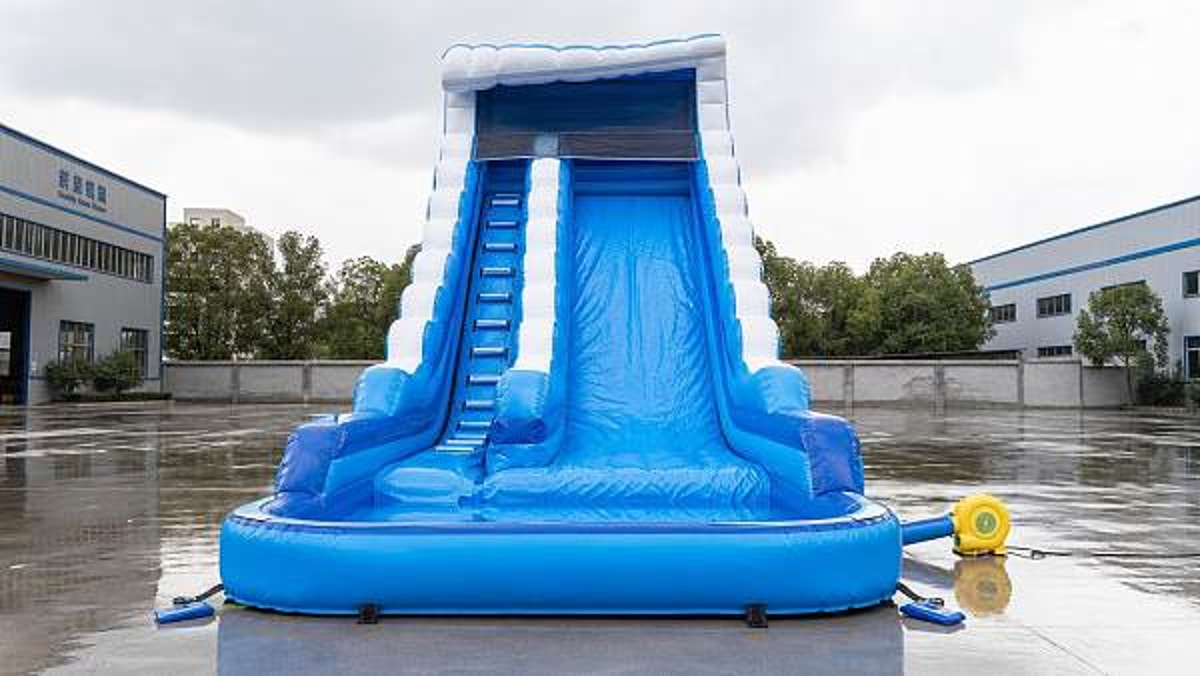
In inflatable water slides wholesale sourcing, repair rates often reveal more than price ever can. For technical evaluators, the real differentiators lie in fabric weight, seam construction, anchor design, blower compatibility, and compliance testing. Understanding which features reduce wear, punctures, and structural stress helps buyers select units that last longer, perform safer, and deliver stronger lifecycle value in commercial settings.
Why a checklist approach matters in inflatable water slides wholesale evaluation
For technical teams, repair frequency is rarely caused by one dramatic failure. It usually comes from repeated small stresses: abrasive landing zones, weak stitching around high-load points, underpowered blowers, poor drainage, or anchor systems that allow shifting under use. That is why inflatable water slides wholesale decisions should be made through a checklist, not a brochure comparison.
A structured review helps buyers separate cosmetic selling points from design features that truly lower maintenance demand. It also supports cross-functional sourcing, where procurement, operations, safety, and site management need a shared framework. In commercial parks, resorts, event rental fleets, and leisure venues, a slide that costs slightly more but cuts patching, downtime, and labor can produce a much better total cost outcome.
First-pass checklist: the features most closely linked to lower repair rates
Before reviewing colors, themes, or customization options, technical evaluators should confirm the following points in any inflatable water slides wholesale project:
- PVC tarpaulin grade and fabric weight are matched to commercial, not residential, duty cycles.
- Critical seams use reinforced stitching, heat welding, or a hybrid process suitable for wet, high-stress operation.
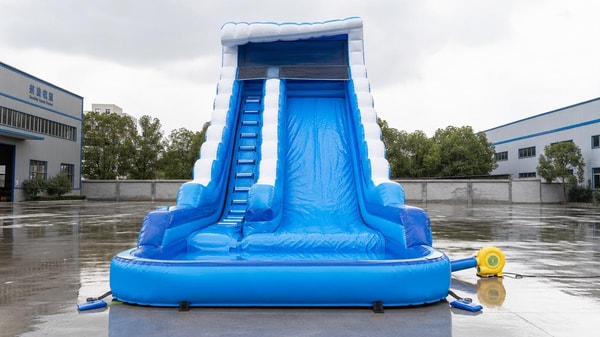
- Slide lanes, splash zones, stairs, and entrance points include extra wear layers.
- Anchor points are numerous, reinforced, and positioned for the expected wind and user load.
- The blower specification matches chamber volume, pressure requirements, and local electrical conditions.
- Drainage and water flow design prevent pooling, added weight, and seam strain.
- Test reports and compliance documents are current, verifiable, and relevant to the destination market.
- Repair kit contents, spare material availability, and after-sales technical support are defined before order placement.
If one or more of these items is unclear, repair risk usually rises. The rest of the evaluation should then focus on how the supplier controls those weaknesses.
Core judgment standard 1: fabric specification is the repair-rate foundation
Among all inflatable water slides wholesale variables, base material quality is one of the strongest predictors of durability. Technical buyers should ask not only for nominal fabric weight, but also for coating consistency, tensile strength, tear resistance, cold-crack performance, and UV resistance. A high GSM figure alone does not guarantee longer service life if the coating is brittle or poorly bonded.
For commercial water slides, reinforced PVC tarpaulin is generally preferred because it tolerates repeated wet use, folding, pressure cycles, and transport abrasion better than lighter recreational materials. Evaluators should also check whether the supplier uses different material grades in different zones. A smarter build often combines heavier reinforcement in stairs, landing pads, and high-friction corners with slightly lighter sections elsewhere to manage both weight and durability.
A useful sourcing question is this: where exactly is the extra material applied, and why? Suppliers that can map wear zones usually understand long-term field performance better than those that only promote overall thickness.
Core judgment standard 2: seam construction determines how stress is distributed
Seams are where many failures begin. In inflatable water slides wholesale orders, repair logs often trace back to seam opening at curved transitions, stair attachments, sidewall joints, and inflated arch sections. The key issue is not just whether seams are stitched or welded, but whether the chosen method fits the load profile.
Technical evaluators should verify these seam-related details:
- Double or quadruple stitching on major structural joints.
- Heat-welded or sealed joints where water exposure is constant.
- Reinforcement strips over high-tension seam lines.
- Smooth radius transitions instead of sharp angle joins that concentrate stress.
- Consistent stitch spacing and thread quality suitable for outdoor moisture and UV exposure.
Ask for close-up production photos or sample cross-sections. In practice, visible consistency is often more informative than generic claims like “strong seam technology.”
Core judgment standard 3: wear-zone reinforcement cuts patch frequency
If a unit is used in resorts, rental fleets, or seasonal parks, the areas that fail first are highly predictable. Climbing steps, platform edges, slide exits, and splash pool entries experience repetitive friction, body impact, and water-driven abrasion. A technical review should therefore focus heavily on sacrificial wear layers and replaceable protection where possible.
In inflatable water slides wholesale selection, a robust slide often includes reinforced footholds, anti-slip step covers, added lane protection at turning points, and thicker bottom panels where the unit contacts rough ground. This is especially important when setups occur on mixed surfaces rather than permanent soft pads.
Core judgment standard 4: anchor design protects structure, not just stability
Many buyers see anchors as a safety compliance issue only. In reality, anchor layout also affects repair rates. When a large inflatable shifts, twists, or lifts unevenly, stress transfers into seams, floor panels, and entrance tunnels. Over time, that movement accelerates material fatigue.
Evaluate anchor quantity, material, reinforcement patch size, and placement geometry. Slides with poorly distributed anchor points may remain upright yet still deform under user flow and wind gusts. For commercial applications, the question is not “Does it have anchors?” but “Does the anchoring pattern keep structural loads balanced under real operating conditions?”
Core judgment standard 5: blower matching is a hidden maintenance variable
Blower mismatch is one of the most overlooked repair drivers in inflatable water slides wholesale procurement. When airflow is insufficient, the structure softens, folds at stress points, and increases friction between users and the slide surface. When pressure is unstable, load-bearing areas flex more than intended, which can shorten seam life.
Technical evaluators should confirm rated power, airflow volume, noise profile, ingress protection, voltage compatibility, and whether the blower has been validated with that exact slide model. A generic “suitable blower” statement is not enough. If the destination market has different electrical standards or long extension runs, that must be factored into blower selection before purchase.
Quick comparison table: which features usually reduce service calls
Different use cases require different technical priorities
Not every inflatable water slides wholesale buyer should weight the checklist in the same way. Repair-rate risk changes by operating model.
For rental companies
Transport abrasion, frequent folding, and varied setup surfaces make bottom reinforcement, handle quality, and easy-access repair zones more important. Modular patchability and spare panel availability should be prioritized.
For resorts and hotels
Aesthetic finish matters, but long exposure to sun, chlorinated water, and continuous guest use makes UV stability, anti-slip surfaces, and drainage design critical. Quiet blower operation may also matter more in premium hospitality settings.
For amusement and leisure parks
Higher throughput means structural reinforcement, queue-side impact protection, and maintenance access planning should rank near the top. Operator manuals and inspection routines should be reviewed alongside the product itself.
Commonly ignored items that later increase repairs
- Ground interface assumptions. A strong slide can still fail early if used repeatedly on abrasive surfaces without a suitable ground sheet.
- Water chemistry. Chlorine, salt, or untreated water can affect coatings and stitching over time.
- Drying and storage conditions. Mold, trapped moisture, and folding while wet can weaken material and complicate repairs.
- Access for inspection. If critical seams are hard to see, small problems may go unnoticed until they become major repairs.
- Incomplete documentation. Missing inflation pressure guidance, anchoring instructions, or maintenance intervals often leads to avoidable damage.
Execution advice: what technical evaluators should request before placing an order
To improve decision quality in inflatable water slides wholesale sourcing, buyers should collect objective evidence, not just catalogs. The most useful pre-order package usually includes material data, detailed drawings, production photos, blower specification sheets, compliance reports, user capacity guidance, and a parts-and-repair support plan.
- Request a bill of materials with identified reinforcement zones.
- Ask for seam method details by structural area, not a single general statement.
- Verify destination-market standards and the date of the latest tests.
- Confirm blower brand, model, power requirements, and replacement availability.
- Review warranty terms specifically related to seams, coating failure, and accessories.
- Ask for references from similar commercial installations with comparable usage intensity.
Final buying guidance for lower-lifecycle-cost sourcing
The best inflatable water slides wholesale choice is usually not the one with the lowest unit price. It is the one whose materials, seams, anchoring, airflow system, and compliance documentation work together to reduce preventable damage. For technical evaluators, repair rates should be treated as a design outcome that can be predicted during sourcing if the right checklist is used.
If your team is moving to the next stage, prioritize discussion around usage frequency, site surface conditions, water environment, local electrical standards, maintenance capability, spare parts support, target service life, and budget range. These inputs will help suppliers recommend a more appropriate specification and give buyers a more accurate picture of durability, safety, and total ownership cost.
Search News
Hot Articles
Popular Tags
Need ExpertConsultation?
Connect with our specialized leisureengineering team for procurementstrategies.
Recommended News
 May 07, 2026CCTV5 Broadcasts Key Sports Events on May 7, 2026CCTV5 broadcasts WTT Finals, CBA playoffs & AFC U-17 Women’s qualifiers on May 7, 2026—boosting global demand for FIBA/AFC/ITTF-certified sports equipment.● Theme Park Strategist
 May 07, 2026Snooker World Championship Boosts Chinese Billiards Table ExportsSnooker World Championship boosts Chinese billiards table exports — CE+UKCA-certified slate tables see 37% surge in UK, Germany & Saudi demand.● Theme Park Strategist
 May 07, 2026CPSC Recalls 3 Chinese-Made Kids' Climbing FramesCPSC recalls 3 Chinese-made kids' climbing frames—47,000 units over ASTM F1487-23 failures & pinch hazards. Act now to protect your supply chain.● Theme Park Strategist
 May 07, 2026Inflatable Water Slides Wholesale: Which Features Cut Repair Rates?Inflatable water slides wholesale buyers: discover which features cut repair rates most—commercial PVC, reinforced seams, smart anchoring, matched blowers, and compliant design.● Theme Park Strategist
 May 07, 2026Mini Golf Course Equipment That Wears Out Faster OutdoorsMini golf course equipment wears out faster outdoors due to UV, moisture, and heavy traffic. Discover which parts fail first and how to choose longer-lasting solutions.● Theme Park Strategist
 May 07, 2026Bowling Alley Equipment Upgrades That Improve Lane ReliabilityBowling alley equipment upgrades that improve lane reliability: discover how smarter pinsetters, diagnostics, conditioning, and integration reduce downtime, cut costs, and boost player satisfaction.● Theme Park Strategist
 May 07, 2026Inflatable Obstacle Courses: Setup Mistakes That Hurt Event FlowInflatable obstacle courses can boost event energy, but setup mistakes can ruin flow. Discover the top errors to avoid and keep events safer, faster, and more efficient.● Theme Park Strategist
 May 07, 2026Coin Operated Kiddie Rides That Stop Paying Back Too SoonCoin operated kiddie rides can lose ROI fast when downtime, weak replay value, and poor sourcing add hidden costs. Learn how to choose models that earn longer.● Theme Park Strategist
 May 07, 2026Commercial Bouncy Castles: Why Material Weight Is Not EnoughCommercial bouncy castles are not defined by material weight alone. Learn the key buying checklist for safety, durability, compliance, and smarter commercial sourcing.● Theme Park Strategist
 May 07, 2026Inflatable Water Slides Wholesale: Which Features Cut Repair Rates?Inflatable water slides wholesale buyers: discover which features cut repair rates most—commercial PVC, reinforced seams, smart anchoring, matched blowers, and compliant design.● Theme Park Strategist
 May 07, 2026Mini Golf Course Equipment That Wears Out Faster OutdoorsMini golf course equipment wears out faster outdoors due to UV, moisture, and heavy traffic. Discover which parts fail first and how to choose longer-lasting solutions.● Theme Park Strategist
 May 07, 2026Bowling Alley Equipment Upgrades That Improve Lane ReliabilityBowling alley equipment upgrades that improve lane reliability: discover how smarter pinsetters, diagnostics, conditioning, and integration reduce downtime, cut costs, and boost player satisfaction.● Theme Park Strategist
 May 07, 2026Inflatable Obstacle Courses: Setup Mistakes That Hurt Event FlowInflatable obstacle courses can boost event energy, but setup mistakes can ruin flow. Discover the top errors to avoid and keep events safer, faster, and more efficient.● Theme Park Strategist
 May 07, 2026Coin Operated Kiddie Rides That Stop Paying Back Too SoonCoin operated kiddie rides can lose ROI fast when downtime, weak replay value, and poor sourcing add hidden costs. Learn how to choose models that earn longer.● Theme Park Strategist
 May 07, 2026Commercial Bouncy Castles: Why Material Weight Is Not EnoughCommercial bouncy castles are not defined by material weight alone. Learn the key buying checklist for safety, durability, compliance, and smarter commercial sourcing.● Theme Park Strategist
 May 06, 2026Basketball hoops for school: portable convenience vs fixed stabilityBasketball hoops for school: compare portable convenience and fixed stability to choose safer, smarter, and more cost-effective solutions for campus courts.● Theme Park Strategist
 May 06, 2026Montessori wooden toys and the question of long-term durabilityMontessori wooden toys: discover what really determines long-term durability, safety, and value, and learn how buyers can choose options built for repeated use.● Theme Park Strategist
 May 06, 2026Wholesale ping pong tables for schools: what wears out firstWholesale ping pong tables for schools: learn what wears out first, from casters to locks, and use this buyer-focused guide to cut replacement costs and choose safer, longer-lasting tables.● Theme Park Strategist
 May 06, 2026Gymnastic mats wholesale: thickness claims vs real shock absorptionGymnastic mats wholesale buyers: learn why thickness claims alone can mislead. Compare real shock absorption, foam density, rebound control, and sourcing checks before you buy.● Theme Park Strategist
 May 06, 2026Abacus learning toys still matter when math goes digitalAbacus learning toys still matter in digital math, helping children build number sense, focus, and hands-on problem-solving. See why educators, parents, and buyers still choose them.● Theme Park Strategist
 May 06, 2026Liaoning Tieren Appoints Shin Jeong-won; K-League Training Gear Sourcing Shift PossibleLiaoning Tieren appoints K-League coach Shin Jeong-won — sparking Korean demand for ISO 10993-certified smart athletic wear, especially heart-rate & GPS training vests.● Theme Park Strategist
 May 06, 2026NBA LED Interactive Court System Enters Mass ProductionNBA LED interactive court system enters mass production in Q3 2026 — a breakthrough for smart sports venues, AR fan engagement, and global LED display suppliers.● Theme Park Strategist
 May 06, 2026NBA Adopts New LED Interactive Court Floors in 2026–27 SeasonNBA LED interactive court floors launch in 2026–27: AR fan engagement, real-time stats & certified hardware — game-changing for global sports tech suppliers.● Theme Park Strategist
 May 06, 2026HuaiBA Youth Basketball Arena Adopts Domestic Smart Floor SystemHuaiBA Youth Basketball Arena's domestic smart floor system sets a new benchmark—featuring real-time pressure sensing & acoustic feedback for global sports infrastructure buyers.● Theme Park Strategist