Snooker World Championship Boosts Chinese Billiards Table Exports
On May 6, 2026, Chinese snooker player Yize Wu’s semifinal victory over Mark Murphy at the World Snooker Championship triggered a measurable uptick in global procurement interest for Chinese-made premium slate billiards tables — highlighting implications for export-oriented manufacturers, certification service providers, and logistics operators serving the leisure equipment sector.
Event Overview
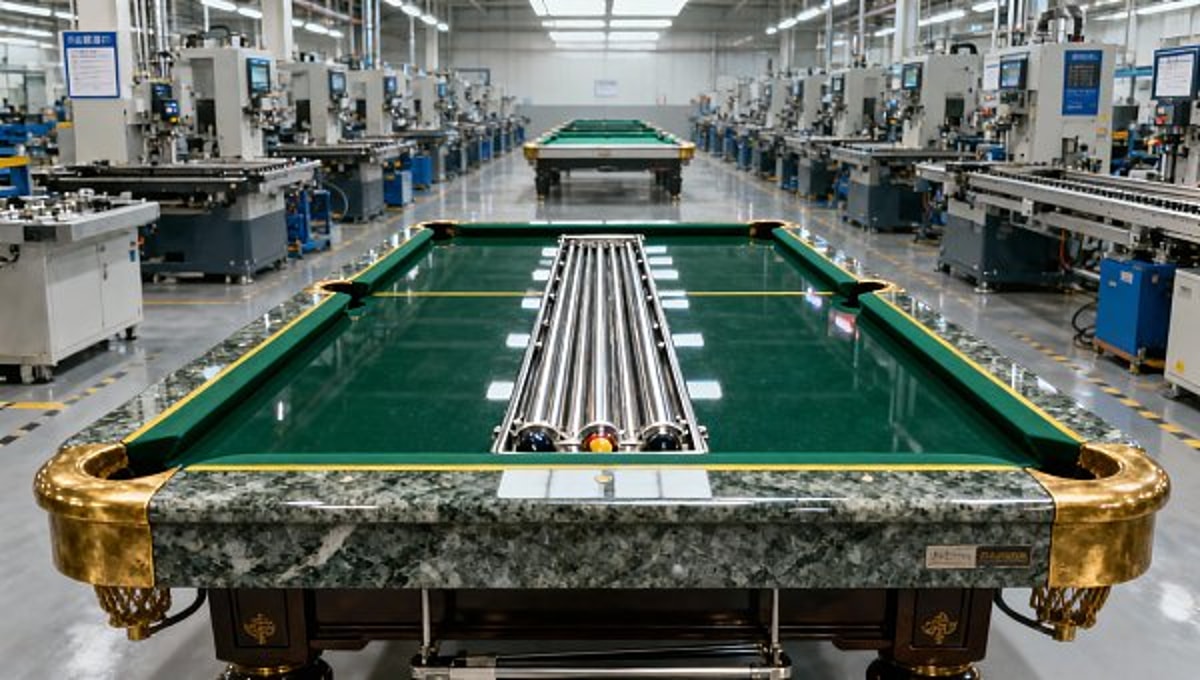
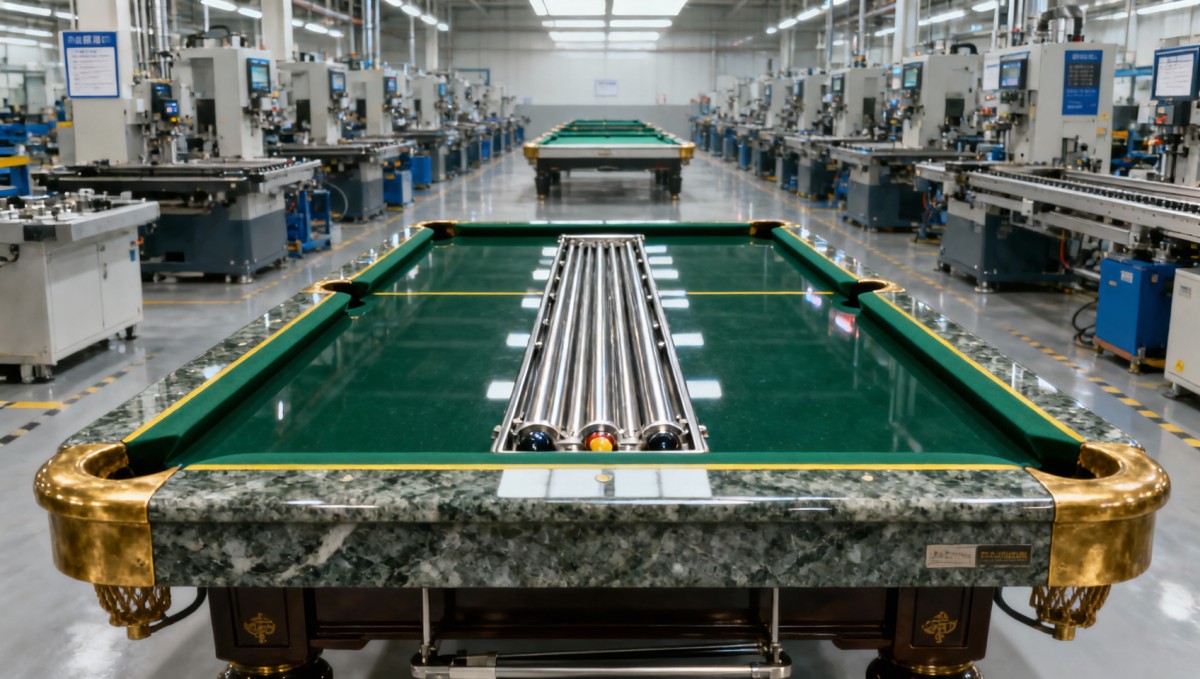
As of May 6, 2026, during the semifinal stage of the 2026 World Snooker Championship, Chinese player Yize Wu defeated Mark Murphy 13–6. This result marks the best single-tournament performance by a Chinese player in the history of the event. According to internal data from Alibaba.com, global buyer inquiries for high-end Chinese slate billiards tables — specified with GTS certification, HPL laminated surfaces, and auto-ball-return systems — rose 37% week-on-week over the prior 24 hours. Buyers from the UK, Germany, and Saudi Arabia collectively accounted for over 61% of those inquiries, with primary focus on CE+UKCA dual certification compliance and LCL (Less-Than-Container-Load) sea freight lead times.
Impact on Specific Industry Segments
Direct Export Trading Enterprises
These firms face immediate demand pressure due to surging inbound inquiries. The spike is concentrated in certified premium segments — not generic or entry-level tables — suggesting buyers are prioritizing regulatory readiness and functional integration (e.g., auto-return systems) over cost alone. Impact manifests as tighter response windows for quotation, increased pre-shipment documentation scrutiny, and higher expectations for certification traceability.
Manufacturing & Assembly Facilities
Producers of slate-based billiards tables must reconcile short-term order acceleration with long-cycle material constraints — particularly for certified natural slate, HPL surface laminates meeting EN 438 standards, and electromechanical auto-return modules. The 37% inquiry increase does not yet reflect confirmed orders; however, production planning teams should assess capacity buffer against potential conversion lift in Q2 2026.
Certification & Compliance Service Providers
CE and UKCA dual certification has become a stated priority among top-inquiry markets. Firms offering conformity assessment, technical file preparation, or test lab coordination for leisure equipment may observe elevated request volumes for documentation support — especially for GTS (Global Table Sports) certification alignment and HPL fire-rating validation under BS 476 or EN 13501-1.
Freight Forwarding & Logistics Operators
The explicit buyer emphasis on LCL sea freight delivery timelines signals heightened sensitivity to port congestion, customs clearance predictability, and container availability in key EU and GCC trade lanes. Carriers and NVOCCs servicing China–UK, China–Germany, and China–Saudi routes may see increased consultation requests for consolidated shipment scheduling and origin documentation accuracy.
What Relevant Businesses Should Monitor and Prepare For
Track official tournament outcomes and post-event media narratives
Wu’s advancement beyond the semifinal — or eventual final result — may further modulate buyer sentiment. Analysis shows sustained media coverage beyond May 6 could extend the inquiry window; conversely, an early exit may compress it. Exporters should align internal sales forecasting with real-time broadcast schedule updates from World Snooker Ltd.
Verify certification status and documentation readiness for top three target markets
UK, Germany, and Saudi Arabia collectively represent over 61% of recent inquiries. From an industry perspective, this concentration suggests that CE+UKCA dual certification — not just CE alone — is now table stakes for market access in these jurisdictions. Manufacturers should confirm current test reports cover both directives, including radio interference (EMC) and low-voltage safety (LVD) where applicable to motorized components.
Differentiate between inquiry volume and order conversion signals
The 37% increase reflects buyer-initiated contact, not purchase commitments. Observably, such spikes often precede modest conversion lifts — typically 5–12% within 30 days — depending on sample approval cycles and payment terms. Sales teams should avoid reallocating finished goods inventory prematurely and instead prioritize fast-turnaround quotation packages with embedded compliance summaries.
Pre-validate LCL routing options and port-specific documentation requirements
Buyers explicitly cited LCL sea freight lead time as a decision factor. Current more relevant is verifying actual transit durations (not quoted estimates) for specific port pairs — e.g., Ningbo–Southampton, Shenzhen–Hamburg, or Yantian–Jeddah — and confirming required documents (e.g., Saudi SASO CoC, UK Responsible Person letter) are pre-approved and digitally accessible for rapid sharing.
Editorial Observation / Industry Perspective
This development is better understood as a short-term demand signal amplified by a high-visibility sporting milestone — not a structural shift in global billiards equipment sourcing. Analysis shows similar spikes occurred after Ding Junhui’s 2016 final appearance, but sustained export growth followed only where manufacturers had already invested in certification infrastructure and modular product platforms. The current episode underscores how elite athlete performance can accelerate buyer evaluation cycles — particularly for regulated, mid-to-high-ticket leisure hardware — but does not substitute for underlying compliance readiness or supply chain agility.
It is not yet evidence of broad-based market expansion; rather, it reflects intensified scrutiny of existing suppliers by buyers already engaged in the category. Industry participants should treat it as a timing-sensitive opportunity to reinforce credibility — not a trigger for speculative capacity expansion.
Conclusion
The May 6, 2026, snooker result serves as a timely reminder that sport-driven demand signals remain highly localized, compliance-dependent, and temporally constrained in the billiards equipment export space. It does not indicate a new long-term market trend, but rather highlights how quickly regulatory preparedness and logistical transparency can become decisive competitive factors — especially when buyer attention is sharply focused. Current interpretation should emphasize operational responsiveness over strategic repositioning.
Information Sources
- Alibaba.com internal platform analytics (inquiry volume and geographic breakdown, May 5–6, 2026)
- World Snooker Championship official match results (semifinal stage, May 6, 2026)
- Note: Ongoing observation is recommended for final-stage results (May 7–10, 2026) and associated buyer follow-up behavior on B2B platforms.
Search News
Hot Articles
Popular Tags
Need ExpertConsultation?
Connect with our specialized leisureengineering team for procurementstrategies.
Recommended News
 May 07, 2026CCTV5 Broadcasts Key Sports Events on May 7, 2026CCTV5 broadcasts WTT Finals, CBA playoffs & AFC U-17 Women’s qualifiers on May 7, 2026—boosting global demand for FIBA/AFC/ITTF-certified sports equipment.● Theme Park Strategist
 May 07, 2026Snooker World Championship Boosts Chinese Billiards Table ExportsSnooker World Championship boosts Chinese billiards table exports — CE+UKCA-certified slate tables see 37% surge in UK, Germany & Saudi demand.● Theme Park Strategist
 May 07, 2026CPSC Recalls 3 Chinese-Made Kids' Climbing FramesCPSC recalls 3 Chinese-made kids' climbing frames—47,000 units over ASTM F1487-23 failures & pinch hazards. Act now to protect your supply chain.● Theme Park Strategist
 May 07, 2026Inflatable Water Slides Wholesale: Which Features Cut Repair Rates?Inflatable water slides wholesale buyers: discover which features cut repair rates most—commercial PVC, reinforced seams, smart anchoring, matched blowers, and compliant design.● Theme Park Strategist
 May 07, 2026Mini Golf Course Equipment That Wears Out Faster OutdoorsMini golf course equipment wears out faster outdoors due to UV, moisture, and heavy traffic. Discover which parts fail first and how to choose longer-lasting solutions.● Theme Park Strategist
 May 07, 2026Bowling Alley Equipment Upgrades That Improve Lane ReliabilityBowling alley equipment upgrades that improve lane reliability: discover how smarter pinsetters, diagnostics, conditioning, and integration reduce downtime, cut costs, and boost player satisfaction.● Theme Park Strategist
 May 07, 2026Inflatable Obstacle Courses: Setup Mistakes That Hurt Event FlowInflatable obstacle courses can boost event energy, but setup mistakes can ruin flow. Discover the top errors to avoid and keep events safer, faster, and more efficient.● Theme Park Strategist
 May 07, 2026Coin Operated Kiddie Rides That Stop Paying Back Too SoonCoin operated kiddie rides can lose ROI fast when downtime, weak replay value, and poor sourcing add hidden costs. Learn how to choose models that earn longer.● Theme Park Strategist
 May 07, 2026Commercial Bouncy Castles: Why Material Weight Is Not EnoughCommercial bouncy castles are not defined by material weight alone. Learn the key buying checklist for safety, durability, compliance, and smarter commercial sourcing.● Theme Park Strategist
 May 07, 2026Inflatable Water Slides Wholesale: Which Features Cut Repair Rates?Inflatable water slides wholesale buyers: discover which features cut repair rates most—commercial PVC, reinforced seams, smart anchoring, matched blowers, and compliant design.● Theme Park Strategist
 May 07, 2026Mini Golf Course Equipment That Wears Out Faster OutdoorsMini golf course equipment wears out faster outdoors due to UV, moisture, and heavy traffic. Discover which parts fail first and how to choose longer-lasting solutions.● Theme Park Strategist
 May 07, 2026Bowling Alley Equipment Upgrades That Improve Lane ReliabilityBowling alley equipment upgrades that improve lane reliability: discover how smarter pinsetters, diagnostics, conditioning, and integration reduce downtime, cut costs, and boost player satisfaction.● Theme Park Strategist
 May 07, 2026Inflatable Obstacle Courses: Setup Mistakes That Hurt Event FlowInflatable obstacle courses can boost event energy, but setup mistakes can ruin flow. Discover the top errors to avoid and keep events safer, faster, and more efficient.● Theme Park Strategist
 May 07, 2026Coin Operated Kiddie Rides That Stop Paying Back Too SoonCoin operated kiddie rides can lose ROI fast when downtime, weak replay value, and poor sourcing add hidden costs. Learn how to choose models that earn longer.● Theme Park Strategist
 May 07, 2026Commercial Bouncy Castles: Why Material Weight Is Not EnoughCommercial bouncy castles are not defined by material weight alone. Learn the key buying checklist for safety, durability, compliance, and smarter commercial sourcing.● Theme Park Strategist
 May 06, 2026Basketball hoops for school: portable convenience vs fixed stabilityBasketball hoops for school: compare portable convenience and fixed stability to choose safer, smarter, and more cost-effective solutions for campus courts.● Theme Park Strategist
 May 06, 2026Montessori wooden toys and the question of long-term durabilityMontessori wooden toys: discover what really determines long-term durability, safety, and value, and learn how buyers can choose options built for repeated use.● Theme Park Strategist
 May 06, 2026Wholesale ping pong tables for schools: what wears out firstWholesale ping pong tables for schools: learn what wears out first, from casters to locks, and use this buyer-focused guide to cut replacement costs and choose safer, longer-lasting tables.● Theme Park Strategist
 May 06, 2026Gymnastic mats wholesale: thickness claims vs real shock absorptionGymnastic mats wholesale buyers: learn why thickness claims alone can mislead. Compare real shock absorption, foam density, rebound control, and sourcing checks before you buy.● Theme Park Strategist
 May 06, 2026Abacus learning toys still matter when math goes digitalAbacus learning toys still matter in digital math, helping children build number sense, focus, and hands-on problem-solving. See why educators, parents, and buyers still choose them.● Theme Park Strategist
 May 06, 2026Liaoning Tieren Appoints Shin Jeong-won; K-League Training Gear Sourcing Shift PossibleLiaoning Tieren appoints K-League coach Shin Jeong-won — sparking Korean demand for ISO 10993-certified smart athletic wear, especially heart-rate & GPS training vests.● Theme Park Strategist
 May 06, 2026NBA LED Interactive Court System Enters Mass ProductionNBA LED interactive court system enters mass production in Q3 2026 — a breakthrough for smart sports venues, AR fan engagement, and global LED display suppliers.● Theme Park Strategist
 May 06, 2026NBA Adopts New LED Interactive Court Floors in 2026–27 SeasonNBA LED interactive court floors launch in 2026–27: AR fan engagement, real-time stats & certified hardware — game-changing for global sports tech suppliers.● Theme Park Strategist
 May 06, 2026HuaiBA Youth Basketball Arena Adopts Domestic Smart Floor SystemHuaiBA Youth Basketball Arena's domestic smart floor system sets a new benchmark—featuring real-time pressure sensing & acoustic feedback for global sports infrastructure buyers.● Theme Park Strategist