Mini Golf Course Equipment That Wears Out Faster Outdoors
Outdoor attractions face constant wear from sun, rain, temperature swings, and heavy foot traffic, making durability a critical concern for operators and buyers. Understanding which mini golf course equipment tends to wear out faster outdoors can help businesses reduce maintenance costs, improve guest experience, and make smarter sourcing decisions. This guide highlights the most vulnerable components and what to evaluate before investing.
For B2B buyers, the issue is not simply replacing parts after they fail. The bigger question is how outdoor exposure changes the life cycle of mini golf course equipment across 12, 24, and 36 months of operation. Hotels, family entertainment centers, resorts, municipal leisure sites, and themed attraction developers all need equipment that balances appearance, safety, and maintenance efficiency.
In sourcing terms, outdoor mini golf installations are high-contact, weather-sensitive assets. A feature that looks attractive on day 1 can become a maintenance burden within 1 season if materials, finishes, drainage, and fastening methods are not specified correctly. Buyers conducting early-stage research should focus on the components with the shortest wear cycle first, because they usually drive 40% to 60% of routine maintenance calls.
Which Mini Golf Course Equipment Usually Wears Out First Outdoors
Not all mini golf course equipment ages at the same speed. Structural frames may last 5 to 10 years, while exposed decorative parts, surface finishes, and moving accessories can degrade much sooner. In most outdoor settings, the fastest wear occurs where UV exposure, moisture retention, abrasion, and repeated player contact overlap.
1. Artificial Turf and Putting Surfaces
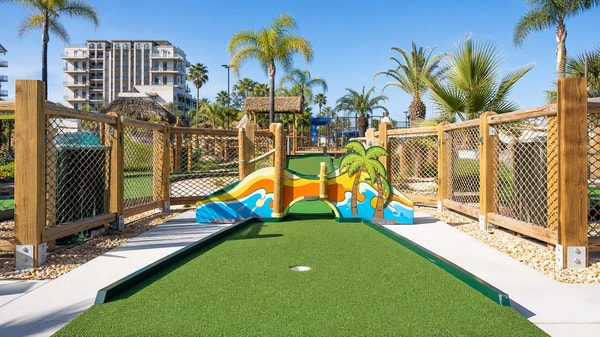
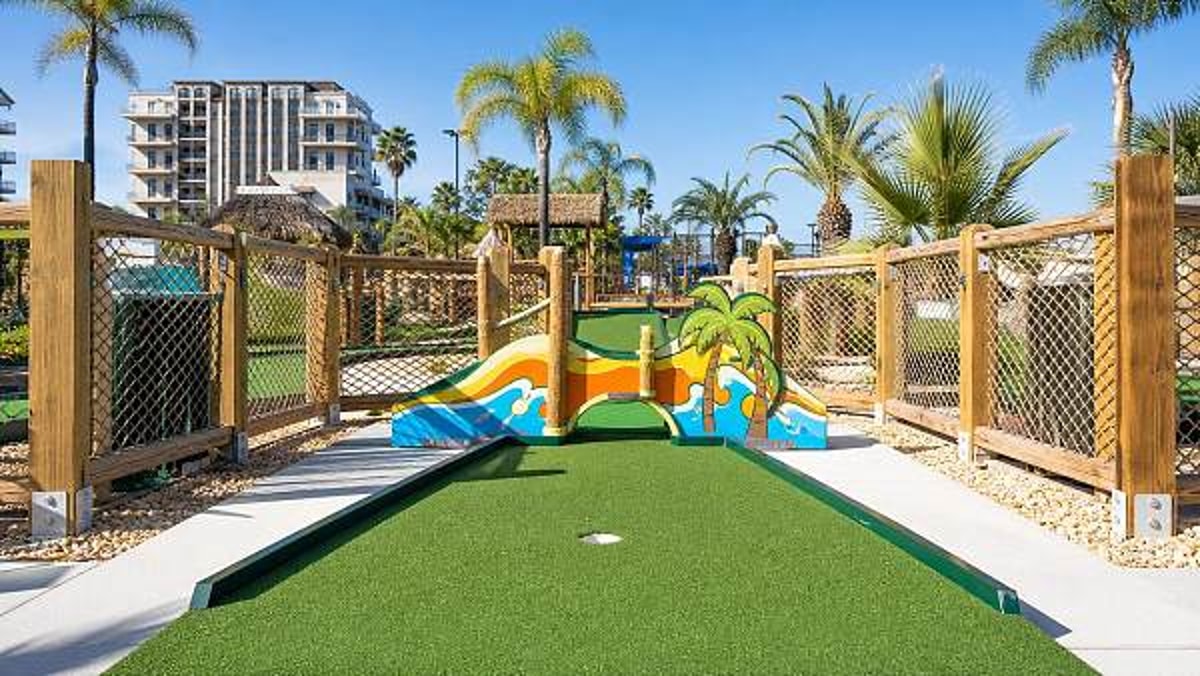
Artificial turf is often the most visibly affected element. On busy courses, heavily used lanes and putting zones may show fiber flattening, seam stress, or color fading within 18 to 36 months. In regions with intense sunlight or poor drainage, the replacement cycle can shorten further, especially if the pile height, backing density, or adhesive system was selected for indoor rather than outdoor use.
The weak points are rarely the center of the lane alone. Edges, cup cutouts, slope transitions, and glued joints tend to fail first. Water trapped under the turf can also accelerate delamination, while sand or rubber contamination can change ball roll consistency and reduce the guest experience.
What buyers should check
- UV-stabilized yarn and fade resistance for 2 to 5 years of outdoor exposure
- Drainage rate and sub-base compatibility
- Seam method, adhesive grade, and edge anchoring detail
- Expected brushing and cleaning frequency, often every 1 to 4 weeks
2. Painted Obstacles and Decorative Features
Obstacles are central to the identity of a mini golf course, but they are also among the most vulnerable categories of mini golf course equipment outdoors. Sculpted props, painted barriers, tunnels, themed figures, and trim panels often degrade faster than buyers expect. Paint chalking, cracking, blistering, and peeling can begin within 6 to 18 months if surface prep and coating layers are insufficient.
Wood-based decorative units are especially vulnerable when end grains, joints, and screw penetrations are not sealed. Fiberglass and resin features typically resist moisture better, but they still suffer from UV fading and impact damage. Once appearance declines, guest perception declines as well, even if the obstacle remains technically usable.
3. Perimeter Edging, Bumpers, and Side Rails
Perimeter edging is a daily-use component that receives repeated ball strikes, foot pressure, cleaning contact, and weather stress. On outdoor courses, side rails made from untreated timber, low-grade composites, or thin-coated metal may warp, chip, rust, or loosen within 1 to 3 years. Once rail alignment shifts, ball behavior changes and course playability becomes inconsistent.
This category is often overlooked during procurement because it appears simple. However, on many layouts, edging runs through 70% to 90% of the course footprint. Even a minor failure rate across long rail sections can create recurring maintenance labor.
The table below outlines which types of mini golf course equipment typically wear faster outdoors and what usually causes the problem.
The key takeaway is that surface-level items usually fail before structural elements. For buyers, that means the visible and interactive parts of mini golf course equipment deserve more specification detail during sourcing, not less.
4. Fasteners, Anchors, and Hidden Hardware
Hardware may be small, but it often determines whether mini golf course equipment remains safe outdoors. Screws, anchor bolts, hinge points, and support brackets can corrode quickly in humid, coastal, or chemically treated environments. A course near salt air may see visible hardware corrosion in less than 12 months if the wrong metal grade is used.
Hidden hardware creates an added risk because deterioration may not be obvious until a rail loosens, a prop shifts, or a panel detaches. Buyers should ask suppliers to identify fastener materials, coating systems, and replacement access points before approving production.
Why Outdoor Conditions Shorten Equipment Life
The outdoor environment affects mini golf course equipment through several overlapping mechanisms. A buyer may focus on rain alone, but in practice, damage usually comes from a combination of UV radiation, thermal expansion, moisture retention, foot traffic, and maintenance methods. Understanding these factors helps separate short-term cosmetic wear from true lifecycle risk.
UV Exposure and Color Breakdown
UV is one of the most underestimated causes of failure. It degrades coatings, weakens plastics, and fades synthetic turf fibers over time. In high-sun climates, south-facing surfaces and top-exposed features may age 20% to 40% faster than shaded or partially protected elements. This is especially important for themed attractions where brand presentation matters as much as functionality.
Water, Drainage, and Freeze-Thaw Cycles
Water rarely damages outdoor mini golf course equipment by simple surface wetting alone. The bigger problem is trapped moisture in joints, under turf, inside hollow components, or around anchor points. In cold regions, repeated freeze-thaw cycles can widen micro-cracks and loosen bonded assemblies over 1 to 2 winters. Poor drainage also increases mold risk and cleaning frequency.
Traffic Load and Operational Wear
A course handling 150 to 300 players on a busy day experiences very different wear from a resort installation with lighter weekday use. Foot traffic compacts sub-bases, shifts infill, scuffs edges, and accelerates the polish or dulling of painted surfaces. If staff move maintenance carts or cleaning tools across the course daily, wear rates increase further.
Common site variables that change wear speed
- Annual sun intensity and shade coverage
- Rainfall volume and surface drainage design
- Player volume per day and peak seasonal concentration
- Distance from coast or exposure to corrosive air
- Cleaning method, chemical use, and inspection frequency
How Buyers Should Evaluate Mini Golf Course Equipment Before Purchase
When comparing suppliers, buyers should avoid selecting mini golf course equipment based on appearance alone. A visually appealing design may still underperform if the supplier cannot explain material thickness, coating build, drainage detailing, or outdoor replacement strategy. A better sourcing process starts with lifecycle questions rather than unit price alone.
Focus on Material Fit, Not Generic Durability Claims
Terms such as weatherproof or outdoor grade are too broad to support procurement decisions. Ask for exact material categories and intended exposure conditions. For example, pressure-treated timber, marine-adjacent hardware choices, UV-stabilized synthetic surfaces, and sealed fiberglass structures all perform differently depending on climate and usage intensity.
A practical review should include at least 4 checkpoints: substrate material, finish system, fastening method, and serviceability. If one of these is missing from supplier documentation, the risk of unplanned maintenance increases.
Request Replacement and Maintenance Planning Up Front
Many operators do not need every component to last equally long. Instead, they need mini golf course equipment that allows predictable replacement. Turf, rails, props, and accessories should be designed so high-wear parts can be swapped in 1 to 3 hours rather than requiring closure of a full hole for multiple days.
This is especially relevant for commercial buyers managing resort uptime, school holiday traffic, or event-driven visitor peaks. Modular replacement planning reduces disruption and makes total ownership cost easier to forecast.
The table below can help information-stage buyers compare the most important sourcing factors for outdoor mini golf course equipment.
For most commercial projects, the supplier that explains replacement logic clearly is often the better long-term partner, even if the initial quote is not the cheapest. Outdoor performance depends as much on serviceability as on materials.
Check the Course as a System, Not as Isolated Parts
Mini golf course equipment should be reviewed as a connected system. A high-quality turf installed over a weak sub-base will still fail early. A durable obstacle mounted with poor drainage or incompatible fasteners will still deteriorate quickly. Buyers should request layout drawings, section details, and component interface information before final approval.
At minimum, ask how the surface, edge, obstacle base, drainage layer, and anchor points work together. These interface zones are where many outdoor failures begin.
Maintenance Priorities and Common Buying Mistakes
Even well-specified mini golf course equipment needs a maintenance plan. The goal is not to eliminate wear but to slow it, detect it early, and replace vulnerable parts before they affect safety or guest satisfaction. For most outdoor sites, a monthly visual review and a quarterly hands-on inspection provide a practical baseline.
High-Value Maintenance Actions
- Brush and clean turf every 2 to 4 weeks in dusty or high-traffic conditions
- Inspect seams, cup edges, and rail joints at least once per month
- Re-seal exposed paint damage before moisture enters the substrate
- Tighten or replace corroded hardware during each quarterly inspection cycle
- Clear drainage points after major rainfall events or every 30 to 60 days
Mistakes That Increase Total Ownership Cost
One common mistake is assuming outdoor-rated mini golf course equipment automatically suits all climates. A dry inland site, a tropical resort, and a coastal attraction do not place the same stress on finishes or hardware. Another mistake is buying themed props without asking how touch-up, repainting, or partial replacement will be handled after 12 or 24 months.
Buyers also underestimate the cost of shutdowns. If one failed component forces a full-hole closure during peak season, the indirect revenue impact can exceed the cost difference between a basic and a better-specified system. That is why lifecycle planning should be part of initial sourcing discussions.
Who Should Pay Closest Attention to Early Wear Risk
This issue matters most for hospitality groups, mixed-use developers, leisure park operators, and procurement teams managing visitor-facing environments where aesthetics affect commercial performance. It is also relevant for distributors and project integrators who need mini golf course equipment that can be supported across multiple geographies with predictable spare-part planning.
For research-stage buyers, the best next step is to build a shortlist based on 3 filters: outdoor material suitability, maintenance transparency, and component replacement ease. Those three criteria often reveal more than a general brochure ever will.
Outdoor mini golf success depends on choosing mini golf course equipment that performs well after installation, not just during the sales process. Turf surfaces, painted obstacles, rails, and hardware typically wear out faster outdoors because they absorb the combined effects of sun, water, traffic, and repeated contact. Buyers who evaluate wear cycles, replacement access, and climate fit early can reduce maintenance surprises and protect the guest experience over the first 2 to 5 years of operation.
If you are comparing suppliers, planning a new attraction, or upgrading an existing course, GCT can help you assess sourcing options with a stronger commercial lens. Contact us to discuss project requirements, request tailored guidance, or explore more solutions for durable outdoor mini golf course equipment.
Search News
Hot Articles
Popular Tags
Need ExpertConsultation?
Connect with our specialized leisureengineering team for procurementstrategies.
Recommended News
 May 07, 2026CCTV5 Broadcasts Key Sports Events on May 7, 2026CCTV5 broadcasts WTT Finals, CBA playoffs & AFC U-17 Women’s qualifiers on May 7, 2026—boosting global demand for FIBA/AFC/ITTF-certified sports equipment.● Theme Park Strategist
 May 07, 2026Snooker World Championship Boosts Chinese Billiards Table ExportsSnooker World Championship boosts Chinese billiards table exports — CE+UKCA-certified slate tables see 37% surge in UK, Germany & Saudi demand.● Theme Park Strategist
 May 07, 2026CPSC Recalls 3 Chinese-Made Kids' Climbing FramesCPSC recalls 3 Chinese-made kids' climbing frames—47,000 units over ASTM F1487-23 failures & pinch hazards. Act now to protect your supply chain.● Theme Park Strategist
 May 07, 2026Inflatable Water Slides Wholesale: Which Features Cut Repair Rates?Inflatable water slides wholesale buyers: discover which features cut repair rates most—commercial PVC, reinforced seams, smart anchoring, matched blowers, and compliant design.● Theme Park Strategist
 May 07, 2026Mini Golf Course Equipment That Wears Out Faster OutdoorsMini golf course equipment wears out faster outdoors due to UV, moisture, and heavy traffic. Discover which parts fail first and how to choose longer-lasting solutions.● Theme Park Strategist
 May 07, 2026Bowling Alley Equipment Upgrades That Improve Lane ReliabilityBowling alley equipment upgrades that improve lane reliability: discover how smarter pinsetters, diagnostics, conditioning, and integration reduce downtime, cut costs, and boost player satisfaction.● Theme Park Strategist
 May 07, 2026Inflatable Obstacle Courses: Setup Mistakes That Hurt Event FlowInflatable obstacle courses can boost event energy, but setup mistakes can ruin flow. Discover the top errors to avoid and keep events safer, faster, and more efficient.● Theme Park Strategist
 May 07, 2026Coin Operated Kiddie Rides That Stop Paying Back Too SoonCoin operated kiddie rides can lose ROI fast when downtime, weak replay value, and poor sourcing add hidden costs. Learn how to choose models that earn longer.● Theme Park Strategist
 May 07, 2026Commercial Bouncy Castles: Why Material Weight Is Not EnoughCommercial bouncy castles are not defined by material weight alone. Learn the key buying checklist for safety, durability, compliance, and smarter commercial sourcing.● Theme Park Strategist
 May 07, 2026Inflatable Water Slides Wholesale: Which Features Cut Repair Rates?Inflatable water slides wholesale buyers: discover which features cut repair rates most—commercial PVC, reinforced seams, smart anchoring, matched blowers, and compliant design.● Theme Park Strategist
 May 07, 2026Mini Golf Course Equipment That Wears Out Faster OutdoorsMini golf course equipment wears out faster outdoors due to UV, moisture, and heavy traffic. Discover which parts fail first and how to choose longer-lasting solutions.● Theme Park Strategist
 May 07, 2026Bowling Alley Equipment Upgrades That Improve Lane ReliabilityBowling alley equipment upgrades that improve lane reliability: discover how smarter pinsetters, diagnostics, conditioning, and integration reduce downtime, cut costs, and boost player satisfaction.● Theme Park Strategist
 May 07, 2026Inflatable Obstacle Courses: Setup Mistakes That Hurt Event FlowInflatable obstacle courses can boost event energy, but setup mistakes can ruin flow. Discover the top errors to avoid and keep events safer, faster, and more efficient.● Theme Park Strategist
 May 07, 2026Coin Operated Kiddie Rides That Stop Paying Back Too SoonCoin operated kiddie rides can lose ROI fast when downtime, weak replay value, and poor sourcing add hidden costs. Learn how to choose models that earn longer.● Theme Park Strategist
 May 07, 2026Commercial Bouncy Castles: Why Material Weight Is Not EnoughCommercial bouncy castles are not defined by material weight alone. Learn the key buying checklist for safety, durability, compliance, and smarter commercial sourcing.● Theme Park Strategist
 May 06, 2026Basketball hoops for school: portable convenience vs fixed stabilityBasketball hoops for school: compare portable convenience and fixed stability to choose safer, smarter, and more cost-effective solutions for campus courts.● Theme Park Strategist
 May 06, 2026Montessori wooden toys and the question of long-term durabilityMontessori wooden toys: discover what really determines long-term durability, safety, and value, and learn how buyers can choose options built for repeated use.● Theme Park Strategist
 May 06, 2026Wholesale ping pong tables for schools: what wears out firstWholesale ping pong tables for schools: learn what wears out first, from casters to locks, and use this buyer-focused guide to cut replacement costs and choose safer, longer-lasting tables.● Theme Park Strategist
 May 06, 2026Gymnastic mats wholesale: thickness claims vs real shock absorptionGymnastic mats wholesale buyers: learn why thickness claims alone can mislead. Compare real shock absorption, foam density, rebound control, and sourcing checks before you buy.● Theme Park Strategist
 May 06, 2026Abacus learning toys still matter when math goes digitalAbacus learning toys still matter in digital math, helping children build number sense, focus, and hands-on problem-solving. See why educators, parents, and buyers still choose them.● Theme Park Strategist
 May 06, 2026Liaoning Tieren Appoints Shin Jeong-won; K-League Training Gear Sourcing Shift PossibleLiaoning Tieren appoints K-League coach Shin Jeong-won — sparking Korean demand for ISO 10993-certified smart athletic wear, especially heart-rate & GPS training vests.● Theme Park Strategist
 May 06, 2026NBA LED Interactive Court System Enters Mass ProductionNBA LED interactive court system enters mass production in Q3 2026 — a breakthrough for smart sports venues, AR fan engagement, and global LED display suppliers.● Theme Park Strategist
 May 06, 2026NBA Adopts New LED Interactive Court Floors in 2026–27 SeasonNBA LED interactive court floors launch in 2026–27: AR fan engagement, real-time stats & certified hardware — game-changing for global sports tech suppliers.● Theme Park Strategist
 May 06, 2026HuaiBA Youth Basketball Arena Adopts Domestic Smart Floor SystemHuaiBA Youth Basketball Arena's domestic smart floor system sets a new benchmark—featuring real-time pressure sensing & acoustic feedback for global sports infrastructure buyers.● Theme Park Strategist