Mandarin Pop Concert Laser Incident Triggers Global IEC 62471 Reassessment
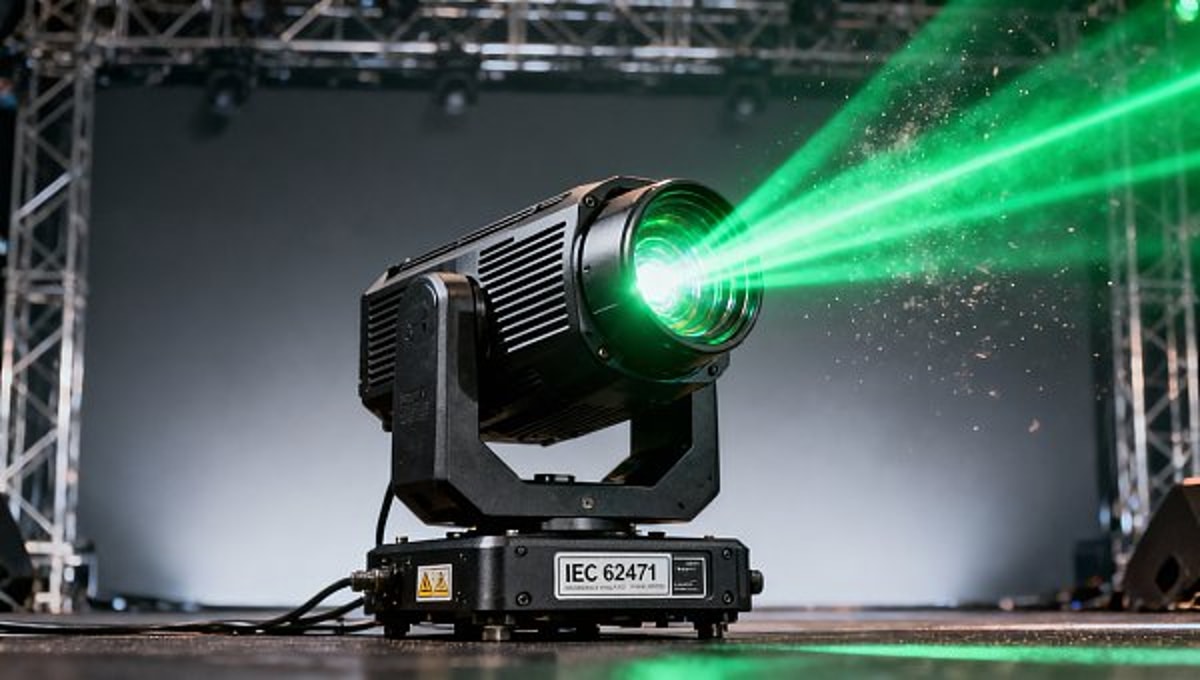
On May 5, 2026, a laser safety incident during Cyndi Wang’s Shenzhen concert prompted an official apology from the organizer and triggered urgent re-evaluation of photobiological safety compliance for stage laser equipment worldwide — with direct implications for laser manufacturers, integration service providers, export-oriented lighting OEMs, and venue technology operators.
Event Overview
On May 5, 2026, during Cyndi Wang’s concert in Shenzhen, uncontrolled laser emissions caused audience discomfort. The organizer issued a public apology on May 6, confirming that the incident resulted from excessive laser power density. The International Electrotechnical Commission (IEC) Secretariat subsequently issued an emergency notice urging global stage laser equipment manufacturers to immediately reassess compliance with IEC 62471:2024 Ed.3. Under this standard, laser products classified as Risk Group 3 (RG3) or higher must incorporate dual-redundant emergency stop mechanisms. Factories in the Pearl River Delta region have reported expedited retesting requests from European and North American system integrators.
Industries Affected
Laser Equipment Manufacturers (OEM/ODM)
Manufacturers supplying stage laser units — particularly those exporting to EU, UK, US, and Australia — are directly affected because IEC 62471:2024 Ed.3 compliance is now being treated as a de facto market access requirement. Non-compliant units risk rejection at customs or disqualification from tender processes for major touring productions.
System Integrators & Rental Houses
Companies integrating lasers into touring rigs or fixed installations face heightened due diligence obligations. With RG3+ devices requiring dual-redundant emergency stops, existing inventory may require retrofitting or documentation upgrades before deployment — delaying bookings and increasing technical validation overhead.
Export-Oriented Lighting Distributors & Trade Agents
Distributors handling laser-based stage lighting across APAC–EU/US trade lanes must now verify updated test reports aligned with IEC 62471:2024 Ed.3. Missing or outdated RG classification data may stall shipments, especially under new EU Product Compliance Gateways scheduled for phased rollout starting Q3 2026.
What Enterprises and Practitioners Should Monitor and Do Now
Track official updates from IEC and national standards bodies
Analysis shows that while IEC 62471:2024 Ed.3 is not yet mandatory under all national regulations, its adoption is accelerating in enforcement contexts — particularly for live-event equipment subject to occupational health and public safety audits. Stakeholders should monitor updates from CENELEC (EU), ANSI (US), and SAC (China) for alignment timelines.
Prioritize retesting for RG3 and RG4 laser modules destined for international markets
Observably, demand for expedited photobiological safety testing has spiked among Pearl River Delta suppliers. Firms should identify high-risk SKUs — especially continuous-wave green/blue lasers above 5 mW output — and initiate third-party verification against the 2024 edition’s revised exposure limits and control architecture requirements.
Distinguish between regulatory signals and operational implementation
Current more appropriately reflects a pre-enforcement compliance signal than a binding mandate. However, major integrators (e.g., TAIT, PRG, Bandit Lites) have already begun requiring IEC 62471:2024 Ed.3-certified documentation in RFPs — meaning commercial readiness precedes formal regulation in practice.
Prepare documentation and supply chain communication protocols
Manufacturers and exporters should update product datasheets, user manuals, and declaration of conformity (DoC) templates to explicitly reference IEC 62471:2024 Ed.3. Internal cross-functional alignment — between engineering, QA, logistics, and sales — is essential to avoid shipment holds or customer disputes over RG classification claims.
Editorial Perspective / Industry Observation
This incident is better understood as a catalyst than a standalone event. Analysis shows it has accelerated industry-wide attention toward photobiological safety as a non-negotiable component of stage technology procurement — not just a technical footnote. From an industry perspective, the shift signals growing convergence between entertainment technology standards and occupational/public safety frameworks. It does not yet represent a finalized regulatory outcome, but rather a clear inflection point where voluntary best practice is rapidly becoming contractual and commercial expectation.
Current more appropriately reflects an early-phase market recalibration — one driven by liability awareness, insurer scrutiny, and integrator risk mitigation — rather than top-down legislative action. Continued observation is warranted for how national regulators respond in the next 6–12 months, particularly regarding enforcement thresholds and retroactivity for installed equipment.
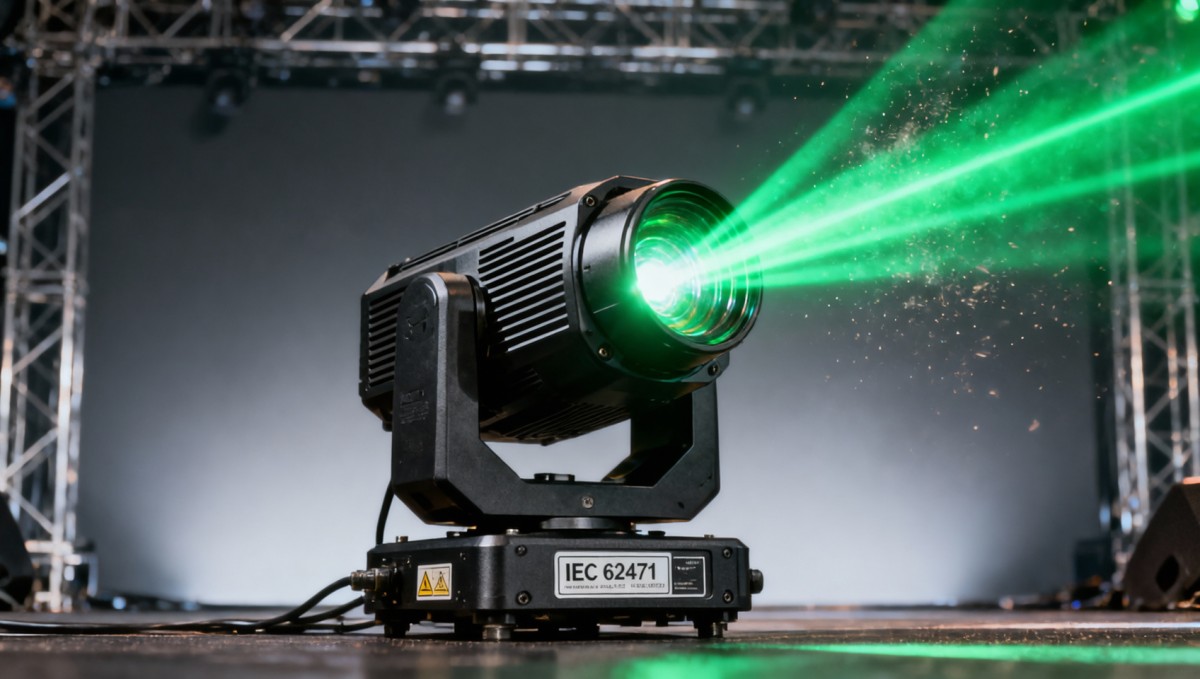
Conclusion: This incident underscores that photobiological safety compliance for laser-based stage equipment is transitioning from a niche technical specification to a core business continuity factor. For stakeholders, the priority is not speculation about future rules — but verifying current product classifications, updating documentation, and aligning supply chain communications with the emerging 2024 edition benchmark.
Source Attribution:
• Official organizer apology statement (May 6, 2026)
• IEC Secretariat emergency notice (distributed May 6, 2026)
• Verified reports from Pearl River Delta laser manufacturing clusters (as of May 7, 2026)
Note: Ongoing developments — including national regulatory responses and enforcement guidance — remain under observation.
Search News
Hot Articles
Popular Tags
Need ExpertConsultation?
Connect with our specialized leisureengineering team for procurementstrategies.
Recommended News
 May 07, 2026Mandarin Pop Concert Laser Incident Triggers Global IEC 62471 ReassessmentIEC 62471 reassessment triggered by Mandarin pop concert laser incident—urgent compliance guidance for laser manufacturers, integrators & exporters.● Pro Audio Engineer
 May 07, 2026Sweden Beats China in Table Tennis: EU Clubs Order Chinese AI Ball MachinesSweden beats China in table tennis—triggering EU club orders for Chinese AI ball machines. Discover how CE-compliant, 230V smart trainers are reshaping elite training.● Pro Audio Engineer
 May 05, 2026IOC Announces 2025–26 Olympic Case Study Theme: 'Accompanying Young Elite Athletes'IOC's 2025–26 Olympic Case Study theme 'Accompanying Young Elite Athletes' spotlights AI coaching, wearable biometrics & mental health tech—key opportunities for sports tech and digital health innovators.● Pro Audio Engineer
 May 04, 2026IOC Announces 2025/26 Case Study Theme: 'Supporting Young Elite Athletes'IOC's 2025/26 Case Study Theme 'Supporting Young Elite Athletes' spotlights AI coaching & remote monitoring—key for sports tech exporters, localization partners & R&D collaborators.● Pro Audio Engineer
 May 03, 2026Premier League Fan Screen Export: FCC/ISED Dual Testing DelayPremier League Fan Screen Export: FCC/ISED dual testing delay hits Wi-Fi 6E + UWB stadium displays—learn how smart hardware exporters can navigate compliance friction before next big match.● Pro Audio Engineer
 May 03, 2026Zhongshan Smart Scoreboard Export: SASO Energy Testing UpdateZhongshan smart scoreboard export update: SASO energy testing now requires ≤0.5W standby power — critical for sports electronics exporters targeting Saudi Arabia & GCC markets.● Pro Audio Engineer
 May 03, 2026Yunnan Yukuin vs. Beijing Guoan: LED Stadium Systems Demand EU Re-TestingLED stadium systems demand EU re-testing after Yunnan Yukuin vs. Beijing Guoan match—urgent CE+UKCA & IP66 condensation data needed for export compliance.● Pro Audio Engineer
 May 02, 2026London Table Tennis World Championships: Smart Table Delivery Window Tightens to 10 Working DaysLondon Table Tennis World Championships: Smart table import window tightens to 10 working days—act now to meet UKCA & BS EN 14904:2021 deadlines.● Pro Audio Engineer
 May 01, 2026FIFA Clears Iran for 2026 World Cup: Demand Rises for Multilingual Fan Screens in US, Mexico, CanadaMultilingual fan screens surge as FIFA clears Iran for 2026 World Cup—URGENT demand for Persian-enabled, FCC/UL-certified LED displays in US, Mexico, Canada fan zones.● Pro Audio Engineer
 May 01, 2026China Men's Basketball Warm-ups in Hangzhou Drive LED Court System Export DemandChina Men's Basketball Hangzhou warm-ups fuel global demand for FIBA-certified LED court systems—urgent export opportunities for compliant suppliers in SEA & Eastern Europe.● Pro Audio Engineer
 Apr 30, 2026China's LED Scoreboard Passes BWF 2026 Standards at Thomas CupChina's LED scoreboard meets BWF 2026 standards — certified for Thomas Cup, multilingual display & anti-glare tech. Discover what it means for your venue.● Pro Audio Engineer
 Apr 30, 2026Soundproofing materials that work better than thicker wallsSoundproofing materials that outperform thicker walls: compare damping, absorption, and decoupling options to cut noise, save space, and improve commercial acoustic results.● Pro Audio Engineer
 Apr 30, 2026How to compare microphone systems for different room sizesMicrophone systems compared by room size: learn how to evaluate pickup, coverage, DSP, and RF stability for small, medium, and large spaces to choose smarter, lower-risk solutions.● Pro Audio Engineer
 Apr 30, 2026Live sound equipment failures that usually start at setupLive sound equipment failures often begin at setup. Learn the early warning signs, key risk points, and smart sourcing tips to prevent costly audio issues.● Pro Audio Engineer
 Apr 30, 2026Recording studio gear upgrades that matter more than price tagsRecording studio gear upgrades that matter most aren’t always expensive. Learn how acoustics, monitoring, interfaces, and workflow tools deliver better sound, efficiency, and ROI.● Pro Audio Engineer
 Apr 30, 2026Commercial sound systems and the hidden cost of poor coverageCommercial sound systems with poor coverage can raise hidden costs, hurt clarity, and damage customer experience. Learn how to evaluate smarter solutions before buying.● Pro Audio Engineer
 Apr 29, 2026Kenya Marathon Record Break Sparks Demand for Racing Sensor ChipsRacing sensor chips surge in demand after Kenya's marathon record—RFID+UWB fusion modules with IP68, –20°C–60°C & ISO/IEC 18000-63 compliance now sought globally.● Pro Audio Engineer
 Apr 28, 2026Kenyan Marathon WR Break Drives Demand for Timing Chips & Track SensorsTiming chips & track sensors surge after Kenyan marathon WR—discover how UWB+BLE timing tech, EN compliance, and −20°C sensor resilience drive global demand.● Pro Audio Engineer
 Apr 27, 2026BWF Adopts 15-Point Scoring System from Jan 2027BWF 15-point scoring system (2027) drives urgent firmware, UI & AI replay upgrades for LED displays, broadcast tech & venue integrators—act now.● Pro Audio Engineer
 Apr 26, 2026BYD Confirms F1 Entry Talks: China’s Racing Electronics & Carbon Fiber Export Window OpensBYD’s F1 entry talks open China’s racing electronics & carbon fiber export window—FIA-certified sensors, composites & data systems in demand.● Pro Audio Engineer
 Apr 25, 2026Fan Zhendong Promotes Chinese AI Ping-Pong Table in Silicon ValleyAI ping-pong table by Fan Zhendong & MLTT debuts in Silicon Valley—smart sports hardware meets edge AI, radar tracking & coaching analytics. Discover the future of table tennis tech.● Pro Audio Engineer
 Apr 24, 2026FIFA Adopts Chinese Mini-LED Displays for 2026 World Cup VAR SystemFIFA adopts Chinese Mini-LED displays for 2026 World Cup VAR—ultra-low latency (≤3ms), 1500+ nits, FIFA TMS 4.2 certified. Game-changing for sports tech suppliers.● Pro Audio Engineer
 Apr 24, 2026Fan Zhendong Visits Silicon Valley as MLTT Investor, AI Ping-Pong Tech Draws US InterestAI ping-pong tech: Fan Zhendong’s MLTT-backed smart table & coaching system draws US youth training interest—edge AI, radar sensing, pilot orders inbound.● Pro Audio Engineer
 Apr 24, 2026FIBA Women's World Cup 2026 Draw: China in 'Group of Death', Lighting & Timing Systems Export Window OpensFIBA Women's World Cup 2026 draw sparks global demand for FIBA Level 3–certified LED lighting & timing systems—act now to qualify.● Pro Audio Engineer