London Table Tennis World Championships: Smart Table Delivery Window Tightens to 10 Working Days
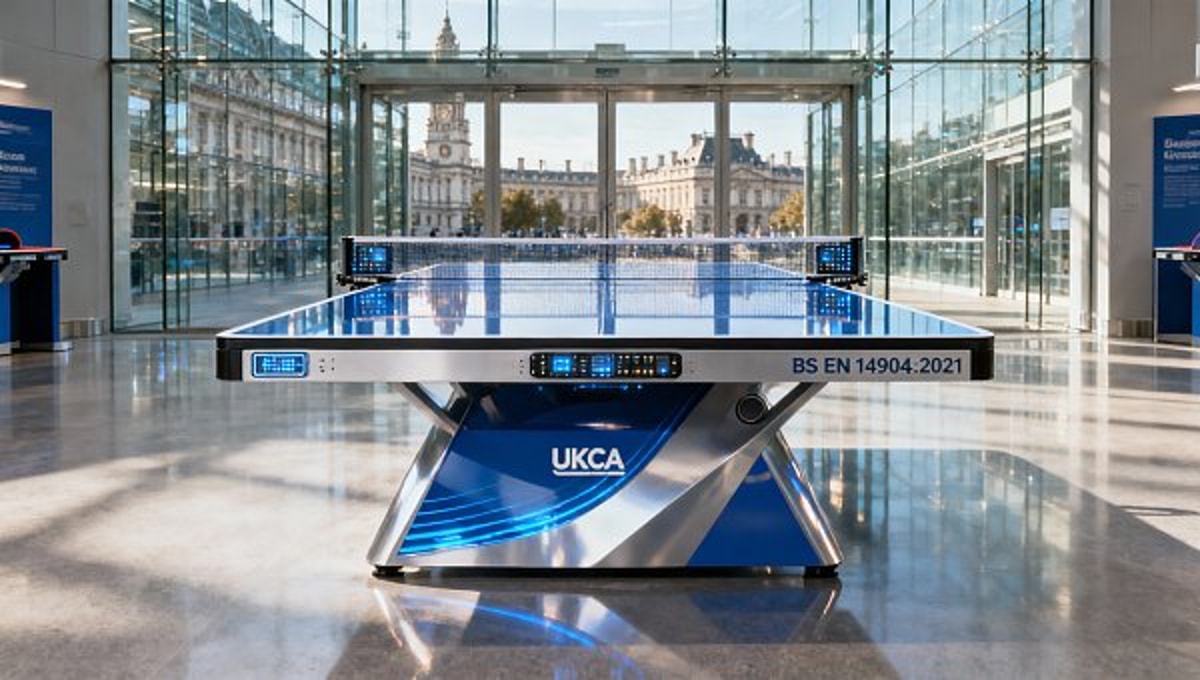
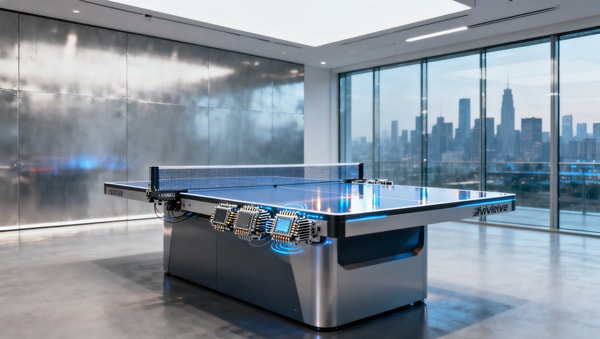
With the London Table Tennis World Championships set to open in May 2026, a recent UK customs update—effective 29 April 2026—has significantly compressed the import and delivery timeline for BS EN 14904:2021–compliant smart tables. This development directly affects exporters, logistics providers, and exhibition suppliers serving the sports equipment and smart hardware sectors.
Event Overview
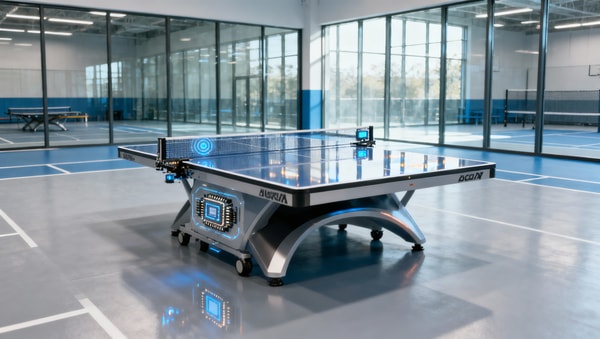
On 29 April 2026, the UK’s customs authority issued updated import requirements mandating that all smart table imports complying with BS EN 14904:2021 must be accompanied by a third-party test report covering electromagnetic compatibility (EMC) and mechanical safety. According to reports from major Chinese suppliers, UKCA certification now takes 12–14 working days, and combined with constrained maritime container availability, the effective delivery window for orders bound for the May 2026 London event has narrowed to just 10 working days. Some clients have begun shifting to air freight as an emergency measure.
Impact on Specific Industry Segments
Direct Exporters & Trade Enterprises
These firms face immediate pressure on lead time and documentation compliance. The requirement for pre-submitted third-party test reports—and the extended UKCA certification cycle—means orders placed after mid-April 2026 are unlikely to clear customs in time for May exhibition setup. Delays risk missed show deadlines, contractual penalties, or loss of shelf space at venue-level retail zones.
Manufacturers & Smart Hardware Producers
Producers supplying smart tables must now ensure their existing test reports explicitly cover both EMC and mechanical safety per BS EN 14904:2021—not just general safety standards. Retesting or report supplementation may be needed if prior certifications omit either domain. Production scheduling must also accommodate the 12–14-day UKCA turnaround before shipment.
Logistics & Freight Forwarding Providers
Sea freight capacity constraints compound the time crunch. Forwarders handling smart table consignments must verify UKCA status and test report completeness *before* booking, not upon arrival. Air freight is being activated as a contingency—but at substantially higher cost and weight restrictions, affecting unit economics for bulk shipments.
Exhibition Service & Event Support Firms
Firms coordinating on-site assembly, demo unit deployment, or venue-level inventory management must now align closely with supplier clearance timelines. A 10-working-day window leaves minimal margin for customs hold-ups, document corrections, or port-side inspections—increasing reliance on pre-cleared stock or bonded warehouse staging near London.
What Relevant Enterprises Should Monitor and Do Now
Track official UKCA guidance updates and border enforcement patterns
While the 29 April 2026 notice is confirmed, enforcement consistency—especially regarding report format, lab accreditation scope (e.g., whether non-UKAS labs are accepted), and inspection frequency—is still emerging. Monitoring HMRC and UKAS bulletins over the next 7–10 days is critical.
Prioritise documentation readiness over production speed
For any order targeting London delivery in May 2026, third-party test report submission to a UKCA-accredited body must occur *before* manufacturing completion—not after. Suppliers should confirm report acceptance criteria with their chosen testing lab *now*, not during shipping prep.
Differentiate between regulatory signal and operational reality
The 10-working-day window reflects current bottlenecks (certification + shipping), not a permanent rule change. It signals tightening oversight—not a new standard. Firms should avoid long-term strategic shifts (e.g., relocating certification labs) based solely on this short-term compression.
Activate dual-mode logistics planning immediately
For orders already in production or scheduled for early May dispatch, confirm air freight feasibility—including dimensional weight limits for assembled smart tables—and secure rate quotes with at least two carriers. Reserve air cargo capacity where possible; do not wait for sea freight delays to materialise.
Editorial Perspective / Industry Observation
Observably, this update functions less as a standalone policy shift and more as a stress test of current UK import infrastructure for connected sports hardware. Analysis shows the convergence of three independent pressures—tighter conformity assessment, certification capacity strain, and maritime supply chain volatility—rather than a deliberate new barrier. From an industry perspective, it highlights how legacy standards like BS EN 14904:2021 are gaining renewed enforcement weight in smart-device contexts, even outside traditional electronics sectors. Current monitoring focus should remain on whether similar documentation mandates emerge for other sports tech categories (e.g., smart flooring, sensor-integrated nets) ahead of major EU/UK events.
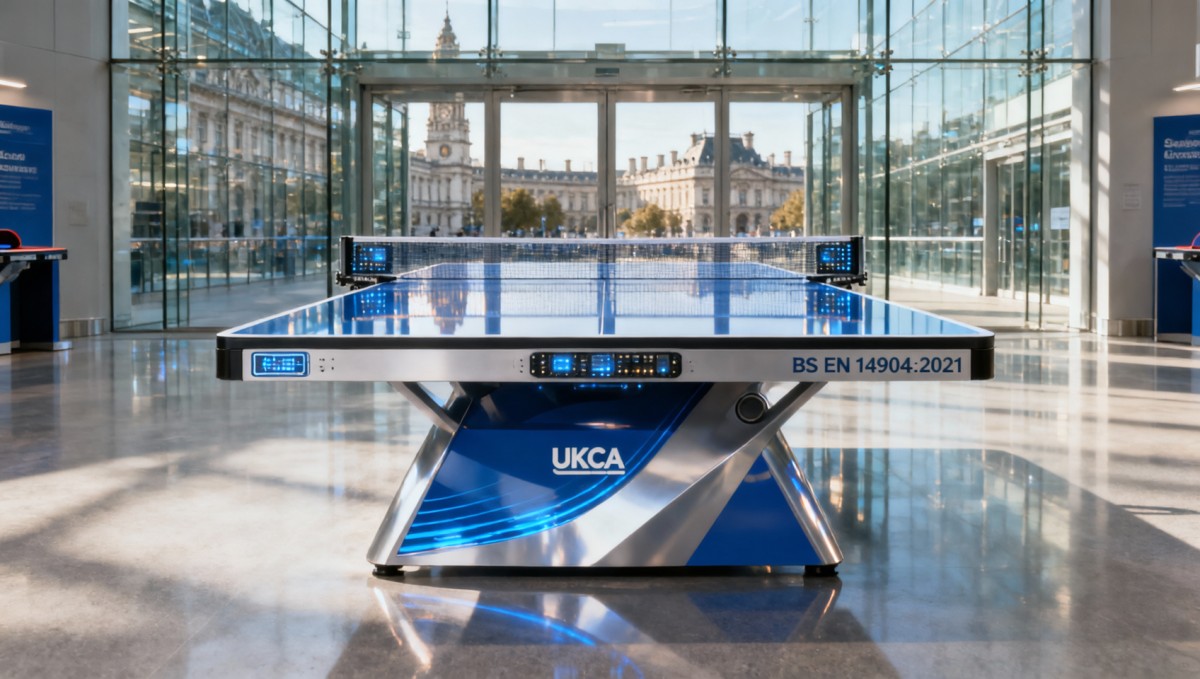
It remains appropriate to interpret this development as a time-bound operational challenge—not a structural market barrier—for smart table exporters. Its significance lies not in novelty, but in the clarity it provides: UK market access for regulated sports hardware now demands integrated compliance planning across testing, certification, and transport—not sequential execution.
Source: UK customs notification effective 29 April 2026; supplier communications verified via industry trade channels (no attribution to individual firms). Ongoing observation required for HMRC enforcement practice and UKAS lab capacity announcements.
Search News
Hot Articles
- Watch OEM & SmartwatchesZheng Qinwen’s Madrid Exit Delays EU Orders for Smart Tennis WearablesMay 02, 2026
- Indoor Playground2026 Jiujiang Guokong Cup Tennis Open Spurs ASEAN Demand for AI Ball MachinesMay 02, 2026
- Stationery & UniformsKenya Marathon Record Break Sparks Carbon-Plate Shoe Export Surge to AfricaMay 02, 2026
Popular Tags
Need ExpertConsultation?
Connect with our specialized leisureengineering team for procurementstrategies.
Recommended News
 May 02, 2026London Table Tennis World Championships: Smart Table Delivery Window Tightens to 10 Working DaysLondon Table Tennis World Championships: Smart table import window tightens to 10 working days—act now to meet UKCA & BS EN 14904:2021 deadlines.● Pro Audio Engineer
 May 01, 2026FIFA Clears Iran for 2026 World Cup: Demand Rises for Multilingual Fan Screens in US, Mexico, CanadaMultilingual fan screens surge as FIFA clears Iran for 2026 World Cup—URGENT demand for Persian-enabled, FCC/UL-certified LED displays in US, Mexico, Canada fan zones.● Pro Audio Engineer
 May 01, 2026China Men's Basketball Warm-ups in Hangzhou Drive LED Court System Export DemandChina Men's Basketball Hangzhou warm-ups fuel global demand for FIBA-certified LED court systems—urgent export opportunities for compliant suppliers in SEA & Eastern Europe.● Pro Audio Engineer
 Apr 30, 2026China's LED Scoreboard Passes BWF 2026 Standards at Thomas CupChina's LED scoreboard meets BWF 2026 standards — certified for Thomas Cup, multilingual display & anti-glare tech. Discover what it means for your venue.● Pro Audio Engineer
 Apr 30, 2026Soundproofing materials that work better than thicker wallsSoundproofing materials that outperform thicker walls: compare damping, absorption, and decoupling options to cut noise, save space, and improve commercial acoustic results.● Pro Audio Engineer
 Apr 30, 2026How to compare microphone systems for different room sizesMicrophone systems compared by room size: learn how to evaluate pickup, coverage, DSP, and RF stability for small, medium, and large spaces to choose smarter, lower-risk solutions.● Pro Audio Engineer
 Apr 30, 2026Live sound equipment failures that usually start at setupLive sound equipment failures often begin at setup. Learn the early warning signs, key risk points, and smart sourcing tips to prevent costly audio issues.● Pro Audio Engineer
 Apr 30, 2026Recording studio gear upgrades that matter more than price tagsRecording studio gear upgrades that matter most aren’t always expensive. Learn how acoustics, monitoring, interfaces, and workflow tools deliver better sound, efficiency, and ROI.● Pro Audio Engineer
 Apr 30, 2026Commercial sound systems and the hidden cost of poor coverageCommercial sound systems with poor coverage can raise hidden costs, hurt clarity, and damage customer experience. Learn how to evaluate smarter solutions before buying.● Pro Audio Engineer
 Apr 29, 2026Kenya Marathon Record Break Sparks Demand for Racing Sensor ChipsRacing sensor chips surge in demand after Kenya's marathon record—RFID+UWB fusion modules with IP68, –20°C–60°C & ISO/IEC 18000-63 compliance now sought globally.● Pro Audio Engineer
 Apr 28, 2026Kenyan Marathon WR Break Drives Demand for Timing Chips & Track SensorsTiming chips & track sensors surge after Kenyan marathon WR—discover how UWB+BLE timing tech, EN compliance, and −20°C sensor resilience drive global demand.● Pro Audio Engineer
 Apr 27, 2026BWF Adopts 15-Point Scoring System from Jan 2027BWF 15-point scoring system (2027) drives urgent firmware, UI & AI replay upgrades for LED displays, broadcast tech & venue integrators—act now.● Pro Audio Engineer
 Apr 26, 2026BYD Confirms F1 Entry Talks: China’s Racing Electronics & Carbon Fiber Export Window OpensBYD’s F1 entry talks open China’s racing electronics & carbon fiber export window—FIA-certified sensors, composites & data systems in demand.● Pro Audio Engineer
 Apr 25, 2026Fan Zhendong Promotes Chinese AI Ping-Pong Table in Silicon ValleyAI ping-pong table by Fan Zhendong & MLTT debuts in Silicon Valley—smart sports hardware meets edge AI, radar tracking & coaching analytics. Discover the future of table tennis tech.● Pro Audio Engineer
 Apr 24, 2026FIFA Adopts Chinese Mini-LED Displays for 2026 World Cup VAR SystemFIFA adopts Chinese Mini-LED displays for 2026 World Cup VAR—ultra-low latency (≤3ms), 1500+ nits, FIFA TMS 4.2 certified. Game-changing for sports tech suppliers.● Pro Audio Engineer
 Apr 24, 2026Fan Zhendong Visits Silicon Valley as MLTT Investor, AI Ping-Pong Tech Draws US InterestAI ping-pong tech: Fan Zhendong’s MLTT-backed smart table & coaching system draws US youth training interest—edge AI, radar sensing, pilot orders inbound.● Pro Audio Engineer
 Apr 24, 2026FIBA Women's World Cup 2026 Draw: China in 'Group of Death', Lighting & Timing Systems Export Window OpensFIBA Women's World Cup 2026 draw sparks global demand for FIBA Level 3–certified LED lighting & timing systems—act now to qualify.● Pro Audio Engineer
 Apr 23, 2026China Upgrades Security Compliance for International Sports EventsChina mandates ISO 22301 business continuity planning for venues hosting international sports events—key for stadium tech, ops, and compliance providers.● Pro Audio Engineer
 Apr 22, 2026China's UWB Timing System Gains ITU Certification at Haiwan EventChina's UWB timing system wins ITU-T Y.3506 certification—key for sports tech exporters targeting GCC & SADC stadium tenders.● Pro Audio Engineer
 Apr 24, 2026Music Production Tools That Save Setup TimeMusic production tools that save setup time help venues and studios deploy faster. Learn smart sourcing for hospitality procurement, hotel sofas, and playground planning.● Pro Audio Engineer
 Apr 24, 2026Best Music Production Tools for Small StudiosMusic production tools for small studios: compare scalable setups, sourcing tips, and smart procurement for hospitality procurement, hotel room furniture, and playground planning projects.● Pro Audio Engineer
 Apr 24, 2026How to Choose Music Production Tools in 2026Music production tools in 2026: learn how to compare workflow, scalability, and supplier reliability for venues, hospitality procurement, and entertainment projects with confidence.● Pro Audio Engineer
 Apr 23, 2026Best Soundproofing Materials for VenuesBest soundproofing materials for venues: compare solutions for hotel beds, custom furniture, catering equipment, instrument cables, playground structures, and theme park rides to improve comfort, compliance, and sourcing efficiency.● Pro Audio Engineer
 Apr 22, 2026Do Soundproofing Materials Really WorkSoundproofing materials really work when matched to hotels, leisure park venues, and pro audio needs. Explore practical solutions for hotel beds, custom furniture, catering equipment, theme park rides, and inclusive playground projects.● Pro Audio Engineer