China's LED Scoreboard Passes BWF 2026 Standards at Thomas Cup
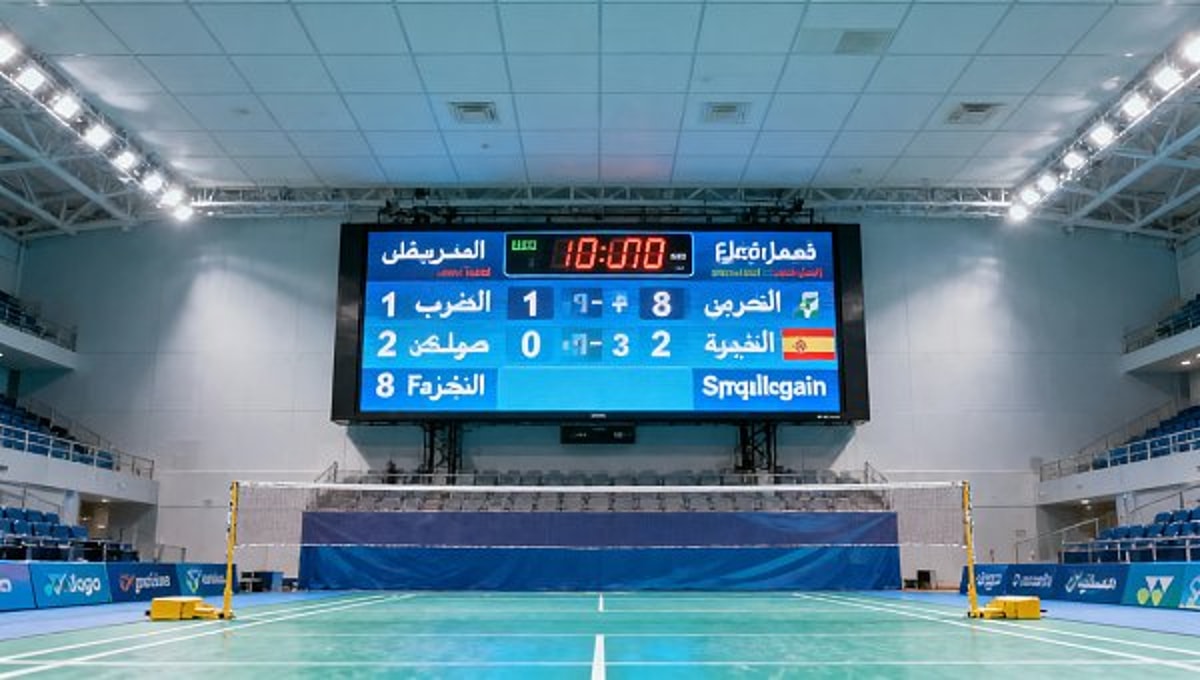
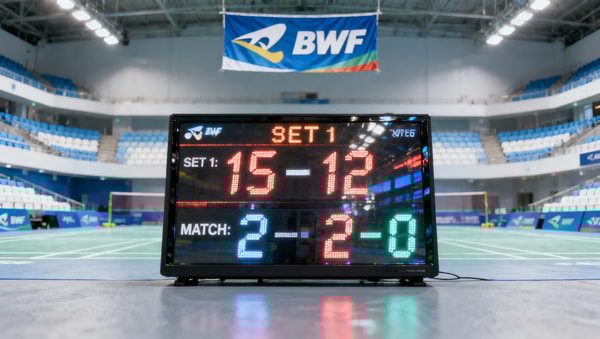
On April 28, 2026, during the Thomas Cup group stage match between China and Canada, a Suzhou-based manufacturer’s LED timing scoreboard — compliant with the Badminton World Federation’s (BWF) newly enforced Competition Equipment Technical Guidelines 2026 — was officially recommended by the tournament organizing committee. This development signals emerging demand shifts for commercial badminton venue equipment suppliers, particularly those serving international-standard facilities in Southeast Asia and Latin America.
Event Overview
On April 28, 2026, during the Thomas Cup group stage match between China and Canada, an LED timing scoreboard supplied by a Suzhou enterprise was deployed at the venue. The device supported real-time multilingual score display (including Arabic, French, and Spanish) and met Clause 4.2 of the BWF’s Competition Equipment Technical Guidelines 2026, covering anti-glare performance and low-blue-light emission requirements. The BWF issued a written recommendation for the product and notified its member national associations’ procurement departments to prioritize suppliers whose LED displays hold certification under this guideline.
Industries Affected
Direct Exporters of Sports Venue LED Displays
These enterprises are directly impacted because BWF’s recommendation functions as a de facto technical prequalification for public tenders in affiliated national badminton federations. Influence manifests in tighter compliance requirements for new orders — especially for upcoming venue construction projects in Southeast Asia and Latin America scheduled for H2 2026.
LED Module and Optical Component Suppliers
Suppliers providing core subcomponents (e.g., anti-glare diffusers, low-blue-light LED chips, or multilingual firmware modules) face increased demand for traceable, certified parts. Impact is visible in tighter delivery timelines and rising requests for third-party test reports aligned with BWF Clause 4.2 specifications.
OEM/ODM Manufacturers Serving Global Brand Partners
OEMs and ODMs producing under white-label arrangements must now verify whether their current designs meet the updated optical and software requirements. Influence includes potential revalidation cycles for existing product lines and revised documentation protocols for firmware localization and photometric testing.
Distribution and Certification Support Providers
Regional distributors and conformity assessment service providers (e.g., those offering BWF-aligned testing or CE/IEC marking support) may see heightened inquiry volumes related to Clause 4.2 verification. Impact centers on expanded service scope — particularly around language-pack validation and glare measurement under standardized ambient lighting conditions.
What Enterprises and Practitioners Should Focus On Now
Monitor official BWF communications and national federation procurement notices
The BWF notification is advisory, not binding. Enterprises should track whether individual member associations (e.g., Badminton Association of Malaysia, Federación Mexicana de Bádminton) issue formal tender specifications referencing Clause 4.2 — and whether they require full test reports versus self-declaration.
Verify alignment of current product documentation with Clause 4.2’s two key criteria
Specifically: (1) photometric test data confirming luminance uniformity and glare index (UGR ≤ 19) under 300–500 lux ambient light; and (2) firmware logs or UI screenshots demonstrating stable Arabic/French/Spanish rendering without character truncation or encoding errors.
Distinguish between policy signal and commercial traction
While the BWF recommendation elevates visibility, no volume-order data or contract awards have been publicly disclosed. Current impact remains procedural — affecting bid eligibility — rather than immediate revenue generation.
Prepare localized technical dossiers for priority markets
For Southeast Asian and Latin American procurement cycles expected in late 2026, firms should compile translated test reports (EN/ES/TH/VI), bilingual user manuals, and firmware update logs — all traceable to certified labs named in BWF Annex A of the 2026 Guidelines.
Editorial Observation / Industry Perspective
Observably, this event reflects a tightening of technical gatekeeping in international sports infrastructure procurement — shifting from functional adequacy to standardized, auditable compliance. Analysis shows it functions less as an immediate market win and more as a formalized benchmarking milestone: the first publicly documented case of BWF applying Clause 4.2 in live tournament conditions. From an industry standpoint, it signals that equipment certification is evolving from optional branding advantage to mandatory bid prerequisite — especially where multilateral funding or federation-backed construction programs are involved. Continued attention is warranted not for near-term sales uplift, but for how national federations operationalize the recommendation into tender language over Q3–Q4 2026.
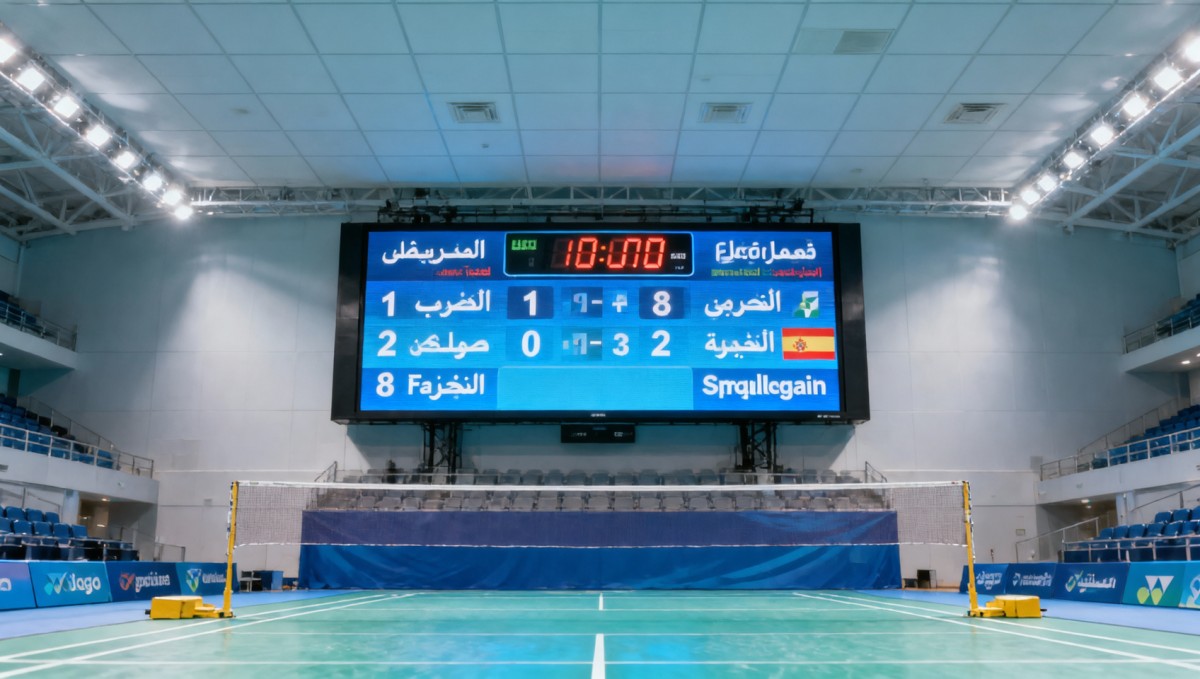
In summary, the Suzhou LED scoreboard’s recognition at the 2026 Thomas Cup marks a procedural inflection point — not a commercial tipping point. It confirms that BWF’s 2026 technical guidelines are entering active enforcement, yet actual procurement outcomes remain contingent on downstream adoption by national bodies. For industry participants, this is best understood as a calibration signal: early alignment with Clause 4.2 strengthens bid readiness, but does not guarantee award.
Source: Official BWF Tournament Bulletin (April 28, 2026); Public statement issued by Thomas Cup Organizing Committee; Reference to Clause 4.2 of BWF Competition Equipment Technical Guidelines 2026. Note: National federation-level tender implementation remains under observation and has not yet been confirmed in public procurement databases.
Search News
Hot Articles
Popular Tags
Need ExpertConsultation?
Connect with our specialized leisureengineering team for procurementstrategies.
Recommended News
 Apr 30, 2026China's LED Scoreboard Passes BWF 2026 Standards at Thomas CupChina's LED scoreboard meets BWF 2026 standards — certified for Thomas Cup, multilingual display & anti-glare tech. Discover what it means for your venue.● Pro Audio Engineer
 Apr 30, 2026Soundproofing materials that work better than thicker wallsSoundproofing materials that outperform thicker walls: compare damping, absorption, and decoupling options to cut noise, save space, and improve commercial acoustic results.● Pro Audio Engineer
 Apr 30, 2026How to compare microphone systems for different room sizesMicrophone systems compared by room size: learn how to evaluate pickup, coverage, DSP, and RF stability for small, medium, and large spaces to choose smarter, lower-risk solutions.● Pro Audio Engineer
 Apr 30, 2026Live sound equipment failures that usually start at setupLive sound equipment failures often begin at setup. Learn the early warning signs, key risk points, and smart sourcing tips to prevent costly audio issues.● Pro Audio Engineer
 Apr 30, 2026Recording studio gear upgrades that matter more than price tagsRecording studio gear upgrades that matter most aren’t always expensive. Learn how acoustics, monitoring, interfaces, and workflow tools deliver better sound, efficiency, and ROI.● Pro Audio Engineer
 Apr 30, 2026Commercial sound systems and the hidden cost of poor coverageCommercial sound systems with poor coverage can raise hidden costs, hurt clarity, and damage customer experience. Learn how to evaluate smarter solutions before buying.● Pro Audio Engineer
 Apr 29, 2026Kenya Marathon Record Break Sparks Demand for Racing Sensor ChipsRacing sensor chips surge in demand after Kenya's marathon record—RFID+UWB fusion modules with IP68, –20°C–60°C & ISO/IEC 18000-63 compliance now sought globally.● Pro Audio Engineer
 Apr 28, 2026Kenyan Marathon WR Break Drives Demand for Timing Chips & Track SensorsTiming chips & track sensors surge after Kenyan marathon WR—discover how UWB+BLE timing tech, EN compliance, and −20°C sensor resilience drive global demand.● Pro Audio Engineer
 Apr 27, 2026BWF Adopts 15-Point Scoring System from Jan 2027BWF 15-point scoring system (2027) drives urgent firmware, UI & AI replay upgrades for LED displays, broadcast tech & venue integrators—act now.● Pro Audio Engineer
 Apr 26, 2026BYD Confirms F1 Entry Talks: China’s Racing Electronics & Carbon Fiber Export Window OpensBYD’s F1 entry talks open China’s racing electronics & carbon fiber export window—FIA-certified sensors, composites & data systems in demand.● Pro Audio Engineer
 Apr 25, 2026Fan Zhendong Promotes Chinese AI Ping-Pong Table in Silicon ValleyAI ping-pong table by Fan Zhendong & MLTT debuts in Silicon Valley—smart sports hardware meets edge AI, radar tracking & coaching analytics. Discover the future of table tennis tech.● Pro Audio Engineer
 Apr 24, 2026FIFA Adopts Chinese Mini-LED Displays for 2026 World Cup VAR SystemFIFA adopts Chinese Mini-LED displays for 2026 World Cup VAR—ultra-low latency (≤3ms), 1500+ nits, FIFA TMS 4.2 certified. Game-changing for sports tech suppliers.● Pro Audio Engineer
 Apr 24, 2026Fan Zhendong Visits Silicon Valley as MLTT Investor, AI Ping-Pong Tech Draws US InterestAI ping-pong tech: Fan Zhendong’s MLTT-backed smart table & coaching system draws US youth training interest—edge AI, radar sensing, pilot orders inbound.● Pro Audio Engineer
 Apr 24, 2026FIBA Women's World Cup 2026 Draw: China in 'Group of Death', Lighting & Timing Systems Export Window OpensFIBA Women's World Cup 2026 draw sparks global demand for FIBA Level 3–certified LED lighting & timing systems—act now to qualify.● Pro Audio Engineer
 Apr 23, 2026China Upgrades Security Compliance for International Sports EventsChina mandates ISO 22301 business continuity planning for venues hosting international sports events—key for stadium tech, ops, and compliance providers.● Pro Audio Engineer
 Apr 22, 2026China's UWB Timing System Gains ITU Certification at Haiwan EventChina's UWB timing system wins ITU-T Y.3506 certification—key for sports tech exporters targeting GCC & SADC stadium tenders.● Pro Audio Engineer
 Apr 24, 2026Music Production Tools That Save Setup TimeMusic production tools that save setup time help venues and studios deploy faster. Learn smart sourcing for hospitality procurement, hotel sofas, and playground planning.● Pro Audio Engineer
 Apr 24, 2026Best Music Production Tools for Small StudiosMusic production tools for small studios: compare scalable setups, sourcing tips, and smart procurement for hospitality procurement, hotel room furniture, and playground planning projects.● Pro Audio Engineer
 Apr 24, 2026How to Choose Music Production Tools in 2026Music production tools in 2026: learn how to compare workflow, scalability, and supplier reliability for venues, hospitality procurement, and entertainment projects with confidence.● Pro Audio Engineer
 Apr 23, 2026Best Soundproofing Materials for VenuesBest soundproofing materials for venues: compare solutions for hotel beds, custom furniture, catering equipment, instrument cables, playground structures, and theme park rides to improve comfort, compliance, and sourcing efficiency.● Pro Audio Engineer
 Apr 22, 2026Do Soundproofing Materials Really WorkSoundproofing materials really work when matched to hotels, leisure park venues, and pro audio needs. Explore practical solutions for hotel beds, custom furniture, catering equipment, theme park rides, and inclusive playground projects.● Pro Audio Engineer
 Apr 20, 2026Snooker World Championship: Xiao Guodong Secures Third Chinese SpotSnooker World Championship: Xiao Guodong secures third Chinese spot amid AI officiating & 4K HDR broadcast — tech and talent converge in elite cue sports.● Pro Audio Engineer
 Apr 20, 2026FDA Proposes Chinese Label Translation Requirements for Sports SupplementsFDA proposes Chinese label translation requirements for sports supplements—key for importers, manufacturers & global brands. Act now to ensure compliance by Jan 2027.● Pro Audio Engineer
 Apr 19, 20262026 Shanghai Sailing Open Adopts ITU-Certified Chinese Timing System2026 Shanghai Sailing Open adopts ITU-certified Chinese timing system — a breakthrough for precision sports tech exporters, certifiers & event organizers.● Pro Audio Engineer