CPSC Recalls 3 Chinese-Made Kids' Climbing Frames
On May 6, 2026, the U.S. Consumer Product Safety Commission (CPSC) issued an urgent recall (Recall ID: 26-218) for three models of indoor children’s climbing frames manufactured in China — totaling 47,000 units. The recall directly impacts exporters, importers, and North American retail channels, and signals heightened scrutiny on structural integrity and pinch-point safety in juvenile fitness equipment.
Event Overview
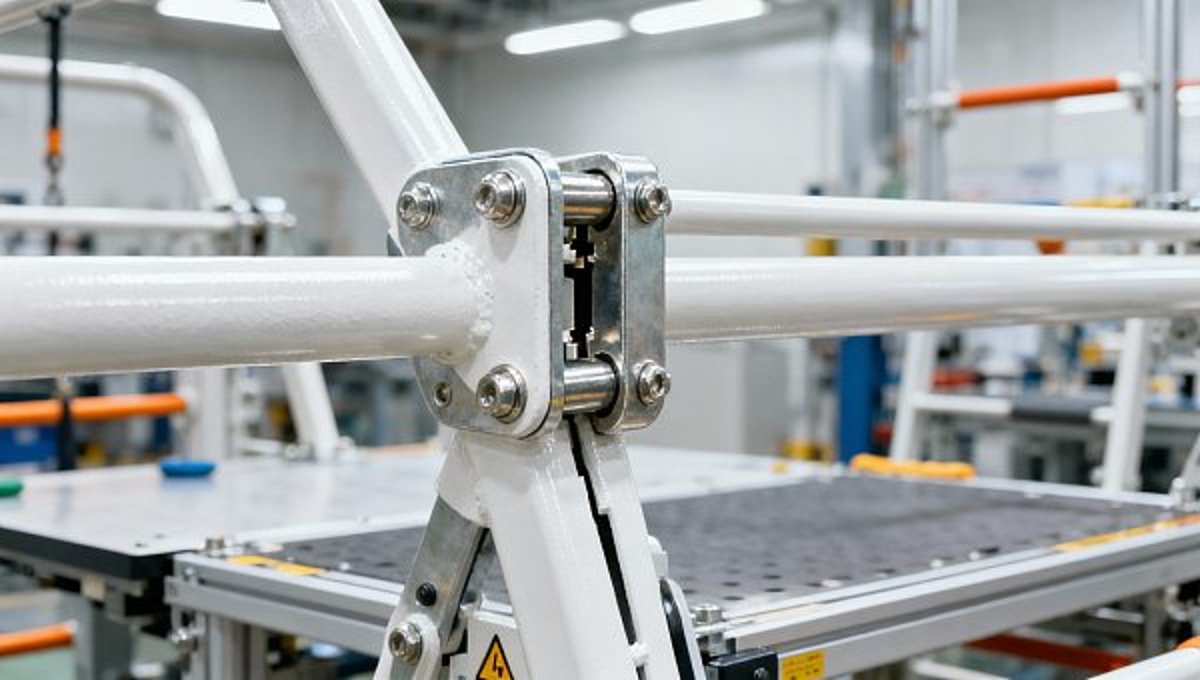
The U.S. Consumer Product Safety Commission (CPSC) announced a formal recall on May 6, 2026, under Recall ID 26-218. It covers three models of indoor children’s climbing frames produced in China. A total of 47,000 units are affected. The primary safety defects confirmed by CPSC are: (1) failure to meet static load requirements specified in ASTM F1487-23; and (2) hinge-related pinch hazards where the gap measures less than 5 mm. As a result, major North American retailers including Target and Costco have suspended listing of new shipments from the same Chinese suppliers and initiated batch re-inspection of existing inventory.
Industries Affected
Direct Exporters & Trading Companies
Exporters handling juvenile climbing equipment for U.S. distribution face immediate shipment holds and customs clearance delays. Since the recalled models were shipped under specific model numbers and supplier IDs, CPSC’s action triggers automatic flagging in U.S. import systems — affecting not only recalled SKUs but also functionally similar items pending verification.
Contract Manufacturers & OEMs
Manufacturers producing climbing frames for international brands or private labels must now verify compliance with ASTM F1487-23’s updated 2023 edition — particularly static load testing protocols and dimensional tolerances at moving joints. Non-compliant test reports or outdated internal QA checklists may no longer suffice for U.S.-bound goods.
Retail & Distribution Channels
North American mass-market retailers and e-commerce fulfillment centers are pausing intake of new climbing frame SKUs from identified Chinese suppliers. This includes halting receipt, unpacking, and shelf placement — even for non-recalled models — until supplier-level corrective actions and third-party re-certification are documented and submitted to CPSC.
Third-Party Testing & Certification Providers
Laboratories accredited for ASTM F1487 testing are observing increased demand for pre-shipment verification of hinge gap measurements and static load performance. Some labs report tighter scheduling windows and revised documentation requirements — notably mandating photographic evidence of gap measurements and calibrated load-test logs.
What Enterprises Should Monitor and Do Now
Track official CPSC updates and related enforcement guidance
Analysis shows CPSC has not yet published a full list of affected supplier names or factory addresses. However, Recall ID 26-218 is already referenced in U.S. Customs’ Automated Commercial Environment (ACE) system as a red-flag identifier. Enterprises should monitor CPSC’s recall portal daily for supplemental notices — especially any expansion to additional models or suppliers sharing design similarities.
Review current and upcoming climbing-frame SKUs against ASTM F1487-23
Observably, the defect hinges on two precise technical thresholds: static load capacity and sub-5-mm hinge gaps. Companies should cross-check all active and pipeline climbing-frame designs — including prototypes and pending certifications — against the 2023 revision’s Clause 6 (Structural Integrity) and Clause 8 (Entrapment Hazards). Internal engineering sign-offs must explicitly reference test conditions and measurement methods aligned with ASTM requirements.
Distinguish between regulatory signal and operational impact
Current more accurately reflects a targeted enforcement action rather than a broad category-wide ban. It does not apply to outdoor playground equipment, wall-mounted accessories, or non-hinged climbing structures. However, retailers’ precautionary pauses suggest that commercial risk tolerance — not just legal compliance — now drives intake decisions. Businesses should separate CPSC’s formal scope from downstream channel policies when planning inventory and logistics.
Prepare documentation and communication for supply chain partners
Suppliers should proactively compile ASTM F1487-23 test reports, gap measurement records (with traceable caliper calibration), and photos showing hinge clearances — all dated and signed by QA personnel. Forward these to buyers and logistics agents ahead of shipment. Where possible, align with buyers on shared third-party lab verification to reduce rework and avoid dock-side rejection.
Editorial Perspective / Industry Observation
This recall is better understood as a compliance inflection point than an isolated incident. Analysis shows it marks the first CPSC enforcement action explicitly citing the 2023 revision of ASTM F1487 — indicating regulators are actively applying newly strengthened standards. Observably, the focus on hinge geometry (<5 mm) suggests CPSC is prioritizing measurable, inspectable defects over subjective durability assessments. From an industry perspective, this signals a shift toward zero-tolerance on dimensional nonconformity in children’s active play equipment — especially where mechanical movement introduces entrapment risk. Sustained attention is warranted because future recalls may expand beyond climbing frames to other hinged juvenile products (e.g., foldable toddler tables, adjustable activity gyms) if similar gaps are found.
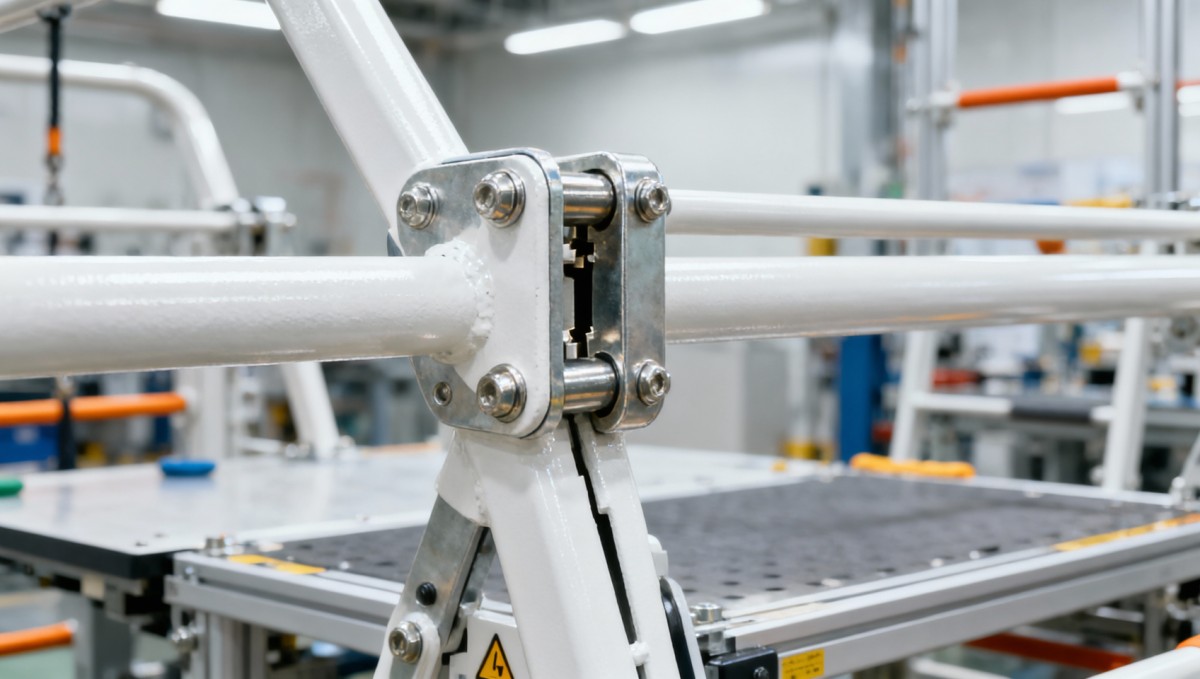
In summary, the CPSC’s May 6, 2026 recall serves as both a compliance benchmark and a supply-chain stress test. It confirms that adherence to the latest ASTM standard — not just prior editions — is now operationally mandatory for market access. More importantly, it reveals how quickly technical noncompliance can cascade across distribution tiers, even without widespread field incidents. Current more appropriately reads as a procedural warning: verification must be precise, documented, and forward-deployed — not retrospective or reactive.
Source: U.S. Consumer Product Safety Commission (CPSC) Official Recall Notice, Recall ID 26-218, issued May 6, 2026. Note: Supplier names, factory locations, and exact model numbers remain unpublished as of May 2026 and are subject to ongoing CPSC disclosure.
Search News
Hot Articles
Popular Tags
Need ExpertConsultation?
Connect with our specialized leisureengineering team for procurementstrategies.
Recommended News
 May 07, 2026CCTV5 Broadcasts Key Sports Events on May 7, 2026CCTV5 broadcasts WTT Finals, CBA playoffs & AFC U-17 Women’s qualifiers on May 7, 2026—boosting global demand for FIBA/AFC/ITTF-certified sports equipment.● Theme Park Strategist
 May 07, 2026Snooker World Championship Boosts Chinese Billiards Table ExportsSnooker World Championship boosts Chinese billiards table exports — CE+UKCA-certified slate tables see 37% surge in UK, Germany & Saudi demand.● Theme Park Strategist
 May 07, 2026CPSC Recalls 3 Chinese-Made Kids' Climbing FramesCPSC recalls 3 Chinese-made kids' climbing frames—47,000 units over ASTM F1487-23 failures & pinch hazards. Act now to protect your supply chain.● Theme Park Strategist
 May 07, 2026Inflatable Water Slides Wholesale: Which Features Cut Repair Rates?Inflatable water slides wholesale buyers: discover which features cut repair rates most—commercial PVC, reinforced seams, smart anchoring, matched blowers, and compliant design.● Theme Park Strategist
 May 07, 2026Mini Golf Course Equipment That Wears Out Faster OutdoorsMini golf course equipment wears out faster outdoors due to UV, moisture, and heavy traffic. Discover which parts fail first and how to choose longer-lasting solutions.● Theme Park Strategist
 May 07, 2026Bowling Alley Equipment Upgrades That Improve Lane ReliabilityBowling alley equipment upgrades that improve lane reliability: discover how smarter pinsetters, diagnostics, conditioning, and integration reduce downtime, cut costs, and boost player satisfaction.● Theme Park Strategist
 May 07, 2026Inflatable Obstacle Courses: Setup Mistakes That Hurt Event FlowInflatable obstacle courses can boost event energy, but setup mistakes can ruin flow. Discover the top errors to avoid and keep events safer, faster, and more efficient.● Theme Park Strategist
 May 07, 2026Coin Operated Kiddie Rides That Stop Paying Back Too SoonCoin operated kiddie rides can lose ROI fast when downtime, weak replay value, and poor sourcing add hidden costs. Learn how to choose models that earn longer.● Theme Park Strategist
 May 07, 2026Commercial Bouncy Castles: Why Material Weight Is Not EnoughCommercial bouncy castles are not defined by material weight alone. Learn the key buying checklist for safety, durability, compliance, and smarter commercial sourcing.● Theme Park Strategist
 May 07, 2026Inflatable Water Slides Wholesale: Which Features Cut Repair Rates?Inflatable water slides wholesale buyers: discover which features cut repair rates most—commercial PVC, reinforced seams, smart anchoring, matched blowers, and compliant design.● Theme Park Strategist
 May 07, 2026Mini Golf Course Equipment That Wears Out Faster OutdoorsMini golf course equipment wears out faster outdoors due to UV, moisture, and heavy traffic. Discover which parts fail first and how to choose longer-lasting solutions.● Theme Park Strategist
 May 07, 2026Bowling Alley Equipment Upgrades That Improve Lane ReliabilityBowling alley equipment upgrades that improve lane reliability: discover how smarter pinsetters, diagnostics, conditioning, and integration reduce downtime, cut costs, and boost player satisfaction.● Theme Park Strategist
 May 07, 2026Inflatable Obstacle Courses: Setup Mistakes That Hurt Event FlowInflatable obstacle courses can boost event energy, but setup mistakes can ruin flow. Discover the top errors to avoid and keep events safer, faster, and more efficient.● Theme Park Strategist
 May 07, 2026Coin Operated Kiddie Rides That Stop Paying Back Too SoonCoin operated kiddie rides can lose ROI fast when downtime, weak replay value, and poor sourcing add hidden costs. Learn how to choose models that earn longer.● Theme Park Strategist
 May 07, 2026Commercial Bouncy Castles: Why Material Weight Is Not EnoughCommercial bouncy castles are not defined by material weight alone. Learn the key buying checklist for safety, durability, compliance, and smarter commercial sourcing.● Theme Park Strategist
 May 06, 2026Basketball hoops for school: portable convenience vs fixed stabilityBasketball hoops for school: compare portable convenience and fixed stability to choose safer, smarter, and more cost-effective solutions for campus courts.● Theme Park Strategist
 May 06, 2026Montessori wooden toys and the question of long-term durabilityMontessori wooden toys: discover what really determines long-term durability, safety, and value, and learn how buyers can choose options built for repeated use.● Theme Park Strategist
 May 06, 2026Wholesale ping pong tables for schools: what wears out firstWholesale ping pong tables for schools: learn what wears out first, from casters to locks, and use this buyer-focused guide to cut replacement costs and choose safer, longer-lasting tables.● Theme Park Strategist
 May 06, 2026Gymnastic mats wholesale: thickness claims vs real shock absorptionGymnastic mats wholesale buyers: learn why thickness claims alone can mislead. Compare real shock absorption, foam density, rebound control, and sourcing checks before you buy.● Theme Park Strategist
 May 06, 2026Abacus learning toys still matter when math goes digitalAbacus learning toys still matter in digital math, helping children build number sense, focus, and hands-on problem-solving. See why educators, parents, and buyers still choose them.● Theme Park Strategist
 May 06, 2026Liaoning Tieren Appoints Shin Jeong-won; K-League Training Gear Sourcing Shift PossibleLiaoning Tieren appoints K-League coach Shin Jeong-won — sparking Korean demand for ISO 10993-certified smart athletic wear, especially heart-rate & GPS training vests.● Theme Park Strategist
 May 06, 2026NBA LED Interactive Court System Enters Mass ProductionNBA LED interactive court system enters mass production in Q3 2026 — a breakthrough for smart sports venues, AR fan engagement, and global LED display suppliers.● Theme Park Strategist
 May 06, 2026NBA Adopts New LED Interactive Court Floors in 2026–27 SeasonNBA LED interactive court floors launch in 2026–27: AR fan engagement, real-time stats & certified hardware — game-changing for global sports tech suppliers.● Theme Park Strategist
 May 06, 2026HuaiBA Youth Basketball Arena Adopts Domestic Smart Floor SystemHuaiBA Youth Basketball Arena's domestic smart floor system sets a new benchmark—featuring real-time pressure sensing & acoustic feedback for global sports infrastructure buyers.● Theme Park Strategist