China PR Men's Team Invited to 2026 ASEAN Cup: Implications for Stadium Tech Export
On May 6, 2026, the China national men's football team was formally invited to participate in the 2026 ASEAN Cup — a development with direct relevance for stadium infrastructure manufacturers, lighting and acoustics suppliers, accessibility equipment providers, and export-oriented engineering service firms. This marks the first time an AFC-affiliated top-tier national team has been included in the tournament, triggering alignment requirements under the newly updated AFC Stadium Regulations 2025 — particularly its three newly mandated technical benchmarks for host venues.
Event Overview
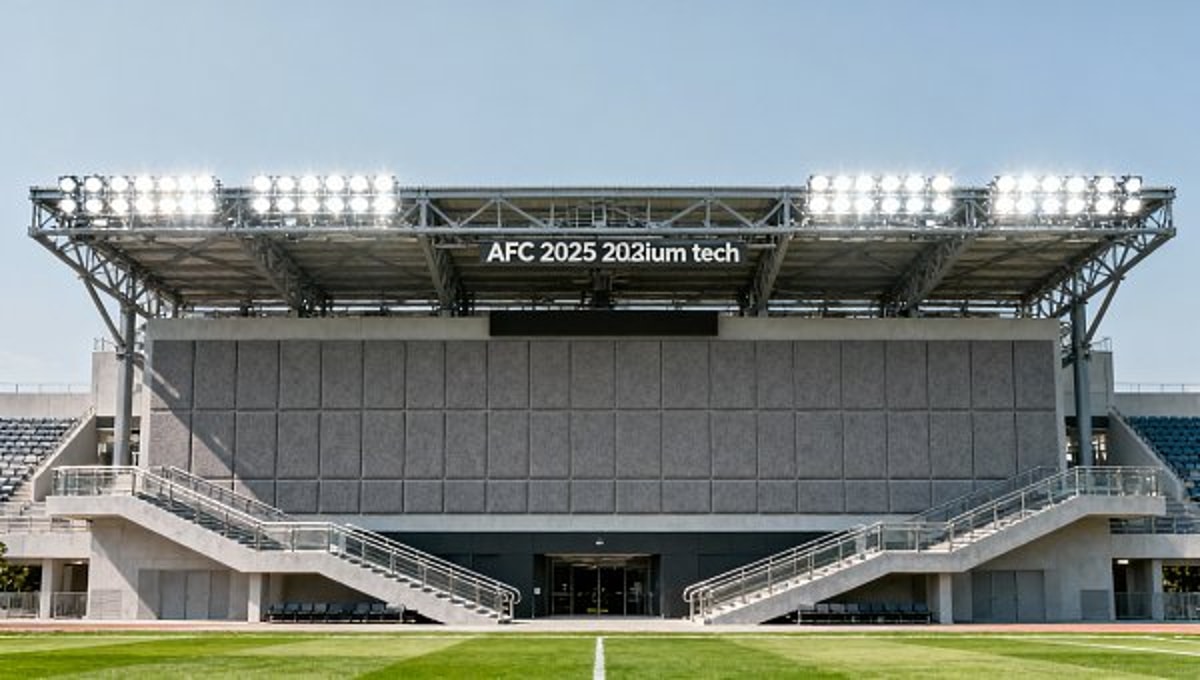
According to internal documents from the ASEAN Football Federation (AFF) and a Reuters report dated May 6, 2026, the China PR men’s national team has officially received an invitation to compete in the 2026 ASEAN Cup as a Tier-1 team. The tournament is scheduled for September 21–October 6, 2026, and will be hosted across all 11 ASEAN member states. All match venues must comply with the AFC Stadium Regulations 2025 edition, which introduces three mandatory venue specifications: LED lighting illuminance ≥2000 lx, acoustic reverberation time ≤1.8 seconds, and accessible ramp gradient ≤1:12.
Industries Affected
Stadium Lighting Equipment Manufacturers
These firms are directly affected because the new illuminance requirement (≥2000 lx) applies to all match venues — including those in ASEAN host countries upgrading existing facilities or building new ones. The specification is more stringent than prior regional standards and aligns closely with AFC Elite Category thresholds, raising demand for certified high-output LED systems compliant with IEC 62471 and ISO/CIE 19005-2.
Acoustic Engineering & Sound System Suppliers
The ≤1.8 s reverberation time mandate targets indoor and covered stadiums — especially multi-use venues undergoing retrofitting. It implies stricter material selection (e.g., absorptive ceiling panels, wall diffusers), structural acoustic modeling, and post-installation verification testing. Firms offering integrated acoustic design + measurement services may see increased tender opportunities in ASEAN markets.
Accessibility Infrastructure Providers
The 1:12 ramp slope requirement exceeds many national building codes in ASEAN countries (e.g., Thailand’s 1:10, Vietnam’s 1:8). This creates near-term demand for standardized modular ramp systems, tactile guidance paths, and platform lifts — particularly for legacy stadiums lacking universal access certification under ISO 21542:2021.
Export-Oriented Engineering & Compliance Consultancies
Firms supporting Chinese manufacturers’ overseas project bids must now verify product conformity against AFC 2025 regulations — not just local ASEAN standards or older AFC editions. This includes documentation of third-party test reports (e.g., photometric lab reports for lighting, RT60 measurements for acoustics, structural load certifications for ramps).
What Relevant Enterprises or Practitioners Should Focus On
Monitor official updates on host venue selection and compliance timelines
The AFF has not yet announced which ASEAN host cities will stage matches involving China PR. Venue-specific compliance deadlines (e.g., pre-tournament inspection windows) remain unconfirmed — but are expected to be published by late June 2026. Delayed announcements could compress implementation schedules for retrofits.
Prioritize verification of product compliance with AFC Stadium Regulations 2025 Annexes
Manufacturers should cross-check their current product test reports against Annex D (Lighting), Annex E (Acoustics), and Annex F (Accessibility) of the 2025 edition — especially where earlier certifications reference outdated metrics (e.g., lux levels measured at 1m height vs. required 1.2m pitch-level plane).
Distinguish between regulatory signal and procurement reality
While the AFC regulation is binding for tournament use, most ASEAN host nations lack dedicated funding mechanisms for full-scale stadium upgrades. In practice, compliance may be achieved via temporary or modular solutions (e.g., mobile LED towers, deployable acoustic banners, adjustable ramp kits) — creating distinct opportunity segments versus permanent infrastructure contracts.
Prepare technical dossiers aligned with AFC tender documentation templates
Chinese exporters should begin assembling bilingual (English + host-country language) technical compliance packages — including test reports, installation manuals, maintenance protocols, and warranty terms — formatted per AFF’s upcoming procurement guidelines. Early alignment reduces bid evaluation delays during the July–August 2026 tender window.
Editorial Perspective / Industry Observation
Observably, this invitation functions primarily as a regulatory catalyst — not a commercial contract. The inclusion of China PR does not guarantee Chinese-made equipment deployment; rather, it activates enforcement of AFC 2025 standards across 11 national jurisdictions simultaneously. Analysis shows that the three new technical clauses were drafted with explicit reference to recent Chinese stadium commissioning experiences (e.g., Hangzhou Asian Games venues), suggesting intentional harmonization — but actual adoption remains contingent on bilateral technical assistance agreements and local budget approvals. From an industry perspective, this is less a market entry event and more a de facto standardization inflection point for Southeast Asian stadium infrastructure procurement.
Current timing suggests early-mover advantage lies with firms already holding AFC-compliant test reports — not those initiating certification processes now. The narrow window between invitation confirmation (May 6) and tournament start (September 21) implies accelerated compliance cycles — making documentation readiness more decisive than manufacturing capacity alone.
Conclusion: This development signals intensified alignment between AFC infrastructure standards and regional stadium modernization agendas — but does not equate to automatic demand generation. It is best understood as a technical benchmark activation event: one that raises the minimum compliance threshold for future ASEAN stadium tenders, especially those co-hosted or co-funded with Chinese partners. Stakeholders should treat it as a calibration point for product documentation, not a sales trigger.
Information Sources: ASEAN Football Federation (AFF) internal document (May 2026), Reuters report dated May 6, 2026. Note: Host city assignments, venue upgrade funding mechanisms, and AFF procurement timelines remain pending official announcement and are subject to ongoing observation.
Search News
Hot Articles
Popular Tags
Need ExpertConsultation?
Connect with our specialized leisureengineering team for procurementstrategies.
Recommended News
 May 07, 2026FIBA 2026 Arena Guidelines: LED Lighting & Acoustic Flooring Now MandatoryFIBA 2026 Arena Guidelines now mandate LED lighting (U1 ≥ 0.8) and acoustic flooring (Ln,w ≤ 55 dB) for top-tier venues—key for global suppliers, contractors & certifiers.● Pro Audio Engineer
 May 07, 2026China PR Men's Team Invited to 2026 ASEAN Cup: Implications for Stadium Tech ExportStadium tech exporters: China PR’s 2026 ASEAN Cup entry triggers urgent demand for AFC 2025-compliant lighting, acoustics & accessibility solutions across Southeast Asia.● Pro Audio Engineer
 May 07, 2026NBA Adopts New LED Interactive Court Floors for 2026–27 SeasonNBA adopts LED interactive court floors for 2026–27 season — discover how IEEE 1901.2a compliance, sub-50ms response, and certified Chinese suppliers reshape smart sports infrastructure.● Pro Audio Engineer
 May 05, 2026NBA to Deploy LED Interactive Court System in 2026–27 SeasonNBA LED interactive court system launch in 2026–27: Real-time AR, player tracking & audience lighting—key opportunity for UL 8750/ANSI E1.17-compliant LED floor tile ODMs.● Pro Audio Engineer
 May 02, 20262026 Hangzhou Basketball Friendly Spurs LED Screen Demand2026 Hangzhou Basketball Friendly Spurs LED Screen Demand: Urgent global need for P2.5 smart-court displays & player-tracking modules—act now amid MBI5252E IC shortage.● Pro Audio Engineer
 May 02, 2026Iran’s 2026 World Cup Qualification Triggers FCC Part 15B Re-testing DemandFCC Part 15B re-testing demand surges for LED fan displays after Iran’s 2026 World Cup qualification — act now to avoid U.S./Mexico/Canada customs delays.● Pro Audio Engineer
 Apr 29, 2026China's LED Timing Screens Gain Traction After Thomas CupLED timing screens for sports venues—featuring BWF API integration, multilingual UI & PSE/SIRIM certification—are gaining export demand in Malaysia and Indonesia after Thomas Cup exposure.● Pro Audio Engineer
 Apr 28, 20262026 FIBA Women's World Cup Draw Sparks LED Timing Screen Upgrade DemandFIBA Women's World Cup 2026 draw fuels urgent demand for FIBA Level 3 LED timing screens in Australia—HDMI 2.1a, GenLock & HDR10+ ready.● Pro Audio Engineer
 Apr 28, 2026France to Host 2031 FIBA Basketball World Cup: LED Venue Screens & Timing Systems Export OpportunityLED venue screens & timing systems export opportunity: France to host 2031 FIBA Basketball World Cup—unlock EU procurement for certified sports AV suppliers.● Pro Audio Engineer
 Apr 27, 20262026 FIBA Women's World Cup Draw Sets LED Timing Screen Requirements2026 FIBA Women's World Cup LED timing screen requirements are live — bilingual display, biometric visualization & FIBA API integration now mandatory for official venues.● Pro Audio Engineer
 Apr 27, 2026France to Host 2031 FIBA Basketball World Cup: LED Arena Screens & Smart Timing Systems Export OpportunityLED arena screens & smart timing systems export opportunity: France’s 2031 FIBA Basketball World Cup mandates P2.5 LED displays and AI foul detection—act now to align with 2029 compliance deadlines.● Pro Audio Engineer
 Apr 26, 2026FIFA Adopts Chinese Mini-LED Displays for 2026 World Cup VAR SystemFIFA adopts Chinese Mini-LED displays for 2026 World Cup VAR — ultra-HD, HDR10+, -20°C–60°C rugged performance. Key insight for AV exporters & certifiers.● Pro Audio Engineer
 Apr 26, 20262026 FIBA Women's World Cup Draw Spurs LED Timing Screen Export DemandFIBA Women's World Cup 2026 draw fuels global demand for certified LED timing screens—explore export opportunities, compliance essentials & multilingual UI requirements now.● Pro Audio Engineer
 Apr 25, 2026FIFA Adopts Chinese MicroLED Displays for 2026 World Cup VAR SystemFIFA VAR system adopts Chinese MicroLED displays for 2026 World Cup — ultra-low-latency, 240Hz+ certified tech. Game-changing for sports display exporters & broadcast integrators.● Pro Audio Engineer
 Apr 25, 20262026 FIBA Women's World Cup Draw Sparks Demand for Certified Arena Lighting & Timing SystemsFIBA Women's World Cup 2026 draw fuels global demand for certified arena lighting & timing systems—get FIBA-compliant, multi-standard solutions now.● Pro Audio Engineer
 Apr 25, 2026CCTV5 Snooker Broadcast Drives 37% Surge in Stage Lighting Export InquiriesCCTV5 snooker broadcast drives 37% surge in stage lighting export inquiries—UK, Germany & Australia lead demand for DMX512 & broadcast-ready LED fixtures.● Pro Audio Engineer
 Apr 24, 2026CCTV5 Snooker Broadcast Drives 37% Surge in Global Lighting Export InquiriesCCTV5 snooker broadcast drives 37% global lighting export inquiries—UK, Germany & UAE lead demand for stage lighting, DMX512 & LED follow-spots.● Pro Audio Engineer
 Apr 23, 20262026 FIBA Women's World Cup Draw Opens Export Window for Arena Lighting & Timing SystemsFIBA Women's World Cup 2026 draw unlocks export opportunities for FIBA Level 3 arena lighting & ITU-certified timing systems — act now.● Pro Audio Engineer
 Apr 23, 2026CCTV5 Snooker Broadcast Drives 37% Surge in Stage Lighting Export InquiriesCCTV5 snooker broadcast sparks 37% surge in global stage lighting export inquiries—UAE, Mexico & Indonesia lead demand for DMX512/IP65-compliant Chinese LED fixtures.● Pro Audio Engineer
 Apr 22, 2026Guangdong vs. Shanxi CBA Game Highlights Smart Arena LightingGuangdong vs. Shanxi CBA game showcased smart arena lighting — HDR-ready, UL/GB-certified, and proven for broadcast excellence. Key for lighting makers & stadium developers.● Pro Audio Engineer
 Apr 22, 2026CCTV5 Snooker Broadcast Drives 37% Rise in Lighting Export InquiriesCCTV5斯诺克直播引爆海外采购潮!LED摇头灯、DMX控制系统等专业舞台灯光出口询盘激增37%,低延迟与EMC Class B成关键门槛。立即洞察趋势→● Pro Audio Engineer
 Apr 21, 2026CCTV5 Snooker Broadcast Drives 37% Surge in Stage Lighting Export InquiriesCCTV5 snooker broadcast sparks 37% surge in global stage lighting export inquiries—key demand from Brazil, KSA & Indonesia for IP65, 20k-hr LED moving heads.● Pro Audio Engineer
 Apr 21, 2026Guangdong vs. Shanxi CBA Game Highlights Domestic Smart Arena LightingGuangdong vs. Shanxi CBA game spotlighted domestic smart arena lighting—EN 12193:2023-compliant, flicker-free 4K LED system powering global stadium upgrades.● Pro Audio Engineer
 Apr 20, 2026Guangdong vs. Shanxi CBA Game Highlights Domestic Smart Arena LightingGuangdong vs. Shanxi CBA game spotlighted China-made smart arena lighting—FIBA-certified, broadcast-ready LED system with <0.1s dimming & 5600K stability.● Pro Audio Engineer