FIBA 2026 Arena Guidelines: LED Lighting & Acoustic Flooring Now Mandatory
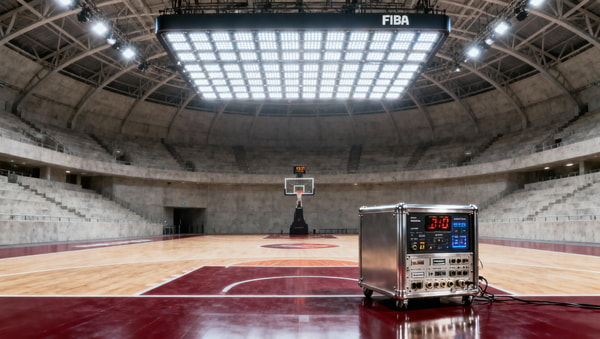
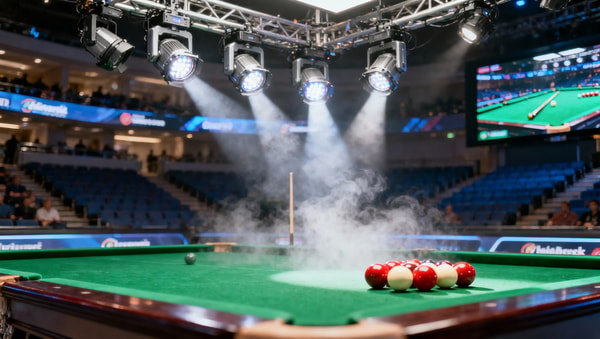
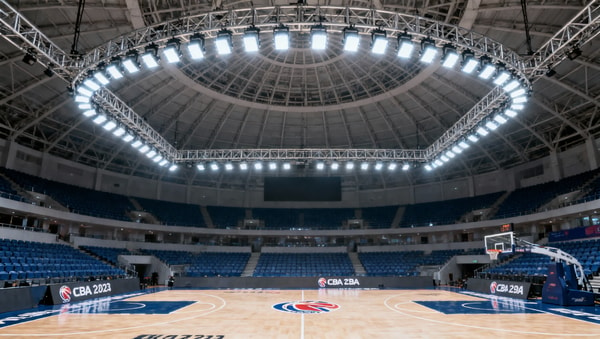
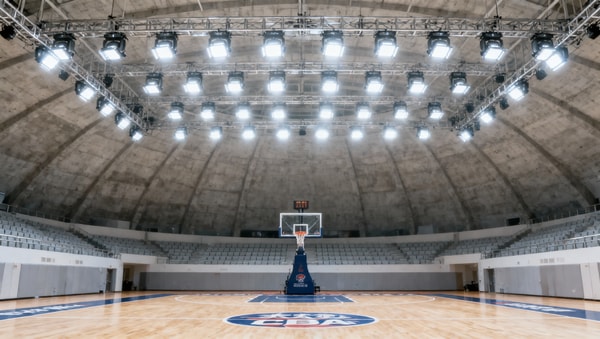
FIBA’s update to the Arena Infrastructure Guidelines 2026, effective 6 May 2026, introduces mandatory technical requirements for LED sports lighting uniformity (U1 ≥ 0.8) and acoustic flooring impact sound pressure level (Ln,w ≤ 55 dB) in Class I venues—including FIBA Basketball World Cup and continental championship facilities. This revision directly affects manufacturers and suppliers of sports venue infrastructure, particularly those engaged in international project bidding or export compliance. The shift signals a tightening of global benchmarking for performance-certified sports infrastructure—and marks a concrete inflection point for supply chain readiness in lighting and flooring sectors.
Event Overview
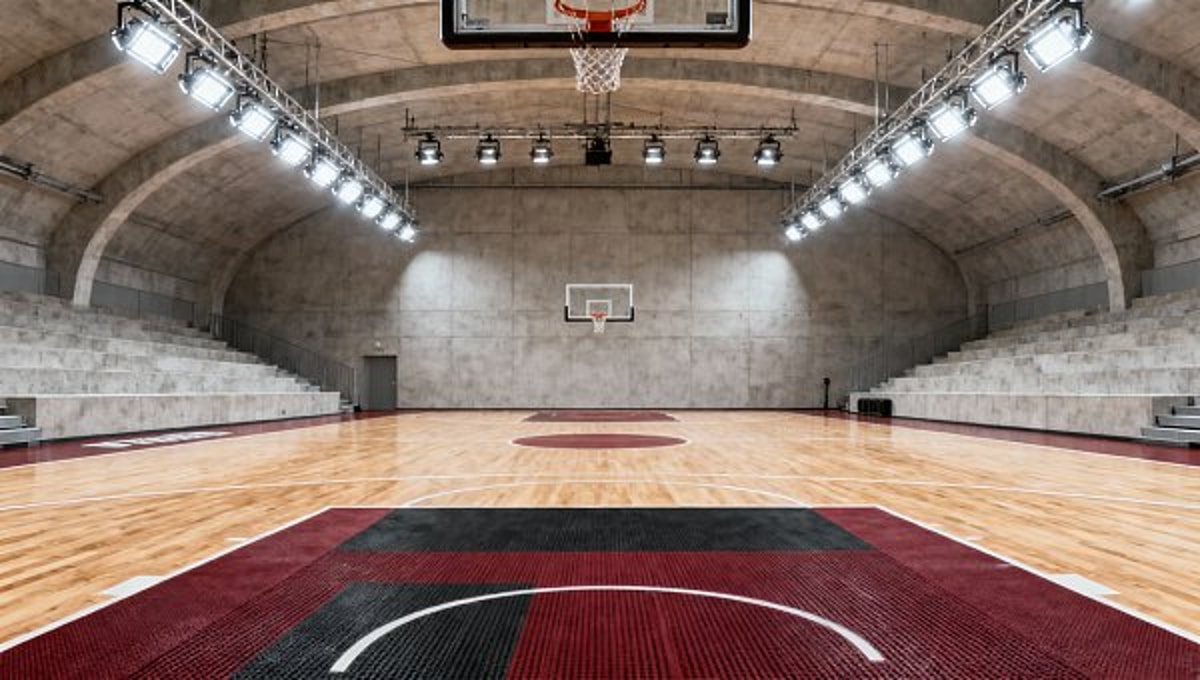
On 6 May 2026, FIBA officially published the FIBA Arena Infrastructure Guidelines 2026. For Class I venues—defined as those hosting FIBA Basketball World Cup, continental championships, and other top-tier official competitions—the document newly mandates two technical criteria: (1) LED sports lighting must achieve minimum illuminance uniformity U1 ≥ 0.8; and (2) sports flooring systems must meet maximum impact sound pressure level Ln,w ≤ 55 dB. All new arena construction projects submitted from 1 September 2026 onward must include third-party certification reports accredited under CNAS or ILAC-MRA frameworks. Chinese LED lighting and sports flooring manufacturers have initiated standard alignment and certification processes.
Industries Affected
LED Sports Lighting Manufacturers
These firms are directly impacted because U1 ≥ 0.8 is now a non-negotiable performance threshold—not merely a recommendation—for Class I venues. Compliance requires verified optical design, precise fixture placement simulation, and photometric testing under real-world installation conditions. Impact includes revised product specifications, extended validation timelines, and increased reliance on certified test labs.
Sports Flooring System Suppliers (Acoustic-Focused)
Manufacturers supplying multi-layer resilient or floating-floor systems for basketball arenas must now demonstrate Ln,w ≤ 55 dB under standardized ISO 140-6/ISO 717-2 protocols. This goes beyond basic shock absorption or wear resistance—it targets airborne noise transmission between floors, affecting material composition, subfloor integration, and joint detailing. Certification becomes a prerequisite for tender eligibility in FIBA-governed projects.
Third-Party Testing & Certification Service Providers
Accredited labs with CNAS or ILAC-MRA recognition face rising demand for U1 and Ln,w verification services. The requirement for documentation submission from September 2026 means labs must confirm capacity, turnaround time, and reporting format alignment with FIBA’s administrative expectations—especially for cross-border projects involving Chinese suppliers.
International Project Contractors & EPC Firms
Contractors delivering turnkey arena infrastructure must now embed verified LED lighting and acoustic flooring compliance into early-stage design packages. Non-compliant submittals risk rejection during FIBA pre-approval stages—even if structural or architectural elements meet prior standards. This elevates due diligence responsibilities across subcontractor selection and equipment sourcing.
What Enterprises and Practitioners Should Focus On
Monitor FIBA’s official implementation clarifications
FIBA has not yet published detailed interpretation notes on U1 measurement methodology (e.g., grid density, mounting height, or field-of-play boundary definition) or Ln,w test setup variations (e.g., use of reference concrete slab vs. site-specific base). Enterprises should track FIBA’s technical bulletins and webinar announcements scheduled for Q3 2026.
Prioritize certification-ready product lines for Class I target markets
Not all LED luminaires or sports floor systems require immediate recertification—but those intended for FIBA Class I venues do. Companies should identify high-priority SKUs, allocate budget for photometric and acoustic lab testing, and verify whether existing certifications (e.g., EN 12193, ISO 9001) provide partial leverage toward U1/Ln,w validation.
Distinguish between policy signal and enforceable requirement
The 1 September 2026 deadline applies only to newly submitted arena construction proposals—not retroactive upgrades or ongoing projects approved before that date. Enterprises supporting legacy venues should assess whether voluntary upgrades align with national stadium upgrade programs (e.g., China’s ‘Modern Sports Venue Standardization Initiative’), but no FIBA mandate currently compels retrofitting.
Prepare documentation workflows for CNAS/ILAC-MRA reports
Certification reports must be issued by labs listed under CNAS or ILAC-MRA signatory bodies. Companies should confirm lab accreditation scope (e.g., “photometric testing per CIE 117” or “impact sound pressure per ISO 140-6”) and ensure reports include FIBA-required metadata: venue name, project ID, test date, instrument calibration records, and signed technician credentials.
Editorial Perspective / Industry Observation
Observably, this update functions less as an isolated regulatory change and more as a formalized convergence of three trends: (1) growing emphasis on spectator experience (via glare control and noise reduction), (2) consolidation of sustainability goals (LED efficiency + acoustic performance both reduce long-term energy and operational loads), and (3) standardization of global procurement benchmarks. Analysis shows that while enforcement begins in September 2026, its influence extends backward—design consultants and specifiers are already adjusting tender documents ahead of deadline. From an industry perspective, it is better understood not as a sudden compliance hurdle, but as the codification of performance expectations already emerging in premium domestic projects since 2024.
Conclusion
This guideline revision represents a calibrated step toward harmonizing technical performance with user-centric venue design—not a disruptive overhaul. Its significance lies in institutionalizing measurable thresholds where qualitative preferences once prevailed. For stakeholders, the current priority is not broad strategic pivoting, but targeted verification: confirming which products, tests, and documentation pathways align with FIBA’s defined Class I requirements—and acting before proposal submission deadlines begin accumulating.
Information Sources
Main source: FIBA Arena Infrastructure Guidelines 2026, published 6 May 2026.
Note: FIBA’s supplementary technical annexes (e.g., U1 measurement protocol details, Ln,w test configuration variants) remain pending publication and are under active observation.
Search News
Hot Articles
Popular Tags
Need ExpertConsultation?
Connect with our specialized leisureengineering team for procurementstrategies.
Recommended News
 May 07, 2026FIBA 2026 Arena Guidelines: LED Lighting & Acoustic Flooring Now MandatoryFIBA 2026 Arena Guidelines now mandate LED lighting (U1 ≥ 0.8) and acoustic flooring (Ln,w ≤ 55 dB) for top-tier venues—key for global suppliers, contractors & certifiers.● Pro Audio Engineer
 May 07, 2026China PR Men's Team Invited to 2026 ASEAN Cup: Implications for Stadium Tech ExportStadium tech exporters: China PR’s 2026 ASEAN Cup entry triggers urgent demand for AFC 2025-compliant lighting, acoustics & accessibility solutions across Southeast Asia.● Pro Audio Engineer
 May 07, 2026NBA Adopts New LED Interactive Court Floors for 2026–27 SeasonNBA adopts LED interactive court floors for 2026–27 season — discover how IEEE 1901.2a compliance, sub-50ms response, and certified Chinese suppliers reshape smart sports infrastructure.● Pro Audio Engineer
 May 05, 2026NBA to Deploy LED Interactive Court System in 2026–27 SeasonNBA LED interactive court system launch in 2026–27: Real-time AR, player tracking & audience lighting—key opportunity for UL 8750/ANSI E1.17-compliant LED floor tile ODMs.● Pro Audio Engineer
 May 02, 20262026 Hangzhou Basketball Friendly Spurs LED Screen Demand2026 Hangzhou Basketball Friendly Spurs LED Screen Demand: Urgent global need for P2.5 smart-court displays & player-tracking modules—act now amid MBI5252E IC shortage.● Pro Audio Engineer
 May 02, 2026Iran’s 2026 World Cup Qualification Triggers FCC Part 15B Re-testing DemandFCC Part 15B re-testing demand surges for LED fan displays after Iran’s 2026 World Cup qualification — act now to avoid U.S./Mexico/Canada customs delays.● Pro Audio Engineer
 Apr 29, 2026China's LED Timing Screens Gain Traction After Thomas CupLED timing screens for sports venues—featuring BWF API integration, multilingual UI & PSE/SIRIM certification—are gaining export demand in Malaysia and Indonesia after Thomas Cup exposure.● Pro Audio Engineer
 Apr 28, 20262026 FIBA Women's World Cup Draw Sparks LED Timing Screen Upgrade DemandFIBA Women's World Cup 2026 draw fuels urgent demand for FIBA Level 3 LED timing screens in Australia—HDMI 2.1a, GenLock & HDR10+ ready.● Pro Audio Engineer
 Apr 28, 2026France to Host 2031 FIBA Basketball World Cup: LED Venue Screens & Timing Systems Export OpportunityLED venue screens & timing systems export opportunity: France to host 2031 FIBA Basketball World Cup—unlock EU procurement for certified sports AV suppliers.● Pro Audio Engineer
 Apr 27, 20262026 FIBA Women's World Cup Draw Sets LED Timing Screen Requirements2026 FIBA Women's World Cup LED timing screen requirements are live — bilingual display, biometric visualization & FIBA API integration now mandatory for official venues.● Pro Audio Engineer
 Apr 27, 2026France to Host 2031 FIBA Basketball World Cup: LED Arena Screens & Smart Timing Systems Export OpportunityLED arena screens & smart timing systems export opportunity: France’s 2031 FIBA Basketball World Cup mandates P2.5 LED displays and AI foul detection—act now to align with 2029 compliance deadlines.● Pro Audio Engineer
 Apr 26, 2026FIFA Adopts Chinese Mini-LED Displays for 2026 World Cup VAR SystemFIFA adopts Chinese Mini-LED displays for 2026 World Cup VAR — ultra-HD, HDR10+, -20°C–60°C rugged performance. Key insight for AV exporters & certifiers.● Pro Audio Engineer
 Apr 26, 20262026 FIBA Women's World Cup Draw Spurs LED Timing Screen Export DemandFIBA Women's World Cup 2026 draw fuels global demand for certified LED timing screens—explore export opportunities, compliance essentials & multilingual UI requirements now.● Pro Audio Engineer
 Apr 25, 2026FIFA Adopts Chinese MicroLED Displays for 2026 World Cup VAR SystemFIFA VAR system adopts Chinese MicroLED displays for 2026 World Cup — ultra-low-latency, 240Hz+ certified tech. Game-changing for sports display exporters & broadcast integrators.● Pro Audio Engineer
 Apr 25, 20262026 FIBA Women's World Cup Draw Sparks Demand for Certified Arena Lighting & Timing SystemsFIBA Women's World Cup 2026 draw fuels global demand for certified arena lighting & timing systems—get FIBA-compliant, multi-standard solutions now.● Pro Audio Engineer
 Apr 25, 2026CCTV5 Snooker Broadcast Drives 37% Surge in Stage Lighting Export InquiriesCCTV5 snooker broadcast drives 37% surge in stage lighting export inquiries—UK, Germany & Australia lead demand for DMX512 & broadcast-ready LED fixtures.● Pro Audio Engineer
 Apr 24, 2026CCTV5 Snooker Broadcast Drives 37% Surge in Global Lighting Export InquiriesCCTV5 snooker broadcast drives 37% global lighting export inquiries—UK, Germany & UAE lead demand for stage lighting, DMX512 & LED follow-spots.● Pro Audio Engineer
 Apr 23, 20262026 FIBA Women's World Cup Draw Opens Export Window for Arena Lighting & Timing SystemsFIBA Women's World Cup 2026 draw unlocks export opportunities for FIBA Level 3 arena lighting & ITU-certified timing systems — act now.● Pro Audio Engineer
 Apr 23, 2026CCTV5 Snooker Broadcast Drives 37% Surge in Stage Lighting Export InquiriesCCTV5 snooker broadcast sparks 37% surge in global stage lighting export inquiries—UAE, Mexico & Indonesia lead demand for DMX512/IP65-compliant Chinese LED fixtures.● Pro Audio Engineer
 Apr 22, 2026Guangdong vs. Shanxi CBA Game Highlights Smart Arena LightingGuangdong vs. Shanxi CBA game showcased smart arena lighting — HDR-ready, UL/GB-certified, and proven for broadcast excellence. Key for lighting makers & stadium developers.● Pro Audio Engineer
 Apr 22, 2026CCTV5 Snooker Broadcast Drives 37% Rise in Lighting Export InquiriesCCTV5斯诺克直播引爆海外采购潮!LED摇头灯、DMX控制系统等专业舞台灯光出口询盘激增37%,低延迟与EMC Class B成关键门槛。立即洞察趋势→● Pro Audio Engineer
 Apr 21, 2026CCTV5 Snooker Broadcast Drives 37% Surge in Stage Lighting Export InquiriesCCTV5 snooker broadcast sparks 37% surge in global stage lighting export inquiries—key demand from Brazil, KSA & Indonesia for IP65, 20k-hr LED moving heads.● Pro Audio Engineer
 Apr 21, 2026Guangdong vs. Shanxi CBA Game Highlights Domestic Smart Arena LightingGuangdong vs. Shanxi CBA game spotlighted domestic smart arena lighting—EN 12193:2023-compliant, flicker-free 4K LED system powering global stadium upgrades.● Pro Audio Engineer
 Apr 20, 2026Guangdong vs. Shanxi CBA Game Highlights Domestic Smart Arena LightingGuangdong vs. Shanxi CBA game spotlighted China-made smart arena lighting—FIBA-certified, broadcast-ready LED system with <0.1s dimming & 5600K stability.● Pro Audio Engineer