How to choose surgical steel belly rings that last
Choosing surgical steel belly rings that truly last requires more than comparing styles or price points. For technical evaluators, the key lies in verifying material grade, corrosion resistance, surface finish, and manufacturing consistency. This guide explains how to assess surgical steel belly rings against durability, safety, and sourcing standards, helping buyers identify reliable options for long-term wear and dependable commercial procurement.
What should technical evaluators examine first in surgical steel belly rings?
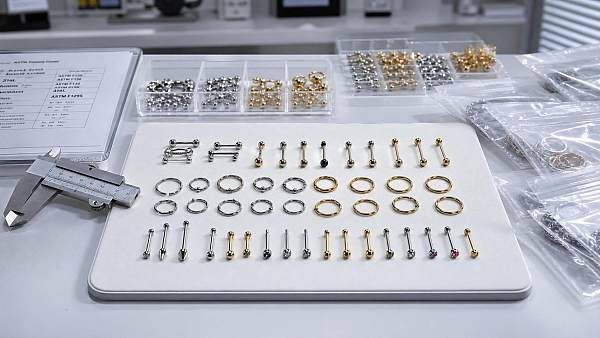
When reviewing surgical steel belly rings for wholesale, OEM, retail supply, or hospitality-linked accessory programs, the first task is to separate cosmetic appeal from measurable durability. A polished finish may look premium at first glance, yet poor alloy control or weak finishing can shorten service life quickly.
For technical teams, lasting performance usually depends on four factors: base material quality, resistance to corrosion, precision of threading and stone setting, and batch-to-batch consistency. These points matter whether the buyer serves jewelry distributors, boutique retailers, resort gift channels, or luxury accessory programs.
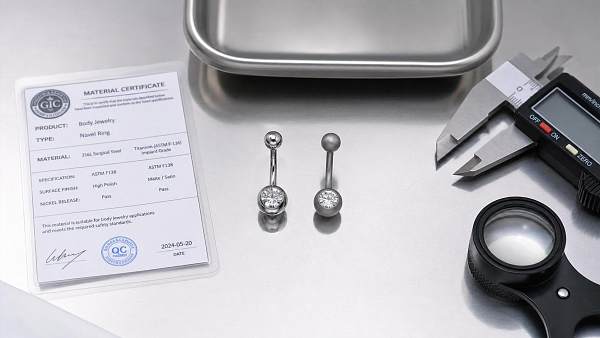
- Confirm the steel family and declared grade rather than accepting generic labels such as “medical steel” or “premium surgical metal.”
- Review whether the supplier can explain corrosion resistance in realistic wear conditions, including sweat, moisture, salt exposure, and cleaning agents.
- Inspect the polish level, burr control, and threading accuracy because weak finishing often causes skin irritation and premature returns.
- Ask for traceable production records, especially if the order supports regulated retail channels or premium commercial sourcing projects.
This is where a sourcing-focused intelligence platform such as GCT adds value. Instead of evaluating suppliers by catalog images alone, buyers can use structured procurement logic that weighs compliance readiness, manufacturing discipline, and market-fit requirements across jewelry and luxury accessory supply chains.
How do material grade and alloy composition affect service life?
Not all surgical steel belly rings perform the same, even when they appear identical. In commercial procurement, the most common concern is the misuse of broad terminology. “Surgical steel” is often used loosely in the market, but evaluators should request the specific alloy declaration and supporting documentation where available.
In many jewelry applications, stainless steel grades associated with implant or body jewelry discussions are favored because they offer a better balance of corrosion resistance, surface stability, and manufacturability. However, technical teams should still review nickel release considerations, processing quality, and post-production finishing.
The table below helps technical evaluators compare the most relevant material checkpoints when screening surgical steel belly rings suppliers.
A useful rule is simple: if a supplier cannot clearly describe the alloy, finishing process, and quality controls, the product may be suitable only for low-risk fashion turnover, not for long-term wear positioning or premium sourcing programs.
Why generic “stainless steel” is not enough
Generic stainless steel labeling gives little insight into wear stability. Technical evaluators need more than a sales term. They need to know whether the material is appropriate for prolonged skin contact, whether machining leaves sharp edges, and whether polishing protects both comfort and visual longevity.
Which technical performance indicators predict durability?
For surgical steel belly rings, durability is not one metric. It is the result of several interacting properties. Technical teams should assess corrosion behavior, surface roughness, mechanical fit, decorative security, and packaging protection during transport and storage.
Core durability indicators
- Corrosion resistance in humid and saline conditions, especially for coastal retail, resort channels, and high-contact environments.
- Surface smoothness that reduces friction and helps maintain wearer comfort over time.
- Thread accuracy that prevents loosening, cross-threading, and part mismatch during repeated handling.
- Stone or decorative element retention under normal movement, cleaning, and packaging pressure.
- Color and shine retention after exposure to sweat, light abrasion, and retail handling.
In technical evaluation, it is also helpful to test samples under realistic use patterns rather than laboratory language alone. A belly ring worn in dry indoor conditions behaves differently from one sold through beach resorts, leisure destinations, or high-turnover fashion counters.
The next table translates technical performance into practical acceptance criteria for buyers assessing surgical steel belly rings across multiple commercial channels.
A reliable supplier should be willing to discuss these checkpoints openly. If answers remain vague, technical teams should escalate sample validation before approving any volume order.
How should buyers compare surgical steel belly rings with alternatives?
Procurement decisions are often shaped by budget, target consumer, and channel positioning. Surgical steel belly rings are frequently compared with titanium, sterling silver, and lower-cost fashion alloys. Each option has trade-offs in price, durability, and wear suitability.
Comparison points that matter in sourcing
- Use surgical steel belly rings when the project needs a strong balance between durability, visual appeal, and accessible cost.
- Consider titanium when sensitivity management is a top priority and the target market accepts a higher price point.
- Use sterling silver selectively for fashion-driven collections, understanding that tarnish control and maintenance expectations differ.
- Avoid low-spec mixed alloys for channels where returns, skin-contact concerns, or premium positioning can damage brand credibility.
For mixed-category buyers working across jewelry, boutique retail, and experience-led commercial spaces, the best choice is rarely the cheapest unit. The better decision is the material that aligns with expected wear duration, after-sales burden, and brand reputation.
What procurement checklist reduces risk before mass ordering?
Technical evaluators often face compressed timelines, limited sample windows, and incomplete supplier disclosure. A disciplined checklist can prevent expensive mistakes before a belly ring collection enters distribution.
Pre-order verification checklist
- Request material declarations, finish descriptions, and any available compliance references relevant to the destination market.
- Compare samples from at least two production lots if the order volume is meaningful.
- Check dimensional consistency, including bar thickness, ball fit, threading depth, and decorative alignment.
- Review packaging methods to avoid scratches, deformation, or contamination during transit.
- Clarify defect handling, replenishment rules, and lead time impact if rework is needed.
This approach is especially useful for buyers sourcing through global channels, where quality failures can trigger cascading costs in logistics, customer service, and retail reputation. GCT’s sourcing perspective is built for these realities, helping buyers connect material evaluation with supply chain consequences.
Which standards and compliance points should be discussed?
Requirements vary by market, but technical teams should still hold structured conversations around material safety, restricted substances, labeling, and product-contact suitability. Even when no single mandatory certification applies to every belly ring order, disciplined compliance review protects both buyer and supplier.
Common compliance discussion areas
- Material composition declarations and consistency by production batch.
- Restricted substance review according to the target export market or retailer policy.
- Nickel release considerations where skin-contact regulations or retailer standards require closer scrutiny.
- Packaging and labeling accuracy for origin, care guidance, and SKU traceability.
A serious supplier does not need to promise unrealistic compliance claims. What matters more is whether they understand documentation flow, can answer targeted questions, and can support pre-shipment verification when required.
Where do buyers commonly misjudge surgical steel belly rings?
Many sourcing errors come from oversimplified assumptions. Technical evaluators should watch for these frequent mistakes during vendor screening and sample review.
Frequent misconceptions
- Assuming all polished items are equally safe for long-term wear. Visual shine does not prove finishing quality.
- Treating “surgical steel” as a complete technical specification. It is a category claim, not a full evaluation result.
- Ignoring micro-defects in threads and settings. Small defects often become the main source of field complaints.
- Focusing only on unit price without measuring replacement cost, returns handling, and brand damage.
The technical buyer who reduces these blind spots usually outperforms the buyer who relies on appearance, catalog claims, or short-term pricing alone.
FAQ: practical questions buyers ask about surgical steel belly rings
How do I know whether surgical steel belly rings are suitable for long-term wear programs?
Start with material disclosure, then move to sample testing. Evaluate corrosion behavior, finishing smoothness, thread durability, and decorative retention. If the supplier can support lot consistency and realistic wear review, the product is more likely to fit long-term programs.
What is the biggest quality risk in bulk sourcing?
Batch inconsistency is often the biggest risk. A good prototype can hide unstable production control. Always compare multiple samples, inspect finishing under magnification if possible, and confirm how defects are handled after shipment.
Are lower-priced surgical steel belly rings always a poor choice?
Not necessarily. Lower cost can be acceptable for short-cycle fashion programs if the wear expectation is clearly defined. However, for premium retail, resort boutiques, or repeat-wear collections, the hidden cost of returns can outweigh the initial savings.
What lead time questions should technical evaluators ask suppliers?
Ask about sample preparation time, production lead time, material availability, customization impact, packaging preparation, and rework scenarios. These questions reveal whether the supplier has stable planning or is simply quoting optimistic dates.
Why work with GCT when evaluating suppliers and sourcing options?
For technical evaluators, the challenge is rarely finding more suppliers. The real challenge is finding better supplier intelligence. GCT supports buyers operating across jewelry and adjacent commercial sectors by organizing sourcing decisions around durability, compliance dialogue, design requirements, and supply chain reliability.
This matters when your purchasing environment includes premium retail standards, hospitality-linked merchandising, custom programs, or cross-border procurement. The same product category can carry very different risk profiles depending on who will sell it, where it will be used, and how returns will be handled.
Contact us for targeted evaluation support
If you are reviewing surgical steel belly rings for sourcing or supplier qualification, GCT can help structure the conversation around the details that affect purchasing outcomes. You can consult on material parameters, product selection, estimated lead times, customization routes, compliance questions, sample review priorities, and quotation comparison logic.
For teams balancing commercial deadlines with technical scrutiny, that support can shorten evaluation cycles and reduce avoidable procurement risk. Reach out when you need clearer benchmarking, sharper supplier questions, or a more disciplined path from sample approval to bulk order execution.
Search News
Hot Articles
- Indoor PlaygroundHow to Choose Animatronic Haunted House Props for High-Throughput AttractionsOct 08, 2026
- Fashion & Gem JewelryThermal Diamond Testers: How They Work and When They Can Misidentify StonesOct 07, 2026
- Commercial KitchenWhat Is Driving Demand for Commercial Hospitality Projects Across the GCC?Oct 06, 2026
Popular Tags
Need ExpertConsultation?
Connect with our specialized leisureengineering team for procurementstrategies.
Recommended News
 Oct 07, 2026Thermal Diamond Testers: How They Work and When They Can Misidentify StonesThermal diamond tester guide: learn how it works, spot false positives from moissanite, and choose reliable verification methods for jewelry trade and retail.● Luxury Retail Analyst
 Oct 02, 2026Diamond Tester Wholesale: How to Vet Accuracy, Calibration, and MOQ Before OrderingDiamond tester wholesale guide: verify accuracy, calibration records, supplier quality controls, and MOQ terms before ordering. Source reliable testers with confidence.● Luxury Retail Analyst
 Sep 09, 2026Wholesale Coral Earrings: How Buyers Can Assess Quality, Treatments, and Supply RiskCoral jewelry earrings wholesale guide for buyers: assess quality, treatments, secure settings, documentation, and supply risks before ordering.● Luxury Retail Analyst
 Sep 01, 2026How to Choose a Jewelry Laser Engraving Machine Manufacturer for Custom ProductionChoose a jewelry laser engraving machine manufacturer with proven sample testing, precision fixtures, workflow-ready software, and reliable support for custom production.● Luxury Retail Analyst
 Aug 27, 2026Evaluating Luxury Retail Accessories Suppliers: Quality, Lead Times, and Brand FitLuxury retail accessories supplier selection made clearer: assess quality, lead times, compliance, costs, and brand fit to protect premium launches and margins.● Luxury Retail Analyst
 Jul 29, 2026Fine Jewelry Price Guide: What Affects Cost and How to Judge Real ValueFine jewelry price guide for buyers: learn what drives cost in metals, gemstones, craftsmanship, certification, and branding so you can judge real value, reduce sourcing risk, and buy with confidence.● Luxury Retail Analyst
 Jul 14, 2026What to Ask an Enamel Jewelry Manufacturer Before Sampling and Mass ProductionEnamel jewelry manufacturer selection starts with the right questions. Learn what to ask about materials, color matching, MOQ, QC, compliance, and lead times before sampling and mass production.● Luxury Retail Analyst
 Jul 12, 2026Surgical Steel Belly Rings vs Titanium: Material Differences, Safety, and CostSurgical steel belly rings vs titanium: compare safety, nickel exposure, comfort, durability, and cost to choose the best option for sensitive skin or budget-friendly style.● Luxury Retail Analyst
 Jul 12, 2026Natural Coral Jewelry Guide: How to Identify Real Coral, Treatments, and QualityNatural coral jewelry guide covering how to identify real coral, spot treatments, assess quality, and buy with confidence. Learn the key signs before you choose.● Luxury Retail Analyst
 Jul 11, 2026Braided Leather Bracelets OEM: Material, Clasp, and MOQ Factors Before SamplingBraided leather bracelets OEM guide covering material grades, clasp options, and MOQ factors before sampling. Learn how to reduce sourcing risk, control cost, and choose the right supplier.● Luxury Retail Analyst
 Jul 09, 2026Jewelry Craftsmanship Gemstone Setting Methods Explained: Prong, Bezel, Pave, and MoreJewelry craftsmanship gemstone setting explained clearly: compare prong, bezel, pavé, channel, and more to choose secure, beautiful, and commercially smart jewelry designs.● Luxury Retail Analyst
 Jul 06, 2026Photo Locket Necklace Manufacturer Selection Guide: Materials, MOQ, and Custom OptionsPhoto locket necklace manufacturer selection guide covering materials, MOQ, custom options, compliance, and quality checks to help buyers source smarter and build stronger jewelry lines.● Luxury Retail Analyst
 Jul 05, 2026What to Check When Comparing a Sterling Silver Clasp ManufacturerChoosing a sterling silver clasp manufacturer? Learn what to check first: 925 silver claims, finish quality, testing, compliance, lead times, and hidden sourcing costs.● Luxury Retail Analyst
 Jul 02, 2026Jewelry Craftsmanship Techniques Explained: Casting, Stone Setting, Engraving, and PolishingJewelry craftsmanship techniques explained: discover how casting, stone setting, engraving, and polishing shape quality, durability, and sourcing confidence.● Luxury Retail Analyst
 Jul 01, 2026Lost Wax Casting Machines Explained: Types, Capacity, and Metal CompatibilityLost wax casting machines explained: compare types, real capacity, and metal compatibility to choose the right system for precision casting, higher quality, and smarter sourcing.● Luxury Retail Analyst
 Jun 29, 2026How to Evaluate a Luxury Accessories Online Store Before You BuyLuxury accessories online store buying guide: learn how to verify authenticity, compare policies, check reviews, and avoid costly mistakes before you place an order.● Luxury Retail Analyst
 Jun 22, 2026Matching Couple Rings: Popular Materials, Fit Differences, and How to ChooseMatching couple rings guide: compare popular materials, fit differences, comfort, durability, and resizing options to choose a stylish pair that truly lasts.● Luxury Retail Analyst
 Jun 19, 2026How to Build a Fashion Accessories Catalog That Improves Product Discovery and SalesFashion accessories catalog strategies that improve product discovery, filtering, and conversions. Learn how to structure pages, categories, and data to drive more qualified sales.● Luxury Retail Analyst
 Jun 19, 2026How to Choose Luxury Accessories for Women by Material, Style, and Price PointLuxury accessories for women: learn how to choose the right pieces by material, style, and price point for better value, timeless appeal, and smarter buying decisions.● Luxury Retail Analyst
 Jun 18, 2026Stainless Steel Rings Bulk: 304 vs 316L, Finishes, and Custom Order FactorsStainless steel rings bulk guide: compare 304 vs 316L, explore finish options, and learn key custom order factors to reduce sourcing risk and improve product value.● Luxury Retail Analyst
 Jun 18, 2026Body Piercing Jewelry Bulk Buying Guide: Materials, Sizes, and MOQ QuestionsBody piercing jewelry bulk buying guide covering safe materials, size checks, MOQ strategy, supplier screening, and compliance tips to reduce risk and source with confidence.● Luxury Retail Analyst
 Jun 18, 2026How to Evaluate a Luxury Jewelry Exporter for Quality, Compliance, and DeliveryLuxury jewelry exporter evaluation starts with more than design. Learn how to verify quality, compliance, and delivery control to source premium jewelry with less risk.● Luxury Retail Analyst
 Jun 17, 2026Iced Out Watches Wholesale: How to Compare MOQ, Stone Quality, and MarginsIced out watches wholesale guide: compare MOQ, stone quality, and real margins to choose reliable suppliers, reduce risk, and grow resale profits with smarter sourcing.● Luxury Retail Analyst
 Jun 15, 2026How to Evaluate an Amber Jewelry Manufacturer: Quality Grades, OEM Options, and Lead TimesAmber jewelry manufacturer selection starts with quality grades, OEM capability, and realistic lead times. Learn how to compare suppliers, reduce sourcing risk, and choose with confidence.● Luxury Retail Analyst