What matters most when comparing nose rings wholesale
When evaluating nose rings wholesale options, procurement teams need more than attractive pricing—they need consistent quality, compliant materials, dependable lead times, and suppliers who can support brand positioning at scale. In a market where product safety, finish precision, and customization directly affect buyer confidence, understanding what truly matters helps commercial purchasers reduce risk and secure long-term value.
What should procurement teams prioritize in nose rings wholesale sourcing?
For professional buyers, nose rings wholesale is not a simple unit-price exercise. The right decision balances product safety, finish consistency, design relevance, packaging requirements, replenishment speed, and supplier communication discipline.
This matters even more in commercial environments such as jewelry chains, fashion retailers, specialty gift stores, online marketplaces, and hospitality-linked retail concepts. In these channels, small defects can quickly become costly returns, poor reviews, and margin erosion.
Procurement teams also face a more complex market than many first assume. A wholesale offer may look competitive on paper, yet fail under closer review because of unstable plating, missing material declarations, inconsistent gauge tolerances, or weak after-sales handling.
- Material suitability for skin contact, especially for users sensitive to nickel or low-grade alloys.
- Uniformity across batches, including color tone, polish, stone setting, and closure performance.
- Commercial readiness, such as barcode support, retail packaging, private labeling, and low-defect inbound shipments.
- Supplier responsiveness when samples, production approvals, or replacement claims need fast handling.
At GCT, sourcing guidance is framed around commercial use cases rather than generic catalog descriptions. That approach helps procurement managers compare nose rings wholesale suppliers with a clearer focus on risk, compliance, and long-term operating fit.
Why low price alone is a weak indicator
A lower quote can hide higher total cost. Returns, re-polishing, urgent replenishment freight, delayed launch calendars, and customer complaints often consume far more value than the initial savings from a cheaper wholesale order.
How to compare nose rings wholesale suppliers beyond the catalog
A practical comparison framework makes supplier evaluation more objective. Procurement teams can use the following matrix to assess wholesale nose ring offers across commercial criteria that directly affect sell-through and operational stability.
This type of side-by-side review helps buyers avoid overvaluing visual assortment while ignoring execution risk. In nose rings wholesale, reliability often separates profitable supply relationships from problematic ones.
Questions worth asking before approval
- Can the supplier provide batch photos or pre-shipment quality records for each production lot?
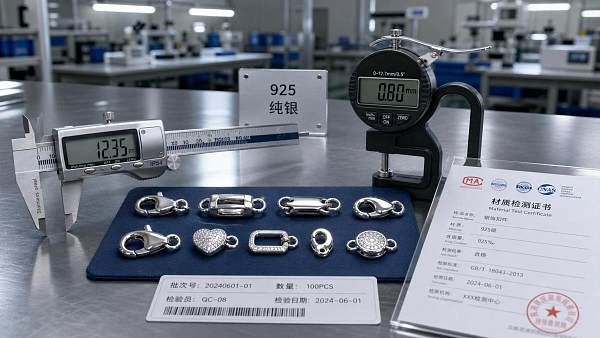
- Are material declarations available for metals, stones, coatings, and packaging components?
- What is the acceptable defect rate, and how are replacement claims handled in practice?
- Can they support both trend-driven small runs and volume replenishment without quality drift?
Which product specifications matter most in nose rings wholesale?
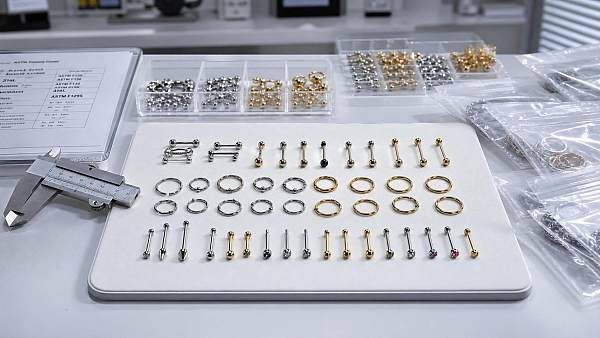
Technical details strongly influence customer satisfaction. Buyers comparing nose rings wholesale programs should review the parameters that determine fit, durability, appearance, and downstream complaint rates.
The table below summarizes common specification checkpoints procurement teams should document during sampling and vendor onboarding.
Specification control is especially important when buyers source for multiple channels. What works for a fashion impulse display may not suit a premium jewelry counter or a private-label e-commerce collection.
Material choices and channel fit
Titanium and 316L stainless steel are often preferred where lower sensitivity risk and durable wear are priorities. Sterling silver supports a more refined position but needs stronger care guidance. Brass-based products can serve trend collections, but quality control over plating and finish becomes critical.
How do compliance and safety affect wholesale buying decisions?
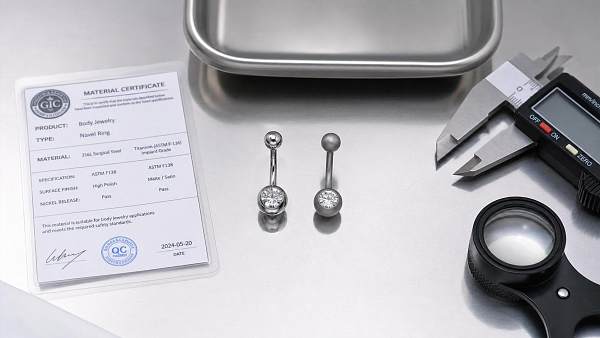
In body jewelry categories, compliance is not a minor administrative issue. It directly affects retailer acceptance, market entry, and customer trust. Procurement teams handling nose rings wholesale should confirm reasonable documentation for skin-contact materials and chemical restrictions relevant to destination markets.
Requirements vary by region, product construction, and channel, but responsible buying generally includes checks for material declarations, coating information, and restricted substance control. Importers should also review packaging labeling needs and age-related merchandising considerations where applicable.
- Ask for material composition details rather than accepting broad claims such as hypoallergenic without support.
- Review whether plating systems and decorative coatings align with your target market’s restrictions.
- Confirm carton, inner pack, and retail card labeling requirements before mass production.
- Include compliance checkpoints in purchase orders, not only in email discussions.
For commercial buyers managing multiple sourcing categories, GCT’s cross-sector perspective is useful because jewelry procurement often intersects with broader concerns already familiar in hospitality, specialty retail, and institutional supply: traceability, documentation discipline, and dependable vendor communication.
Common compliance mistake
Many buyers verify the metal but overlook inks, adhesives, card inserts, pouches, or electroplated layers. A complete review should cover the full product presentation, especially for private-label nose rings wholesale programs.
What procurement risks are often overlooked in nose rings wholesale?
The biggest sourcing issues are often hidden in operational details rather than headline pricing. A supplier may offer a wide assortment but struggle with repeatability, carton discipline, or replenishment forecasting.
- Inconsistent plating shade between initial sample and production lot, creating mixed visual presentation in stores.
- Unstable stone setting, especially on lower-cost fashion styles where prongs or adhesive systems are not well controlled.
- Weak MOQ planning that forces buyers into either overstock or frequent, costly rush orders.
- Poor packaging execution that causes tangling, scratches, missing pairs, or barcode mismatch on receipt.
- Communication gaps when design revisions, sample sign-off, or shipment release timing become urgent.
These risks are manageable when procurement teams adopt a stage-gate process. Sampling, material review, pre-production confirmation, in-process checks, and pre-shipment verification should all be treated as commercial controls, not optional extras.
A practical approval workflow
- Approve golden samples with exact finish, dimensions, packaging, and labeling references.
- Lock the bill of materials before bulk production to reduce substitution risk.
- Set acceptable quality levels for appearance defects, closure function, and packing accuracy.
- Define claim resolution terms in advance, including photo evidence standards and replacement timing.
How should buyers balance cost, customization, and margin?
Not every nose rings wholesale program needs the same product architecture. Trend-led collections may prioritize speed and variety. Premium private-label lines may prioritize material grade, refined finishing, and elevated packaging. The right balance depends on channel economics.
Before negotiating, buyers should clarify whether the goal is fast turnover, brand elevation, giftability, low return rate, or assortment exclusivity. Those objectives shape the acceptable trade-off between product cost and perceived value.
A cost discussion should include more than ex-factory price. Freight mode, packaging density, inspection expense, rework exposure, sampling rounds, and markdown risk all affect the actual landed and sold margin of nose rings wholesale programs.
When customization is commercially justified
- Private-label retail chains that need packaging consistency across stores and online listings.
- Hospitality or lifestyle venues developing curated retail corners with brand-aligned accessories.
- Specialty jewelry sellers seeking exclusive styles to reduce direct price comparison pressure.
GCT helps buyers assess these trade-offs with a sourcing lens shaped by premium commercial environments, where visual identity, compliance discipline, and execution reliability often matter as much as headline cost.
Which application scenarios require different wholesale strategies?
Different business models require different nose rings wholesale structures. Buyers should align product mix, MOQ, packaging, and replenishment logic with the sales environment instead of applying one sourcing template to every channel.
The following table outlines how wholesale strategy can shift by commercial scenario.
This scenario-based view helps procurement teams avoid mismatches between product specifications and selling context. In nose rings wholesale, the best supplier is often the one that fits your channel mechanics, not just your budget target.
FAQ: what buyers often ask about nose rings wholesale
How do I choose between stainless steel, titanium, and silver?
Choose based on customer profile, price architecture, and brand position. Titanium and 316L stainless steel are often favored for durability and lower sensitivity concerns. Sterling silver can support a more premium image, but requires stronger tarnish-care communication and tighter storage control.
What is the most common mistake when buying nose rings wholesale?
The most common mistake is approving based on appearance only. Buyers should also test closure strength, surface smoothness, size consistency, packing accuracy, and documentation quality. A visually attractive sample can still produce costly issues at scale.
How much customization should a procurement team request?
Request only the customization that supports your sales model. For some buyers, branded cards and barcode labeling are enough. For others, exclusive designs, coordinated finish palettes, and gift-ready packaging create needed differentiation. Too much customization can increase MOQ pressure and slow launch timelines.
What lead time questions should be clarified early?
Clarify sample timing, bulk production schedule, capacity during seasonal peaks, and reorder lead time for proven styles. In nose rings wholesale, the real advantage often comes from predictable replenishment rather than a fast first order alone.
Why work with a sourcing partner that understands commercial buying complexity?
Procurement teams rarely buy in isolation. They manage branding targets, margin pressure, compliance review, launch timing, and cross-border coordination at the same time. That is why a structured sourcing partner can add value beyond supplier introductions.
Global Commercial Trade supports buyers with a commercially oriented perspective shaped by hospitality, specialty retail, and premium sourcing environments. That means sourcing discussions can move beyond catalog browsing toward decisions about fit-for-channel specifications, documentation readiness, scalable customization, and supplier dependability.
If your team is comparing nose rings wholesale programs, you can consult on sample evaluation criteria, material and finish options, packaging formats, quote comparison logic, expected lead times, and documentation checkpoints before committing to bulk volume.
Why choose us
Work with GCT when you need clearer sourcing decisions, not just more supplier names. We can help you review product parameters, compare wholesale offers, discuss channel-specific assortment strategy, confirm customization feasibility, assess delivery schedules, and organize the right questions around compliance and sample support.
For procurement teams ready to move forward, the most useful next step is a focused inquiry covering target material, finish preference, order volume, packaging needs, required delivery window, and any certification or market-entry concerns. With those inputs, sourcing conversations become faster, more accurate, and more commercially actionable.
Search News
Hot Articles
- Musical InstrumentsA Practical Guide to Identifying Wooden Orchestral Instruments by Family and ToneOct 10, 2026
- Indoor PlaygroundHow to Choose Animatronic Haunted House Props for High-Throughput AttractionsOct 08, 2026
- Fashion & Gem JewelryThermal Diamond Testers: How They Work and When They Can Misidentify StonesOct 07, 2026
Popular Tags
Need ExpertConsultation?
Connect with our specialized leisureengineering team for procurementstrategies.
Recommended News
 Oct 07, 2026Thermal Diamond Testers: How They Work and When They Can Misidentify StonesThermal diamond tester guide: learn how it works, spot false positives from moissanite, and choose reliable verification methods for jewelry trade and retail.● Luxury Retail Analyst
 Oct 02, 2026Diamond Tester Wholesale: How to Vet Accuracy, Calibration, and MOQ Before OrderingDiamond tester wholesale guide: verify accuracy, calibration records, supplier quality controls, and MOQ terms before ordering. Source reliable testers with confidence.● Luxury Retail Analyst
 Sep 09, 2026Wholesale Coral Earrings: How Buyers Can Assess Quality, Treatments, and Supply RiskCoral jewelry earrings wholesale guide for buyers: assess quality, treatments, secure settings, documentation, and supply risks before ordering.● Luxury Retail Analyst
 Sep 01, 2026How to Choose a Jewelry Laser Engraving Machine Manufacturer for Custom ProductionChoose a jewelry laser engraving machine manufacturer with proven sample testing, precision fixtures, workflow-ready software, and reliable support for custom production.● Luxury Retail Analyst
 Aug 27, 2026Evaluating Luxury Retail Accessories Suppliers: Quality, Lead Times, and Brand FitLuxury retail accessories supplier selection made clearer: assess quality, lead times, compliance, costs, and brand fit to protect premium launches and margins.● Luxury Retail Analyst
 Jul 29, 2026Fine Jewelry Price Guide: What Affects Cost and How to Judge Real ValueFine jewelry price guide for buyers: learn what drives cost in metals, gemstones, craftsmanship, certification, and branding so you can judge real value, reduce sourcing risk, and buy with confidence.● Luxury Retail Analyst
 Jul 14, 2026What to Ask an Enamel Jewelry Manufacturer Before Sampling and Mass ProductionEnamel jewelry manufacturer selection starts with the right questions. Learn what to ask about materials, color matching, MOQ, QC, compliance, and lead times before sampling and mass production.● Luxury Retail Analyst
 Jul 12, 2026Surgical Steel Belly Rings vs Titanium: Material Differences, Safety, and CostSurgical steel belly rings vs titanium: compare safety, nickel exposure, comfort, durability, and cost to choose the best option for sensitive skin or budget-friendly style.● Luxury Retail Analyst
 Jul 12, 2026Natural Coral Jewelry Guide: How to Identify Real Coral, Treatments, and QualityNatural coral jewelry guide covering how to identify real coral, spot treatments, assess quality, and buy with confidence. Learn the key signs before you choose.● Luxury Retail Analyst
 Jul 11, 2026Braided Leather Bracelets OEM: Material, Clasp, and MOQ Factors Before SamplingBraided leather bracelets OEM guide covering material grades, clasp options, and MOQ factors before sampling. Learn how to reduce sourcing risk, control cost, and choose the right supplier.● Luxury Retail Analyst
 Jul 09, 2026Jewelry Craftsmanship Gemstone Setting Methods Explained: Prong, Bezel, Pave, and MoreJewelry craftsmanship gemstone setting explained clearly: compare prong, bezel, pavé, channel, and more to choose secure, beautiful, and commercially smart jewelry designs.● Luxury Retail Analyst
 Jul 06, 2026Photo Locket Necklace Manufacturer Selection Guide: Materials, MOQ, and Custom OptionsPhoto locket necklace manufacturer selection guide covering materials, MOQ, custom options, compliance, and quality checks to help buyers source smarter and build stronger jewelry lines.● Luxury Retail Analyst
 Jul 05, 2026What to Check When Comparing a Sterling Silver Clasp ManufacturerChoosing a sterling silver clasp manufacturer? Learn what to check first: 925 silver claims, finish quality, testing, compliance, lead times, and hidden sourcing costs.● Luxury Retail Analyst
 Jul 02, 2026Jewelry Craftsmanship Techniques Explained: Casting, Stone Setting, Engraving, and PolishingJewelry craftsmanship techniques explained: discover how casting, stone setting, engraving, and polishing shape quality, durability, and sourcing confidence.● Luxury Retail Analyst
 Jul 01, 2026Lost Wax Casting Machines Explained: Types, Capacity, and Metal CompatibilityLost wax casting machines explained: compare types, real capacity, and metal compatibility to choose the right system for precision casting, higher quality, and smarter sourcing.● Luxury Retail Analyst
 Jun 29, 2026How to Evaluate a Luxury Accessories Online Store Before You BuyLuxury accessories online store buying guide: learn how to verify authenticity, compare policies, check reviews, and avoid costly mistakes before you place an order.● Luxury Retail Analyst
 Jun 22, 2026Matching Couple Rings: Popular Materials, Fit Differences, and How to ChooseMatching couple rings guide: compare popular materials, fit differences, comfort, durability, and resizing options to choose a stylish pair that truly lasts.● Luxury Retail Analyst
 Jun 19, 2026How to Build a Fashion Accessories Catalog That Improves Product Discovery and SalesFashion accessories catalog strategies that improve product discovery, filtering, and conversions. Learn how to structure pages, categories, and data to drive more qualified sales.● Luxury Retail Analyst
 Jun 19, 2026How to Choose Luxury Accessories for Women by Material, Style, and Price PointLuxury accessories for women: learn how to choose the right pieces by material, style, and price point for better value, timeless appeal, and smarter buying decisions.● Luxury Retail Analyst
 Jun 18, 2026Stainless Steel Rings Bulk: 304 vs 316L, Finishes, and Custom Order FactorsStainless steel rings bulk guide: compare 304 vs 316L, explore finish options, and learn key custom order factors to reduce sourcing risk and improve product value.● Luxury Retail Analyst
 Jun 18, 2026Body Piercing Jewelry Bulk Buying Guide: Materials, Sizes, and MOQ QuestionsBody piercing jewelry bulk buying guide covering safe materials, size checks, MOQ strategy, supplier screening, and compliance tips to reduce risk and source with confidence.● Luxury Retail Analyst
 Jun 18, 2026How to Evaluate a Luxury Jewelry Exporter for Quality, Compliance, and DeliveryLuxury jewelry exporter evaluation starts with more than design. Learn how to verify quality, compliance, and delivery control to source premium jewelry with less risk.● Luxury Retail Analyst
 Jun 17, 2026Iced Out Watches Wholesale: How to Compare MOQ, Stone Quality, and MarginsIced out watches wholesale guide: compare MOQ, stone quality, and real margins to choose reliable suppliers, reduce risk, and grow resale profits with smarter sourcing.● Luxury Retail Analyst
 Jun 15, 2026How to Evaluate an Amber Jewelry Manufacturer: Quality Grades, OEM Options, and Lead TimesAmber jewelry manufacturer selection starts with quality grades, OEM capability, and realistic lead times. Learn how to compare suppliers, reduce sourcing risk, and choose with confidence.● Luxury Retail Analyst