How to tell if 925 sterling silver jewelry is worth buying
Wondering whether 925 sterling silver jewelry is truly worth your money? For informed buyers, the answer goes beyond shine and price. From metal purity and craftsmanship to durability, hallmarks, and resale value, understanding what sets quality pieces apart can help you avoid costly mistakes and choose jewelry that offers both style and long-term value.
What does 925 sterling silver jewelry actually mean for buyers?
925 sterling silver jewelry contains 92.5% pure silver and 7.5% other metals, usually copper. That small alloy addition matters because pure silver is soft, while sterling silver offers a better balance of beauty, wearability, and structural strength.
For information-driven buyers, especially those comparing retail collections, gift pieces, or sourcing options for luxury accessory channels, the real question is not only whether the silver is genuine. It is whether the piece delivers lasting value in finish, workmanship, comfort, and long-term maintenance.
In commercial buying environments, silver jewelry is often evaluated the same way other premium goods are assessed: material integrity, visual consistency, supplier transparency, compliance needs, packaging suitability, and after-sales risk. That is why the “925” mark is a starting point, not the final buying decision.
- A 925 stamp indicates alloy purity, not overall quality of design or production.
- A well-made sterling silver piece can hold value through durability, repairability, and timeless styling.
- A poorly made piece can still be stamped 925 but suffer from weak clasps, thin plating, rough finishing, or unstable stones.
Why sterling silver remains commercially relevant
925 sterling silver jewelry remains popular because it sits in a practical middle zone. It looks premium, is more accessible than gold or platinum, and supports a wide variety of designs. For specialty retail and hospitality gifting programs, that makes it a versatile material with broad consumer appeal.
How to tell if 925 sterling silver jewelry is worth buying
If you want to judge 925 sterling silver jewelry with confidence, focus on a layered review process. Buyers often make mistakes by looking only at price or shine. In reality, value comes from several technical and commercial checkpoints working together.
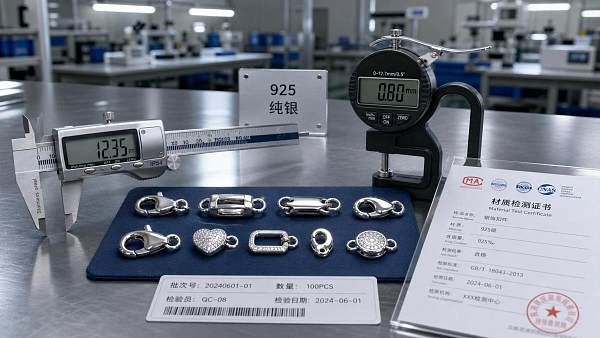
- Check the hallmark. Look for “925,” “Sterling,” or recognized assay indications, while remembering that marks can be misused without supporting seller credibility.
- Inspect finishing quality. Smooth edges, secure soldering, even polish, and consistent color usually indicate better manufacturing control.
- Review weight and thickness. Very light pieces may use minimal silver, making them less durable for daily wear.
- Assess functional parts. Clasps, earring posts, hinge mechanisms, and chain links often reveal whether a piece was built for longevity.
- Ask about treatments. Rhodium plating, anti-tarnish coating, oxidation finishes, and stone settings affect maintenance and price.
- Compare seller transparency. Reputable sources provide material details, return terms, care guidance, and where relevant, test reports or declarations.
This is where research platforms and sourcing hubs become useful. Global Commercial Trade helps buyers move beyond surface-level product descriptions by framing decisions around commercial suitability, sourcing reliability, and category-specific evaluation standards across jewelry and luxury accessories.
Key buying indicators: a practical evaluation table
The table below summarizes what buyers should examine before purchasing 925 sterling silver jewelry, especially when comparing multiple suppliers, private-label options, or premium retail assortments.
A useful takeaway is that authenticity alone does not guarantee value. In many buying scenarios, craftsmanship and supplier transparency have more impact on satisfaction than the silver percentage itself.
925 sterling silver jewelry vs other common jewelry materials
Many buyers researching 925 sterling silver jewelry are also comparing it with stainless steel, gold vermeil, brass, or solid gold. Each option serves a different budget, maintenance level, and brand positioning strategy.
The comparison below can help narrow decisions based on use case rather than marketing claims.
For many buyers, 925 sterling silver jewelry stands out because it delivers precious-metal appeal without moving into the pricing range of fine gold jewelry. That balance is especially important in specialty retail, curated gifting, and branded accessory programs.
When sterling silver is the better choice
- You want a genuine precious metal rather than base-metal fashion jewelry.
- You need a premium look but must control budget across multiple units or collections.
- You value classic styling, engravability, or repair options.
What affects the price of 925 sterling silver jewelry?
Price differences in 925 sterling silver jewelry can be confusing because two pieces may look similar online while differing sharply in cost. Usually, the gap comes from construction, finishing, design complexity, brand positioning, and added materials rather than silver content alone.
Main pricing drivers
- Metal weight: heavier items generally use more silver and cost more.
- Hand-finishing: polishing, texturing, engraving, and stone setting require labor.
- Surface treatment: rhodium or gold vermeil finishes add process cost.
- Design originality: custom molds, signature forms, and low-volume runs increase unit price.
- Packaging and presentation: premium boxes, certificates, and retail-ready kits raise perceived and actual cost.
Commercial buyers should also account for hidden costs such as sample development, quality control, shipping protection, import documentation, and returns caused by inconsistent finishing. A low unit price is not a true saving if defect rates or presentation issues damage the end customer experience.
Which quality risks do buyers often overlook?
Buyers researching 925 sterling silver jewelry often focus on authenticity but miss the operational risks that affect satisfaction later. These risks matter for both personal buyers and sourcing teams building retail or hospitality accessory assortments.
Common red flags
- Very vague product descriptions that mention “silver tone” or “925 style” without clear material statements.
- No close-up images of clasps, chain links, backs, or settings where flaws usually appear.
- No information on plating thickness or whether the finish will naturally wear with use.
- Thin posts, fragile rings, or hollow-feeling parts that may deform under normal wear.
- Unclear return policies, no sample path for larger orders, or limited communication from the seller.
Global Commercial Trade addresses these issues through a sourcing-oriented perspective. Instead of treating jewelry as a simple consumer good, GCT frames evaluation around finish consistency, supplier communication, category positioning, and fit for demanding commercial environments.
Procurement guide: how should professional buyers assess 925 sterling silver jewelry?
Professional buyers need a more disciplined process than casual retail shoppers. Whether you are evaluating jewelry for luxury accessory retail, hotel gift boutiques, curated event merchandise, or branded collaborations, selection should connect product quality with delivery and presentation requirements.
The table below outlines a practical procurement checklist for 925 sterling silver jewelry in commercial sourcing scenarios.
This kind of structured review is especially valuable when the end use is high-visibility. A jewelry piece placed in a premium guest environment or a specialty retail concept must meet both aesthetic and operational expectations.
Where GCT adds value in the decision process
GCT supports buyers by connecting product evaluation with sourcing intelligence. That means looking beyond the object itself to assess supplier readiness, OEM or ODM suitability, presentation standards, and category fit across commercial experiences and luxury accessory channels.
Are there standards or compliance points worth checking?
Yes. While requirements vary by market, buyers of 925 sterling silver jewelry should pay attention to material disclosure, hallmarking practices, and possible restrictions related to nickel, lead, cadmium, or other substances in components and surface treatments.
- Check whether the seller clearly states the metal composition of the full item, not just part of it.
- If jewelry includes plating, stones, adhesives, or findings, ask whether these materials are suitable for your target market.
- For commercial distribution, confirm labeling and packaging information required by your destination channel.
Buyers do not always need complex certification for every order, but they do need enough traceability and product information to protect brand reputation and reduce downstream disputes.
FAQ: common questions about 925 sterling silver jewelry
Does 925 sterling silver jewelry tarnish, and is that a bad sign?
Yes, sterling silver can tarnish over time because of its alloy content and exposure to air, moisture, cosmetics, and sulfur compounds. Tarnish does not automatically mean poor quality. In fact, genuine silver often develops tarnish naturally. What matters is how easily the piece can be cleaned and whether protective finishes were properly applied.
Is 925 sterling silver jewelry a good choice for daily wear?
It can be, provided the item is well made. Rings, chains, earrings, and bracelets intended for daily wear should have reliable clasps, appropriate thickness, and smooth finishing. Delicate fashion-driven designs may still be genuine sterling silver but not ideal for heavy everyday use.
How can I avoid overpaying for 925 sterling silver jewelry?
Compare pieces by weight, craftsmanship, treatment, and seller transparency rather than by appearance alone. A higher price may be justified by better finishing or stronger construction, but inflated branding without clear material and production value should be questioned.
Is 925 sterling silver jewelry suitable for gift and retail programs?
Yes. It is particularly suitable where buyers want a premium yet accessible precious-metal category. That includes boutique retail, hospitality gifting, event merchandise, and curated luxury accessory assortments. The key is matching design, packaging, and finish quality to the intended brand experience.
Why choosing the right sourcing partner matters
When assessing whether 925 sterling silver jewelry is worth buying, the product and the sourcing channel must be judged together. A good piece from an unreliable supplier can still create delays, inconsistency, and costly after-sales issues. For commercial buyers, that risk multiplies when collections are customized or time-sensitive.
Global Commercial Trade helps narrow that risk by combining category knowledge, sourcing perspective, and buyer-oriented editorial analysis across jewelry and luxury accessories. This approach is especially useful for decision-makers who need more than a basic catalog view.
Why choose us for 925 sterling silver jewelry sourcing insights
If you are comparing 925 sterling silver jewelry for retail, gifting, branded collections, or commercial luxury programs, GCT can support the decision with practical sourcing intelligence rather than generic product talk. Our focus is on helping buyers evaluate material claims, finish quality, supplier suitability, and market fit in a structured way.
- Need help confirming parameters? Ask about metal composition, surface treatment, stone setting, and packaging details.
- Comparing options? We can help frame product selection around budget level, use scenario, and expected presentation standard.
- Working on a launch timeline? Discuss sample support, production lead times, and delivery planning before committing.
- Need a custom direction? Explore OEM or ODM possibilities, finish variations, branded packaging, and target-market requirements.
- Reviewing compliance concerns? Raise questions about labeling, restricted substances, and documentation expectations for your destination market.
For buyers who want to know whether 925 sterling silver jewelry is truly worth buying, the best next step is not guessing from photos. It is asking the right technical and sourcing questions early. Contact GCT to discuss product selection, sample evaluation, delivery timing, certification-related concerns, and quotation planning for your next jewelry or luxury accessories project.
Search News
Hot Articles
- Fashion & Gem JewelryThermal Diamond Testers: How They Work and When They Can Misidentify StonesOct 07, 2026
- Commercial KitchenWhat Is Driving Demand for Commercial Hospitality Projects Across the GCC?Oct 06, 2026
- Hotel Room AmenitiesHow to Select Hotel Hair Dryers That Balance Guest Safety, Durability, and CostOct 05, 2026
Popular Tags
Need ExpertConsultation?
Connect with our specialized leisureengineering team for procurementstrategies.
Recommended News
 Oct 07, 2026Thermal Diamond Testers: How They Work and When They Can Misidentify StonesThermal diamond tester guide: learn how it works, spot false positives from moissanite, and choose reliable verification methods for jewelry trade and retail.● Luxury Retail Analyst
 Oct 02, 2026Diamond Tester Wholesale: How to Vet Accuracy, Calibration, and MOQ Before OrderingDiamond tester wholesale guide: verify accuracy, calibration records, supplier quality controls, and MOQ terms before ordering. Source reliable testers with confidence.● Luxury Retail Analyst
 Sep 09, 2026Wholesale Coral Earrings: How Buyers Can Assess Quality, Treatments, and Supply RiskCoral jewelry earrings wholesale guide for buyers: assess quality, treatments, secure settings, documentation, and supply risks before ordering.● Luxury Retail Analyst
 Sep 01, 2026How to Choose a Jewelry Laser Engraving Machine Manufacturer for Custom ProductionChoose a jewelry laser engraving machine manufacturer with proven sample testing, precision fixtures, workflow-ready software, and reliable support for custom production.● Luxury Retail Analyst
 Aug 27, 2026Evaluating Luxury Retail Accessories Suppliers: Quality, Lead Times, and Brand FitLuxury retail accessories supplier selection made clearer: assess quality, lead times, compliance, costs, and brand fit to protect premium launches and margins.● Luxury Retail Analyst
 Jul 29, 2026Fine Jewelry Price Guide: What Affects Cost and How to Judge Real ValueFine jewelry price guide for buyers: learn what drives cost in metals, gemstones, craftsmanship, certification, and branding so you can judge real value, reduce sourcing risk, and buy with confidence.● Luxury Retail Analyst
 Jul 14, 2026What to Ask an Enamel Jewelry Manufacturer Before Sampling and Mass ProductionEnamel jewelry manufacturer selection starts with the right questions. Learn what to ask about materials, color matching, MOQ, QC, compliance, and lead times before sampling and mass production.● Luxury Retail Analyst
 Jul 12, 2026Surgical Steel Belly Rings vs Titanium: Material Differences, Safety, and CostSurgical steel belly rings vs titanium: compare safety, nickel exposure, comfort, durability, and cost to choose the best option for sensitive skin or budget-friendly style.● Luxury Retail Analyst
 Jul 12, 2026Natural Coral Jewelry Guide: How to Identify Real Coral, Treatments, and QualityNatural coral jewelry guide covering how to identify real coral, spot treatments, assess quality, and buy with confidence. Learn the key signs before you choose.● Luxury Retail Analyst
 Jul 11, 2026Braided Leather Bracelets OEM: Material, Clasp, and MOQ Factors Before SamplingBraided leather bracelets OEM guide covering material grades, clasp options, and MOQ factors before sampling. Learn how to reduce sourcing risk, control cost, and choose the right supplier.● Luxury Retail Analyst
 Jul 09, 2026Jewelry Craftsmanship Gemstone Setting Methods Explained: Prong, Bezel, Pave, and MoreJewelry craftsmanship gemstone setting explained clearly: compare prong, bezel, pavé, channel, and more to choose secure, beautiful, and commercially smart jewelry designs.● Luxury Retail Analyst
 Jul 06, 2026Photo Locket Necklace Manufacturer Selection Guide: Materials, MOQ, and Custom OptionsPhoto locket necklace manufacturer selection guide covering materials, MOQ, custom options, compliance, and quality checks to help buyers source smarter and build stronger jewelry lines.● Luxury Retail Analyst
 Jul 05, 2026What to Check When Comparing a Sterling Silver Clasp ManufacturerChoosing a sterling silver clasp manufacturer? Learn what to check first: 925 silver claims, finish quality, testing, compliance, lead times, and hidden sourcing costs.● Luxury Retail Analyst
 Jul 02, 2026Jewelry Craftsmanship Techniques Explained: Casting, Stone Setting, Engraving, and PolishingJewelry craftsmanship techniques explained: discover how casting, stone setting, engraving, and polishing shape quality, durability, and sourcing confidence.● Luxury Retail Analyst
 Jul 01, 2026Lost Wax Casting Machines Explained: Types, Capacity, and Metal CompatibilityLost wax casting machines explained: compare types, real capacity, and metal compatibility to choose the right system for precision casting, higher quality, and smarter sourcing.● Luxury Retail Analyst
 Jun 29, 2026How to Evaluate a Luxury Accessories Online Store Before You BuyLuxury accessories online store buying guide: learn how to verify authenticity, compare policies, check reviews, and avoid costly mistakes before you place an order.● Luxury Retail Analyst
 Jun 22, 2026Matching Couple Rings: Popular Materials, Fit Differences, and How to ChooseMatching couple rings guide: compare popular materials, fit differences, comfort, durability, and resizing options to choose a stylish pair that truly lasts.● Luxury Retail Analyst
 Jun 19, 2026How to Build a Fashion Accessories Catalog That Improves Product Discovery and SalesFashion accessories catalog strategies that improve product discovery, filtering, and conversions. Learn how to structure pages, categories, and data to drive more qualified sales.● Luxury Retail Analyst
 Jun 19, 2026How to Choose Luxury Accessories for Women by Material, Style, and Price PointLuxury accessories for women: learn how to choose the right pieces by material, style, and price point for better value, timeless appeal, and smarter buying decisions.● Luxury Retail Analyst
 Jun 18, 2026Stainless Steel Rings Bulk: 304 vs 316L, Finishes, and Custom Order FactorsStainless steel rings bulk guide: compare 304 vs 316L, explore finish options, and learn key custom order factors to reduce sourcing risk and improve product value.● Luxury Retail Analyst
 Jun 18, 2026Body Piercing Jewelry Bulk Buying Guide: Materials, Sizes, and MOQ QuestionsBody piercing jewelry bulk buying guide covering safe materials, size checks, MOQ strategy, supplier screening, and compliance tips to reduce risk and source with confidence.● Luxury Retail Analyst
 Jun 18, 2026How to Evaluate a Luxury Jewelry Exporter for Quality, Compliance, and DeliveryLuxury jewelry exporter evaluation starts with more than design. Learn how to verify quality, compliance, and delivery control to source premium jewelry with less risk.● Luxury Retail Analyst
 Jun 17, 2026Iced Out Watches Wholesale: How to Compare MOQ, Stone Quality, and MarginsIced out watches wholesale guide: compare MOQ, stone quality, and real margins to choose reliable suppliers, reduce risk, and grow resale profits with smarter sourcing.● Luxury Retail Analyst
 Jun 15, 2026How to Evaluate an Amber Jewelry Manufacturer: Quality Grades, OEM Options, and Lead TimesAmber jewelry manufacturer selection starts with quality grades, OEM capability, and realistic lead times. Learn how to compare suppliers, reduce sourcing risk, and choose with confidence.● Luxury Retail Analyst