Buying LED PAR Cans Wholesale: How to Compare Suppliers and Costs
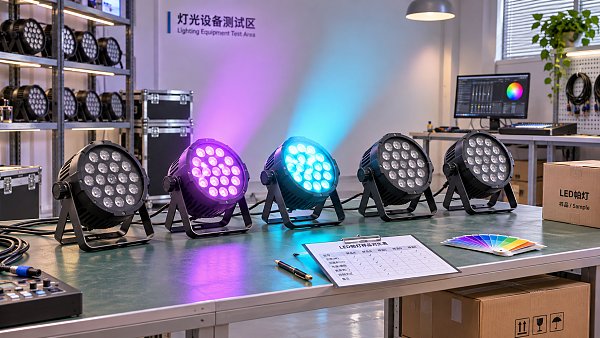
Buying LED PAR cans wholesale involves more than comparing unit prices. Procurement teams must assess light output, color mixing, control compatibility, certifications, and supplier reliability.
Shipping, minimum order quantities, and after-sales support also affect the final decision. A consistent evaluation process reveals which offer delivers the best value for your project.
Whether sourcing for venues, events, or commercial installations, start with a shared specification and calculate landed costs before ranking suppliers. Then validate the leading offers with samples.
Start With the Application, Not the Lowest Quote
A low fixture price matters only if the product produces the required effect, operates with existing controls, and survives the intended working environment.
For touring and rental inventories, prioritize durable housings, dependable connectors, easy servicing, and consistent performance across replacement batches. Frequent setup can expose weaknesses quickly.
For permanent installations, confirm mounting positions, throw distances, available power, control wiring, and access for maintenance. Appearance and fan noise may also influence the choice.
Outdoor events require fixtures rated for the expected conditions. An enclosure suitable for rain during operation may still need protection during storage and transport.
Before requesting quotations, document quantities, delivery locations, installation dates, control requirements, and performance targets. Give every supplier the same brief to make responses comparable.
Which LED PAR Can Specifications Matter Most?
Product listings often emphasize LED wattage or the number of diodes. Neither measurement alone tells you whether a fixture will deliver enough usable light.
Light output and beam coverage
Ask for photometric data showing illuminance in lux at relevant distances, along with beam angle and field angle. Compare measurements under the same operating conditions.
Beam angle describes the brighter central portion of the beam, while field angle covers a wider area. Both help determine coverage and fixture placement.
A narrow beam can deliver greater intensity at a distance; a wider beam can cover more area. Neither is automatically better for every application.
Request the measurement distance, color setting, dimmer level, and test method. White output and saturated color output can differ significantly on the same fixture.
Color mixing and dimming
RGB fixtures can suit saturated effects, while RGBW and other LED combinations may offer different white-light or color-mixing capabilities. Select according to actual visual requirements.
If accurate color matters for merchandise, hospitality interiors, or filmed events, assess color rendering and consistency using the intended white setting and representative sample materials.
Ask suppliers to specify how color quality is measured. CRI can inform a white-light comparison, but a live sample check remains valuable for mixed-color effects.
Test low-level dimming for visible steps, flicker, and unexpected color shifts. For video applications, verify performance using the cameras and exposure settings planned for production.
Controls, power, and environmental protection
Check whether fixtures support the required control protocol, commonly DMX512, and request the channel modes, addressing instructions, connector type, and a complete control chart.
If wireless control or network integration is required, confirm the exact protocol, compatible equipment, and any additional transmitters or interfaces included in the quote.
Match input voltage and frequency to each destination. Review power consumption, connector ratings, and manufacturer guidance before calculating how many units can share a circuit.
For wet or dusty locations, specify the necessary IP rating and verify that connectors and accessories provide equivalent protection when installed as intended.
Also check operating temperature, cooling method, and noise. A fan-cooled fixture acceptable at a concert may be unsuitable for a quiet restaurant or conference room.
How to Compare LED PAR Can Suppliers
When buying LED PAR cans wholesale, compare suppliers against a written scorecard. Include technical fit, product quality, documentation, delivery, commercial terms, and support.
Separate essential requirements from preferences. A supplier should pass mandatory safety, control, and performance checks before a lower price improves its ranking.
Verify product consistency and manufacturing capability
Ask who manufactures the fixture, where final assembly takes place, and whether key components may change between batches. A trading company should identify its quality controls.
Request details of incoming component inspection, burn-in procedures, final functional testing, and traceability. Ask how defects are recorded and what happens when a batch fails.
For large or recurring orders, agree on a golden sample: an approved reference unit against which later production can be evaluated for agreed characteristics.
Define acceptable variation in output, color, finish, and operation. Where consistency is critical, specify measurable tolerances and the sampling method in the purchase agreement.
Check documentation for the destination market
Ask for the full test reports and declarations relevant to the exact model, configuration, and destination. A logo on a listing is insufficient evidence.
Depending on the market and application, requirements may involve electrical safety, electromagnetic compatibility, hazardous substances, and other obligations. Confirm applicability with qualified local advisers.
Check the model number, manufacturer, issuing body, test standard, and report date. If components or the product design change, ask whether existing documentation still applies.
For branded or private-label products, establish who is responsible for importer labeling, technical documentation, and any required market registrations before the order is placed.
Assess delivery and financial reliability
Request a production schedule covering materials, assembly, inspection, and dispatch. Ask which components have long lead times and how the supplier handles shortages.
Check business registration, trade references where available, and the consistency of bank details with contract documentation. Independently verify any changes to payment instructions.
Compare payment milestones and cancellation terms as carefully as price. A larger deposit may increase exposure if production is delayed or the supplier fails to perform.
How Much Do LED PAR Cans Cost When Bought Wholesale?
Wholesale pricing varies with output, LED configuration, enclosure rating, order volume, accessories, and market conditions. A useful comparison starts with total landed cost, not a generic price range.
For each offer, calculate the product cost plus tooling, inspection, freight, insurance, duties, taxes, customs clearance, and inland delivery. Add expected financing and handling costs where relevant.
Then divide the total by the number of usable fixtures received. This makes offers easier to compare when packaging, accessories, or expected damage rates differ.
Use the same destination, currency, exchange-rate assumption, and tax treatment for every calculation. Treat recoverable taxes separately from costs the business will ultimately bear.
A simple landed-cost example
Suppose a buyer orders 100 fixtures at $40 each. Freight and insurance total $600, estimated duty is $230, and clearance plus inland delivery adds $170.
The estimated landed cost is $5,000, or $50 per fixture, before any applicable nonrecoverable taxes and financing costs. Actual duty depends on classification and destination rules.
A competing $37 fixture may still cost more if it ships in smaller cartons, needs separate power cables, or carries higher freight and clearance charges.
Run a sensitivity check using higher freight, currency movement, and a realistic defect allowance. For example, $5,000 divided by 98 usable fixtures is approximately $51.02 each.
Do not count replacement units twice: include either the expected cost of resolving defects or the reduced number of usable units, according to your model.
Understand minimum orders and price breaks
Ask whether the minimum order quantity applies per model, color, connector, packaging design, or total order. Mixed configurations may change the quoted unit price.
Request price breaks at several quantities, but compare the savings with storage, financing, and the risk of holding fixtures that become obsolete or remain unused.
If demand is uncertain, negotiate a pilot order or scheduled releases against a framework agreement. Confirm whether later releases retain the same price and specifications.
Compare shipping terms on equal footing
Identify the agreed Incoterms rule, named place, and version in each quote. These terms allocate delivery obligations and risk, but do not replace the sales contract.
For example, an FOB offer and a delivered offer include different transport responsibilities. Convert both to the same destination cost before deciding which is cheaper.
Ask for carton dimensions, gross weight, packing configuration, and production-ready date. These details help freight providers produce comparable estimates and identify storage constraints.
What Should a Sample Order Prove?
A sample should answer specific purchasing questions, not merely confirm that the fixture turns on. Test it against the written requirements and intended working conditions.
Run fixtures at normal operating levels long enough to assess heat, fan behavior, noise, and stability. Follow manufacturer guidance and use qualified personnel for electrical checks.
Connect the sample to your controller and verify every required channel mode, dimming curve, addressing procedure, and cable connection. Test any promised wireless functions separately.
Compare multiple samples side by side for color and output consistency. Check mounting hardware, adjustment mechanisms, cable strain relief, and the clarity of labels.
For video use, record test footage at the intended frame rates and shutter settings. Ask about refresh-rate options if visible flicker or banding appears.
Keep a record of sample results, photographs, firmware version, and any agreed corrections. Obtain a revised sample if changes could affect performance or compliance.
Which Warranty and After-Sales Terms Protect the Purchase?
A warranty period alone says little about practical support. The agreement should explain covered defects, exclusions, response times, and the process for obtaining a remedy.
Clarify whether the supplier will provide replacement parts, replacement fixtures, repairs, or credit. Specify who pays freight, duties, and labor for each remedy.
Ask how long spare parts will remain available, particularly LED boards, drivers, fans, lenses, and control boards. Confirm part compatibility across expected production batches.
For time-sensitive installations, negotiate an initial spare-parts package or reserve fixtures. Compare that cost with the disruption caused by a failed unit awaiting shipment.
Agree on a defect reporting window, evidence requirements, and escalation contact. Define how widespread failures will be investigated and resolved, including responsibilities for affected inventory.
What Should Be Included in the Purchase Order?
Attach the approved specification and reference sample details to the purchase order. Include model numbers, quantities, accessories, packaging, labeling, and the required documentation.
State delivery milestones, the named delivery point, payment terms, inspection rights, and remedies for delays or nonconforming goods. Ensure these terms match the supplier agreement.
For larger orders, consider an independent pre-shipment inspection based on agreed sampling and acceptance criteria. Decide in advance how failures trigger rework or reinspection.
Require written approval before changes to critical components, firmware, or manufacturing location. Such changes can affect performance, replacement compatibility, and the validity of supporting documentation.
Confirm carton markings and destination-specific instructions before production ends. Accurate packing lists and commercial invoices can reduce avoidable customs and receiving delays.
Make the Final Supplier Decision
The strongest LED PAR cans wholesale offer meets the application requirements, demonstrates consistent quality, and remains competitive after all delivery and support costs are included.
Compare suppliers using the same specifications and landed-cost assumptions, then validate the leading option through samples and documented checks. Record any remaining risks before approval.
A clear purchase order and workable after-sales terms turn that comparison into a dependable sourcing decision, whether you are buying for one venue or recurring projects.
Search News
Hot Articles
- Stage Lighting & TrussBuying LED PAR Cans Wholesale: How to Compare Suppliers and CostsNov 21, 2026
- Fashion & Gem JewelryMacau Retail Sales Rise 9.1% in Q3; Watches and Jewellery Up 31.1%Nov 20, 2026
- Fashion & Gem JewelryHow to Assess a Fashion Accessories Supplier: Quality, Delivery and RiskNov 20, 2026
Popular Tags
Need ExpertConsultation?
Connect with our specialized leisureengineering team for procurementstrategies.
Recommended News
 Nov 21, 2026Buying LED PAR Cans Wholesale: How to Compare Suppliers and CostsBuying LED PAR cans wholesale? Compare suppliers, specifications, landed costs, and warranties to find reliable fixtures and make a confident purchase.● Pro Audio Engineer
 Nov 19, 2026Choosing High Output Bubble Machines for Large Events: Key FactorsChoosing high output bubble machines for a large event? Compare coverage, runtime, fluid needs and safety to deliver a reliable, crowd-pleasing effect.● Pro Audio Engineer
 Oct 19, 2026What Event Technology Stack Suits a 500-Person Corporate Event?Discover what event technology stack fits a 500-person corporate event. Compare registration, check-in, AV, and connectivity to reduce queues, control costs, and engage attendees.● Pro Audio Engineer
 Jul 13, 2026Stage Riser Platforms Explained: Types, Load Ratings, and Best-Fit Event UsesStage riser platforms explained clearly: compare types, load ratings, safety factors, and best-fit event uses to choose smarter, safer solutions for conferences, schools, hotels, and live shows.● Pro Audio Engineer
 Jul 09, 2026SASO Fast Track Cuts Stage Lighting Export Lead TimeSASO Fast Track cuts stage lighting export lead time from 45 days to 12 working days. Learn how Saudi certification changes affect truss suppliers, OEMs, buyers, and shipment planning.● Pro Audio Engineer
 Jul 08, 2026SASO Updates Stage Lighting Label Rules for LED Moving HeadsSASO updates stage lighting label rules for LED moving heads, requiring three-level energy efficiency values and bilingual labels. See what exporters and buyers must do before October 2026.● Pro Audio Engineer
 Jul 07, 2026SASO Adds Energy Label Rules for Stage Lighting ImportsSASO Adds Energy Label Rules for Stage Lighting Imports: learn which stage lighting products now need Arabic energy labels and SASO-recognized test reports before Sept. 1, 2026.● Pro Audio Engineer
 Jul 06, 2026Saudi SASO Sets A+ Rule for Stage LED LightingSaudi SASO sets A+ rule for stage LED lighting from Oct 1, 2026. Learn how the new SASO label and IEC 62722-2-1:2026 standard impact compliance, shipping, and market access.● Pro Audio Engineer
 Jul 04, 2026SASO Tightens RF Test Rules for Wireless Stage ControlsSASO tightens RF test rules for wireless stage controls in Saudi Arabia. Learn how the new IEC 62368-3 requirement impacts stage lighting exports, compliance, and delivery.● Pro Audio Engineer
 Jul 03, 2026Saudi SASO Adds RF Approval Rule for Stage LightingSaudi SASO adds RF approval rule for stage lighting. Learn how the new SASO RoHS+RF certification affects wireless lighting, truss control exports, retail access, and project delivery in Saudi Arabia.● Pro Audio Engineer
 Jul 02, 2026SASO Starts EMC Pilot for Smart Stage Lighting in SaudiSASO starts an EMC pilot for smart stage lighting in Saudi Arabia, impacting dimming controllers, cloud access, and project compliance. See what suppliers and integrators must do now.● Pro Audio Engineer
 Jul 01, 2026Saudi SASO Tightens UV-C Limits for Stage LightingSaudi SASO tightens UV-C limits for stage lighting and truss products. Learn the 2026 SASO IEC 62471 update, retesting deadline, customs risks, and how to protect Saudi shipments.● Pro Audio Engineer
 Jun 30, 2026EN 62471:2026 Adds UV-C Limit for Stage LightingEN 62471:2026 adds a UV-C limit for stage lighting, impacting LED moving heads, laser fixtures, and truss lighting. Learn what changes before Dec 1, 2026.● Pro Audio Engineer
 Jun 29, 2026TUV Adds Wi-Fi 7 EMC Test for Stage LightingTUV Adds Wi-Fi 7 EMC Test for Stage Lighting sold into the EU. Learn the Oct 1, 2026 deadline, retesting rules, and how EN 55032:2024 impacts certificates, shipments, and compliance planning.● Pro Audio Engineer
 Jun 25, 2026LED PAR Cans Wholesale: What to Compare in Wattage, Beam Angle, and DMX ControlLED par cans wholesale buyers should compare wattage, beam angle, and DMX control before requesting quotes. Learn how to avoid costly mismatches and choose fixtures that fit each venue.● Pro Audio Engineer
 Jun 16, 2026Stage Lighting Equipment List for Small Venues: What You Need and How to Plan ItStage lighting equipment for small venues: discover a practical equipment list, planning tips, and smart setup ideas to improve performance, flexibility, and long-term value.● Pro Audio Engineer
 Jun 12, 2026Vietnam Tightens EMC Rules for Stage Lighting LEDsVietnam Tightens EMC Rules for Stage Lighting LEDs: learn how QCVN 139:2026 impacts imports, testing, sourcing, and delivery planning for stage lighting businesses.● Pro Audio Engineer
 Jun 11, 2026LPGA Shanghai Debut Lifts Stage Lighting OrdersStage lighting and truss demand is rising as LPGA Shanghai debuts in 2026. Learn how tighter delivery windows, compliance, and project execution are reshaping global orders.● Pro Audio Engineer
 Jun 04, 2026UK EPR Rules Expand to Stage Lighting and TrussUK EPR rules for stage lighting and truss expand in Q3 2026. Learn how UKCA-linked registration, reporting, recycling fees, and material documentation will affect compliance and market access.● Pro Audio Engineer
 Jun 03, 2026UK EPR Fee Hits Stage Truss Textiles in Q3 2026UK EPR Fee for stage truss textiles starts in Q3 2026. Learn what new recycling charges and UKCA-Flame rules mean for lighting and truss suppliers.● Pro Audio Engineer
 Jun 02, 2026UK EPR Fee Hits Stage Lighting & TrussUK EPR Fee Hits Stage Lighting & Truss products with textile components in 2026. Learn compliance risks, BOM updates, and cost impacts for UK exporters.● Pro Audio Engineer
 May 25, 2026China's Carbon Fiber Truss Strength Up 32% at 2026 Sports ExpoCarbon fiber truss strength up 32% at 2026 Sports Expo—UL 1598 certified, CE+UL ready. Discover how China’s stage infrastructure is winning European music festivals & global tenders.● Pro Audio Engineer
 May 23, 2026Vietnam Mandates Bilingual MSDS for Stage Lighting & Truss ImportsVietnam mandates bilingual MSDS (Vietnamese & Chinese) for stage lighting and truss imports — ensure compliance by July 1, 2026 to avoid shipment rejection.● Pro Audio Engineer
 May 20, 20263 Chinese Stage Lighting Firms Join LA28 Olympic Supplier List3 Chinese stage lighting firms join LA28 Olympic supplier list — showcasing ISO 20121 & UL 1574 compliance, sustainability leadership, and global credibility in live-event infrastructure.● Pro Audio Engineer