Synthetic Turf Wholesale: Which Specs Actually Change Lifespan?
In synthetic turf wholesale, lifespan is rarely determined by price alone. The specs that truly matter—fiber material, stitch rate, backing strength, pile height, and UV resistance—can dramatically affect durability, maintenance costs, and long-term appearance. For buyers comparing options, understanding which technical details actually extend service life is essential to making a smarter commercial sourcing decision.
Why lifespan specs are getting more attention in synthetic turf wholesale
A noticeable shift is happening across commercial sourcing: buyers are no longer judging artificial grass mainly by surface appearance, sample softness, or headline price. In synthetic turf wholesale, the market is moving toward lifecycle thinking. Hotels, schools, public leisure operators, contractors, and facility investors increasingly want to know which specifications genuinely reduce replacement frequency, lower maintenance pressure, and protect the visual standard of the site over time.
This shift is not theoretical. End users have become more demanding, project budgets are under closer review, and procurement teams are being asked to justify total cost rather than only initial spend. In practice, that means turf products that look similar at delivery may perform very differently after heat, rainfall, UV exposure, heavy foot traffic, grooming cycles, and repeated cleaning. The lifespan conversation in synthetic turf wholesale has therefore become more technical and more strategic.
Another important signal is the widening range of application scenarios. Landscape turf for hospitality, rooftop leisure decks, school activity spaces, pet zones, event venues, and decorative commercial installations do not age in the same way. As a result, buyers are asking sharper questions: Which specs affect fiber recovery? Which backing system resists moisture and delamination? Which pile configuration traps debris and accelerates wear? The result is a market where specification literacy has become a competitive advantage.
The biggest market change: buyers are shifting from “looks good now” to “lasts well later”
The most relevant trend in synthetic turf wholesale is the move from appearance-led selection to performance-led selection. This is especially visible in commercial projects where downtime, warranty disputes, and premature replacement can damage both operating budgets and brand perception. Buyers now understand that lifespan is not a single promise but the result of multiple technical choices interacting with installation quality and real use conditions.
In previous buying cycles, some wholesale decisions prioritized pile height, color blend, or face weight without enough attention to underlying construction. Today, procurement teams are more likely to compare backing composition, tuft bind stability, drainage design, and UV additives. This change matters because many early-stage failures are not caused by one dramatic defect. They come from gradual flattening, seam stress, yarn splitting, fading, weak drainage performance, or base instability that slowly shortens usable life.
Which specifications actually change lifespan the most
Not every specification has equal influence. In synthetic turf wholesale, a few technical details consistently have a stronger effect on service life than cosmetic features. Buyers researching long-term performance should focus on the construction elements below.
1. Fiber material is still the first major durability signal
Polyethylene is often chosen for softness and natural appearance, while polypropylene is generally less resilient in demanding commercial conditions. Nylon can offer strong recovery and heat tolerance, but it is usually positioned differently in cost and application. The key point is not that one material is always best, but that fiber choice must match the stress profile of the project. For high-use zones, the wrong yarn material can lead to faster matting, visible wear paths, and reduced aesthetic life.
2. Stitch rate and tuft density affect more than visual fullness
Many buyers in synthetic turf wholesale focus on density because it changes how premium the product looks. But density also influences support, fiber posture, and wear distribution. A balanced stitch rate can improve how well fibers remain upright under repeated use. However, density should not be judged in isolation. If dense construction is paired with weak yarn or poor backing, the apparent upgrade may not translate into longer life.
3. Backing strength is a hidden but decisive factor
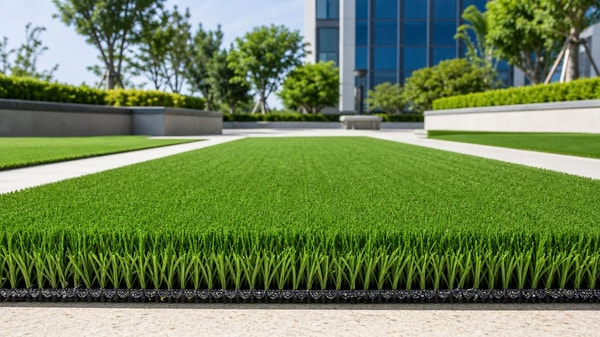
For many commercial failures, the problem is not the grass blade itself but the system holding it in place. Primary backing, secondary coating, tuft lock, and dimensional stability all matter. Weak backing can increase the risk of yarn pullout, seam stress, moisture-related issues, and overall structural fatigue. In landscape and leisure applications, backing quality often separates turf that remains stable for years from turf that deteriorates early despite looking acceptable at the start.
4. Pile height changes wear behavior and maintenance load
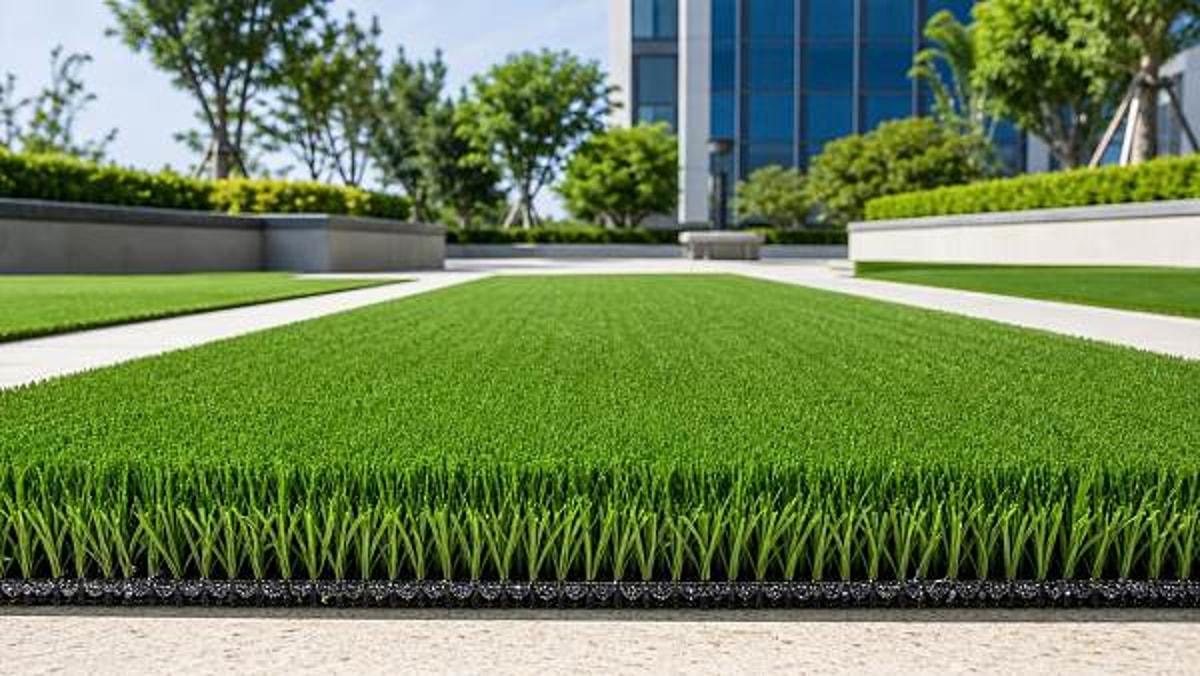
Taller pile is not automatically better. In some settings, excessive pile height can flatten faster, hold more debris, and require more grooming to maintain appearance. Shorter or medium pile often performs more consistently in commercial areas with regular traffic. Buyers using synthetic turf wholesale channels should evaluate pile height based on use intensity, maintenance capacity, and the visual standard expected after months of operation rather than on showroom impression alone.
5. UV resistance is increasingly critical in global sourcing
As sourcing becomes more international, products may be installed in climate conditions very different from where they were first sampled. Strong sunlight, heat cycling, and weather exposure can accelerate fading and polymer degradation. UV stabilization is therefore one of the most important long-term indicators in synthetic turf wholesale, particularly for hospitality exteriors, open-air retail spaces, school grounds, and leisure installations in warm climates.
Why these specification priorities are changing now
Several market forces are pushing buyers to become more selective. First, commercial operators are under pressure to reduce avoidable replacement cycles. A turf system that needs early renewal can disrupt operations, affect guest experience, and create budget volatility. Second, procurement teams are expected to document value more clearly, especially when sourcing through wholesale channels where many offers appear similar.
Third, environmental conditions are becoming more variable. Heat, intense sunlight, heavy rainfall, and drainage stress are exposing weak product constructions faster than before. Fourth, online sourcing has expanded choice but also increased comparison complexity. In synthetic turf wholesale, more suppliers can now present competitive visuals and technical sheets, so buyers must interpret which numbers actually matter and which are mostly sales positioning.
Who is most affected by these changes in synthetic turf wholesale
The impact is not limited to manufacturers. Different roles in the sourcing chain are affected in different ways, and this is why specification clarity matters more than ever.
Commercial buyers are affected because weak spec decisions can turn into maintenance complaints and replacement claims. Contractors and installers are affected because poorly matched turf creates more site-level issues, especially around seams, drainage, and uneven wear. Facility managers are affected because maintenance intensity varies significantly depending on pile structure and resilience. Brand owners and hospitality operators are affected because faded or matted turf undermines presentation quality.
For sourcing platforms and B2B decision-makers, the implication is clear: the most valuable product comparison is no longer “Which quote is lower?” but “Which construction profile better survives this exact use case?” That question leads to better supplier conversations and fewer downstream surprises.
How buyers should evaluate synthetic turf wholesale offers more intelligently
A stronger evaluation method begins with use-case mapping. Before reviewing product sheets, buyers should define traffic level, climate exposure, maintenance capability, drainage requirement, and appearance expectations after one to three years. This prevents a common mistake in synthetic turf wholesale: comparing products as if all commercial environments create the same wear profile.
Next, buyers should compare groups of specifications rather than isolated numbers. A medium pile with good yarn resilience and strong backing may outlast a taller, denser product built with weaker structure. Likewise, a visually attractive sample may not indicate long-term fiber memory or coating integrity. Asking for performance context is often more useful than asking for more marketing language.
It is also wise to request evidence tied to commercial reality: project references in similar climates, explanation of intended application range, maintenance recommendations, and clarity on what conditions the warranty assumes. In synthetic turf wholesale, a technically suitable product is one whose design logic matches actual site pressure, not one that simply presents the longest list of specs.
The next signals worth watching
Looking ahead, three signals deserve attention. First, buyers will continue to favor products that balance aesthetics with lower maintenance burden. Second, sourcing decisions will increasingly reward suppliers that explain specification trade-offs clearly instead of only promoting premium claims. Third, climate suitability will become a stronger part of wholesale evaluation, especially for projects spanning multiple regions.
This means the future of synthetic turf wholesale will likely belong to suppliers and buyers who speak the same technical language. Broad claims about durability will matter less than specific discussion of yarn type, stitch structure, backing system, pile behavior, and UV performance under identifiable conditions. That is where sourcing confidence is built.
What to confirm before making a sourcing decision
If a business wants to judge which synthetic turf wholesale option is most likely to deliver long service life, the most useful next step is to confirm a small set of practical questions. Is the fiber material appropriate for the traffic pattern? Does the stitch rate support durability rather than only appearance? Is the backing system robust enough for the site environment? Is the pile height realistic for maintenance resources? Is UV resistance suitable for the installation region?
Those questions create a better buying framework than price comparison alone. In a market where products can look similar at first glance, lifespan is shaped by construction details, environmental fit, and application judgment. For companies researching synthetic turf wholesale, the smartest move is to treat specifications not as technical clutter, but as the clearest signals of how well a product will age in real commercial use.
Search News
Hot Articles
Popular Tags
Need ExpertConsultation?
Connect with our specialized leisureengineering team for procurementstrategies.
Recommended News
 May 07, 2026Commercial Swimming Pool Filters: Sand, Cartridge, or DE?Commercial swimming pool filters compared: sand, cartridge, or DE? Discover the best option for water clarity, maintenance, operating costs, and smarter commercial pool decisions.● Hospitality Sourcing Dir
 May 07, 2026Synthetic Turf Wholesale: Which Specs Actually Change Lifespan?Synthetic turf wholesale buyers: learn which specs truly extend lifespan—fiber, stitch rate, backing, pile height, and UV resistance—to reduce replacement costs and source smarter.● Hospitality Sourcing Dir
 May 07, 2026Hotel and Catering Equipment Lists That Miss Critical Back-End ItemsHotel & Catering Equipment lists often miss critical back-end items like utilities, ventilation, and controls. Learn how to avoid delays, rework, and hidden project costs.● Hospitality Sourcing Dir
 May 07, 2026Why Pool Heat Pumps Perform Differently in Mild ClimatesPool heat pumps perform differently in mild climates due to part-load demand, humidity, and controls. Learn what drives real seasonal efficiency and smarter commercial selection.● Hospitality Sourcing Dir
 May 07, 2026Commercial Swimming Pool Filters: Sand, Cartridge, or DE?Commercial swimming pool filters compared: sand, cartridge, or DE? Discover the best option for water clarity, maintenance, operating costs, and smarter commercial pool decisions.● Hospitality Sourcing Dir
 May 07, 2026Synthetic Turf Wholesale: Which Specs Actually Change Lifespan?Synthetic turf wholesale buyers: learn which specs truly extend lifespan—fiber, stitch rate, backing, pile height, and UV resistance—to reduce replacement costs and source smarter.● Hospitality Sourcing Dir
 May 07, 2026Hotel and Catering Equipment Lists That Miss Critical Back-End ItemsHotel & Catering Equipment lists often miss critical back-end items like utilities, ventilation, and controls. Learn how to avoid delays, rework, and hidden project costs.● Hospitality Sourcing Dir
 May 07, 2026Why Pool Heat Pumps Perform Differently in Mild ClimatesPool heat pumps perform differently in mild climates due to part-load demand, humidity, and controls. Learn what drives real seasonal efficiency and smarter commercial selection.● Hospitality Sourcing Dir
 May 06, 2026Hotel & Catering Equipment upgrades that cut daily labor timeHotel & Catering Equipment upgrades that cut labor time fast—discover smart kitchen, warewashing, and service solutions that streamline workflows, reduce staffing strain, and boost hospitality efficiency.● Hospitality Sourcing Dir
 May 05, 2026Hotel & Catering Equipment costs that often get missed earlyHotel & Catering Equipment costs often go beyond the quote. Discover hidden expenses in utilities, compliance, logistics, and commissioning to protect budgets and avoid project delays.● Hospitality Sourcing Dir
 May 04, 2026Commercial Water Softeners: Sizing Mistakes That Raise CostsCommercial water softeners sizing mistakes can quietly raise salt, water, and maintenance costs. Learn the most common errors and smarter sizing tips for long-term commercial efficiency.● Hospitality Sourcing Dir
 May 04, 2026Hotel & Catering Equipment Lists Often Miss These BasicsHotel & Catering Equipment lists often miss critical basics like utilities, compliance, workflow, and maintenance access. Learn how to avoid delays, rework, and costly project risks.● Hospitality Sourcing Dir
 May 03, 2026Commercial pizza ovens that save labor may cost more to ventCommercial pizza ovens can cut labor, but venting, code compliance, and installation may raise total costs. See the key checks before you buy.● Hospitality Sourcing Dir
 May 03, 2026Commercial juicers: cold press or centrifugal for daily serviceCommercial juicers: compare cold press and centrifugal models for daily service. Discover the best fit for speed, juice quality, yield, cleaning, and operating costs.● Hospitality Sourcing Dir
 May 03, 2026Commercial water boilers: recovery time matters more than listed capacityCommercial water boilers perform best when recovery time matches peak demand. Learn why faster reheating beats listed capacity for reliable, efficient commercial hot water service.● Hospitality Sourcing Dir
 May 03, 2026Cotton candy machines wholesale: small details that affect cleaning timeCotton candy machines wholesale guide: discover the small design details that cut cleaning time, reduce labor costs, and improve hygiene for busy commercial operations.● Hospitality Sourcing Dir
 May 03, 2026Dough sheeters wholesale: thickness control is where quality showsDough sheeters wholesale buyers: see why thickness control defines real quality, repeatability, and long-term value. Compare key evaluation points for smarter sourcing.● Hospitality Sourcing Dir
 May 03, 2026Slushy machines wholesale: what causes flavor crossover problemsSlushy machines wholesale buyers should understand what causes flavor crossover, from poor sealing to weak cleaning design, to protect drink quality and choose more reliable equipment.● Hospitality Sourcing Dir
 May 03, 2026Commercial bread slicers: slice consistency affects more than looksCommercial bread slicers do more than improve appearance—they boost portion control, reduce waste, and support faster service. Learn what drives slice consistency before you buy.● Hospitality Sourcing Dir
 May 03, 2026Wood fired pizza ovens need more space than most plans allowWood fired pizza ovens often require more space than expected. Learn how to avoid redesigns, protect workflow, and plan compliant, high-performance hospitality projects.● Hospitality Sourcing Dir
 May 03, 2026Commercial pizza ovens: gas or electric for steady outputCommercial pizza ovens: compare gas vs. electric for steady output, faster recovery, precise control, and smarter installation choices across real kitchen scenarios.● Hospitality Sourcing Dir
 May 03, 2026Commercial popcorn machines: kettle size vs serving rush realityCommercial popcorn machines should be chosen by real rush-hour output, not kettle size alone. Learn how to match serving peaks, staffing, and workflow for smarter buying.● Hospitality Sourcing Dir
 May 03, 2026Commercial insect killers: indoor placement changes results fastCommercial insect killers perform very differently based on indoor placement. Discover how small positioning changes can boost control, reduce pest activity, and improve operational results fast.● Hospitality Sourcing Dir
 May 03, 2026Hotel & Catering Equipment lists often hide installation costsHotel & Catering Equipment lists often hide installation costs. Learn where budgets slip, what to verify early, and how to compare total installed value before approval.● Hospitality Sourcing Dir