How to assess quality in iced out pendants oem orders
Assessing quality in iced out pendants oem orders now demands deeper technical judgment. Visual shine alone no longer predicts commercial value, return rates, or supplier reliability.
Across global jewelry sourcing, buyers increasingly compare stone precision, plating endurance, CAD accuracy, and batch consistency. This shift reflects a broader premiumization trend in custom accessories.
For complex OEM projects, quality assessment must connect design intent with production control. The most reliable decisions come from measurable standards, not sales promises or polished samples.
Why iced out pendants oem quality checks are becoming more demanding
The market for custom pendants has changed fast. More orders now involve micro pavé, mixed materials, logo-specific geometry, and short lead-time launches.
At the same time, online retail has made product flaws easier to expose. Loose stones, uneven shine, or faded plating quickly damage brand perception.
This means iced out pendants oem programs must be judged as engineered products. They combine aesthetics, precision setting, wear resistance, and repeatable manufacturing performance.
Another trend is the rise of low-minimum customization. Smaller runs increase unit complexity because setup costs spread across fewer pieces.
As a result, technical review at the quotation stage has become just as important as final inspection. Early errors often multiply during casting, setting, and plating.
The strongest trend signals behind stricter iced out pendants oem evaluation
Several market signals explain why quality standards are tightening for iced out pendants oem projects. These signals affect cost, lead time, and long-term brand risk.
What actually defines quality in iced out pendants oem production
In practice, quality is not a single feature. It is the combined result of design execution, raw material control, handwork skill, and inspection discipline.
Stone setting precision remains the first real benchmark
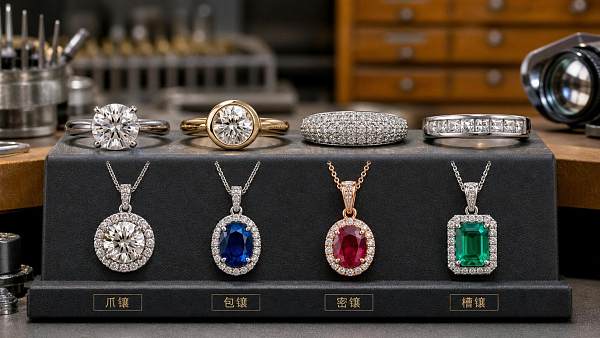
A pendant can look bright in photos yet still fail in wear. The critical issue is whether stones are seated evenly and locked with stable prongs or beads.
- Check for uniform stone height across the face.
- Look for straight rows and balanced spacing.
- Inspect prong symmetry under magnification.
- Test for movement by gentle tapping and rubbing.
- Confirm no glue is used to mask poor setting.
Metal consistency affects strength and finishing stability
Base metal composition influences casting quality, surface smoothness, and long-term plating adhesion. Inconsistent alloys often create porosity, rough edges, or brittle thin sections.
For iced out pendants oem orders, request metal specifications in writing. Sample approval should match the mass-production alloy, not a better prototype material.
Plating durability has become a decisive quality filter
Color tone matters, but thickness and adhesion matter more. Uneven electroplating usually appears around edges, bails, recessed areas, and high-contact surfaces.
Ask for plating microns, undercoat details, and wear-test methods. Good iced out pendants oem suppliers can explain process controls instead of giving vague assurances.
CAD-to-sample accuracy reveals technical discipline
Many quality issues begin before production. If the sample differs from the approved drawing, later batches will likely drift further.
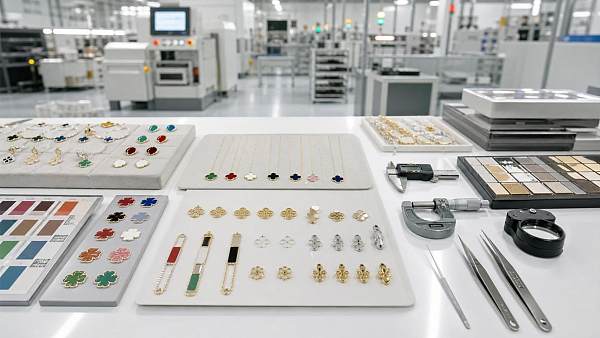
Compare CAD dimensions, stone counts, weight targets, bail opening, and logo line thickness. Even small deviations can affect chain fit, comfort, and durability.
How these quality shifts affect sourcing decisions and business outcomes
Stricter evaluation changes how OEM jewelry should be sourced. It reduces overreliance on price comparison and increases emphasis on process transparency.
A lower quote may hide weak stone setting labor, thinner plating, or less inspection time. Those hidden gaps often become chargebacks, remake costs, and delayed launches.
In broader commercial trade, jewelry quality also affects packaging, logistics, and after-sales handling. Fragile finishing raises damage claims during shipping and retail display.
Reliable iced out pendants oem execution supports stronger brand presentation. Consistent batches improve photography, replenishment confidence, and customer satisfaction across multiple channels.
The key checkpoints that deserve the closest attention now
Current market conditions reward buyers who focus on a few high-impact checkpoints. These areas expose whether a supplier can scale quality beyond one attractive sample.
- Stone security: Random pull checks and vibration simulation reduce fallout risk.
- Surface finishing: Review polishing around corners, letters, and stone seats.
- Weight tolerance: Large variation may signal unstable casting control.
- Plating consistency: Compare color and gloss across several units.
- Bail strength: Confirm solder integrity and chain compatibility.
- Backside finishing: Hidden surfaces still affect comfort and perceived value.
- Packaging protection: Prevent scratching during transit and storage.
A practical framework for verifying iced out pendants oem suppliers
Supplier verification should move in stages. The goal is to confirm repeatability, not just craftsmanship on a single pre-production piece.
What to do next when evaluating iced out pendants oem opportunities
The best response is to create a quality-first approval path. This should link design files, material declarations, sample records, and production checkpoints.
Use one technical scorecard for every iced out pendants oem project. Include stone setting, dimensions, weight, plating, finish, and packaging protection.
Request a golden sample signed against the approved CAD. Then require the supplier to confirm that bulk production uses the same structure and finishing standard.
For higher-value launches, add third-party inspection or remote video review during setting and plating stages. Early visibility prevents expensive corrections after shipment.
In today’s market, strong iced out pendants oem results come from measurable discipline. Sparkle may win attention, but controlled quality wins repeatable commercial success.
Search News
Hot Articles
- Fashion & Gem JewelryThermal Diamond Testers: How They Work and When They Can Misidentify StonesOct 07, 2026
- Commercial KitchenWhat Is Driving Demand for Commercial Hospitality Projects Across the GCC?Oct 06, 2026
- Hotel Room AmenitiesHow to Select Hotel Hair Dryers That Balance Guest Safety, Durability, and CostOct 05, 2026
Popular Tags
Need ExpertConsultation?
Connect with our specialized leisureengineering team for procurementstrategies.
Recommended News
 Oct 07, 2026Thermal Diamond Testers: How They Work and When They Can Misidentify StonesThermal diamond tester guide: learn how it works, spot false positives from moissanite, and choose reliable verification methods for jewelry trade and retail.● Luxury Retail Analyst
 Oct 02, 2026Diamond Tester Wholesale: How to Vet Accuracy, Calibration, and MOQ Before OrderingDiamond tester wholesale guide: verify accuracy, calibration records, supplier quality controls, and MOQ terms before ordering. Source reliable testers with confidence.● Luxury Retail Analyst
 Sep 09, 2026Wholesale Coral Earrings: How Buyers Can Assess Quality, Treatments, and Supply RiskCoral jewelry earrings wholesale guide for buyers: assess quality, treatments, secure settings, documentation, and supply risks before ordering.● Luxury Retail Analyst
 Sep 01, 2026How to Choose a Jewelry Laser Engraving Machine Manufacturer for Custom ProductionChoose a jewelry laser engraving machine manufacturer with proven sample testing, precision fixtures, workflow-ready software, and reliable support for custom production.● Luxury Retail Analyst
 Aug 27, 2026Evaluating Luxury Retail Accessories Suppliers: Quality, Lead Times, and Brand FitLuxury retail accessories supplier selection made clearer: assess quality, lead times, compliance, costs, and brand fit to protect premium launches and margins.● Luxury Retail Analyst
 Jul 29, 2026Fine Jewelry Price Guide: What Affects Cost and How to Judge Real ValueFine jewelry price guide for buyers: learn what drives cost in metals, gemstones, craftsmanship, certification, and branding so you can judge real value, reduce sourcing risk, and buy with confidence.● Luxury Retail Analyst
 Jul 14, 2026What to Ask an Enamel Jewelry Manufacturer Before Sampling and Mass ProductionEnamel jewelry manufacturer selection starts with the right questions. Learn what to ask about materials, color matching, MOQ, QC, compliance, and lead times before sampling and mass production.● Luxury Retail Analyst
 Jul 12, 2026Surgical Steel Belly Rings vs Titanium: Material Differences, Safety, and CostSurgical steel belly rings vs titanium: compare safety, nickel exposure, comfort, durability, and cost to choose the best option for sensitive skin or budget-friendly style.● Luxury Retail Analyst
 Jul 12, 2026Natural Coral Jewelry Guide: How to Identify Real Coral, Treatments, and QualityNatural coral jewelry guide covering how to identify real coral, spot treatments, assess quality, and buy with confidence. Learn the key signs before you choose.● Luxury Retail Analyst
 Jul 11, 2026Braided Leather Bracelets OEM: Material, Clasp, and MOQ Factors Before SamplingBraided leather bracelets OEM guide covering material grades, clasp options, and MOQ factors before sampling. Learn how to reduce sourcing risk, control cost, and choose the right supplier.● Luxury Retail Analyst
 Jul 09, 2026Jewelry Craftsmanship Gemstone Setting Methods Explained: Prong, Bezel, Pave, and MoreJewelry craftsmanship gemstone setting explained clearly: compare prong, bezel, pavé, channel, and more to choose secure, beautiful, and commercially smart jewelry designs.● Luxury Retail Analyst
 Jul 06, 2026Photo Locket Necklace Manufacturer Selection Guide: Materials, MOQ, and Custom OptionsPhoto locket necklace manufacturer selection guide covering materials, MOQ, custom options, compliance, and quality checks to help buyers source smarter and build stronger jewelry lines.● Luxury Retail Analyst
 Jul 05, 2026What to Check When Comparing a Sterling Silver Clasp ManufacturerChoosing a sterling silver clasp manufacturer? Learn what to check first: 925 silver claims, finish quality, testing, compliance, lead times, and hidden sourcing costs.● Luxury Retail Analyst
 Jul 02, 2026Jewelry Craftsmanship Techniques Explained: Casting, Stone Setting, Engraving, and PolishingJewelry craftsmanship techniques explained: discover how casting, stone setting, engraving, and polishing shape quality, durability, and sourcing confidence.● Luxury Retail Analyst
 Jul 01, 2026Lost Wax Casting Machines Explained: Types, Capacity, and Metal CompatibilityLost wax casting machines explained: compare types, real capacity, and metal compatibility to choose the right system for precision casting, higher quality, and smarter sourcing.● Luxury Retail Analyst
 Jun 29, 2026How to Evaluate a Luxury Accessories Online Store Before You BuyLuxury accessories online store buying guide: learn how to verify authenticity, compare policies, check reviews, and avoid costly mistakes before you place an order.● Luxury Retail Analyst
 Jun 22, 2026Matching Couple Rings: Popular Materials, Fit Differences, and How to ChooseMatching couple rings guide: compare popular materials, fit differences, comfort, durability, and resizing options to choose a stylish pair that truly lasts.● Luxury Retail Analyst
 Jun 19, 2026How to Build a Fashion Accessories Catalog That Improves Product Discovery and SalesFashion accessories catalog strategies that improve product discovery, filtering, and conversions. Learn how to structure pages, categories, and data to drive more qualified sales.● Luxury Retail Analyst
 Jun 19, 2026How to Choose Luxury Accessories for Women by Material, Style, and Price PointLuxury accessories for women: learn how to choose the right pieces by material, style, and price point for better value, timeless appeal, and smarter buying decisions.● Luxury Retail Analyst
 Jun 18, 2026Stainless Steel Rings Bulk: 304 vs 316L, Finishes, and Custom Order FactorsStainless steel rings bulk guide: compare 304 vs 316L, explore finish options, and learn key custom order factors to reduce sourcing risk and improve product value.● Luxury Retail Analyst
 Jun 18, 2026Body Piercing Jewelry Bulk Buying Guide: Materials, Sizes, and MOQ QuestionsBody piercing jewelry bulk buying guide covering safe materials, size checks, MOQ strategy, supplier screening, and compliance tips to reduce risk and source with confidence.● Luxury Retail Analyst
 Jun 18, 2026How to Evaluate a Luxury Jewelry Exporter for Quality, Compliance, and DeliveryLuxury jewelry exporter evaluation starts with more than design. Learn how to verify quality, compliance, and delivery control to source premium jewelry with less risk.● Luxury Retail Analyst
 Jun 17, 2026Iced Out Watches Wholesale: How to Compare MOQ, Stone Quality, and MarginsIced out watches wholesale guide: compare MOQ, stone quality, and real margins to choose reliable suppliers, reduce risk, and grow resale profits with smarter sourcing.● Luxury Retail Analyst
 Jun 15, 2026How to Evaluate an Amber Jewelry Manufacturer: Quality Grades, OEM Options, and Lead TimesAmber jewelry manufacturer selection starts with quality grades, OEM capability, and realistic lead times. Learn how to compare suppliers, reduce sourcing risk, and choose with confidence.● Luxury Retail Analyst