Choosing an OEM Jewelry Manufacturer: MOQs, Quality and Lead Times
When a jewelry collection must launch on a fixed date, the cheapest factory quote can become expensive if the minimum order is too high, the finish varies between batches, or production starts later than expected. Choose an OEM jewelry manufacturer by comparing the complete order commitment, an agreed quality standard, and a delivery schedule built around approved samples—not unit price alone.
Start with a specification detailed enough for suppliers to quote the same product. Then establish whether their minimums fit your assortment, whether they can reproduce the approved sample, and which events trigger the production clock. A supplier that cannot explain those conditions may be difficult to manage even if its initial sample looks good.
Define the product before requesting prices
An OEM arrangement generally means the supplier manufactures to the buyer’s design or specification. The exact division of work varies: one factory may develop molds and source stones, while another expects production-ready drawings and nominated components. Clarify those responsibilities before comparing quotations.
Prepare a brief for each style covering dimensions, target weight or acceptable range, base metal and fineness where relevant, finish, plating requirements, stone type and setting, clasp or fastening, branding, packaging, and intended sales markets. Include drawings or reference samples where available. For items with moving parts, specify the expected function as well as appearance.
Identify decisions that remain open. A quote based on an unspecified plating thickness or an assumed stone grade is not directly comparable with one based on a defined specification. Ask suppliers to list their assumptions and exclusions, including tooling, sampling, testing, packaging, and freight. This makes it easier to distinguish a genuinely competitive offer from an incomplete one.
Read the MOQ as an assortment commitment
A minimum order quantity is not always a single number for the whole collection. It may apply per style, metal, color, size, finish, or stone combination. A manufacturer offering a low minimum per design may still require a separate minimum for every ring size or plating color, making the practical commitment much larger than expected.
Request a written breakdown of the minimums for the finished item and for any constrained components. Findings, custom clasps, stones, packaging, and plated components may be sourced separately, each with its own minimum or surcharge. Also ask whether the quoted minimum applies to the first order, repeat orders, or both.
Negotiation is more productive when it addresses the cause of the minimum. If a custom clasp drives the order size, an existing clasp may make a smaller run possible. If a plating batch is the constraint, combining styles in one finish might help—but only if the supplier confirms that its process allows it. Do not assume an annual forecast guarantees a lower initial minimum unless the agreement defines the commitment and consequences.
Compare landed cost, not just the quoted piece price
Ask each supplier to quote the same quantities and clearly separate one-time charges from recurring costs. Tooling and sample fees affect the economics of a new design, while packaging, inspection, freight, duties, and import-related charges can change the effective cost of every shipment. Metal and stone prices may also move between quotation and production; establish the pricing basis, validity period, and method for approving changes.
A useful comparison is: total expected order cost divided by accepted, sellable units. Include expected one-time development charges in the first-order calculation, and assess repeat orders separately if tooling will be reused. Do not insert an assumed defect rate as fact; instead, model the effect of possible rejects or replacement costs and confirm who bears them under the contract.
Payment terms matter alongside price. A deposit paid before design approval carries a different risk from a payment tied to a defined milestone. Specify the currency, payment schedule, taxes where applicable, and delivery terms, including where responsibility and risk transfer. The selected trade term should match the actual transport arrangement and be understood by both parties.
Check whether the sample can be reproduced
A polished sample is evidence of what a supplier can make once, not proof of consistent production. Ask which processes are performed in-house and which are subcontracted: casting, machining, polishing, plating, stone setting, assembly, and packaging may involve different facilities. Identify who manages each handoff and whether a change of subcontractor requires approval.
Before bulk production, establish an approved reference sample and a written specification. Both should identify the version, finish, dimensions, materials, and any accepted visual characteristics. Retain a reference on each side and agree on the viewing conditions and criteria for appearance checks. Photographs can support the record, but they may not show color, surface defects, or plating variation accurately.
Turn quality expectations into inspection criteria
“Premium finish” or “secure setting” leaves too much room for interpretation. Define measurable tolerances where appropriate and describe how functional and visual checks will be performed. The inspection plan should cover the following items where relevant to the design:
- Materials and identification: required metal composition, fineness marks where applicable, stone identification, and supporting material records.
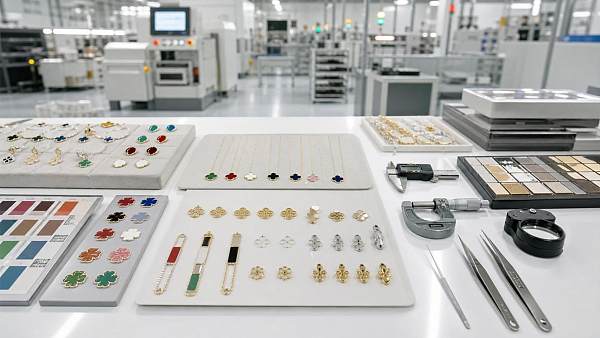
- Construction: dimensions, weight range, solder joints, symmetry, sharp edges, and alignment of components.
- Finish: color consistency, polish, surface marks, plating specification, and any permitted variation.
- Function: operation of clasps, hinges, posts, and other moving parts; security of stones and attachments.
- Presentation: logo placement, labels, packaging, and protection against scratching during transport.
Agree on the sampling method, defect classifications, acceptance criteria, and who performs and pays for inspection. A pre-shipment inspection can reveal issues before dispatch, but it does not replace controls during casting, plating, or assembly. For defects discovered after shipment, set a process for notification, evidence, replacement or credit, and responsibility for associated shipping costs.
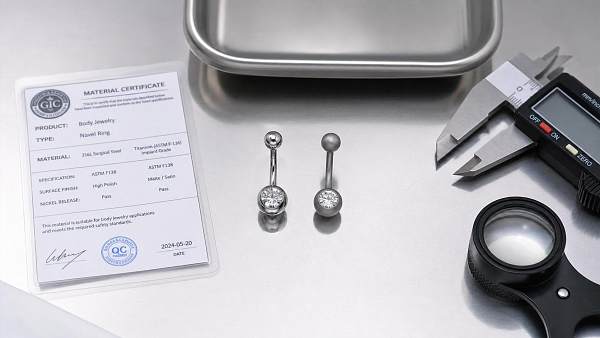
Material claims and market access require separate verification. Ask for relevant test reports or declarations tied to the material, product, and intended market; an unrelated factory document does not establish that a particular item complies. Requirements can differ by destination and product composition, so confirm applicable rules and testing scope before finalizing the specification.
Build the lead time from milestones
A production lead time may begin only after the supplier receives the deposit, final artwork, approved sample, and all required materials. Ask for a milestone schedule rather than a single number of days. Include design review, tooling, sample production, sample revision, material procurement, bulk manufacturing, inspection, packing, and transport.
Mark the approval dependencies on that schedule. A revised logo, a late stone selection, or a failed inspection can move the completion date even when the factory’s quoted production duration remains unchanged. Confirm whether component procurement can begin before sample approval and whether doing so creates a cancellation or material-cost liability.
Separate the factory’s ready date from the date goods must arrive at the destination. Freight booking, customs clearance, and onward delivery are not necessarily included in the factory’s estimate. For a fixed launch, reserve time for sample revisions and corrective action, and ask the supplier how it handles capacity conflicts or material shortages. A promised date is more credible when it is supported by named milestones and a clear escalation process.
Put ownership and change control in writing
Custom jewelry can involve molds, master models, artwork, CAD files, and brand marks. The quotation should state who pays for each item, who owns it, where it will be stored, and whether the buyer can retrieve or transfer it. Payment for tooling does not automatically settle every ownership or access question; the written agreement should do so.
Control changes after approval. A substitute alloy, different plating provider, revised stone source, or altered clasp can affect appearance, performance, and compliance. Require written approval before specified changes are made, and decide whether a new sample or testing is needed. Record the approved specification version on the purchase order so that production, inspection, and dispute resolution refer to the same document.
Make the supplier decision against the launch requirement
Use the same comparison for each shortlisted manufacturer: practical order quantity across all variants, first-order and repeat-order cost, evidence of relevant production capability, quality controls, and a milestone schedule. Request clarification where a quote is silent rather than treating an omission as included.
A smaller supplier may be suitable for a limited assortment if it can document its processes and secure the required components. A larger run may justify a supplier with higher minimums when the forecast and inventory budget support it. Where quality or timing remains unverified, consider a development or trial order with defined acceptance criteria before committing the full collection; confirm its price, minimum, and schedule separately from the planned bulk order.
Search News
Hot Articles
- Fashion & Gem JewelryChoosing an OEM Jewelry Manufacturer: MOQs, Quality and Lead TimesNov 25, 2026
- Travel ServicesSpain Hotel Overnight Stays Rise 1.6% as Prices Increase 7.4% in October 2026Nov 24, 2026
- Watch OEM & SmartwatchesGoogle Research Studies Cuffless Hypertension Screening Using Smartwatch AINov 24, 2026
Popular Tags
Need ExpertConsultation?
Connect with our specialized leisureengineering team for procurementstrategies.
Recommended News
 Nov 25, 2026Choosing an OEM Jewelry Manufacturer: MOQs, Quality and Lead TimesChoose an OEM jewelry manufacturer with confidence. Compare MOQs, quality standards, landed costs and lead times to keep your collection on track.● Luxury Retail Analyst
 Nov 24, 2026Hainan Jewelry Industry Explores Free Trade Port Policy and Cluster DevelopmentExplore how Hainan Free Trade Port policy discussions could shape pearl imports, jewelry processing and sales—and what businesses should watch next.● Luxury Retail Analyst
 Nov 20, 2026Macau Retail Sales Rise 9.1% in Q3; Watches and Jewellery Up 31.1%Macau retail sales rose 9.1% in Q3 2026, while watches and jewellery climbed 31.1%. Explore what the figures could mean for purchasing and supply chains.● Luxury Retail Analyst
 Nov 20, 2026How to Assess a Fashion Accessories Supplier: Quality, Delivery and RiskLearn how to evaluate fashion accessories supplier reliability with practical checks for product quality, delivery performance, capacity, compliance and risk.● Luxury Retail Analyst
 Nov 11, 2026Choosing an Ultrasonic Jewelry Cleaner Manufacturer: What Buyers Should CheckChoosing an ultrasonic jewelry cleaner manufacturer? Discover the key checks for performance, safety, quality, costs, and support before you buy.● Luxury Retail Analyst
 Nov 06, 2026Rapaport: Small Round Diamond Prices Fell 5.5% in OctoberSmall round diamond prices fell 5.5% in October, according to Rapaport. Explore what the decline may mean for jewelry buyers, suppliers and inventory planning.● Luxury Retail Analyst
 Nov 05, 2026WGC: India's Illegal Gold Imports Surge Over 1,500% in Third QuarterIndia's illegal gold imports surged over 1,500% to 50 tonnes in Q3 2026, the WGC reports. Discover what's driving the rise and its impact on jewellery sales.● Luxury Retail Analyst
 Nov 04, 2026Pandora CEO Warns New Tariffs Could Raise Contemporary Jewelry PricesPandora CEO Alexander Lacik warns that new US tariffs could raise contemporary jewelry prices. Explore the potential impact on businesses and shoppers.● Luxury Retail Analyst
 Nov 02, 2026Shanwei Jewelry Conference Opens as Canton Fair Buyers Begin Sourcing TourShanwei Jewelry Conference connects Canton Fair buyers with local suppliers. Explore sourcing opportunities and key considerations for jewelry procurement.● Luxury Retail Analyst
 Nov 01, 2026US Tariffs on Indian Goods Reach 50%, Raising Jewelry Export ConcernsUS tariffs on Indian goods reach 50%, raising concerns for jewelry exporters. Explore the potential impact on prices, orders, supply chains and jobs.● Luxury Retail Analyst
 Oct 31, 2026US Jewelry Business Closures Ease in Q3, but Active Firms Fall 1.4%US jewelry business closures eased in Q3 2026, but active firms fell 1.4%. Explore the JBT figures and what they reveal about industry contraction.● Luxury Retail Analyst
 Oct 30, 2026Nose Studs and Rings: Which Is Better for a New Piercing?Nose studs and rings: discover which is best for a new nostril piercing, plus expert tips on fit, materials, healing, and when to switch to a hoop.● Luxury Retail Analyst
 Oct 27, 2026Luxury Retail Merchandising: What Sets It Apart From Mass-Market Retail?Discover how luxury retail merchandising differs from mass-market retail, with curated displays, refined spaces, and personalized service that elevate perceived value and inspire purchases.● Luxury Retail Analyst
 Oct 12, 2026How to Choose Designer Eyewear That Fits Your Store’s Customer ProfileDesigner eyewear buying guide for retailers: match frames, price points, brand appeal, fit, and supplier support to your store’s customer profile for stronger sales.● Luxury Retail Analyst
 Oct 07, 2026Thermal Diamond Testers: How They Work and When They Can Misidentify StonesThermal diamond tester guide: learn how it works, spot false positives from moissanite, and choose reliable verification methods for jewelry trade and retail.● Luxury Retail Analyst
 Oct 02, 2026Diamond Tester Wholesale: How to Vet Accuracy, Calibration, and MOQ Before OrderingDiamond tester wholesale guide: verify accuracy, calibration records, supplier quality controls, and MOQ terms before ordering. Source reliable testers with confidence.● Luxury Retail Analyst
 Sep 09, 2026Wholesale Coral Earrings: How Buyers Can Assess Quality, Treatments, and Supply RiskCoral jewelry earrings wholesale guide for buyers: assess quality, treatments, secure settings, documentation, and supply risks before ordering.● Luxury Retail Analyst
 Sep 01, 2026How to Choose a Jewelry Laser Engraving Machine Manufacturer for Custom ProductionChoose a jewelry laser engraving machine manufacturer with proven sample testing, precision fixtures, workflow-ready software, and reliable support for custom production.● Luxury Retail Analyst
 Aug 27, 2026Evaluating Luxury Retail Accessories Suppliers: Quality, Lead Times, and Brand FitLuxury retail accessories supplier selection made clearer: assess quality, lead times, compliance, costs, and brand fit to protect premium launches and margins.● Luxury Retail Analyst
 Jul 29, 2026Fine Jewelry Price Guide: What Affects Cost and How to Judge Real ValueFine jewelry price guide for buyers: learn what drives cost in metals, gemstones, craftsmanship, certification, and branding so you can judge real value, reduce sourcing risk, and buy with confidence.● Luxury Retail Analyst
 Jul 14, 2026What to Ask an Enamel Jewelry Manufacturer Before Sampling and Mass ProductionEnamel jewelry manufacturer selection starts with the right questions. Learn what to ask about materials, color matching, MOQ, QC, compliance, and lead times before sampling and mass production.● Luxury Retail Analyst
 Jul 12, 2026Surgical Steel Belly Rings vs Titanium: Material Differences, Safety, and CostSurgical steel belly rings vs titanium: compare safety, nickel exposure, comfort, durability, and cost to choose the best option for sensitive skin or budget-friendly style.● Luxury Retail Analyst
 Jul 12, 2026Natural Coral Jewelry Guide: How to Identify Real Coral, Treatments, and QualityNatural coral jewelry guide covering how to identify real coral, spot treatments, assess quality, and buy with confidence. Learn the key signs before you choose.● Luxury Retail Analyst
 Jul 11, 2026Braided Leather Bracelets OEM: Material, Clasp, and MOQ Factors Before SamplingBraided leather bracelets OEM guide covering material grades, clasp options, and MOQ factors before sampling. Learn how to reduce sourcing risk, control cost, and choose the right supplier.● Luxury Retail Analyst