US CPSC Tightens EMC Limits for Arcade Devices Effective June 1
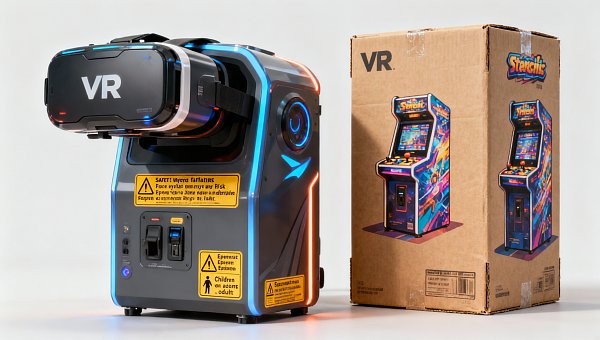
On May 19, 2026, the U.S. Consumer Product Safety Commission (CPSC) issued an emergency update to electromagnetic compatibility (EMC) requirements for arcade and VR machines — triggering immediate compliance concerns across China’s export-oriented entertainment hardware sector. The revision introduces mandatory radiated emission testing above 1 GHz and enforces full-spectrum EMC certification for all incoming shipments starting June 1, 2026. With over 85% of mid- and low-tier Chinese arcade/VR equipment previously untested in this frequency band, the rule change poses acute operational and financial risks for exporters lacking updated test reports from CPSC-recognized laboratories.
Event Overview
The U.S. Consumer Product Safety Commission (CPSC) announced on May 19, 2026, a formal amendment to the mandatory EMC limits applicable to Arcade & VR Machines. The update adds radiated emission testing requirements for frequencies above 1 GHz and mandates that all imported units must be accompanied by complete EMC test reports issued by CPSC-recognized laboratories. The regulation takes effect on June 1, 2026, with no grace period for non-compliant shipments.
Industries Affected
Direct Trading Enterprises: Exporters acting as the named consignee or importer of record face direct customs rejection or detention at U.S. ports if their shipments lack valid, CPSC-recognized EMC reports covering the newly required high-frequency band. Impact manifests as shipment delays, container demurrage, retesting costs, or full-container return — especially for orders shipped under FOB or EXW terms where compliance responsibility falls squarely on the exporter.
Raw Material Procurement Enterprises: Suppliers of key components such as high-speed PCBs, RF-shielded enclosures, power modules, and wireless VR controllers may see revised specification requests from downstream manufacturers. However, most current suppliers do not maintain high-frequency EMC characterization data; thus, procurement teams must now vet component-level emissions performance — adding lead time and qualification overhead to sourcing cycles.
Contract Manufacturing Enterprises: EMS and ODM providers producing arcade cabinets or VR kiosks for international brands must retrofit existing production lines with RF-absorbing materials, revise grounding layouts, and implement pre-compliance scanning above 1 GHz. These changes require engineering validation and may delay NPI (new product introduction) timelines — particularly for cost-sensitive SKUs where shielding upgrades conflict with BOM targets.
Supply Chain Service Providers: Customs brokers, freight forwarders, and third-party compliance consultants are reporting surging demand for EMC documentation review, lab coordination, and entry filing support. Notably, some forwarders have begun flagging shipments without verifiable 1+ GHz test coverage during pre-arrival checks — signaling a shift toward proactive risk screening rather than post-entry enforcement only.
Key Focus Areas and Recommended Actions
Verify Lab Recognition Status Before Testing
Not all accredited EMC labs are recognized by CPSC for this specific product category. Enterprises must confirm that their chosen laboratory appears on CPSC’s official list of “Recognized Testing Laboratories for Arcade & VR Machines” — published separately from general ISO/IEC 17025 accreditation. Retesting at unrecognized labs will not satisfy entry requirements.
Prioritize Radiated Emission Scanning Above 1 GHz
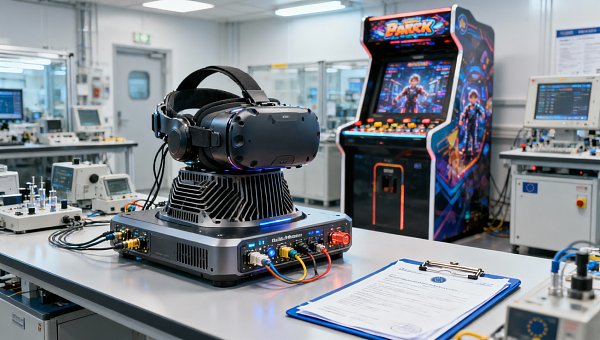
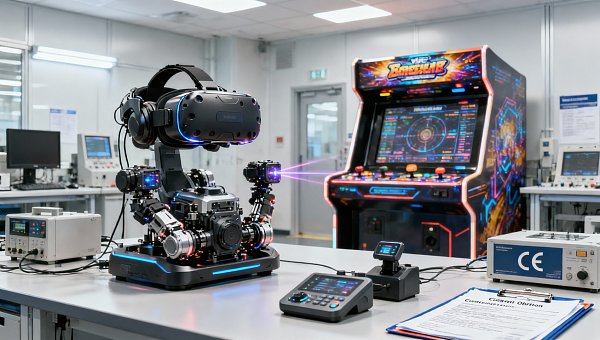
Many legacy arcade designs pass CISPR 32 up to 1 GHz but exhibit resonant peaks between 1.2–3.5 GHz due to clock harmonics from GPUs, display drivers, and wireless modules. Pre-compliance scans using spectrum analyzers with near-field probes should begin immediately — focusing on enclosure seams, cable exits, and heatsink interfaces.
Review Technical Documentation Against CPSC Bulletin CPSC-2026-004
The bulletin specifies revised test configurations: e.g., devices must be tested in both “operational idle” and “peak-load gaming” modes, with all peripherals connected and active. Manufacturers must ensure user manuals, labeling, and internal test protocols explicitly reflect these dual-state requirements — as inconsistencies may trigger CPSC follow-up inquiries.
Editorial Perspective / Industry Observation
Analysis shows this is not merely a technical threshold adjustment but a strategic signal: CPSC is aligning arcade device oversight with FCC Part 15 Subpart B practices — indicating long-term convergence between safety and radiofrequency regulatory frameworks. Observably, the timing coincides with rising consumer complaints about VR-induced interference with medical devices and home Wi-Fi networks. From an industry perspective, this move reflects growing regulatory scrutiny of immersive hardware beyond traditional toy or electronics classifications — a trend likely to extend to haptic wearables and AI-powered interactive kiosks in coming years.
Conclusion
This EMC update marks a structural inflection point for China’s arcade and VR hardware exporters — shifting compliance from a ‘check-the-box’ activity to an embedded design requirement. Rather than representing a one-time hurdle, it signals the beginning of higher baseline expectations for electromagnetic behavior in consumer-facing interactive systems. A measured, engineering-led response — grounded in early diagnostics and cross-supplier alignment — remains more viable than reactive rework or market withdrawal.
Source Attribution
Official notice: CPSC Bulletin CPSC-2026-004, published May 19, 2026, available at www.cpsc.gov/Newsroom/Releases/2026/CPSC-Announces-EMC-Updates-for-Arcade-and-VR-Machines.
Note: CPSC has indicated that supplementary guidance on test setup tolerances and acceptable margin-of-error for peak detection will be issued by May 31, 2026 — to be monitored closely.
Search News
Hot Articles
- Restaurant FurnitureFast-Casual Restaurant Interiors: Design Choices That Improve Speed and Guest FlowOct 04, 2026
- Outdoor RidesHow to Select Leisure Park Equipment for Safe, High-Throughput Visitor AreasOct 03, 2026
- Fashion & Gem JewelryDiamond Tester Wholesale: How to Vet Accuracy, Calibration, and MOQ Before OrderingOct 02, 2026
Popular Tags
Need ExpertConsultation?
Connect with our specialized leisureengineering team for procurementstrategies.
Recommended News
 Sep 15, 2026How to Choose Coin-Operated Pool Tables for Bars, Hotels, and Arcade VenuesCoin operated pool tables for bars, hotels, and arcades: compare sizes, payment systems, durability, service access, and revenue potential.● Theme Park Strategist
 Sep 08, 2026What to Look for in a Flight Simulator Chair Manufacturer for Commercial VR CentersChoose a flight simulator chair manufacturer that delivers durable, safe, customizable seating for commercial VR centers. Explore key sourcing criteria now.● Theme Park Strategist
 Aug 25, 2026What to Evaluate Before Buying Commercial Self Service Photo Booths for VenuesCommercial self service photo booths for venues: learn how to evaluate durability, software stability, branding flexibility, support, and total ROI before you buy.● Theme Park Strategist
 Aug 23, 2026How to Evaluate Wholesale Vending Machines for Multi-Location Business DeploymentWholesale vending machines for multi-location deployment require more than low unit cost. Learn how to compare reliability, payments, telemetry, and supplier support to scale smarter.● Theme Park Strategist
 Aug 17, 2026U.S. CPSC Urges Bilingual Warnings for Arcade and VR MachinesU.S. CPSC urges bilingual safety warnings for Arcade & VR Machines—learn what exporters, importers, and distributors must do now to avoid delays and returns.● Theme Park Strategist
 Aug 16, 2026EU Enforces EN IEC 62368-1:2026 Certification for Arcade and VR MachinesEU Enforces EN IEC 62368-1:2026 certification for arcade and VR machines, reshaping EU market access, customs clearance, and compliance planning for exporters and distributors.● Theme Park Strategist
 Aug 13, 2026UFLPA’s new guidelines take effect: Exports of Arcade and VR equipment face full-link labor compliance requirementsUFLPA’s new guide takes effect: Arcade and VR machine exports to the U.S. now face full-chain labor compliance checks. Discover key risks and action steps.● Theme Park Strategist
 Aug 12, 2026EU PPWR takes effect, Arcade and VR packaging incorporate heavy metal and PFAS restrictionsEU PPWR now applies to Arcade and VR packaging, tightening heavy metal and PFAS compliance. Learn how exporters can avoid delays, fines, and customs risks.● Theme Park Strategist
 Aug 11, 2026CPSC Sets Bilingual Labels for Arcade and VR ImportsCPSC bilingual labels for arcade and VR imports become mandatory on October 1, 2026. Learn the new English-Spanish warning rules, customs risks, and key compliance steps now.● Theme Park Strategist
 Aug 10, 2026EU Rule Takes Effect for Arcade & VR Machine ClearanceArcade & VR Machine clearance in the EU now depends on EN IEC 62368-1:2026+A11:2026 compliance. Learn what changed, who is affected, and how to avoid customs delays.● Theme Park Strategist
 Aug 09, 2026CPSC Requires New Labels for Arcade and VR ImportsCPSC requires new labels for Arcade and VR imports starting Oct 1, 2026. Learn the multilingual warning rules, compliance risks, and key steps exporters and buyers must take now.● Theme Park Strategist
 Aug 08, 2026EU Entry Rule Tightens for Arcade & VR MachinesArcade & VR Machines entering the EU now face stricter CE compliance under EN IEC 62368-1:2026+A11:2026. Learn the new rule, risks, and what exporters must do now.● Theme Park Strategist
 Aug 07, 2026CPSC Notice Tightens U.S. Entry Rules for Arcade and VR MachinesCPSC Notice Tightens U.S. Entry Rules for Arcade and VR Machines: learn the new labeling, FCC, UN38.3, and compliance document requirements before October 1, 2026.● Theme Park Strategist
 Aug 06, 2026EU Rule Takes Effect for CE-UKCA Labels on Arcade & VR MachinesArcade & VR Machines face new CE-UKCA label and ECPD filing rules in the EU and UK. Learn what manufacturers, importers, and distributors must do now to avoid delays.● Theme Park Strategist
 Aug 05, 2026CPSC Recalls Arcade and VR Machines Over UL 62368-1CPSC recalls arcade and VR machines over UL 62368-1 non-compliance. Learn how this 2026 safety action may affect imports, distribution, customs clearance, and market access.● Theme Park Strategist
 Aug 02, 2026EU Sets New Certification Rule for Arcade and VR MachinesArcade and VR Machines face a new EU certification rule from Oct 1, 2026. Learn how EN IEC 62368-1:2026+A11:2026 affects CE marking, customs clearance, and market access.● Theme Park Strategist
 Aug 01, 2026CPSC Moves to Require Bilingual Warnings on Arcade and VR MachinesCPSC bilingual warnings for Arcade and VR Machines may reshape U.S. import compliance. Learn how English-Spanish labels affect packaging, customs risk, and shipment readiness.● Theme Park Strategist
 Jul 31, 2026EU Sets EN IEC 62368-1:2025 Rule for Arcade and VR MachinesEU Sets EN IEC 62368-1:2025 Rule for Arcade and VR Machines. Learn the new EU compliance deadlines, safety updates, and key actions for manufacturers, OEMs, and distributors.● Theme Park Strategist
 Jul 30, 2026CPSC Sets New Warning Label Rule for Arcade & VR MachinesCPSC sets a new warning label rule for Arcade & VR Machines effective August 15, 2026. Learn key compliance risks, multilingual label requirements, and shipment actions now.● Theme Park Strategist
 Jul 29, 2026EU Enforces New Safety Standard for Arcade and VR MachinesEU Enforces New Safety Standard for Arcade and VR Machines: learn how EN IEC 62368-1 affects CE compliance, customs clearance, and EU market access for exporters and buyers.● Theme Park Strategist
 Jul 28, 2026CPSC Sets ASTM F3472-26 Rule for Arcade & VR ImportsCPSC ASTM F3472-26 rule reshapes Arcade & VR imports to the U.S. Learn key compliance deadlines, certification risks, and what exporters, OEM/ODM suppliers, and buyers should do now.● Theme Park Strategist
 Jul 27, 2026EU Rule Takes Effect for Arcade & VR Machine CybersecurityEU Rule Takes Effect for Arcade & VR Machine Cybersecurity: learn how EN IEC 62443-3-3:2025 affects compliance, customs clearance, sales continuity, and supplier planning in the EU market.● Theme Park Strategist
 Jul 25, 2026CPSC Sets Bilingual Warning Rule for Arcade and VR ImportsCPSC bilingual warning rule for arcade and VR imports takes effect August 1, 2026. Learn how OEM/ODM exporters can avoid CBP delays, relabel shipments, and protect U.S. delivery timelines.● Theme Park Strategist
 Jul 24, 2026EU Enforces New Safety Standard for Arcade and VR MachinesEU Enforces New Safety Standard for Arcade and VR Machines: learn how EN IEC 62368-1:2026+A11:2026 reshapes EU compliance, CE documentation, testing timelines, and export readiness.● Theme Park Strategist