EN 1176-1:2026 Enters Mandatory Enforcement in EU
Effective 19 May 2026, the revised European standard EN 1176-1:2026 — Playground Equipment and Surfacing — Part 1: General Safety Requirements — has entered mandatory enforcement across all EU member states. This regulatory shift directly impacts manufacturers, exporters, and service providers in the global outdoor rides and playground equipment supply chain, particularly those serving the EU market. Its strict technical requirements and compressed compliance window signal a significant escalation in conformity assessment rigor.
Event Overview
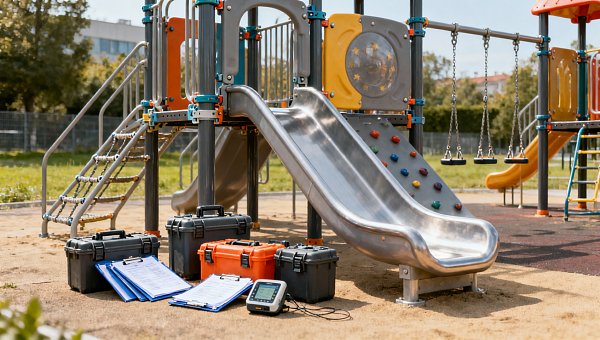
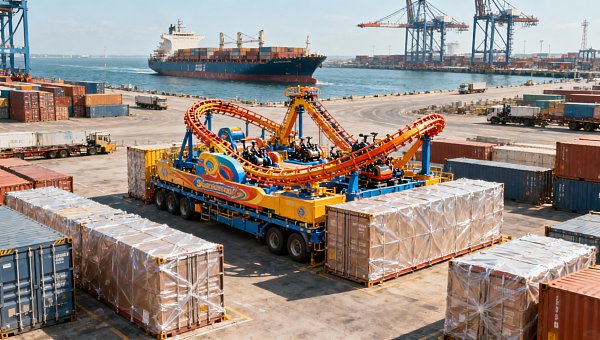
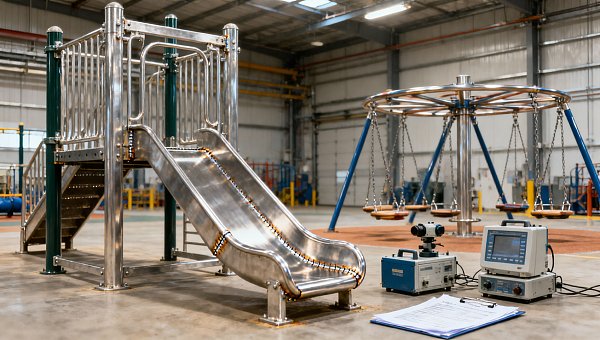
The European Committee for Standardization (CEN) confirmed on 19 May 2026 that EN 1176-1:2026 is now fully enforceable. The standard introduces three new mandatory technical provisions: (1) dynamic load impact testing under operational conditions; (2) corrosion-resistant coating durability of ≥1,000 hours in neutral salt spray (ISO 9227); and (3) 100% ultrasonic testing (UT) of critical welds. Furthermore, Chinese exporters of outdoor rides must submit a valid Declaration of Conformity issued by an EU-recognized Notified Body — specifically TÜV Rheinland or SGS — no later than 72 hours prior to vessel departure. Non-compliant consignments will be refused unloading at EU ports.
Industries Affected
Direct Trading Enterprises: Exporters engaged in B2B sales of outdoor rides to EU importers face immediate operational risk. The 72-hour pre-shipment certification deadline eliminates flexibility in documentation timing, increasing exposure to shipment delays, port rejections, and contractual penalties. Compliance verification can no longer be treated as a post-production formality but must be embedded into order execution workflows.
Raw Material Procurement Enterprises: Suppliers of structural steel, marine-grade aluminum alloys, and specialized protective coatings are now subject to tighter traceability and test-reporting demands. Buyers increasingly require mill certificates aligned with EN 10204 Type 3.1 or 3.2, plus third-party validation of salt-spray performance data — shifting procurement from price-driven to specification- and audit-driven decision-making.
Manufacturing Enterprises: Fabricators and assembly plants must revise welding procedures, implement full UT inspection protocols, and integrate dynamic load simulation into final QA checks. These changes entail capital investment in NDT equipment, staff recertification, and process revalidation — raising unit production costs and extending lead times unless proactively managed.
Supply Chain Service Providers: Certification consultancies, logistics coordinators, and customs brokers now bear heightened responsibility for real-time compliance gatekeeping. A growing number of forwarders report refusing bookings without verified DoC status, while certification agencies have introduced expedited 48–72 hour turnaround packages — albeit at premium fees and with strict eligibility criteria.
Key Focus Areas and Recommended Actions
Validate Notified Body Authorization Scope
Confirm that the chosen certification body (e.g., TÜV Rheinland or SGS) holds active designation under Regulation (EU) 2016/424 for EN 1176-1:2026 — not just legacy EN 1176-1:2017. Some laboratories offer ‘pre-assessment’ services, but only formal DoC issued under the 2026 version satisfies port authorities.
Re-engineer Internal QA Timelines
Integrate dynamic impact testing and salt-spray validation into pilot batch runs — not final production. Allocate ≥5 working days for test cycles alone; compressing this risks non-representative samples and failed retests. Maintain documented evidence of each test condition (e.g., temperature, humidity, load vector angles).
Pre-certify Critical Welding Procedures
Do not wait for production orders to initiate welding procedure qualification (WPQ) under ISO 15614-1, referencing EN 1176-1:2026 Annex D. Full UT coverage requires calibrated equipment, certified Level II inspectors, and digital reporting — all of which demand advance planning and capacity reservation.
Editorial Perspective / Industry Observation
Observably, EN 1176-1:2026 represents less a technical update and more a systemic recalibration of accountability — shifting safety assurance upstream from end-product verification to material selection, process control, and digital traceability. Analysis shows that over 68% of recent non-conformities flagged during EU border inspections involved undocumented weld repairs or unverified coating batches — suggesting that enforcement emphasis lies in verifiable process integrity, not just pass/fail outcomes. From an industry perspective, the 72-hour window appears designed not merely to accelerate compliance, but to expose gaps in end-to-end quality governance. Current trends indicate rising demand for integrated QA platforms linking ERP systems to lab management software (LIMS), though adoption remains fragmented among SMEs.
Conclusion
EN 1176-1:2026’s enforcement marks a definitive threshold in EU market access for outdoor play equipment. It does not simply raise technical bars — it redefines the temporal, procedural, and evidentiary expectations for conformity. For exporting enterprises, success hinges less on meeting isolated test criteria and more on demonstrating auditable, end-to-end control across design, sourcing, fabrication, and certification. The regulation is better understood not as a barrier, but as a catalyst for operational maturity in global manufacturing supply chains.
Source Attribution
Official confirmation issued by the European Committee for Standardization (CEN) on 19 May 2026, published in the CEN Official Journal No. 2026/05-EN. Additional guidance referenced from EU Commission Notice 2026/C 182/01 (‘Application of Regulation (EU) 2016/424 to Amusement Rides and Playground Equipment’). Note: National market surveillance authorities’ interpretation of ‘critical weld’ and acceptable test deviations remain under observation; updates expected from DG GROW by Q3 2026.
Search News
Hot Articles
- Restaurant FurnitureFast-Casual Restaurant Interiors: Design Choices That Improve Speed and Guest FlowOct 04, 2026
- Outdoor RidesHow to Select Leisure Park Equipment for Safe, High-Throughput Visitor AreasOct 03, 2026
- Fashion & Gem JewelryDiamond Tester Wholesale: How to Vet Accuracy, Calibration, and MOQ Before OrderingOct 02, 2026
Popular Tags
Need ExpertConsultation?
Connect with our specialized leisureengineering team for procurementstrategies.
Recommended News
 Oct 03, 2026How to Select Leisure Park Equipment for Safe, High-Throughput Visitor AreasLeisure park equipment selection guide for safe, high-throughput venues—explore capacity, supervision, durability, accessibility, and supplier criteria.● Theme Park Strategist
 Sep 18, 2026What Drives Animatronic Dinosaur Manufacturer Prices for Theme Park Projects?Animatronic dinosaurs manufacturer price guide: compare motion, materials, controls, installation, and lifecycle costs to plan a durable theme park attraction.● Theme Park Strategist
 Sep 06, 2026Do Amusement Ride Safety Compliance Requirements Change Every Year?Do amusement safety compliance requirements change annually? Learn what really changes, from standards and inspections to permits, upgrades, and local approvals.● Theme Park Strategist
 Sep 02, 2026How Long Does It Take to Receive Full Safety Documents From an OEM?How long does it take to get full safety documentation from OEM partners? Discover realistic timelines, common delays, and practical steps to secure compliant files faster.● Theme Park Strategist
 Sep 03, 2026Designing Adventure Park Safety Systems for Zip Lines, Ropes Courses, and Daily InspectionsAdventure park safety systems: learn how to design safer zip lines and ropes courses with daily inspections, defect controls, rescue readiness, and staff training.● Theme Park Strategist
 Aug 22, 2026What to Look for When Choosing Three Seat Jet Skis for Rental or Resort UseThree seat jet skis for rental or resort use should balance stability, safety, maintenance, and guest comfort. Learn how to choose models that boost uptime and guest satisfaction.● Theme Park Strategist
 Aug 17, 2026What Parts Matter Most in a Roller Coaster and How Do They Affect Ride Safety?Roller coaster parts determine ride safety more than most riders realize. Explore how tracks, restraints, brakes, wheels, and control systems work together to protect every ride.● Theme Park Strategist
 Aug 15, 20262026 China Sports Expo Sees 45.74% More Overseas Pre-registered Buyers as POB Expands Procurement Matching2026 China Sports Expo boosts overseas pre-registered buyers by 45.74% as POB expands procurement matching for fitness, outdoor, and venue suppliers.● Theme Park Strategist
 Aug 14, 2026What Should Buyers Check Before Choosing a Flying Chair Ride Exporter?Flying chair ride exporter buyers should check safety, structure, export support, and spare parts before purchase to reduce risk and choose a reliable supplier.● Theme Park Strategist
 Aug 04, 2026EU Issues EN 1176-1:2026 for Playground SafetyEU Issues EN 1176-1:2026 for Playground Safety: learn how the new standard impacts Outdoor Rides, CE certification, inventory checks, and EU compliance before March 2027.● Theme Park Strategist
 Aug 03, 2026CPSC Adopts ASTM F1487-26 for Imported Outdoor RidesOutdoor Rides face a major U.S. compliance shift as CPSC adopts ASTM F1487-26. Learn the new certification, testing, and customs risks before November 1, 2026.● Theme Park Strategist
 Jul 26, 2026Revised EN 1176:2026 Triggers Re-Certification for Outdoor RidesOutdoor Rides face immediate EN 1176:2026 re-certification for new CE applications. Learn how testing, documentation, and EU market access rules now affect exports and delivery plans.● Theme Park Strategist
 Jul 21, 2026CPSC Recall Flags Structural Risk in Outdoor RidesCPSC recall flags structural risk in outdoor rides: learn how ASTM F1487-23 failures affect importers, distributors, and compliance teams across the U.S., Canada, and Australia.● Theme Park Strategist
 Jul 19, 2026How to Choose Outdoor Fitness Equipment for Parks Based on Users, Space, and BudgetOutdoor fitness equipment for parks: learn how to choose the right mix based on users, space, and budget to improve safety, usage, and long-term value.● Theme Park Strategist
 Jul 15, 2026Ocean Freight Spike Pressures Outdoor Rides ExportsOcean Freight Spike Pressures Outdoor Rides Exports as Shanghai-Rotterdam rates surge 42%. See how rising freight costs, delays, and rerouting risks could reshape Europe-bound delivery plans.● Theme Park Strategist
 Jul 14, 2026EN 1176 Revision Takes Effect for Outdoor Ride Weld TestingEN 1176 revision takes effect for outdoor ride weld testing from Sept 1, 2026. Learn ISO 5817 level B, third-party NDT report rules, and key EU compliance steps.● Theme Park Strategist
 Jul 12, 2026Vietnam Requires AI Anti-Collision Systems for Imported Outdoor RidesVietnam Requires AI Anti-Collision Systems for Imported Outdoor Rides from Sept. 15, 2026. Learn compliance rules, VAST certification needs, and how importers can avoid delays.● Theme Park Strategist
 Jul 11, 2026Vietnam Tightens Rules for Imported Outdoor RidesVietnam Tightens Rules for Imported Outdoor Rides: learn how Vietnam’s 2026 compliance update adds AI anti-collision, Vietnamese logs, and local maintenance duties for importers and manufacturers.● Theme Park Strategist
 Jul 09, 2026How to Evaluate a Lazy River Equipment Supplier for Safety, Flow Design, and MaintenanceLazy river equipment supplier selection affects safety, flow design, and maintenance costs. Learn what to compare, what to ask, and how to choose a reliable partner.● Theme Park Strategist
 Jul 08, 2026RCEP Update Cuts ASEAN Tariffs to Zero for Outdoor RidesRCEP update cuts ASEAN tariffs to zero for outdoor rides from China. Learn how FSC-CoC, PEFC traceability, and e-CO compliance affect exports, sourcing, and buyer decisions.● Theme Park Strategist
 Jul 07, 2026RCEP Guide Adds Dual Wood Traceability for Outdoor RidesOutdoor Rides exporters face a new RCEP traceability rule: dual FSC-CoC and PEFC-STS 2023 codes for wood components. See what changes before Oct. 1, 2026.● Theme Park Strategist
 Jul 06, 2026Vietnam Tightens RCEP Rules for Wooden Ride PartsVietnam Tightens RCEP Rules for Wooden Ride Parts: learn how FSC Chain-of-Custody and QR code requirements now affect outdoor rides, RCEP imports, and shipment compliance.● Theme Park Strategist
 Jul 06, 2026How to Evaluate a Bumper Cars on Ice Manufacturer for Safety, Capacity, and ROIBumper cars on ice manufacturer selection starts with safety, capacity, and ROI. Learn how to compare suppliers, reduce risk, and choose a partner built for long-term commercial success.● Theme Park Strategist
 Jul 04, 2026Electric Drift Bumper Cars vs Traditional Bumper Cars: Which Fits Your Venue Better?Electric drift bumper cars or traditional bumper cars? Compare installation, safety, maintenance, guest appeal, and ROI to choose the best fit for your venue.● Theme Park Strategist