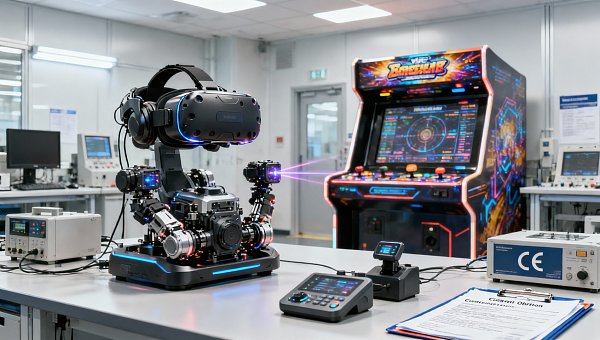
ASEAN EPR Platform Launches for Arcade & VR Machines
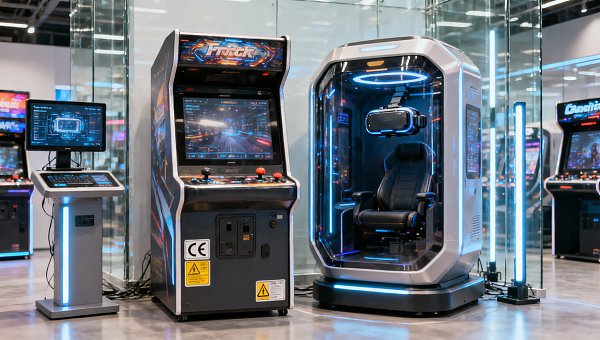
On May 19, 2026, Thailand, Vietnam, Malaysia, Indonesia, and the Philippines jointly launched the ASEAN-wide Electronic Extended Producer Responsibility (EPR) reporting platform. This development directly affects manufacturers of arcade and VR machines—including Chinese OEMs exporting to these five markets—and signals a new compliance requirement for market access in Southeast Asia.
Event Overview
Effective May 19, 2026, the five ASEAN countries—Thailand, Vietnam, Malaysia, Indonesia, and the Philippines—officially activated a unified electronic EPR reporting platform. All producers of arcade and VR machines shipping into these countries must complete registration on the platform within 72 hours prior to their first shipment. A mandatory annual eco-processing fee applies, calculated at USD 0.12 per kilogram of device weight. Failure to register before clearance triggers a 200% penalty surcharge and suspension of import quota allocation.
Industries Affected
Direct Exporters & Trading Companies
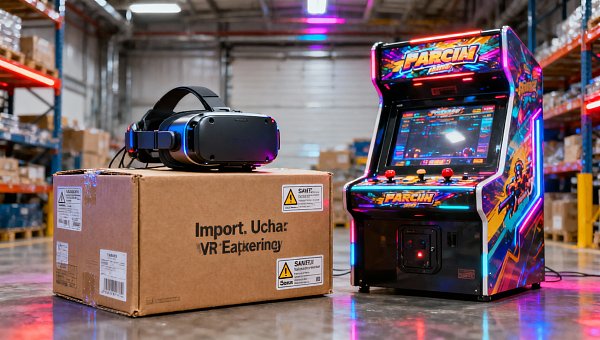
Companies physically shipping arcade or VR machines into any of the five countries face immediate customs compliance risk. Registration is tied to the first shipment, not annual calendar timing—meaning even one-time consignments require pre-clearance registration. Delayed registration may halt customs release, disrupt delivery schedules, and incur financial penalties that scale with declared shipment value and weight.
OEM/ODM Manufacturing Firms (including China-based)
Manufacturers producing under private labels or contract for overseas brands must verify whether their customer’s brand name—or their own facility name—is designated as the ‘producer’ under local EPR rules. If the manufacturer is named as the responsible entity in commercial documentation (e.g., invoice, packing list, or importer-of-record arrangement), it bears direct registration obligation—even if it does not hold the end-market brand.
Supply Chain & Logistics Service Providers
Fulfillment centers, freight forwarders, and customs brokers handling arcade/VR machine shipments into the region now need to confirm EPR registration status before cargo arrival. Since non-compliance triggers automatic penalty application at clearance, service providers may face operational friction—including extended dwell times, document rework, or client disputes—if registration evidence is missing or misaligned with shipment details.
What Enterprises Should Monitor and Do Now
Verify producer designation in export documentation
Review current commercial invoices, certificates of origin, and importer-of-record arrangements to determine which party—brand owner, distributor, or manufacturer—is legally recognized as the ‘producer’ under each target country’s implementation guidance. Registration responsibility follows this designation, not contractual supply chain roles alone.
Calculate and budget for the eco-processing fee based on device weight
Since the fee is strictly weight-based (USD 0.12/kg), companies should audit product net weights across SKUs—not just carton or shipping weights—to avoid underpayment. Weight data must match what is declared at customs; discrepancies may trigger verification requests or penalty assessments.
Implement a 72-hour pre-shipment registration checkpoint
Integrate EPR platform registration into existing pre-shipment workflows—e.g., as a required step before release from warehouse or handover to forwarder. Treat it as a hard gate, analogous to obtaining an export license or sanitary certificate, rather than a post-shipment administrative filing.
Monitor official platform rollout status per country
Although the platform was announced as ‘launched’ on May 19, 2026, country-level technical readiness (e.g., language interface, payment gateway integration, or supporting documentation requirements) may vary. Track national environmental agency notices—not just regional ASEAN statements—for implementation timelines and procedural clarifications.
Editorial Observation / Industry Perspective
Observably, this initiative functions less as a fully harmonized regional regulation and more as a coordinated national enforcement alignment. While the platform is branded ‘ASEAN-wide’, each country retains authority over fee collection, penalty enforcement, and definition of covered equipment—meaning classification disputes (e.g., whether a VR headset-only unit qualifies) will likely be resolved nationally, not centrally. Analysis shows the 72-hour window reflects urgency in closing a prior compliance gap, not necessarily technical capacity for real-time processing. From an industry standpoint, this is best understood not as a one-time registration event, but as the formalization of an ongoing operational requirement—one where timeliness, weight accuracy, and role clarity matter more than platform sophistication.
This is a compliance milestone—not a policy proposal. It has taken effect as of May 19, 2026, and carries enforceable consequences at first clearance. Current interpretation should focus on execution readiness, not anticipation of future revisions.
Conclusion
The ASEAN EPR platform launch marks a concrete shift in market access conditions for arcade and VR machine exporters. Its significance lies not in novelty of the EPR concept, but in the binding, time-bound, and financially enforced nature of its implementation across five high-growth markets simultaneously. For affected businesses, this is best understood as an operational checkpoint now embedded in cross-border logistics—not a distant regulatory horizon.
Source Attribution
Main source: Joint announcement by environmental authorities of Thailand, Vietnam, Malaysia, Indonesia, and the Philippines, effective May 19, 2026.
Points requiring ongoing observation: Country-specific platform functionality, acceptable weight documentation formats, and treatment of multi-component or modular arcade systems under the $0.12/kg fee structure.
Search News
Hot Articles
- Restaurant FurnitureFast-Casual Restaurant Interiors: Design Choices That Improve Speed and Guest FlowOct 04, 2026
- Outdoor RidesHow to Select Leisure Park Equipment for Safe, High-Throughput Visitor AreasOct 03, 2026
- Fashion & Gem JewelryDiamond Tester Wholesale: How to Vet Accuracy, Calibration, and MOQ Before OrderingOct 02, 2026
Popular Tags
Need ExpertConsultation?
Connect with our specialized leisureengineering team for procurementstrategies.
Recommended News
 Sep 15, 2026How to Choose Coin-Operated Pool Tables for Bars, Hotels, and Arcade VenuesCoin operated pool tables for bars, hotels, and arcades: compare sizes, payment systems, durability, service access, and revenue potential.● Theme Park Strategist
 Sep 08, 2026What to Look for in a Flight Simulator Chair Manufacturer for Commercial VR CentersChoose a flight simulator chair manufacturer that delivers durable, safe, customizable seating for commercial VR centers. Explore key sourcing criteria now.● Theme Park Strategist
 Aug 25, 2026What to Evaluate Before Buying Commercial Self Service Photo Booths for VenuesCommercial self service photo booths for venues: learn how to evaluate durability, software stability, branding flexibility, support, and total ROI before you buy.● Theme Park Strategist
 Aug 23, 2026How to Evaluate Wholesale Vending Machines for Multi-Location Business DeploymentWholesale vending machines for multi-location deployment require more than low unit cost. Learn how to compare reliability, payments, telemetry, and supplier support to scale smarter.● Theme Park Strategist
 Aug 17, 2026U.S. CPSC Urges Bilingual Warnings for Arcade and VR MachinesU.S. CPSC urges bilingual safety warnings for Arcade & VR Machines—learn what exporters, importers, and distributors must do now to avoid delays and returns.● Theme Park Strategist
 Aug 16, 2026EU Enforces EN IEC 62368-1:2026 Certification for Arcade and VR MachinesEU Enforces EN IEC 62368-1:2026 certification for arcade and VR machines, reshaping EU market access, customs clearance, and compliance planning for exporters and distributors.● Theme Park Strategist
 Aug 13, 2026UFLPA’s new guidelines take effect: Exports of Arcade and VR equipment face full-link labor compliance requirementsUFLPA’s new guide takes effect: Arcade and VR machine exports to the U.S. now face full-chain labor compliance checks. Discover key risks and action steps.● Theme Park Strategist
 Aug 12, 2026EU PPWR takes effect, Arcade and VR packaging incorporate heavy metal and PFAS restrictionsEU PPWR now applies to Arcade and VR packaging, tightening heavy metal and PFAS compliance. Learn how exporters can avoid delays, fines, and customs risks.● Theme Park Strategist
 Aug 11, 2026CPSC Sets Bilingual Labels for Arcade and VR ImportsCPSC bilingual labels for arcade and VR imports become mandatory on October 1, 2026. Learn the new English-Spanish warning rules, customs risks, and key compliance steps now.● Theme Park Strategist
 Aug 10, 2026EU Rule Takes Effect for Arcade & VR Machine ClearanceArcade & VR Machine clearance in the EU now depends on EN IEC 62368-1:2026+A11:2026 compliance. Learn what changed, who is affected, and how to avoid customs delays.● Theme Park Strategist
 Aug 09, 2026CPSC Requires New Labels for Arcade and VR ImportsCPSC requires new labels for Arcade and VR imports starting Oct 1, 2026. Learn the multilingual warning rules, compliance risks, and key steps exporters and buyers must take now.● Theme Park Strategist
 Aug 08, 2026EU Entry Rule Tightens for Arcade & VR MachinesArcade & VR Machines entering the EU now face stricter CE compliance under EN IEC 62368-1:2026+A11:2026. Learn the new rule, risks, and what exporters must do now.● Theme Park Strategist
 Aug 07, 2026CPSC Notice Tightens U.S. Entry Rules for Arcade and VR MachinesCPSC Notice Tightens U.S. Entry Rules for Arcade and VR Machines: learn the new labeling, FCC, UN38.3, and compliance document requirements before October 1, 2026.● Theme Park Strategist
 Aug 06, 2026EU Rule Takes Effect for CE-UKCA Labels on Arcade & VR MachinesArcade & VR Machines face new CE-UKCA label and ECPD filing rules in the EU and UK. Learn what manufacturers, importers, and distributors must do now to avoid delays.● Theme Park Strategist
 Aug 05, 2026CPSC Recalls Arcade and VR Machines Over UL 62368-1CPSC recalls arcade and VR machines over UL 62368-1 non-compliance. Learn how this 2026 safety action may affect imports, distribution, customs clearance, and market access.● Theme Park Strategist
 Aug 02, 2026EU Sets New Certification Rule for Arcade and VR MachinesArcade and VR Machines face a new EU certification rule from Oct 1, 2026. Learn how EN IEC 62368-1:2026+A11:2026 affects CE marking, customs clearance, and market access.● Theme Park Strategist
 Aug 01, 2026CPSC Moves to Require Bilingual Warnings on Arcade and VR MachinesCPSC bilingual warnings for Arcade and VR Machines may reshape U.S. import compliance. Learn how English-Spanish labels affect packaging, customs risk, and shipment readiness.● Theme Park Strategist
 Jul 31, 2026EU Sets EN IEC 62368-1:2025 Rule for Arcade and VR MachinesEU Sets EN IEC 62368-1:2025 Rule for Arcade and VR Machines. Learn the new EU compliance deadlines, safety updates, and key actions for manufacturers, OEMs, and distributors.● Theme Park Strategist
 Jul 30, 2026CPSC Sets New Warning Label Rule for Arcade & VR MachinesCPSC sets a new warning label rule for Arcade & VR Machines effective August 15, 2026. Learn key compliance risks, multilingual label requirements, and shipment actions now.● Theme Park Strategist
 Jul 29, 2026EU Enforces New Safety Standard for Arcade and VR MachinesEU Enforces New Safety Standard for Arcade and VR Machines: learn how EN IEC 62368-1 affects CE compliance, customs clearance, and EU market access for exporters and buyers.● Theme Park Strategist
 Jul 28, 2026CPSC Sets ASTM F3472-26 Rule for Arcade & VR ImportsCPSC ASTM F3472-26 rule reshapes Arcade & VR imports to the U.S. Learn key compliance deadlines, certification risks, and what exporters, OEM/ODM suppliers, and buyers should do now.● Theme Park Strategist
 Jul 27, 2026EU Rule Takes Effect for Arcade & VR Machine CybersecurityEU Rule Takes Effect for Arcade & VR Machine Cybersecurity: learn how EN IEC 62443-3-3:2025 affects compliance, customs clearance, sales continuity, and supplier planning in the EU market.● Theme Park Strategist
 Jul 25, 2026CPSC Sets Bilingual Warning Rule for Arcade and VR ImportsCPSC bilingual warning rule for arcade and VR imports takes effect August 1, 2026. Learn how OEM/ODM exporters can avoid CBP delays, relabel shipments, and protect U.S. delivery timelines.● Theme Park Strategist
 Jul 24, 2026EU Enforces New Safety Standard for Arcade and VR MachinesEU Enforces New Safety Standard for Arcade and VR Machines: learn how EN IEC 62368-1:2026+A11:2026 reshapes EU compliance, CE documentation, testing timelines, and export readiness.● Theme Park Strategist