SteamVR Opens Direct Connect Certification for Chinese OEMs
Valve has officially launched the SteamVR Direct Connect certification program for Chinese VR hardware manufacturers on May 19, 2026 — a move poised to reshape deployment workflows and global market access for China-made arcade-grade VR equipment. The initiative directly addresses longstanding bottlenecks in cross-border SDK integration, cloud synchronization, and content distribution latency, positioning China’s VR hardware ecosystem closer to Valve’s global infrastructure.
Event Overview
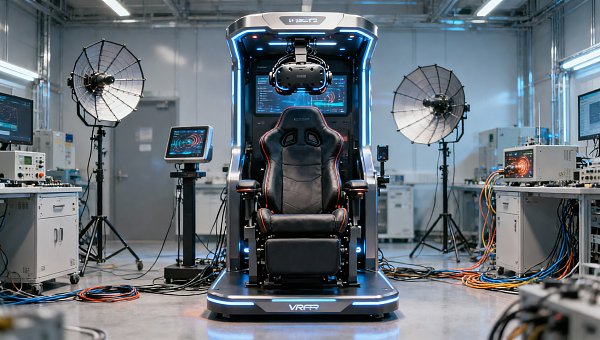
On May 19, 2026, Valve Corporation opened the SteamVR Direct Connect certification channel to Chinese VR hardware OEMs. Certified products — including large-scale spatial tracking base stations and standalone VR controllers designed for arcade environments — can complete SDK integration and cloud platform interoperability testing within 72 hours. Upon passing, devices receive the official ‘SteamVR Ready’ badge and gain direct access to Valve’s global content delivery network, reducing content update latency for overseas VR venues.
Industries Affected
Direct Trade Enterprises: Export-oriented VR hardware distributors and brand operators face accelerated time-to-market for certified devices in North America, Europe, and Southeast Asia. Certification reduces pre-deployment validation cycles by up to 40%, but also introduces new compliance obligations — including mandatory firmware logging standards and real-time telemetry reporting to SteamVR Cloud. Revenue upside is conditional on achieving certification before Q4 2026, when Valve begins prioritizing ‘SteamVR Ready’ devices in its Arcade Partner Portal algorithm.
Raw Material Procurement Enterprises: Suppliers of high-precision IMU sensors, ultra-low-latency wireless SoCs (e.g., Qualcomm Snapdragon XR series), and millimeter-wave antenna modules may see revised demand forecasts. Certification requires minimum latency thresholds (
Manufacturing Enterprises: Contract manufacturers producing VR base stations and hand controllers must now accommodate updated firmware signing workflows, secure bootchain requirements, and automated cloud handshake protocols. While integration tooling is provided by Valve, factory-level CI/CD pipelines require revalidation — adding ~2–3 weeks to ramp-up timelines for first-time applicants. Notably, certification does not waive existing CE/FCC/CCC regulatory obligations; it operates as a parallel technical assurance layer.
Supply Chain Service Providers: Logistics firms offering ‘certification-ready’ warehousing, firmware OTA orchestration, and regional content caching services are seeing early inbound inquiries. However, current demand reflects exploratory engagement rather than committed contracts. The value proposition hinges on demonstrable integration with Valve’s SteamVR Cloud API — a capability few third-party platforms currently support natively.
Key Considerations & Recommended Actions
Prioritize Certification Timeline Alignment
OEMs should treat certification as a product milestone — not an afterthought. The 72-hour integration window applies only to fully compliant reference designs; legacy architectures requiring driver-layer refactoring may need 8–12 weeks. Early registrants gain priority access to Valve’s remote debugging lab, a resource expected to reach capacity by July 2026.
Evaluate Content Distribution Strategy Implications
Access to Valve’s global CDN does not equate to automatic storefront visibility. ‘SteamVR Ready’ status enables lower-latency updates but does not guarantee placement in SteamVR’s Arcade Featured section. OEMs must separately negotiate content bundling agreements with publishers — particularly for region-specific titles (e.g., localized motion-simulator experiences).
Assess Firmware & Telemetry Compliance Burden
Certified devices must transmit anonymized operational telemetry (e.g., tracking loss frequency, battery decay patterns) to SteamVR Cloud at configurable intervals. This requirement may conflict with domestic data sovereignty policies or enterprise customer SLAs. Legal review of Valve’s Data Processing Addendum is advised prior to signing the certification agreement.
Editorial Perspective / Industry Observation
Observably, this is not merely a technical onboarding program — it is Valve’s first formal mechanism to embed Chinese hardware into its closed-loop ecosystem without relying on third-party middleware. Analysis shows that the 40% efficiency gain cited in deployment speed reflects optimization of internal Valve toolchains, not inherent hardware improvements. From an industry perspective, the move signals a strategic pivot: Valve is shifting from platform neutrality toward infrastructure stewardship, selectively enabling hardware partners who align with its long-term vision for low-latency, cloud-coordinated VR venues. Current more critical than certification itself is how OEMs interpret — and operationalize — the implied commitment to ongoing telemetry, security patching, and cross-regional interoperability.
Conclusion
This initiative marks a structural inflection point: for the first time, Chinese VR arcade hardware gains standardized, deterministic access to a global distribution backbone. Yet its broader significance lies less in immediate sales uplift and more in signaling maturity — both technical and procedural — of China’s VR manufacturing base. A rational interpretation is that Valve’s certification threshold serves as a de facto benchmark for industrial readiness in next-generation immersive infrastructure.
Source Attribution
Official announcement: SteamVR Developer Blog, May 19, 2026. Additional technical documentation available via Valve’s Partner Portal (NDA-restricted). Ongoing observation required for: (1) actual certification throughput rates among Tier-2 OEMs; (2) evolution of SteamVR Cloud’s regional caching architecture outside North America; (3) potential alignment with China’s upcoming GB/T VR Interoperability Standard (draft v3.2, expected Q3 2026).
Search News
Hot Articles
- Restaurant FurnitureFast-Casual Restaurant Interiors: Design Choices That Improve Speed and Guest FlowOct 04, 2026
- Outdoor RidesHow to Select Leisure Park Equipment for Safe, High-Throughput Visitor AreasOct 03, 2026
- Fashion & Gem JewelryDiamond Tester Wholesale: How to Vet Accuracy, Calibration, and MOQ Before OrderingOct 02, 2026
Popular Tags
Need ExpertConsultation?
Connect with our specialized leisureengineering team for procurementstrategies.
Recommended News
 Sep 15, 2026How to Choose Coin-Operated Pool Tables for Bars, Hotels, and Arcade VenuesCoin operated pool tables for bars, hotels, and arcades: compare sizes, payment systems, durability, service access, and revenue potential.● Theme Park Strategist
 Sep 08, 2026What to Look for in a Flight Simulator Chair Manufacturer for Commercial VR CentersChoose a flight simulator chair manufacturer that delivers durable, safe, customizable seating for commercial VR centers. Explore key sourcing criteria now.● Theme Park Strategist
 Aug 25, 2026What to Evaluate Before Buying Commercial Self Service Photo Booths for VenuesCommercial self service photo booths for venues: learn how to evaluate durability, software stability, branding flexibility, support, and total ROI before you buy.● Theme Park Strategist
 Aug 23, 2026How to Evaluate Wholesale Vending Machines for Multi-Location Business DeploymentWholesale vending machines for multi-location deployment require more than low unit cost. Learn how to compare reliability, payments, telemetry, and supplier support to scale smarter.● Theme Park Strategist
 Aug 17, 2026U.S. CPSC Urges Bilingual Warnings for Arcade and VR MachinesU.S. CPSC urges bilingual safety warnings for Arcade & VR Machines—learn what exporters, importers, and distributors must do now to avoid delays and returns.● Theme Park Strategist
 Aug 16, 2026EU Enforces EN IEC 62368-1:2026 Certification for Arcade and VR MachinesEU Enforces EN IEC 62368-1:2026 certification for arcade and VR machines, reshaping EU market access, customs clearance, and compliance planning for exporters and distributors.● Theme Park Strategist
 Aug 13, 2026UFLPA’s new guidelines take effect: Exports of Arcade and VR equipment face full-link labor compliance requirementsUFLPA’s new guide takes effect: Arcade and VR machine exports to the U.S. now face full-chain labor compliance checks. Discover key risks and action steps.● Theme Park Strategist
 Aug 12, 2026EU PPWR takes effect, Arcade and VR packaging incorporate heavy metal and PFAS restrictionsEU PPWR now applies to Arcade and VR packaging, tightening heavy metal and PFAS compliance. Learn how exporters can avoid delays, fines, and customs risks.● Theme Park Strategist
 Aug 11, 2026CPSC Sets Bilingual Labels for Arcade and VR ImportsCPSC bilingual labels for arcade and VR imports become mandatory on October 1, 2026. Learn the new English-Spanish warning rules, customs risks, and key compliance steps now.● Theme Park Strategist
 Aug 10, 2026EU Rule Takes Effect for Arcade & VR Machine ClearanceArcade & VR Machine clearance in the EU now depends on EN IEC 62368-1:2026+A11:2026 compliance. Learn what changed, who is affected, and how to avoid customs delays.● Theme Park Strategist
 Aug 09, 2026CPSC Requires New Labels for Arcade and VR ImportsCPSC requires new labels for Arcade and VR imports starting Oct 1, 2026. Learn the multilingual warning rules, compliance risks, and key steps exporters and buyers must take now.● Theme Park Strategist
 Aug 08, 2026EU Entry Rule Tightens for Arcade & VR MachinesArcade & VR Machines entering the EU now face stricter CE compliance under EN IEC 62368-1:2026+A11:2026. Learn the new rule, risks, and what exporters must do now.● Theme Park Strategist
 Aug 07, 2026CPSC Notice Tightens U.S. Entry Rules for Arcade and VR MachinesCPSC Notice Tightens U.S. Entry Rules for Arcade and VR Machines: learn the new labeling, FCC, UN38.3, and compliance document requirements before October 1, 2026.● Theme Park Strategist
 Aug 06, 2026EU Rule Takes Effect for CE-UKCA Labels on Arcade & VR MachinesArcade & VR Machines face new CE-UKCA label and ECPD filing rules in the EU and UK. Learn what manufacturers, importers, and distributors must do now to avoid delays.● Theme Park Strategist
 Aug 05, 2026CPSC Recalls Arcade and VR Machines Over UL 62368-1CPSC recalls arcade and VR machines over UL 62368-1 non-compliance. Learn how this 2026 safety action may affect imports, distribution, customs clearance, and market access.● Theme Park Strategist
 Aug 02, 2026EU Sets New Certification Rule for Arcade and VR MachinesArcade and VR Machines face a new EU certification rule from Oct 1, 2026. Learn how EN IEC 62368-1:2026+A11:2026 affects CE marking, customs clearance, and market access.● Theme Park Strategist
 Aug 01, 2026CPSC Moves to Require Bilingual Warnings on Arcade and VR MachinesCPSC bilingual warnings for Arcade and VR Machines may reshape U.S. import compliance. Learn how English-Spanish labels affect packaging, customs risk, and shipment readiness.● Theme Park Strategist
 Jul 31, 2026EU Sets EN IEC 62368-1:2025 Rule for Arcade and VR MachinesEU Sets EN IEC 62368-1:2025 Rule for Arcade and VR Machines. Learn the new EU compliance deadlines, safety updates, and key actions for manufacturers, OEMs, and distributors.● Theme Park Strategist
 Jul 30, 2026CPSC Sets New Warning Label Rule for Arcade & VR MachinesCPSC sets a new warning label rule for Arcade & VR Machines effective August 15, 2026. Learn key compliance risks, multilingual label requirements, and shipment actions now.● Theme Park Strategist
 Jul 29, 2026EU Enforces New Safety Standard for Arcade and VR MachinesEU Enforces New Safety Standard for Arcade and VR Machines: learn how EN IEC 62368-1 affects CE compliance, customs clearance, and EU market access for exporters and buyers.● Theme Park Strategist
 Jul 28, 2026CPSC Sets ASTM F3472-26 Rule for Arcade & VR ImportsCPSC ASTM F3472-26 rule reshapes Arcade & VR imports to the U.S. Learn key compliance deadlines, certification risks, and what exporters, OEM/ODM suppliers, and buyers should do now.● Theme Park Strategist
 Jul 27, 2026EU Rule Takes Effect for Arcade & VR Machine CybersecurityEU Rule Takes Effect for Arcade & VR Machine Cybersecurity: learn how EN IEC 62443-3-3:2025 affects compliance, customs clearance, sales continuity, and supplier planning in the EU market.● Theme Park Strategist
 Jul 25, 2026CPSC Sets Bilingual Warning Rule for Arcade and VR ImportsCPSC bilingual warning rule for arcade and VR imports takes effect August 1, 2026. Learn how OEM/ODM exporters can avoid CBP delays, relabel shipments, and protect U.S. delivery timelines.● Theme Park Strategist
 Jul 24, 2026EU Enforces New Safety Standard for Arcade and VR MachinesEU Enforces New Safety Standard for Arcade and VR Machines: learn how EN IEC 62368-1:2026+A11:2026 reshapes EU compliance, CE documentation, testing timelines, and export readiness.● Theme Park Strategist