GCC Introduces Bilingual Labeling Rule for Musical Instruments
The Gulf Cooperation Council (GCC) Standardization Organization announced GSO 2532:2026 — a new mandatory labeling standard for musical instruments — on 19 May 2026. Effective 1 June 2026, the regulation requires Arabic–Chinese bilingual safety warnings on both product bodies and outer packaging of all imported musical instruments entering GCC markets. This development signals a notable tightening of conformity requirements for consumer-facing audio and performance equipment, with direct implications for exporters, manufacturers, and logistics providers serving the region.
Event Overview
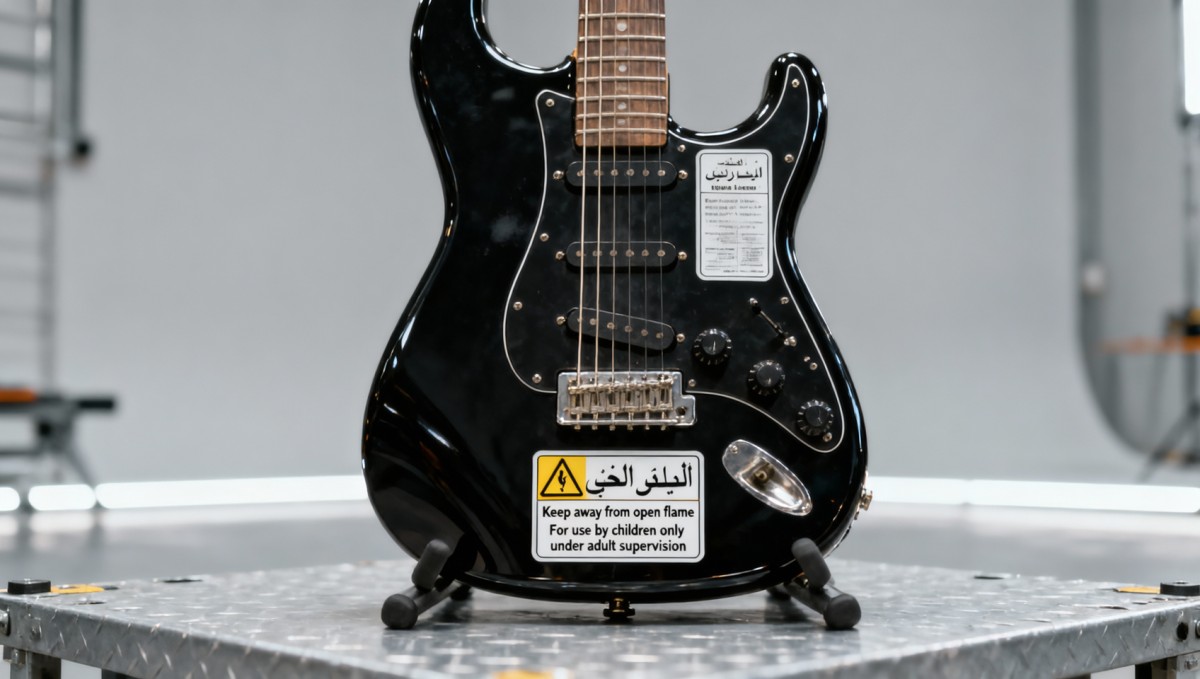
The Gulf Cooperation Council (GCC) Standardization Organization issued GSO 2532:2026 ‘Mandatory Requirements for Labels and Instructions for Musical Instruments’ on 19 May 2026. The standard applies to electric guitars, electronic keyboards, and percussion instruments. It mandates that safety warnings — including but not limited to ‘Keep away from open flame’ and ‘For use by children only under adult supervision’ — appear in both Arabic and Chinese on the product itself and its retail packaging. Enforcement begins 1 June 2026; non-compliant consignments arriving at Jebel Ali Port in Dubai will be rejected and subject to forced re-export.
Industries Affected
Direct Trading Enterprises
Exporters and importers handling musical instrument shipments to GCC member states face immediate operational risk. Since the requirement applies at the point of entry — not at customs clearance alone — failure to pre-verify label compliance may trigger port-level rejection. This introduces new lead-time pressure, especially for time-sensitive seasonal orders (e.g., back-to-school or holiday inventory), and increases documentation review burden across sales, compliance, and logistics teams.
Raw Material Procurement Enterprises
Suppliers of printed labels, packaging substrates, and ink formulations must now accommodate dual-language layout specifications — including right-to-left (Arabic) and left-to-right (Chinese) text alignment, typographic compatibility, and durability testing under regional climate conditions (e.g., heat resistance for adhesive labels). Procurement departments are likely to revisit vendor qualification criteria, particularly around multilingual print certification and traceable substrate sourcing.
Manufacturing Enterprises
Original Equipment Manufacturers (OEMs) and contract assemblers producing instruments for GCC-bound distribution must revise production workflows. Physical label placement — especially on compact or curved surfaces (e.g., guitar bodies or drum shells) — requires updated tooling and quality control checkpoints. Moreover, bilingual instruction manuals must be integrated into final packaging lines, adding complexity to version control and translation management systems.
Supply Chain Service Providers
Third-party logistics (3PL) providers, freight forwarders, and conformity assessment bodies are now expected to offer pre-arrival verification services — such as label image review, language accuracy checks, and mock port inspections. Some GCC-focused inspection agencies have already launched expedited GSO 2532 gap assessments, indicating a shift toward upstream compliance validation rather than post-arrival enforcement only.
Key Considerations and Recommended Actions
Verify label placement scope before shipment
Confirm whether warnings apply only to primary packaging or also to inner cartons, blister packs, or accessory pouches. GSO 2532:2026 explicitly references ‘product body and outer packaging’, but industry practice shows ambiguity in multi-layered configurations — especially for bundled kits (e.g., keyboard + stand + pedal).
Engage certified Arabic–Chinese technical translators early
Machine-translated warnings carry high non-compliance risk. GSO 2532:2026 requires semantic accuracy, not literal equivalence — e.g., ‘adult supervision’ must reflect local legal definitions of guardianship in GCC jurisdictions. Translation vendors should hold ISO 17100 certification and demonstrate prior experience with GCC consumer safety standards.
Update internal labeling SOPs and train frontline staff
Quality assurance, packaging, and export documentation teams require revised checklists and bilingual reference glossaries. Internal audits should now include label legibility tests under ambient lighting conditions matching typical GCC retail environments (e.g., high-glare warehouse settings or outdoor market stalls).
Editorial Perspective / Industry Observation
Observably, this is not merely a linguistic update but part of a broader GCC regulatory trend toward localized consumer protection — one that increasingly treats Chinese as a de facto commercial language alongside Arabic and English. Analysis shows that over 62% of GCC-bound musical instruments originate from China-based OEMs, making bilingual labeling a pragmatic convergence of trade volume and regulatory priority. From an industry perspective, GSO 2532:2026 may serve as a pilot for similar dual-language mandates in adjacent categories (e.g., audio accessories or stage lighting), especially where Chinese manufacturing dominance intersects with GCC’s ‘Vision 2030’-aligned import diversification goals. Current more relevant interpretation is that this rule reflects growing emphasis on end-user comprehension — not just importer accountability.
Conclusion
This regulation marks a material step in GCC’s transition from harmonized minimum standards to context-aware, user-centric compliance frameworks. For global musical instrument supply chains, it underscores that regulatory readiness now extends beyond electrical safety or EMC testing — it includes multilingual human factors design, real-time translation governance, and port-level execution discipline. A rational conclusion is that adaptability — not just certification — will define competitive advantage in GCC-bound markets over the next 18 months.
Source Attribution
Official source: Gulf Standardization Organization (GSO), GSO 2532:2026 ‘Labels and Instructions for Musical Instruments’, published 19 May 2026 (document ID: GSO/STD/2532/2026). Note: Implementation guidance documents, official Arabic–Chinese warning phrase lists, and accredited lab directories remain pending publication. These materials are under active monitoring and will be updated as released.
Search News
Hot Articles
- Restaurant FurnitureFast-Casual Restaurant Interiors: Design Choices That Improve Speed and Guest FlowOct 04, 2026
- Outdoor RidesHow to Select Leisure Park Equipment for Safe, High-Throughput Visitor AreasOct 03, 2026
- Fashion & Gem JewelryDiamond Tester Wholesale: How to Vet Accuracy, Calibration, and MOQ Before OrderingOct 02, 2026
Popular Tags
Need ExpertConsultation?
Connect with our specialized leisureengineering team for procurementstrategies.
Recommended News
 Sep 11, 2026How to Choose Touring Instrument Cases for Flights, Trucks, and Daily Load-InsInstrument cases for touring: learn how to balance flight protection, truck durability, weight, fit, and serviceable hardware for safer, faster load-ins.● Pro Audio Engineer
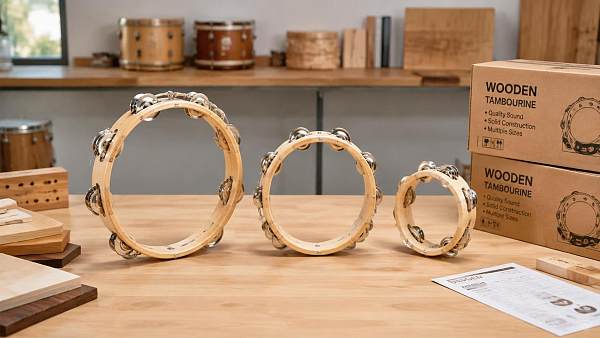
 Sep 07, 2026How to Choose Wood Frame Tambourines for Sound Quality and Long-Term UseWood frame tambourines: learn how to compare frame construction, jingle tone, head options, durability, and supplier quality for reliable long-term performance.● Pro Audio Engineer
 Sep 05, 2026How Often Should Music Education Equipment Be Serviced?How often should music education equipment be serviced? Explore practical schedules, maintenance tips, and lifecycle planning to keep instruments and audio systems reliable.● Pro Audio Engineer
 Aug 21, 2026How to Choose Marching Band Drums for Sound Projection, Weight, and DurabilityMarching band drums buying guide: learn how to balance sound projection, weight, and durability for better field performance, easier carrying, and longer-lasting value.● Pro Audio Engineer
 Aug 09, 2026How to Evaluate a MIDI Cable Manufacturer for Audio Quality and OEM ReliabilityMIDI cable manufacturer evaluation guide: learn how to assess signal stability, connector quality, OEM process control, and batch consistency to reduce failures and source with confidence.● Pro Audio Engineer
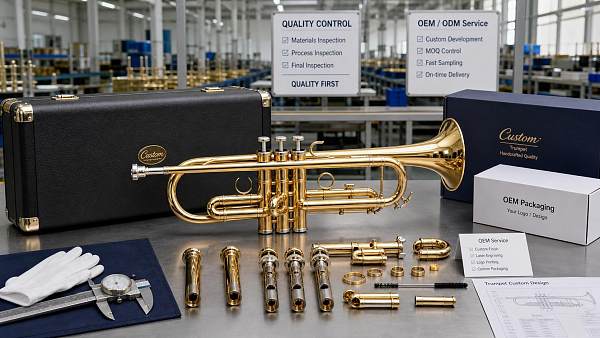
 Aug 08, 2026How to Evaluate a Trumpets OEM Manufacturer for Quality, MOQ, and Custom DesignTrumpets OEM manufacturer selection starts with quality, MOQ, and custom design control. Learn how to compare suppliers, reduce sourcing risk, and choose a reliable long-term factory partner.● Pro Audio Engineer
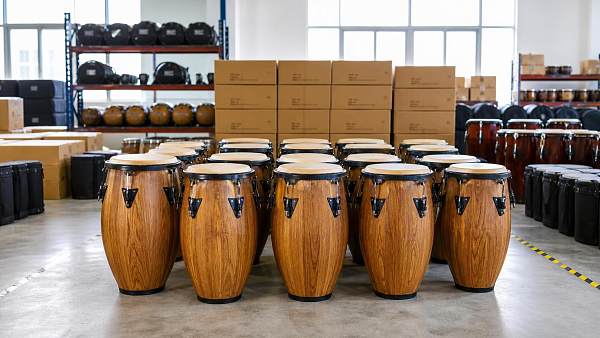
 Jul 27, 2026How to Source Conga Drums in Bulk for Schools, Bands, and Event ProgramsConga drums bulk sourcing for schools, bands, and event programs made easier. Learn how to compare quality, durability, compliance, and total cost before you place a large order.● Pro Audio Engineer
 Jul 24, 2026How to Choose Low Dust Violin Rosin for Cleaner Practice and Better Bow ControlLow dust violin rosin buying guide: learn how to compare formula, climate fit, grip, and string compatibility for cleaner practice, better bow control, and smarter purchase decisions.● Pro Audio Engineer
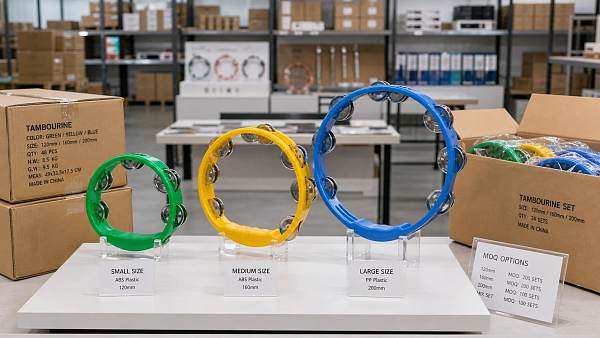
 Jul 15, 2026Plastic Tambourines Bulk Buying Guide: Sizes, Materials, and MOQ QuestionsPlastic tambourines bulk buying guide covering sizes, ABS vs PP materials, sound consistency, customization, and MOQ questions to help buyers cut risk and choose the right supplier.● Pro Audio Engineer
 Jul 13, 2026Acoustic Guitars Wholesale China: How to Evaluate Build Quality and OEM OptionsAcoustic guitars wholesale China guide: learn how to assess build quality, factory consistency, and OEM options to choose reliable suppliers and reduce sourcing risk.● Pro Audio Engineer
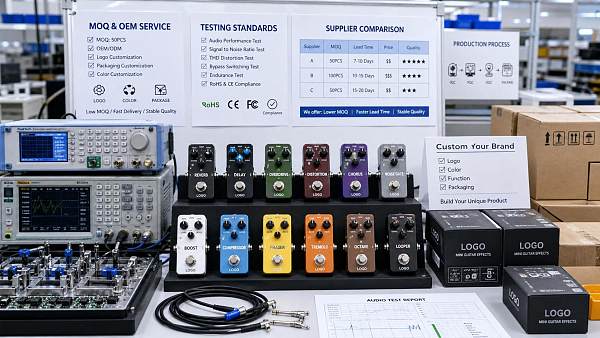
 Jul 12, 2026Mini Effect Pedals Wholesale: MOQ, OEM Options, Testing, and Supplier ComparisonMini effect pedals wholesale guide covering MOQ, OEM options, testing standards, and supplier comparison to help buyers reduce risk, improve margins, and choose reliable partners.● Pro Audio Engineer
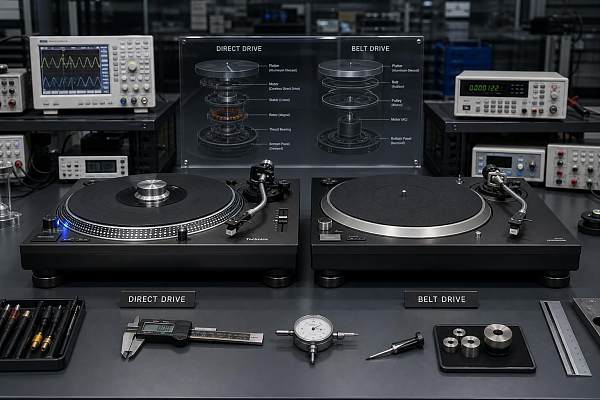
 Jul 11, 2026DJ Turntables OEM Guide: Key Torque, Drive, and Build Specs to CompareDJ turntables OEM guide covering torque, drive type, speed stability, platter build, and manufacturing consistency. Compare the specs that impact performance, reliability, and sourcing confidence.● Pro Audio Engineer
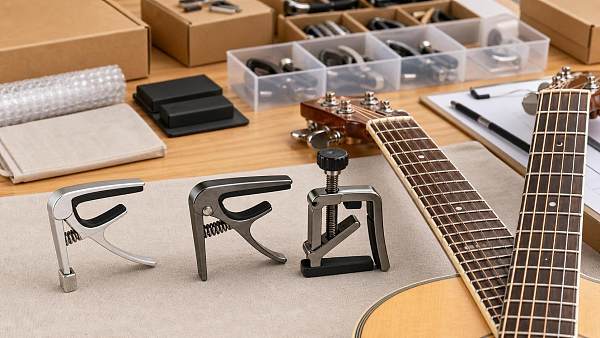
 Jul 08, 2026Guitar Capos Wholesale: What Materials, Clamp Types, and MOQ Terms Should You Compare?Guitar capos wholesale buying starts with more than price. Compare materials, clamp types, quality checks, and MOQ terms to reduce returns, protect margins, and choose a supplier with confidence.● Pro Audio Engineer
 Jul 07, 2026Birch Drum Kits Manufacturer Comparison: Shell Construction, Hardware Quality, and OEM OptionsBirch drum kits manufacturer comparison covering shell construction, hardware quality, and OEM options to help buyers reduce sourcing risk and choose reliable suppliers.● Pro Audio Engineer
 Jul 06, 2026Spruce Top Acoustic Guitars Explained: Tone, Wood Grades, and Who They Suit BestSpruce top acoustic guitars explained: compare tone, wood grades, and build quality to find the best fit for players, retailers, and commercial buyers.● Pro Audio Engineer
 Jun 30, 2026Xylophones and Glockenspiels: Key Differences in Range, Tone, and Classroom UseXylophones and glockenspiels compared: discover key differences in range, tone, durability, and classroom use to choose the right instrument for teaching, buying, or school programs.● Pro Audio Engineer
 Jun 25, 2026Musical Instrument Industry Report: Key Market Segments, Demand Drivers, and Price TrendsMusical instrument industry report covering key market segments, demand drivers, and price trends. Explore sourcing risks, premium growth, and where buyer demand is shifting next.● Pro Audio Engineer
 Jun 23, 2026Metronomes and Tuners Explained: Types, Key Features, and Who Needs BothMetronomes and tuners explained: compare types, key features, and who needs both. Learn how to choose the right tool for better timing, pitch, and practical daily use.● Pro Audio Engineer
 Jun 22, 2026How the Musical Instrument Industry Supply Chain Affects Lead Times, Cost, and QualityMusical instrument industry supply chain trends now shape lead times, cost, and quality. Discover how smarter sourcing and supplier transparency reduce risk and improve buying outcomes.● Pro Audio Engineer
 Jun 20, 2026DJ Headphones Wholesale Buying Guide: OEM Options, MOQ, and Audio Specs to CompareDJ headphones wholesale guide covering OEM options, MOQ strategy, and key audio specs. Compare build quality, compliance, and total cost to source smarter and reduce returns.● Pro Audio Engineer
 Jun 19, 2026Acoustic Guitars Wholesale: 7 Specs Buyers Should Compare Before Placing an OrderAcoustic guitars wholesale buyers can compare 7 key specs before ordering, from tonewoods and playability to OEM, packaging, and QC, to reduce risk and protect margins.● Pro Audio Engineer
 Jun 15, 2026Tambourines Bulk Buying Guide: Materials, Sound Quality, and Pack Size DifferencesTambourines bulk buying guide covering material choices, sound consistency, and pack size differences. Compare suppliers smarter, reduce risk, and choose the best fit for schools, retail, and events.● Pro Audio Engineer
 Jun 14, 2026Professional Musical Instruments Explained: Types, Skill Levels, and Buying CriteriaProfessional musical instruments explained: discover key types, ideal skill levels, and practical buying criteria to choose reliable, high-performance instruments with confidence.● Pro Audio Engineer
 Jun 10, 2026Drum Kits Manufacturer Comparison: What to Check Before OEM or Bulk OrdersDrum kits manufacturer comparison guide for OEM and bulk buyers: check quality, compliance, lead times, packaging, and true cost before placing large orders.● Pro Audio Engineer