What to check before choosing instrument cables OEM
Choosing the right instrument cables OEM can directly shape product consistency, signal integrity, and delivery confidence across commercial projects. In real sourcing situations, cable selection affects far more than unit cost.
A weak OEM partner may create noise issues, unstable shielding, cosmetic defects, or compliance gaps. A capable instrument cables OEM supports brand reputation, repeat orders, and smoother international trade execution.
Before approval, it is important to assess use scenarios, not just quotations. Different environments demand different cable structures, testing standards, packaging methods, and customization depth.
Why scenario-based evaluation matters before selecting an instrument cables OEM
Instrument cables serve very different roles across retail, touring, education, hospitality, and studio environments. A cable that works in one setting may underperform or fail early in another.
That is why choosing an instrument cables OEM should begin with scenario mapping. Usage intensity, handling frequency, connector stress, and storage conditions all change the specification baseline.
Commercial buyers also need alignment between technical quality and brand positioning. Premium private-label products require stricter finish control, stronger traceability, and cleaner acoustic performance.
The first judgment: performance risk or supply risk?
Some projects fail because cables produce signal loss, crackling, or interference. Others fail because shipment schedules slip, labels are wrong, or material batches vary without notice.
A reliable instrument cables OEM should show control over both risks. Technical quality without supply discipline is incomplete. Fast delivery without quality assurance is equally dangerous.
Scenario 1: Retail private label needs stronger finish consistency and packaging control
Retail-focused programs usually prioritize appearance, shelf presentation, and stable batch identity. Here, an instrument cables OEM must deliver visual consistency as carefully as electrical performance.
Outer jacket color, logo print clarity, connector plating appearance, and blister or carton presentation all influence sell-through. Small cosmetic variation can weaken perceived product value.
What to check in this retail scenario
- Print durability on cable jackets and packaging
- Color matching control across repeated orders
- Connector appearance, plating uniformity, and scratch resistance
- Barcode, multilingual labeling, and carton marking accuracy
- Drop-test suitable retail packaging design
For this scenario, ask for pre-production samples from the exact factory line. Prototype quality alone does not confirm stable retail execution at volume.
Scenario 2: Touring and live events require durability beyond basic signal transmission
Live performance environments place heavy mechanical stress on cables. Repeated coiling, stepping, pulling, and connector bending make durability a core buying criterion.
In this use case, an instrument cables OEM should prove strain relief design, conductor flexibility, jacket toughness, and soldering consistency through clear test records.
Key checks for high-movement environments
- Bending cycle test data
- Pull-force resistance at connector joints
- Jacket flexibility in low-temperature transport conditions
- Shielding structure for EMI-heavy venues
- Failure rate records from previous batches
If the supplier only discusses copper purity and price, the review is incomplete. Mechanical endurance often determines real field performance in event-driven applications.
Scenario 3: Studios and education settings need low noise and predictable specification control
Studios, rehearsal rooms, and music education spaces usually value low handling noise, stable capacitance, and dependable signal clarity. Product consistency matters more than flashy customization.
A qualified instrument cables OEM for these settings should define conductor size, shielding coverage, insulation quality, and capacitance tolerance with documented precision.
Questions that reveal technical discipline
- Are capacitance values tested per batch or only by design estimate?
- Is shielding braided, spiral, or served, and why?
- What continuity and short-circuit testing occurs before packing?
- How are soldering defects detected and recorded?
- Can the factory keep identical specifications across long-term replenishment orders?
This scenario often rewards disciplined factories rather than the cheapest ones. Stable data control reduces returns, support complaints, and product reputation damage.
How requirements differ across common instrument cable sourcing scenarios
What to verify in factory capability before approving an instrument cables OEM
Once the scenario is clear, factory capability review becomes more focused. A credible instrument cables OEM should present process evidence instead of generic marketing claims.
Material and component control
Check conductor material specification, strand structure, insulation type, shielding method, jacket compound, and connector sourcing. Consistency starts with approved raw materials, not final inspection alone.
Quality control and traceability
Ask whether each production lot can be traced to date, operator, component batch, and test result. Strong traceability lowers claim-handling time and protects branded distribution channels.
Compliance and market readiness
Depending on sales regions, review RoHS, REACH, packaging regulations, and labeling conformity. For some markets, documentation gaps can stop shipments even when product quality is acceptable.
Customization depth
A capable instrument cables OEM should support lengths, connector combinations, branding, packaging, and specification adjustments without causing uncontrolled quality drift or long redevelopment delays.
Practical selection advice for matching the right OEM to the right scenario
- Define the primary use environment before asking for quotations.
- Request test reports linked to actual production models, not unrelated samples.
- Compare defect response procedures, not just initial pricing.
- Validate packaging and labeling through pilot orders.
- Confirm replenishment stability for six to twelve months.
- Use one approval checklist for performance, compliance, and logistics together.
This approach helps narrow choices to the most suitable instrument cables OEM, rather than the fastest or lowest-priced offer on paper.
Common sourcing mistakes when reviewing instrument cables OEM options
One common mistake is approving based on a single attractive sample. Sample quality can be hand-selected, while mass production may show weaker soldering, inconsistent shielding, or poor connector finishing.
Another mistake is ignoring after-sales handling. If an instrument cables OEM cannot define claim timelines, replacement rules, and root-cause reporting, commercial risk remains high.
It is also risky to treat all instrument cables as interchangeable. Cable structure, plug design, flexibility, and shielding should match the intended commercial application.
Finally, do not overlook communication accuracy. Incorrect specifications, artwork mistakes, or carton label errors can create avoidable losses even when the cable itself performs well.
Next steps before finalizing your instrument cables OEM decision
Build a short evaluation sheet covering scenario fit, material control, test capability, compliance documents, packaging accuracy, and delivery reliability. This creates a measurable approval process.
Then request a pilot order that reflects real commercial requirements. Include branded packaging, final connectors, target lengths, and shipment markings to test full execution capability.
The best instrument cables OEM is not simply the one with the lowest cost. It is the one that fits the exact scenario, protects product quality, and supports repeatable global sourcing results.
Search News
Hot Articles
- Restaurant FurnitureFast-Casual Restaurant Interiors: Design Choices That Improve Speed and Guest FlowOct 04, 2026
- Outdoor RidesHow to Select Leisure Park Equipment for Safe, High-Throughput Visitor AreasOct 03, 2026
- Fashion & Gem JewelryDiamond Tester Wholesale: How to Vet Accuracy, Calibration, and MOQ Before OrderingOct 02, 2026
Popular Tags
Need ExpertConsultation?
Connect with our specialized leisureengineering team for procurementstrategies.
Recommended News
 Sep 11, 2026How to Choose Touring Instrument Cases for Flights, Trucks, and Daily Load-InsInstrument cases for touring: learn how to balance flight protection, truck durability, weight, fit, and serviceable hardware for safer, faster load-ins.● Pro Audio Engineer
 Sep 07, 2026How to Choose Wood Frame Tambourines for Sound Quality and Long-Term UseWood frame tambourines: learn how to compare frame construction, jingle tone, head options, durability, and supplier quality for reliable long-term performance.● Pro Audio Engineer
 Sep 05, 2026How Often Should Music Education Equipment Be Serviced?How often should music education equipment be serviced? Explore practical schedules, maintenance tips, and lifecycle planning to keep instruments and audio systems reliable.● Pro Audio Engineer
 Aug 21, 2026How to Choose Marching Band Drums for Sound Projection, Weight, and DurabilityMarching band drums buying guide: learn how to balance sound projection, weight, and durability for better field performance, easier carrying, and longer-lasting value.● Pro Audio Engineer
 Aug 09, 2026How to Evaluate a MIDI Cable Manufacturer for Audio Quality and OEM ReliabilityMIDI cable manufacturer evaluation guide: learn how to assess signal stability, connector quality, OEM process control, and batch consistency to reduce failures and source with confidence.● Pro Audio Engineer
 Aug 08, 2026How to Evaluate a Trumpets OEM Manufacturer for Quality, MOQ, and Custom DesignTrumpets OEM manufacturer selection starts with quality, MOQ, and custom design control. Learn how to compare suppliers, reduce sourcing risk, and choose a reliable long-term factory partner.● Pro Audio Engineer
 Jul 27, 2026How to Source Conga Drums in Bulk for Schools, Bands, and Event ProgramsConga drums bulk sourcing for schools, bands, and event programs made easier. Learn how to compare quality, durability, compliance, and total cost before you place a large order.● Pro Audio Engineer
 Jul 24, 2026How to Choose Low Dust Violin Rosin for Cleaner Practice and Better Bow ControlLow dust violin rosin buying guide: learn how to compare formula, climate fit, grip, and string compatibility for cleaner practice, better bow control, and smarter purchase decisions.● Pro Audio Engineer
 Jul 15, 2026Plastic Tambourines Bulk Buying Guide: Sizes, Materials, and MOQ QuestionsPlastic tambourines bulk buying guide covering sizes, ABS vs PP materials, sound consistency, customization, and MOQ questions to help buyers cut risk and choose the right supplier.● Pro Audio Engineer
 Jul 13, 2026Acoustic Guitars Wholesale China: How to Evaluate Build Quality and OEM OptionsAcoustic guitars wholesale China guide: learn how to assess build quality, factory consistency, and OEM options to choose reliable suppliers and reduce sourcing risk.● Pro Audio Engineer
 Jul 12, 2026Mini Effect Pedals Wholesale: MOQ, OEM Options, Testing, and Supplier ComparisonMini effect pedals wholesale guide covering MOQ, OEM options, testing standards, and supplier comparison to help buyers reduce risk, improve margins, and choose reliable partners.● Pro Audio Engineer
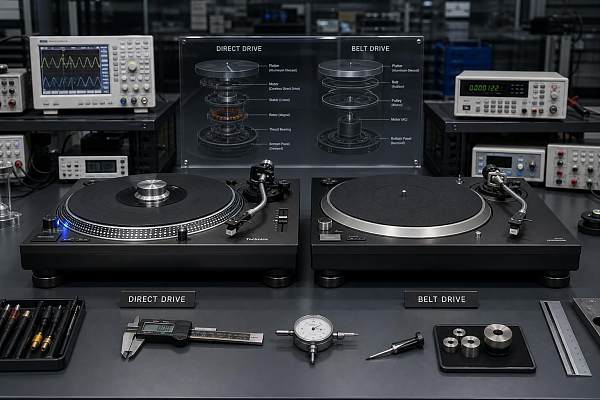
 Jul 11, 2026DJ Turntables OEM Guide: Key Torque, Drive, and Build Specs to CompareDJ turntables OEM guide covering torque, drive type, speed stability, platter build, and manufacturing consistency. Compare the specs that impact performance, reliability, and sourcing confidence.● Pro Audio Engineer
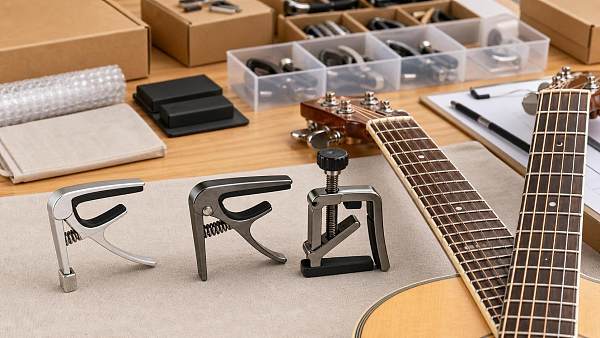
 Jul 08, 2026Guitar Capos Wholesale: What Materials, Clamp Types, and MOQ Terms Should You Compare?Guitar capos wholesale buying starts with more than price. Compare materials, clamp types, quality checks, and MOQ terms to reduce returns, protect margins, and choose a supplier with confidence.● Pro Audio Engineer
 Jul 07, 2026Birch Drum Kits Manufacturer Comparison: Shell Construction, Hardware Quality, and OEM OptionsBirch drum kits manufacturer comparison covering shell construction, hardware quality, and OEM options to help buyers reduce sourcing risk and choose reliable suppliers.● Pro Audio Engineer
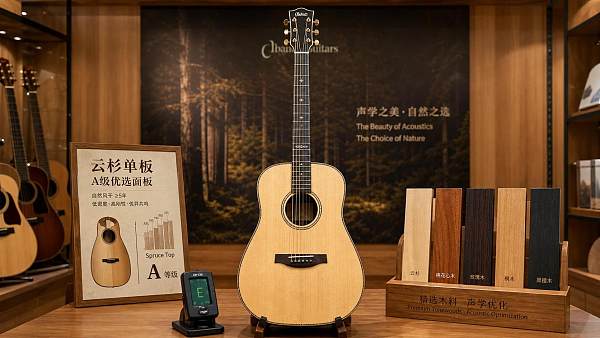
 Jul 06, 2026Spruce Top Acoustic Guitars Explained: Tone, Wood Grades, and Who They Suit BestSpruce top acoustic guitars explained: compare tone, wood grades, and build quality to find the best fit for players, retailers, and commercial buyers.● Pro Audio Engineer
 Jun 30, 2026Xylophones and Glockenspiels: Key Differences in Range, Tone, and Classroom UseXylophones and glockenspiels compared: discover key differences in range, tone, durability, and classroom use to choose the right instrument for teaching, buying, or school programs.● Pro Audio Engineer
 Jun 25, 2026Musical Instrument Industry Report: Key Market Segments, Demand Drivers, and Price TrendsMusical instrument industry report covering key market segments, demand drivers, and price trends. Explore sourcing risks, premium growth, and where buyer demand is shifting next.● Pro Audio Engineer
 Jun 23, 2026Metronomes and Tuners Explained: Types, Key Features, and Who Needs BothMetronomes and tuners explained: compare types, key features, and who needs both. Learn how to choose the right tool for better timing, pitch, and practical daily use.● Pro Audio Engineer
 Jun 22, 2026How the Musical Instrument Industry Supply Chain Affects Lead Times, Cost, and QualityMusical instrument industry supply chain trends now shape lead times, cost, and quality. Discover how smarter sourcing and supplier transparency reduce risk and improve buying outcomes.● Pro Audio Engineer
 Jun 20, 2026DJ Headphones Wholesale Buying Guide: OEM Options, MOQ, and Audio Specs to CompareDJ headphones wholesale guide covering OEM options, MOQ strategy, and key audio specs. Compare build quality, compliance, and total cost to source smarter and reduce returns.● Pro Audio Engineer
 Jun 19, 2026Acoustic Guitars Wholesale: 7 Specs Buyers Should Compare Before Placing an OrderAcoustic guitars wholesale buyers can compare 7 key specs before ordering, from tonewoods and playability to OEM, packaging, and QC, to reduce risk and protect margins.● Pro Audio Engineer
 Jun 15, 2026Tambourines Bulk Buying Guide: Materials, Sound Quality, and Pack Size DifferencesTambourines bulk buying guide covering material choices, sound consistency, and pack size differences. Compare suppliers smarter, reduce risk, and choose the best fit for schools, retail, and events.● Pro Audio Engineer
 Jun 14, 2026Professional Musical Instruments Explained: Types, Skill Levels, and Buying CriteriaProfessional musical instruments explained: discover key types, ideal skill levels, and practical buying criteria to choose reliable, high-performance instruments with confidence.● Pro Audio Engineer
 Jun 10, 2026Drum Kits Manufacturer Comparison: What to Check Before OEM or Bulk OrdersDrum kits manufacturer comparison guide for OEM and bulk buyers: check quality, compliance, lead times, packaging, and true cost before placing large orders.● Pro Audio Engineer