How Hotel & Catering Equipment affects daily service costs
For project managers and engineering leads, Hotel & Catering Equipment is more than a capital purchase—it directly shapes labor efficiency, energy use, maintenance cycles, and service consistency. Understanding how equipment choices influence daily operating costs helps teams balance performance, compliance, and long-term value while keeping hospitality projects on schedule and within budget.
Why equipment decisions have a direct impact on daily service costs
When buyers evaluate Hotel & Catering Equipment, the headline price is only one part of the financial picture. Daily service costs are usually driven by labor time, energy consumption, cleaning effort, maintenance frequency, downtime risk, and output consistency.
For project managers, this means the cheapest unit is often not the lowest-cost option in operation. Equipment that is faster, more reliable, and easier to maintain can reduce recurring service expenses for years after installation.
In hotel kitchens, banquet operations, room service support areas, and staff canteens, every extra minute of prep, washdown, reheating, or repair adds cost. Equipment affects these minutes directly, which is why selection decisions influence operating margins long after project handover.
The practical takeaway is simple: Hotel & Catering Equipment should be assessed as an operating-cost lever, not only as a procurement line item. That perspective helps engineering and procurement teams make choices that support both project delivery and long-term site performance.
What project managers and engineering leads are really trying to control
Most target readers are not just asking whether a machine works. They want to know how equipment will perform under daily service pressure, whether it aligns with staffing realities, and how quickly it will create avoidable cost.
The first concern is throughput under real operating conditions. A combi oven, dishwasher, refrigeration line, or hot holding system may look efficient in specifications, but performance during peak breakfast, banquet turnover, or high-volume events matters more.
The second concern is labor dependency. If a unit requires constant monitoring, difficult cleaning, or frequent manual adjustment, staffing costs rise. In many hospitality operations, labor is one of the largest operating expenses, so equipment simplicity matters.
The third concern is reliability and serviceability. Unplanned downtime can disrupt service, increase food waste, delay event schedules, and trigger emergency maintenance costs. For engineering leads, service access and spare parts availability are not minor technical details.
The fourth concern is compliance and integration. Equipment must meet local code, ventilation needs, utility loads, hygiene standards, and space constraints. A poor fit can create installation changes, commissioning delays, and unexpected operating inefficiencies.
Labor efficiency is often the biggest hidden cost driver
In many hospitality environments, labor savings outweigh modest differences in purchase price. Equipment that shortens prep time, reduces supervision, or simplifies workflow can create meaningful daily savings across multiple shifts.
Take food preparation as an example. High-performance cutters, mixers, holding cabinets, and multifunction cooking systems reduce handling steps. That lowers the number of labor hours required to produce the same output while improving consistency between teams.
Cleaning design also matters. Smooth surfaces, tool-free disassembly, self-cleaning cycles, and easy drain access reduce the time staff spend on sanitation. Over months and years, these repeated time savings become a major operating advantage.
Automation features can also affect staffing needs. Programmable cycles, temperature presets, auto-dosing, and error alerts reduce dependency on highly experienced operators. This is especially valuable where turnover is high or training capacity is limited.
For project teams, the right question is not simply “How much staff does this department have?” It is “How much staff time will this equipment consume every day, and can we reduce it without sacrificing output or quality?”
Energy and utility consumption shape daily cost more than many teams expect
Energy-efficient Hotel & Catering Equipment can have a measurable effect on daily service costs, especially in large hotels, resorts, institutional kitchens, and event venues with long operating hours. The impact is cumulative and often underestimated at specification stage.
Cooking equipment with faster heat recovery and better insulation reduces wasted energy during idle periods and production cycles. Refrigeration with efficient compressors, intelligent defrost control, and improved door sealing also lowers utility demand.
Water use is equally important. Dishwashers, glass washers, ice machines, and steam-based equipment can raise both water and energy bills. Lower consumption per cycle may look like a technical detail, but across hundreds of daily uses it becomes material.
Project managers should also consider utility infrastructure requirements. Equipment that needs higher electrical load, gas supply upgrades, additional drainage, or more ventilation capacity may increase both installation cost and ongoing operating expense.
A useful approach is to compare units based on cost per service cycle or cost per meal output, rather than annual efficiency claims alone. This makes specification decisions more relevant to actual hospitality operating patterns.
Maintenance, downtime, and parts support can quickly erase procurement savings
Low upfront pricing can become expensive if equipment fails often or is difficult to service. Daily service costs rise quickly when maintenance teams spend excessive time troubleshooting recurring faults or waiting for parts.
Downtime in hospitality is rarely isolated. A failed dishwasher can slow banquet reset. A refrigeration issue can affect food safety and stock holding. An unreliable oven can disrupt production timing across breakfast, lunch, and event schedules.
That is why maintainability should be part of every sourcing review. Equipment with accessible service panels, modular components, standard consumables, and strong technical documentation is easier and cheaper to keep running.
Service network coverage is another key factor. If support technicians are not locally available, response times increase and operational disruption lasts longer. For multi-site hospitality groups, standardized equipment platforms can simplify maintenance and training.
Engineering leads should ask suppliers practical questions: What is the expected preventive maintenance cycle? Which parts fail most often? What is the average lead time for replacements? These answers often reveal the true daily cost profile.
Equipment consistency affects food quality, waste, and guest experience
Daily service costs are not limited to utilities and labor. Inconsistent Hotel & Catering Equipment can create hidden losses through food waste, rework, service delays, and customer dissatisfaction. These issues are operational costs even if they do not appear on the equipment invoice.
Cooking systems that deliver uneven results force teams to overproduce, reheat, or discard product. Holding equipment with poor temperature stability can reduce food quality and increase spoilage risk. Refrigeration inconsistency can weaken stock control accuracy.
In banquet and high-volume catering environments, consistency is especially valuable. Stable performance helps teams plan portions, service timing, and staffing with greater confidence. Predictability reduces operational stress and lowers the chance of expensive mistakes.
For project managers, this means quality performance is a cost issue, not just a culinary issue. Better control over output translates into lower waste, fewer complaints, and smoother service execution across departments.
Layout, workflow, and equipment matching matter as much as the machine itself
Even excellent equipment can create avoidable daily cost if it is poorly matched to the workflow. The relationship between kitchen layout, storage, preparation, cooking, cleaning, and pass-through zones strongly affects labor productivity.
If refrigeration is too far from prep stations, staff walk more. If dishwashing flow causes backtracking, reset times increase. If hot holding capacity does not match service rhythm, food handling becomes less efficient and quality suffers.
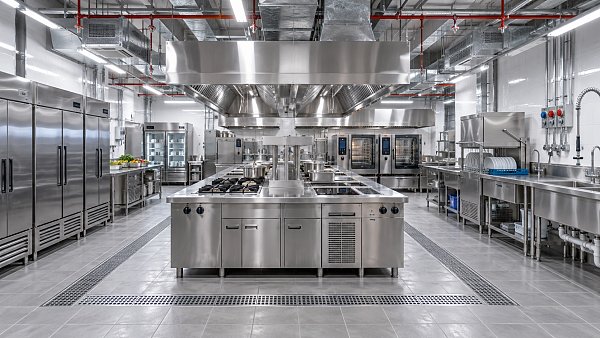
Project leaders should therefore assess Hotel & Catering Equipment as part of an integrated operational system. Capacity, footprint, ergonomics, and adjacency planning all influence how many touches, delays, and bottlenecks occur during daily service.
This is where collaboration between consultants, operators, chefs, engineering teams, and procurement becomes valuable. The best equipment choice is often the one that improves total workflow, not the one with the most impressive standalone specification.
How to evaluate total cost of ownership before making a sourcing decision
A practical total cost of ownership review gives project teams a clearer basis for comparison. Instead of focusing on purchase price alone, decision-makers should estimate the full operational cost of each equipment option over its expected service life.
Start with five core categories: acquisition and installation cost, labor impact, utility consumption, maintenance and parts expense, and downtime risk. These categories usually capture the majority of the operating cost difference between comparable units.
Then connect those numbers to real site conditions. Consider daily covers, shift patterns, menu complexity, cleaning protocols, local energy prices, staff skill levels, and service response availability. Generic benchmark data is useful, but site-specific assumptions are better.
It is also wise to model best-case and worst-case scenarios. A machine may look efficient under ideal usage but become expensive if trained operators are unavailable or if preventive maintenance is not consistently followed.
Where possible, ask suppliers for case references from similar hotel or catering environments. Verified performance in comparable operations is often more valuable than brochure claims when estimating long-term service costs.
Questions project teams should ask suppliers before approving equipment
To make better sourcing decisions, project managers should move beyond standard specification sheets. Supplier discussions should focus on daily operating impact, not only capacity or dimensions.
Useful questions include: What is the average cycle cost in real use? How much operator input is needed per shift? How long does daily cleaning take? What preventive maintenance is mandatory? Which components are most frequently replaced?
Teams should also ask about local compliance, commissioning support, operator training, warranty exclusions, and spare parts stock. These factors influence how quickly equipment starts delivering value and how much disruption it may cause later.
If the project involves multiple properties or future rollouts, standardization potential should be discussed early. Consistent equipment platforms reduce training complexity, improve parts planning, and support more predictable operating costs across sites.
Choosing Hotel & Catering Equipment with long-term operational value in mind
For hospitality projects, the right Hotel & Catering Equipment is the equipment that supports efficient daily service, not merely the one that fits the initial capex target. Long-term value comes from reducing labor drag, utility waste, maintenance burden, and service disruption.
Project managers and engineering leads are in a strong position to influence this outcome when they evaluate equipment through an operational lens. A disciplined review of workflow fit, maintainability, energy use, and output consistency leads to better decisions.
In practical terms, equipment affects daily service costs by shaping how fast teams work, how reliably they deliver, and how often problems interrupt production. Those factors directly influence departmental budgets and guest-facing performance.
The most effective sourcing strategy is therefore balanced: control upfront spend, but prioritize equipment that lowers recurring operating cost and supports dependable service. That is how better equipment decisions create measurable value long after project completion.
Search News
Hot Articles
- Restaurant FurnitureFast-Casual Restaurant Interiors: Design Choices That Improve Speed and Guest FlowOct 04, 2026
- Outdoor RidesHow to Select Leisure Park Equipment for Safe, High-Throughput Visitor AreasOct 03, 2026
- Fashion & Gem JewelryDiamond Tester Wholesale: How to Vet Accuracy, Calibration, and MOQ Before OrderingOct 02, 2026
Popular Tags
Need ExpertConsultation?
Connect with our specialized leisureengineering team for procurementstrategies.
Recommended News
 Sep 24, 2026Conveyor Pizza Oven Price: What Buyers Should Budget for Capacity and FeaturesConveyor pizza oven price guide: compare capacity, features, installation costs, and quote factors to choose the right commercial oven for your operation.● Hospitality Sourcing Dir
 Sep 23, 2026How Restaurant Buyers Can Source Hospitality Supplies Without OverorderingHospitality supplies for restaurants: learn practical sourcing strategies to cut excess inventory, protect cash flow, improve supplier reliability, and keep every service running smoothly.● Hospitality Sourcing Dir
 Sep 22, 2026Commercial Kitchen Design Price: Budgeting by Layout, Equipment, and MEP ScopeCommercial kitchen design price explained: budget smarter for layout, equipment, MEP scope, compliance, installation, and long-term operational performance.● Hospitality Sourcing Dir
 Sep 19, 2026How to Select a Spiral Dough Mixer for Bakery Batch Size and Dough HydrationSpiral dough mixer bakery guide: match batch size, flour load, and hydration to select reliable torque, temperature control, and consistent dough results.● Hospitality Sourcing Dir
 Sep 14, 2026How Restaurants Can Choose Disposable Wooden Cutlery for Takeout and CateringDisposable wooden cutlery fork spoon knife guide for restaurants: compare strength, finish, packaging, food-contact needs, and catering performance.● Hospitality Sourcing Dir
 Sep 12, 2026How to Size a Restaurant Walk-In Cooler for Peak Inventory and Kitchen LayoutRestaurant walk in coolers sized for peak inventory and kitchen workflow help improve food safety, staff efficiency, storage access, and long-term operational performance.● Hospitality Sourcing Dir
 Sep 10, 2026How to Choose a CE Hot Dog Roller for Safe, High-Volume Food Service?Choose a CE hot dog roller with confidence: compare compliance documents, heating consistency, cleaning design, capacity, and total cost for safe, high-volume food service.● Hospitality Sourcing Dir
 Sep 04, 2026How to Evaluate a Commercial Food Warmer Manufacturer for Bulk Catering ProjectsCommercial food warmer manufacturer evaluation guide for bulk catering projects: compare thermal performance, compliance, customization, costs, and after-sales support.● Hospitality Sourcing Dir
 Aug 30, 2026How Can Buyers Verify Supplier Qualifications Before a Bulk Order?How to confirm supplier qualifications before placing a bulk order: verify legal identity, factory capability, certificates, samples, quality controls, and payment safeguards.● Hospitality Sourcing Dir
 Aug 28, 2026Commercial Kitchen Design Standards: A Planning Checklist for Code-Compliant LayoutsCommercial kitchen design standards: use this practical checklist to plan safer, code-compliant layouts, streamline approvals, and avoid costly rework.● Hospitality Sourcing Dir
 Aug 06, 2026How to Choose Flake Ice Makers for Seafood Displays, Bars, and Food Prep?Flake ice makers buying guide: compare output, hygiene, storage, energy use, and reliability to choose the best solution for seafood displays, bars, and food prep.● Hospitality Sourcing Dir
 Aug 03, 2026Commercial Kitchen Design Price: What Drives Cost in a New Build Project?Commercial kitchen design price explained: discover what drives cost in a new build, from layout and equipment to ventilation, compliance, and hidden budget risks.● Hospitality Sourcing Dir
 Jul 30, 2026How to Choose a Countertop Commercial Pizza Oven for Capacity, Speed, and Space?Countertop commercial pizza oven buying guide: learn how to match capacity, bake speed, and kitchen space for consistent output, lower costs, and smarter purchasing decisions.● Hospitality Sourcing Dir
 Jul 22, 2026How to Evaluate a Cotton Candy Machine Supplier for Quality, Lead Time, and MOQCotton candy machine supplier selection starts with quality, lead time, and MOQ. Learn how to compare suppliers, reduce sourcing risk, and choose a partner that supports reliable growth.● Hospitality Sourcing Dir
 Jul 21, 2026How to Choose a Charcoal Commercial Grill for Capacity, Heat Control, and Menu FitCharcoal commercial grill buying guide: learn how to match capacity, heat control, and menu fit to boost consistency, service speed, and ROI in commercial kitchens.● Hospitality Sourcing Dir
 Jul 10, 2026FDA Import Alert Adds NSF/ANSI 50-2026 for Commercial Kitchen EquipmentFDA Import Alert now highlights NSF/ANSI 50-2026 for commercial kitchen equipment. Learn how dishwashers, ice machines, and steam cabinets can avoid U.S. port detention.● Hospitality Sourcing Dir
 Jul 05, 2026How to Select Energy Efficient Display Cabinets for Food Retail and HospitalityEnergy efficient display cabinets can cut operating costs while improving food safety, visibility, and service efficiency. Learn how to choose the right model for retail and hospitality.● Hospitality Sourcing Dir
 Jul 04, 2026CPSC Flags New UL 2595 Label Rule for Commercial Ice MakersCPSC flags a new UL 2595 label rule for commercial ice makers entering the U.S. after Aug. 1, 2026. Learn who is affected, key compliance steps, and how to avoid port delays and recall risk.● Hospitality Sourcing Dir
 Jun 29, 2026How to Choose Thermal Receipt Printers for Retail and Restaurant CountersThermal receipt printers for retail and restaurant counters: learn how to compare speed, durability, connectivity, and total operating cost to choose a model that supports smoother service.● Hospitality Sourcing Dir
 Jun 28, 2026Stainless Steel Kitchen Ventilation Systems: Key Specifications for Commercial ProjectsStainless steel kitchen ventilation systems: compare material grades, airflow capture, hygiene, fire safety, and installation specs for commercial projects before you buy.● Hospitality Sourcing Dir
 Jun 27, 2026Commercial Shawarma Machines: What to Check Before Buying for High-Volume ServiceShawarma machines commercial buying guide: learn how to compare capacity, heat control, durability, compliance, and lifecycle cost before choosing equipment for high-volume service.● Hospitality Sourcing Dir
 Jun 26, 2026Restaurant POS Systems: How to Compare Features, Costs, and ScalabilityRestaurant POS systems: compare features, costs, and scalability to find the best fit for your restaurant and boost long-term efficiency.● Hospitality Sourcing Dir
 Jun 25, 2026Kitchen Ventilation Systems Design: How to Size Hoods, Airflow, and Make-Up AirKitchen ventilation systems design explained clearly: learn how to size hoods, set exhaust airflow, and balance make-up air for safer, more efficient commercial kitchens.● Hospitality Sourcing Dir
 Jun 14, 2026Hot Dog Rollers for Convenience Stores and Cafes: Capacity, Heating Zones, and Cleaning TipsHot dog rollers buying guide for convenience stores and cafes: compare real capacity, heating zones, energy use, and cleaning tips to choose a smarter, lower-waste setup.● Hospitality Sourcing Dir