Hotel & Catering Equipment Costs That Often Show Up Late
Hotel & Catering Equipment costs often appear after the quote
Budget overruns in Hotel & Catering Equipment projects rarely start with the visible equipment price.
They usually surface later, during delivery, installation, testing, compliance review, and early operation.
That makes total project cost very different from initial sourcing cost.
For hotel kitchens, banquet operations, bars, buffets, and back-of-house service zones, late costs can disrupt schedules and capital planning.
A structured review helps identify hidden Hotel & Catering Equipment expenses before they damage margins or delay opening dates.
Why a structured review matters early
In Hotel & Catering Equipment procurement, the quote often covers product supply, but not the full operational environment.
Site conditions, local codes, utility interfaces, and service expectations can reshape cost after purchase orders are approved.
This is especially true in international sourcing, where freight conditions, customs rules, and certification gaps create unplanned cost layers.
A checklist approach improves comparison between suppliers and reveals whether equipment is truly project-ready.
Core points to verify before approving Hotel & Catering Equipment
- Confirm whether delivery terms include crating strength, port charges, local handling, unloading equipment, and final placement inside restricted service areas.
- Check if utility requirements match actual site power, gas pressure, drainage levels, water quality, and ventilation capacity without expensive retrofitting.
- Verify compliance scope for food safety, fire protection, sanitation, electrical approval, and local certification before production begins.
- Review installation responsibility, including anchoring, leveling, sealing, commissioning, calibration, and integration with adjacent kitchen systems.
- Ask whether custom stainless steel fabrication includes site measurement updates, drawing revisions, and tolerance corrections after construction changes.
- Confirm spare parts coverage, recommended stock levels, and lead times for wear components that affect early operating continuity.
- Evaluate whether training, manuals, startup support, and operator handover are included or billed separately after installation.
- Review warranty exclusions carefully, especially for water hardness, improper voltage, ventilation limits, misuse, or third-party installation errors.
- Check if software-enabled Hotel & Catering Equipment requires licenses, updates, remote diagnostics subscriptions, or network configuration support.
- Assess packaging dimensions and route access to avoid crane hire, wall removal, elevator restrictions, or night delivery surcharges.
Where late Hotel & Catering Equipment costs usually come from
1. Freight and landing charges
Ocean freight volatility is only one part of the issue.
Terminal handling, customs inspection, demurrage, pallet disposal, and urban delivery restrictions can significantly raise landed cost.
Large Hotel & Catering Equipment may also require timed delivery windows or special lifting equipment.
2. Utility adaptation and infrastructure work
Equipment specifications often assume ideal site readiness.
In reality, cable upgrades, breaker changes, gas regulators, grease management, and additional extraction are common hidden costs.
These costs usually appear after technical drawings are compared with actual site conditions.
3. Compliance upgrades
Imported Hotel & Catering Equipment may require local electrical marks, hygiene approvals, or fire-related modifications.
When certification is incomplete, projects often pay for retesting, documentation translation, or component substitution.
Those changes can also push back site acceptance.
4. Installation and commissioning gaps
Supply-only quotations often leave unclear who completes final hookup and startup verification.
If separate contractors are needed, labor coordination costs rise, and warranty responsibility can become disputed.
5. After-sales readiness
The first months of operation expose maintenance realities.
Without spare parts, training, and local support, a low purchase price quickly turns into service disruption and emergency repair cost.
Scenario-based notes for different projects
New hotel opening
New-build projects face frequent drawing revisions and late coordination between MEP works and kitchen layouts.
For Hotel & Catering Equipment, confirm final utility points, access routes, and sequencing before fabrication locks.
Custom counters, cold rooms, and exhaust-linked cooking lines deserve extra review because rework is expensive and time-sensitive.
Renovation of an operating property
Renovation creates hidden removal and protection costs.
Old equipment disposal, temporary catering continuity, noise restrictions, and off-hour installation often increase labor and logistics expense.
Hotel & Catering Equipment for renovation should be checked for fit through existing doors, shafts, and ceiling limitations.
Central kitchen or high-volume catering site
High-output operations magnify utility, drainage, and maintenance issues.
A small mismatch in throughput or cleaning design can generate labor waste and earlier component failure.
Here, Hotel & Catering Equipment selection should include lifecycle cost, not only procurement price.
Commonly overlooked items that trigger overruns
Water quality assumptions
Combi ovens, dishwashers, and ice machines often need filtration or softening.
If not included early, scale damage may void warranty and create immediate service bills.
Ventilation interaction
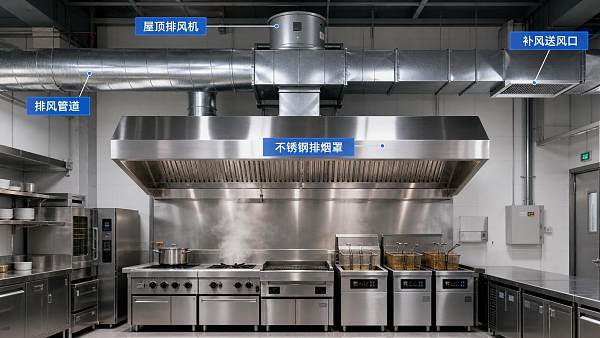
Cooking equipment performance depends on proper extraction and make-up air balance.
Weak coordination here can force hood redesign, airflow balancing, or additional fire suppression components.
Floor loading and drainage slope
Heavy Hotel & Catering Equipment may exceed floor assumptions in upper levels or retrofit sites.
Poor drainage alignment also causes corrective civil work after installation starts.
Consumables and accessories
Trays, racks, baskets, chemical dosing kits, filters, and gas hoses are often omitted from early budgets.
Yet they are necessary for immediate operation and should be priced with the main equipment package.
Digital integration
Connected Hotel & Catering Equipment may need network drops, cybersecurity review, or cloud onboarding support.
These are small line items individually, but they accumulate quickly across multiple stations.
How to execute a stronger cost review
Start with a landed-cost sheet rather than a unit-price sheet.
Include product cost, freight, duties, inland delivery, installation, compliance, utilities, startup, and first-year service items.
Ask suppliers of Hotel & Catering Equipment to mark clearly what is included, excluded, and assumed.
Then compare bids using the same technical and commercial baseline.
Freeze final site dimensions before approving custom fabrication.
Require utility schedules, certification documents, spare parts lists, and commissioning scope before release to production.
Finally, keep a contingency reserve for access issues, last-minute code comments, and startup adjustments.
FAQ on Hotel & Catering Equipment hidden costs
Is the cheapest quotation usually the lowest total cost?
Not necessarily.
Low quotes for Hotel & Catering Equipment often exclude landing, installation, compliance, or service elements that appear later.
Which cost area is missed most often?
Utility adaptation is one of the most frequently underestimated areas.
Power upgrades, water treatment, extraction changes, and drainage work can exceed expectations quickly.
When should compliance documents be checked?
Before production and before shipment.
Late verification creates expensive delays for Hotel & Catering Equipment at customs or site acceptance stages.
Final takeaway
Hotel & Catering Equipment projects succeed when cost review goes beyond the purchase order.
The most damaging overruns usually come from freight changes, site adaptation, compliance gaps, installation ambiguity, and weak after-sales planning.
A disciplined verification process protects budgets and supports better sourcing decisions across hospitality and foodservice environments.
Use this framework to test every Hotel & Catering Equipment proposal against real operating conditions before final approval.
Search News
Hot Articles
- Restaurant FurnitureFast-Casual Restaurant Interiors: Design Choices That Improve Speed and Guest FlowOct 04, 2026
- Outdoor RidesHow to Select Leisure Park Equipment for Safe, High-Throughput Visitor AreasOct 03, 2026
- Fashion & Gem JewelryDiamond Tester Wholesale: How to Vet Accuracy, Calibration, and MOQ Before OrderingOct 02, 2026
Popular Tags
Need ExpertConsultation?
Connect with our specialized leisureengineering team for procurementstrategies.
Recommended News
 Sep 24, 2026Conveyor Pizza Oven Price: What Buyers Should Budget for Capacity and FeaturesConveyor pizza oven price guide: compare capacity, features, installation costs, and quote factors to choose the right commercial oven for your operation.● Hospitality Sourcing Dir
 Sep 23, 2026How Restaurant Buyers Can Source Hospitality Supplies Without OverorderingHospitality supplies for restaurants: learn practical sourcing strategies to cut excess inventory, protect cash flow, improve supplier reliability, and keep every service running smoothly.● Hospitality Sourcing Dir
 Sep 22, 2026Commercial Kitchen Design Price: Budgeting by Layout, Equipment, and MEP ScopeCommercial kitchen design price explained: budget smarter for layout, equipment, MEP scope, compliance, installation, and long-term operational performance.● Hospitality Sourcing Dir
 Sep 19, 2026How to Select a Spiral Dough Mixer for Bakery Batch Size and Dough HydrationSpiral dough mixer bakery guide: match batch size, flour load, and hydration to select reliable torque, temperature control, and consistent dough results.● Hospitality Sourcing Dir
 Sep 14, 2026How Restaurants Can Choose Disposable Wooden Cutlery for Takeout and CateringDisposable wooden cutlery fork spoon knife guide for restaurants: compare strength, finish, packaging, food-contact needs, and catering performance.● Hospitality Sourcing Dir
 Sep 12, 2026How to Size a Restaurant Walk-In Cooler for Peak Inventory and Kitchen LayoutRestaurant walk in coolers sized for peak inventory and kitchen workflow help improve food safety, staff efficiency, storage access, and long-term operational performance.● Hospitality Sourcing Dir
 Sep 10, 2026How to Choose a CE Hot Dog Roller for Safe, High-Volume Food Service?Choose a CE hot dog roller with confidence: compare compliance documents, heating consistency, cleaning design, capacity, and total cost for safe, high-volume food service.● Hospitality Sourcing Dir
 Sep 04, 2026How to Evaluate a Commercial Food Warmer Manufacturer for Bulk Catering ProjectsCommercial food warmer manufacturer evaluation guide for bulk catering projects: compare thermal performance, compliance, customization, costs, and after-sales support.● Hospitality Sourcing Dir
 Aug 30, 2026How Can Buyers Verify Supplier Qualifications Before a Bulk Order?How to confirm supplier qualifications before placing a bulk order: verify legal identity, factory capability, certificates, samples, quality controls, and payment safeguards.● Hospitality Sourcing Dir
 Aug 28, 2026Commercial Kitchen Design Standards: A Planning Checklist for Code-Compliant LayoutsCommercial kitchen design standards: use this practical checklist to plan safer, code-compliant layouts, streamline approvals, and avoid costly rework.● Hospitality Sourcing Dir
 Aug 06, 2026How to Choose Flake Ice Makers for Seafood Displays, Bars, and Food Prep?Flake ice makers buying guide: compare output, hygiene, storage, energy use, and reliability to choose the best solution for seafood displays, bars, and food prep.● Hospitality Sourcing Dir
 Aug 03, 2026Commercial Kitchen Design Price: What Drives Cost in a New Build Project?Commercial kitchen design price explained: discover what drives cost in a new build, from layout and equipment to ventilation, compliance, and hidden budget risks.● Hospitality Sourcing Dir
 Jul 30, 2026How to Choose a Countertop Commercial Pizza Oven for Capacity, Speed, and Space?Countertop commercial pizza oven buying guide: learn how to match capacity, bake speed, and kitchen space for consistent output, lower costs, and smarter purchasing decisions.● Hospitality Sourcing Dir
 Jul 22, 2026How to Evaluate a Cotton Candy Machine Supplier for Quality, Lead Time, and MOQCotton candy machine supplier selection starts with quality, lead time, and MOQ. Learn how to compare suppliers, reduce sourcing risk, and choose a partner that supports reliable growth.● Hospitality Sourcing Dir
 Jul 21, 2026How to Choose a Charcoal Commercial Grill for Capacity, Heat Control, and Menu FitCharcoal commercial grill buying guide: learn how to match capacity, heat control, and menu fit to boost consistency, service speed, and ROI in commercial kitchens.● Hospitality Sourcing Dir
 Jul 10, 2026FDA Import Alert Adds NSF/ANSI 50-2026 for Commercial Kitchen EquipmentFDA Import Alert now highlights NSF/ANSI 50-2026 for commercial kitchen equipment. Learn how dishwashers, ice machines, and steam cabinets can avoid U.S. port detention.● Hospitality Sourcing Dir
 Jul 05, 2026How to Select Energy Efficient Display Cabinets for Food Retail and HospitalityEnergy efficient display cabinets can cut operating costs while improving food safety, visibility, and service efficiency. Learn how to choose the right model for retail and hospitality.● Hospitality Sourcing Dir
 Jul 04, 2026CPSC Flags New UL 2595 Label Rule for Commercial Ice MakersCPSC flags a new UL 2595 label rule for commercial ice makers entering the U.S. after Aug. 1, 2026. Learn who is affected, key compliance steps, and how to avoid port delays and recall risk.● Hospitality Sourcing Dir
 Jun 29, 2026How to Choose Thermal Receipt Printers for Retail and Restaurant CountersThermal receipt printers for retail and restaurant counters: learn how to compare speed, durability, connectivity, and total operating cost to choose a model that supports smoother service.● Hospitality Sourcing Dir
 Jun 28, 2026Stainless Steel Kitchen Ventilation Systems: Key Specifications for Commercial ProjectsStainless steel kitchen ventilation systems: compare material grades, airflow capture, hygiene, fire safety, and installation specs for commercial projects before you buy.● Hospitality Sourcing Dir
 Jun 27, 2026Commercial Shawarma Machines: What to Check Before Buying for High-Volume ServiceShawarma machines commercial buying guide: learn how to compare capacity, heat control, durability, compliance, and lifecycle cost before choosing equipment for high-volume service.● Hospitality Sourcing Dir
 Jun 26, 2026Restaurant POS Systems: How to Compare Features, Costs, and ScalabilityRestaurant POS systems: compare features, costs, and scalability to find the best fit for your restaurant and boost long-term efficiency.● Hospitality Sourcing Dir
 Jun 25, 2026Kitchen Ventilation Systems Design: How to Size Hoods, Airflow, and Make-Up AirKitchen ventilation systems design explained clearly: learn how to size hoods, set exhaust airflow, and balance make-up air for safer, more efficient commercial kitchens.● Hospitality Sourcing Dir
 Jun 14, 2026Hot Dog Rollers for Convenience Stores and Cafes: Capacity, Heating Zones, and Cleaning TipsHot dog rollers buying guide for convenience stores and cafes: compare real capacity, heating zones, energy use, and cleaning tips to choose a smarter, lower-waste setup.● Hospitality Sourcing Dir