GCC Introduces Bilingual Labeling Rule for Musical Instruments
The Gulf Cooperation Council (GSO) has introduced a new regulatory requirement affecting the global musical instruments supply chain — mandating bilingual Chinese-Arabic safety labeling for electronic musical instruments imported into GCC member states. Effective 1 June 2026, the rule directly impacts Chinese exporters, local manufacturers, and supporting service providers across multiple tiers of the industry.
Event Overview
The Gulf Standardization Organization (GSO) published GSO IEC 60065:2026 Amendment 2 on 17 May 2026. The amendment requires that all electronic musical instruments — including digital pianos, synthesizers, and effects processors — imported into Saudi Arabia, the United Arab Emirates, Kuwait, Qatar, Bahrain, and Oman must carry safety warnings in both Chinese and Arabic on product packaging and user manuals. The bilingual text must be printed in a minimum font size of 12 pt. Compliance becomes mandatory as of 1 June 2026.

Industries Affected
Direct Export Trading Enterprises
Exporters based in China who ship electronic musical instruments to GCC markets will face immediate operational adjustments. Their current packaging templates and multilingual documentation workflows — typically designed for English-Arabic or English-only compliance — now require integration of Chinese-language safety content. This affects label artwork approvals, print vendor coordination, and customs clearance timelines, especially where pre-shipment verification is required.
Raw Material & Component Procurement Enterprises
Suppliers of printed packaging materials, instruction booklet printers, and label converters must revise their production specifications to accommodate dual-language layout requirements, including typographic validation for Arabic script rendering and Chinese character legibility at 12 pt. These enterprises may need to invest in updated typesetting software or partner with linguistically qualified localization vendors — particularly where Arabic right-to-left formatting conflicts with existing Chinese left-to-right layouts.
Manufacturing Enterprises
OEM/ODM factories producing electronic musical instruments for export must update internal quality control checklists to include bilingual warning verification before final packaging. Since safety warnings are often embedded in firmware-generated PDF manuals or printed labels supplied by third parties, manufacturers must formalize handover protocols with technical documentation teams and external printers — adding traceability and version-control steps to their production SOPs.
Supply Chain Service Providers
Freight forwarders, customs brokers, and regulatory compliance consultants serving Chinese instrument exporters will need to expand their GCC market support offerings. Specifically, they must verify labeling compliance during pre-shipment audits and assist clients in interpreting GSO’s interpretation of ‘safety warning’ scope — which, per Annex A of Amendment 2, includes electrical shock, overheating, and battery-related hazards — not just general usage instructions.
Key Focus Areas and Recommended Actions
Review and Localize Documentation Templates by Q3 2025
Exporters should audit all existing packaging artwork and user manuals against GSO IEC 60065:2026 Amendment 2 Annex B (layout specifications). Priority should be given to updating Chinese-Arabic bilingual safety warnings — ensuring correct terminology alignment between standardized Arabic safety phrases (e.g., ‘تحذير: خطر الصدمة الكهربائية’) and technically accurate Chinese equivalents (e.g., ‘警告:存在电击危险’), rather than literal translations.
Engage Certified Arabic-Chinese Localization Partners
Given the legal weight of safety labeling, enterprises should engage language service providers accredited by GSO or holding ISO 17100 certification — with demonstrable experience in GCC regulatory documentation. Unqualified translation may result in rejected shipments or post-import nonconformity notices under GSO’s Market Surveillance Framework.
Update Internal Compliance Tracking Systems
Manufacturers and exporters should integrate bilingual labeling requirements into their product lifecycle management (PLM) or enterprise resource planning (ERP) systems. This includes tagging SKUs subject to GCC import, assigning responsible personnel for label approval, and scheduling periodic reviews aligned with GSO’s planned surveillance cycles (announced annually in January).
Editorial Perspective / Industry Observation
Observably, this amendment marks a strategic shift in GSO’s regulatory posture: moving beyond harmonizing with IEC standards toward embedding regional linguistic sovereignty into product conformity. While previous GSO updates focused on technical safety parameters, Amendment 2 explicitly ties market access to language equity — suggesting future regulations may extend similar bilingual (or even trilingual) mandates to other high-volume export categories such as consumer electronics or home appliances. Analysis shows that Chinese instrument exporters with established GCC distribution networks — particularly those already certified to SASO SABER — are better positioned to absorb these changes, whereas SMEs relying on consolidated freight or generic documentation may face disproportionate implementation costs.
Conclusion
This regulation does not represent an isolated compliance hurdle, but rather a signal of evolving expectations for cross-border product governance in the GCC region. For the musical instruments sector — historically characterized by agile, design-led innovation — adapting to structured, language-inclusive conformity frameworks reflects a broader maturation of trade relationships. A measured, process-oriented response remains more effective than reactive overhauls.
Source Attribution
Official source: Gulf Standardization Organization (GSO), GSO IEC 60065:2026 Amendment 2, issued 17 May 2026. Document accessible via GSO e-Regulatory Portal (registration required). Note: GSO has indicated that official Arabic-language guidance on acceptable Chinese terminology variants will be published in Q4 2025 — this remains under observation.
Search News
Hot Articles
- Restaurant FurnitureFast-Casual Restaurant Interiors: Design Choices That Improve Speed and Guest FlowOct 04, 2026
- Outdoor RidesHow to Select Leisure Park Equipment for Safe, High-Throughput Visitor AreasOct 03, 2026
- Fashion & Gem JewelryDiamond Tester Wholesale: How to Vet Accuracy, Calibration, and MOQ Before OrderingOct 02, 2026
Popular Tags
Need ExpertConsultation?
Connect with our specialized leisureengineering team for procurementstrategies.
Recommended News
 Sep 11, 2026How to Choose Touring Instrument Cases for Flights, Trucks, and Daily Load-InsInstrument cases for touring: learn how to balance flight protection, truck durability, weight, fit, and serviceable hardware for safer, faster load-ins.● Pro Audio Engineer
 Sep 07, 2026How to Choose Wood Frame Tambourines for Sound Quality and Long-Term UseWood frame tambourines: learn how to compare frame construction, jingle tone, head options, durability, and supplier quality for reliable long-term performance.● Pro Audio Engineer
 Sep 05, 2026How Often Should Music Education Equipment Be Serviced?How often should music education equipment be serviced? Explore practical schedules, maintenance tips, and lifecycle planning to keep instruments and audio systems reliable.● Pro Audio Engineer
 Aug 21, 2026How to Choose Marching Band Drums for Sound Projection, Weight, and DurabilityMarching band drums buying guide: learn how to balance sound projection, weight, and durability for better field performance, easier carrying, and longer-lasting value.● Pro Audio Engineer
 Aug 09, 2026How to Evaluate a MIDI Cable Manufacturer for Audio Quality and OEM ReliabilityMIDI cable manufacturer evaluation guide: learn how to assess signal stability, connector quality, OEM process control, and batch consistency to reduce failures and source with confidence.● Pro Audio Engineer
 Aug 08, 2026How to Evaluate a Trumpets OEM Manufacturer for Quality, MOQ, and Custom DesignTrumpets OEM manufacturer selection starts with quality, MOQ, and custom design control. Learn how to compare suppliers, reduce sourcing risk, and choose a reliable long-term factory partner.● Pro Audio Engineer
 Jul 27, 2026How to Source Conga Drums in Bulk for Schools, Bands, and Event ProgramsConga drums bulk sourcing for schools, bands, and event programs made easier. Learn how to compare quality, durability, compliance, and total cost before you place a large order.● Pro Audio Engineer
 Jul 24, 2026How to Choose Low Dust Violin Rosin for Cleaner Practice and Better Bow ControlLow dust violin rosin buying guide: learn how to compare formula, climate fit, grip, and string compatibility for cleaner practice, better bow control, and smarter purchase decisions.● Pro Audio Engineer
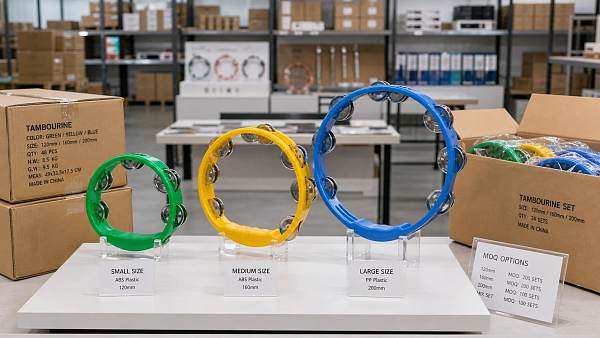
 Jul 15, 2026Plastic Tambourines Bulk Buying Guide: Sizes, Materials, and MOQ QuestionsPlastic tambourines bulk buying guide covering sizes, ABS vs PP materials, sound consistency, customization, and MOQ questions to help buyers cut risk and choose the right supplier.● Pro Audio Engineer
 Jul 13, 2026Acoustic Guitars Wholesale China: How to Evaluate Build Quality and OEM OptionsAcoustic guitars wholesale China guide: learn how to assess build quality, factory consistency, and OEM options to choose reliable suppliers and reduce sourcing risk.● Pro Audio Engineer
 Jul 12, 2026Mini Effect Pedals Wholesale: MOQ, OEM Options, Testing, and Supplier ComparisonMini effect pedals wholesale guide covering MOQ, OEM options, testing standards, and supplier comparison to help buyers reduce risk, improve margins, and choose reliable partners.● Pro Audio Engineer
 Jul 11, 2026DJ Turntables OEM Guide: Key Torque, Drive, and Build Specs to CompareDJ turntables OEM guide covering torque, drive type, speed stability, platter build, and manufacturing consistency. Compare the specs that impact performance, reliability, and sourcing confidence.● Pro Audio Engineer
 Jul 08, 2026Guitar Capos Wholesale: What Materials, Clamp Types, and MOQ Terms Should You Compare?Guitar capos wholesale buying starts with more than price. Compare materials, clamp types, quality checks, and MOQ terms to reduce returns, protect margins, and choose a supplier with confidence.● Pro Audio Engineer
 Jul 07, 2026Birch Drum Kits Manufacturer Comparison: Shell Construction, Hardware Quality, and OEM OptionsBirch drum kits manufacturer comparison covering shell construction, hardware quality, and OEM options to help buyers reduce sourcing risk and choose reliable suppliers.● Pro Audio Engineer
 Jul 06, 2026Spruce Top Acoustic Guitars Explained: Tone, Wood Grades, and Who They Suit BestSpruce top acoustic guitars explained: compare tone, wood grades, and build quality to find the best fit for players, retailers, and commercial buyers.● Pro Audio Engineer
 Jun 30, 2026Xylophones and Glockenspiels: Key Differences in Range, Tone, and Classroom UseXylophones and glockenspiels compared: discover key differences in range, tone, durability, and classroom use to choose the right instrument for teaching, buying, or school programs.● Pro Audio Engineer
 Jun 25, 2026Musical Instrument Industry Report: Key Market Segments, Demand Drivers, and Price TrendsMusical instrument industry report covering key market segments, demand drivers, and price trends. Explore sourcing risks, premium growth, and where buyer demand is shifting next.● Pro Audio Engineer
 Jun 23, 2026Metronomes and Tuners Explained: Types, Key Features, and Who Needs BothMetronomes and tuners explained: compare types, key features, and who needs both. Learn how to choose the right tool for better timing, pitch, and practical daily use.● Pro Audio Engineer
 Jun 22, 2026How the Musical Instrument Industry Supply Chain Affects Lead Times, Cost, and QualityMusical instrument industry supply chain trends now shape lead times, cost, and quality. Discover how smarter sourcing and supplier transparency reduce risk and improve buying outcomes.● Pro Audio Engineer
 Jun 20, 2026DJ Headphones Wholesale Buying Guide: OEM Options, MOQ, and Audio Specs to CompareDJ headphones wholesale guide covering OEM options, MOQ strategy, and key audio specs. Compare build quality, compliance, and total cost to source smarter and reduce returns.● Pro Audio Engineer
 Jun 19, 2026Acoustic Guitars Wholesale: 7 Specs Buyers Should Compare Before Placing an OrderAcoustic guitars wholesale buyers can compare 7 key specs before ordering, from tonewoods and playability to OEM, packaging, and QC, to reduce risk and protect margins.● Pro Audio Engineer
 Jun 15, 2026Tambourines Bulk Buying Guide: Materials, Sound Quality, and Pack Size DifferencesTambourines bulk buying guide covering material choices, sound consistency, and pack size differences. Compare suppliers smarter, reduce risk, and choose the best fit for schools, retail, and events.● Pro Audio Engineer
 Jun 14, 2026Professional Musical Instruments Explained: Types, Skill Levels, and Buying CriteriaProfessional musical instruments explained: discover key types, ideal skill levels, and practical buying criteria to choose reliable, high-performance instruments with confidence.● Pro Audio Engineer
 Jun 10, 2026Drum Kits Manufacturer Comparison: What to Check Before OEM or Bulk OrdersDrum kits manufacturer comparison guide for OEM and bulk buyers: check quality, compliance, lead times, packaging, and true cost before placing large orders.● Pro Audio Engineer