Southeast Asia's EPR Platform Launch for EEE: Arcade Devices Face 72-Hour Registration Deadline
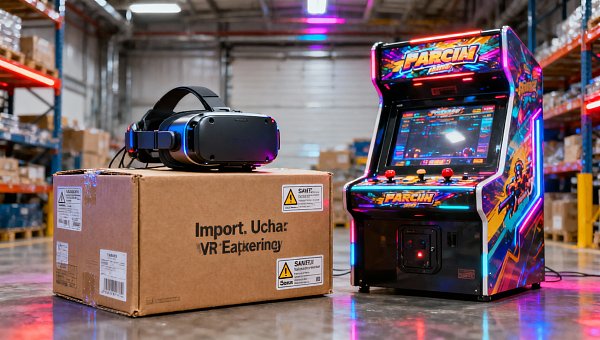
On May 20, 2026, Indonesia, Thailand, Vietnam, Malaysia, and the Philippines jointly announced the imminent rollout of a harmonized Electronic Electrical Equipment (EEE) Extended Producer Responsibility (EPR) registration platform—set to go live on June 1, 2026. This coordinated regulatory step marks the first regional implementation of mandatory EPR for arcade and VR machines exported from China, introducing strict pre-arrival compliance windows and financial obligations that directly impact supply chain actors across multiple tiers.
Event Overview
Indonesia, Thailand, Vietnam, Malaysia, and the Philippines jointly announced on May 20, 2026, that their national EPR platforms for electronic electrical equipment will launch simultaneously on June 1, 2026. Arcade & VR Machines are explicitly listed as one of the first product categories subject to mandatory registration. Exporters based in China must complete production responsibility registration on all five national platforms within 72 hours prior to the arrival of their first shipment in each respective country. Annual recycling fees range from USD 1,200 to USD 2,800 per country. Failure to register triggers an automated customs hold—preventing clearance until verification is confirmed.

Industries Affected
Direct Trading Enterprises
Exporters and brand owners shipping arcade or VR machines directly to any of the five countries face immediate operational risk. Unlike traditional import declarations, EPR registration is not a post-arrival administrative step—it is a prerequisite for customs release. Delays in registration—even by hours—can result in container demurrage, port storage fees, or forced return of goods. Moreover, registration must be completed separately per jurisdiction, with no cross-recognition between platforms.
Raw Material Procurement Enterprises
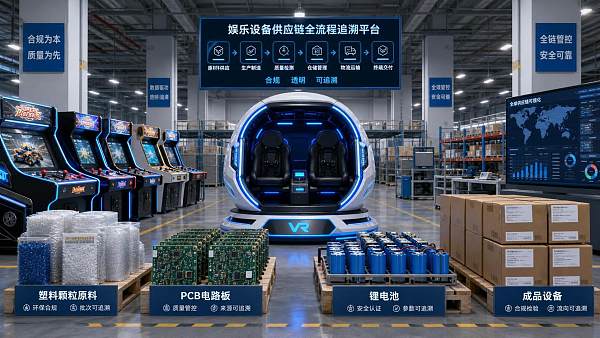
Suppliers of key components—including PCBs, motion sensors, display modules, and coin mechanisms—may see downstream pressure to provide EPR-ready documentation (e.g., material composition data, recyclability certifications) to support registrants’ submissions. While not directly liable, procurement firms may need to adapt contractual terms to include EPR-related data sharing clauses—especially where OEMs require full bill-of-materials traceability for fee calculations.
Contract Manufacturing Enterprises
OEM/ODM manufacturers producing arcade or VR hardware for export brands must now clarify responsibility boundaries in manufacturing agreements. If the brand owner registers under its own name, the factory may still be required to supply technical dossiers (e.g., weight-by-material breakdown, packaging specs) to substantiate declared recycling obligations. Some national platforms mandate submission of production batch records—raising questions about data sovereignty and audit readiness.
Supply Chain Service Providers
Cargo agents, customs brokers, and EPR compliance consultants are experiencing surging demand for multi-jurisdictional registration support. However, current platform interfaces lack API integration or shared authentication; each registration requires manual input, document upload, and local payment processing. Service providers must now build country-specific workflow templates—and anticipate longer lead times for client onboarding due to verification delays (e.g., bank transfer confirmation, identity notarization).
Key Focus Areas and Recommended Actions
Verify Product Classification Before Shipment
Arcade & VR machines fall under Category 4 (IT and Consumer Electronics) in most national EPR frameworks—but definitions vary. For example, Philippines’ draft guidelines classify ‘coin-operated interactive kiosks’ separately from ‘immersive VR cabins’. Exporters should cross-check product HS codes and functional descriptions against each country’s published scope annex before initiating registration.
Assign Dedicated EPR Coordinators Per Market
Given the 72-hour deadline and non-transferable nature of registrations, companies should designate internal or external coordinators responsible for end-to-end submission per country—including account setup, fee payment, and status monitoring. A centralized dashboard tracking registration expiry dates, fee renewal cycles, and pending verifications is strongly advised.
Prepare Financial and Documentation Infrastructure
Annual recycling fees are payable in local currency via domestic banking channels in each country—requiring advance foreign exchange arrangements and potentially local bank accounts. Supporting documents (e.g., business license, product photos, annual sales forecasts) must be notarized or apostilled depending on jurisdiction. Pre-validating document formats avoids repeated rejection loops.
Editorial Perspective / Industry Observation
Observably, this five-nation alignment signals a strategic shift toward interoperable environmental accountability—not just for electronics, but as a potential blueprint for future regional EPR harmonization (e.g., packaging, batteries). Analysis shows that while the 72-hour window appears operationally tight, it deliberately prioritizes enforcement over flexibility—reflecting growing domestic political emphasis on circular economy targets ahead of ASEAN’s 2030 sustainability commitments. From an industry perspective, the absence of a unified portal suggests intentional regulatory sovereignty rather than technical incapacity; therefore, expecting near-term consolidation is unrealistic. Current more realistic interpretation: this is the baseline for ASEAN’s next wave of green trade barriers.
Conclusion
This coordinated EPR activation does not merely add compliance overhead—it redefines the entry threshold for electronics exporters into Southeast Asia. It elevates producer responsibility from a branding initiative to a hard gate in the logistics chain. For arcade and VR hardware firms, success hinges less on product innovation and more on operational discipline in cross-border regulatory execution. The broader implication is clear: environmental policy is now a core determinant of market access—not a secondary consideration.
Source Attribution
Official announcements issued jointly by the Ministry of Environment and Forestry (Indonesia), Department of Environmental Quality Promotion (Thailand), Ministry of Natural Resources and Environment (Vietnam), Department of Environment (Malaysia), and Environmental Management Bureau (Philippines), published May 20, 2026. Platform technical specifications and fee schedules remain subject to finalization; official guidance documents are expected by May 25, 2026. Ongoing monitoring is recommended for updates on grace period provisions, third-party representation rules, and potential mutual recognition discussions.
Search News
Hot Articles
- Restaurant FurnitureFast-Casual Restaurant Interiors: Design Choices That Improve Speed and Guest FlowOct 04, 2026
- Outdoor RidesHow to Select Leisure Park Equipment for Safe, High-Throughput Visitor AreasOct 03, 2026
- Fashion & Gem JewelryDiamond Tester Wholesale: How to Vet Accuracy, Calibration, and MOQ Before OrderingOct 02, 2026
Popular Tags
Need ExpertConsultation?
Connect with our specialized leisureengineering team for procurementstrategies.
Recommended News
 Sep 15, 2026How to Choose Coin-Operated Pool Tables for Bars, Hotels, and Arcade VenuesCoin operated pool tables for bars, hotels, and arcades: compare sizes, payment systems, durability, service access, and revenue potential.● Theme Park Strategist
 Sep 08, 2026What to Look for in a Flight Simulator Chair Manufacturer for Commercial VR CentersChoose a flight simulator chair manufacturer that delivers durable, safe, customizable seating for commercial VR centers. Explore key sourcing criteria now.● Theme Park Strategist
 Aug 25, 2026What to Evaluate Before Buying Commercial Self Service Photo Booths for VenuesCommercial self service photo booths for venues: learn how to evaluate durability, software stability, branding flexibility, support, and total ROI before you buy.● Theme Park Strategist
 Aug 23, 2026How to Evaluate Wholesale Vending Machines for Multi-Location Business DeploymentWholesale vending machines for multi-location deployment require more than low unit cost. Learn how to compare reliability, payments, telemetry, and supplier support to scale smarter.● Theme Park Strategist
 Aug 17, 2026U.S. CPSC Urges Bilingual Warnings for Arcade and VR MachinesU.S. CPSC urges bilingual safety warnings for Arcade & VR Machines—learn what exporters, importers, and distributors must do now to avoid delays and returns.● Theme Park Strategist
 Aug 16, 2026EU Enforces EN IEC 62368-1:2026 Certification for Arcade and VR MachinesEU Enforces EN IEC 62368-1:2026 certification for arcade and VR machines, reshaping EU market access, customs clearance, and compliance planning for exporters and distributors.● Theme Park Strategist
 Aug 13, 2026UFLPA’s new guidelines take effect: Exports of Arcade and VR equipment face full-link labor compliance requirementsUFLPA’s new guide takes effect: Arcade and VR machine exports to the U.S. now face full-chain labor compliance checks. Discover key risks and action steps.● Theme Park Strategist
 Aug 12, 2026EU PPWR takes effect, Arcade and VR packaging incorporate heavy metal and PFAS restrictionsEU PPWR now applies to Arcade and VR packaging, tightening heavy metal and PFAS compliance. Learn how exporters can avoid delays, fines, and customs risks.● Theme Park Strategist
 Aug 11, 2026CPSC Sets Bilingual Labels for Arcade and VR ImportsCPSC bilingual labels for arcade and VR imports become mandatory on October 1, 2026. Learn the new English-Spanish warning rules, customs risks, and key compliance steps now.● Theme Park Strategist
 Aug 10, 2026EU Rule Takes Effect for Arcade & VR Machine ClearanceArcade & VR Machine clearance in the EU now depends on EN IEC 62368-1:2026+A11:2026 compliance. Learn what changed, who is affected, and how to avoid customs delays.● Theme Park Strategist
 Aug 09, 2026CPSC Requires New Labels for Arcade and VR ImportsCPSC requires new labels for Arcade and VR imports starting Oct 1, 2026. Learn the multilingual warning rules, compliance risks, and key steps exporters and buyers must take now.● Theme Park Strategist
 Aug 08, 2026EU Entry Rule Tightens for Arcade & VR MachinesArcade & VR Machines entering the EU now face stricter CE compliance under EN IEC 62368-1:2026+A11:2026. Learn the new rule, risks, and what exporters must do now.● Theme Park Strategist
 Aug 07, 2026CPSC Notice Tightens U.S. Entry Rules for Arcade and VR MachinesCPSC Notice Tightens U.S. Entry Rules for Arcade and VR Machines: learn the new labeling, FCC, UN38.3, and compliance document requirements before October 1, 2026.● Theme Park Strategist
 Aug 06, 2026EU Rule Takes Effect for CE-UKCA Labels on Arcade & VR MachinesArcade & VR Machines face new CE-UKCA label and ECPD filing rules in the EU and UK. Learn what manufacturers, importers, and distributors must do now to avoid delays.● Theme Park Strategist
 Aug 05, 2026CPSC Recalls Arcade and VR Machines Over UL 62368-1CPSC recalls arcade and VR machines over UL 62368-1 non-compliance. Learn how this 2026 safety action may affect imports, distribution, customs clearance, and market access.● Theme Park Strategist
 Aug 02, 2026EU Sets New Certification Rule for Arcade and VR MachinesArcade and VR Machines face a new EU certification rule from Oct 1, 2026. Learn how EN IEC 62368-1:2026+A11:2026 affects CE marking, customs clearance, and market access.● Theme Park Strategist
 Aug 01, 2026CPSC Moves to Require Bilingual Warnings on Arcade and VR MachinesCPSC bilingual warnings for Arcade and VR Machines may reshape U.S. import compliance. Learn how English-Spanish labels affect packaging, customs risk, and shipment readiness.● Theme Park Strategist
 Jul 31, 2026EU Sets EN IEC 62368-1:2025 Rule for Arcade and VR MachinesEU Sets EN IEC 62368-1:2025 Rule for Arcade and VR Machines. Learn the new EU compliance deadlines, safety updates, and key actions for manufacturers, OEMs, and distributors.● Theme Park Strategist
 Jul 30, 2026CPSC Sets New Warning Label Rule for Arcade & VR MachinesCPSC sets a new warning label rule for Arcade & VR Machines effective August 15, 2026. Learn key compliance risks, multilingual label requirements, and shipment actions now.● Theme Park Strategist
 Jul 29, 2026EU Enforces New Safety Standard for Arcade and VR MachinesEU Enforces New Safety Standard for Arcade and VR Machines: learn how EN IEC 62368-1 affects CE compliance, customs clearance, and EU market access for exporters and buyers.● Theme Park Strategist
 Jul 28, 2026CPSC Sets ASTM F3472-26 Rule for Arcade & VR ImportsCPSC ASTM F3472-26 rule reshapes Arcade & VR imports to the U.S. Learn key compliance deadlines, certification risks, and what exporters, OEM/ODM suppliers, and buyers should do now.● Theme Park Strategist
 Jul 27, 2026EU Rule Takes Effect for Arcade & VR Machine CybersecurityEU Rule Takes Effect for Arcade & VR Machine Cybersecurity: learn how EN IEC 62443-3-3:2025 affects compliance, customs clearance, sales continuity, and supplier planning in the EU market.● Theme Park Strategist
 Jul 25, 2026CPSC Sets Bilingual Warning Rule for Arcade and VR ImportsCPSC bilingual warning rule for arcade and VR imports takes effect August 1, 2026. Learn how OEM/ODM exporters can avoid CBP delays, relabel shipments, and protect U.S. delivery timelines.● Theme Park Strategist
 Jul 24, 2026EU Enforces New Safety Standard for Arcade and VR MachinesEU Enforces New Safety Standard for Arcade and VR Machines: learn how EN IEC 62368-1:2026+A11:2026 reshapes EU compliance, CE documentation, testing timelines, and export readiness.● Theme Park Strategist