FIFA Cuts 2026 World Cup Broadcast Fees, Opens VR/IP Licensing Window
On May 20, 2026, FIFA announced an 18% reduction in official broadcast rights fees for the 2026 FIFA World Cup co-hosted by the United States, Canada, and Mexico. Simultaneously, it launched a streamlined licensing pathway—‘Commercial Use Licensing Fast Track’—specifically targeting Arcade and VR hardware manufacturers. This move signals a strategic pivot toward expanding commercial engagement beyond traditional media, with direct implications for immersive entertainment hardware developers, especially those operating in China’s export-oriented VR/arcade ecosystem.
Event Overview
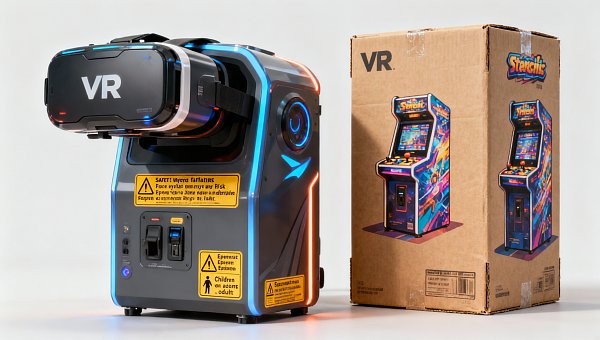
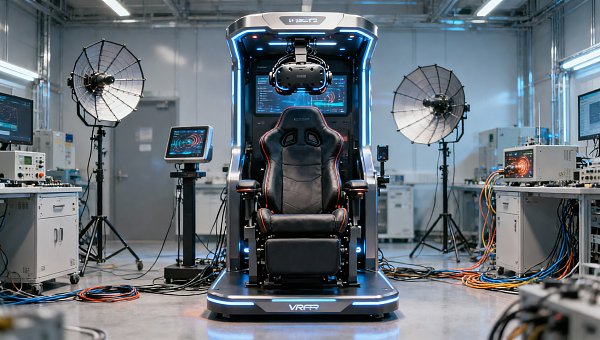
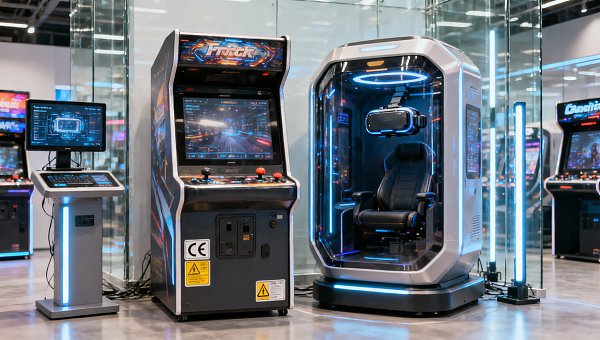
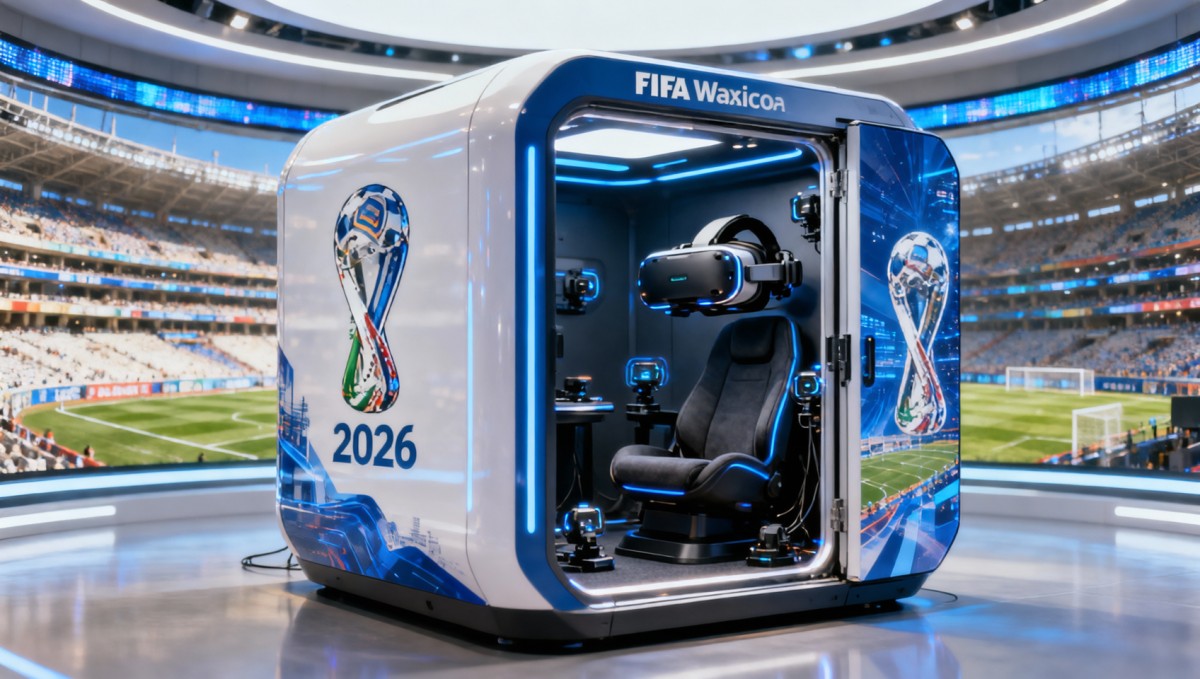
International Federation of Association Football (FIFA) announced on May 20, 2026, an 18% reduction in official broadcast rights fees for the 2026 FIFA World Cup. Concurrently, FIFA opened its ‘Commercial Use Licensing Fast Track’ program, enabling Arcade & VR Machines manufacturers to obtain simplified access to official 3D modeling assets, licensed jersey textures, and venue LiDAR scan data packages. The license is valid for commercial deployment—including VR football experience pods and interactive shooting games—until March 31, 2027.
Industries Affected
Direct Trade Enterprises: Export-focused Chinese arcade and VR hardware vendors—particularly those with established distribution channels in North America and Europe—are directly affected. The fee cut lowers FIFA’s overall revenue dependency on broadcasters, increasing its incentive to monetize non-broadcast IP via B2B licensing. As a result, trade enterprises gain faster, lower-barrier access to premium FIFA-branded content, potentially accelerating product localization and time-to-market for World Cup-themed hardware.
Raw Material Procurement Enterprises: Suppliers of specialized display modules (e.g., high-refresh-rate OLED panels), motion-tracking sensors, and haptic feedback components may see modest demand upticks—not from volume surges, but from tighter integration timelines. The March 2027 license expiry creates compressed development windows; procurement firms must prioritize just-in-time sourcing of certified components compatible with FIFA’s asset delivery specs (e.g., texture resolution standards, real-time rendering latency thresholds).
Manufacturing Enterprises: OEM/ODM facilities producing VR cabins, motion platforms, and interactive kiosks face revised compliance requirements. FIFA’s asset package includes strict usage guidelines for official branding, color fidelity, and spatial accuracy of stadium replicas. Manufacturers must now embed pre-certified rendering pipelines or partner with licensed middleware providers—shifting some R&D burden from software integration to hardware validation.
Supply Chain Service Providers: Logistics and certification service providers—including those offering CE/FCC/UL compliance support and cross-border IP licensing documentation handling—are seeing increased demand for ‘fast-track readiness’ packages. These include FIFA-specific asset watermarking verification, localized EULA translation, and audit-ready metadata logs—services previously niche but now operationally critical under the Fast Track’s 45-day average approval SLA.
Key Considerations and Recommended Actions
Verify Eligibility Against FIFA’s Defined Manufacturer Criteria
Only entities classified as ‘Arcade & VR Machines manufacturers’—not software-only studios or content publishers—are eligible. Applicants must submit proof of physical hardware production capacity (e.g., factory certifications, BOMs, or OEM contracts). Firms misclassifying themselves risk rejection or retroactive license termination.
Prioritize Asset Integration Within the 2026–2027 Development Cycle
The license expires March 31, 2027—covering only the tournament window and immediate post-event consumer demand. Developers should align firmware updates, content rollouts, and regional launch calendars to peak visibility (June–December 2026), avoiding over-investment in long-tail features unsupported beyond the license term.
Assess Data Package Compatibility With Existing Rendering Stacks
FIFA’s delivered assets include PBR-compliant textures, photogrammetry-derived mesh LODs, and georeferenced venue scans. Teams using Unity HDRP or Unreal Engine 5.3+ will face fewer integration hurdles; legacy engines or proprietary renderers may require custom shader adaptation—adding 2–3 weeks to QA cycles.
Editorial Perspective / Industry Observation
This initiative is not primarily about revenue diversification—it reflects FIFA’s growing recognition that immersive hardware is becoming a primary touchpoint for Gen Z and Alpha audiences in markets where linear TV penetration is declining. Observably, the Fast Track’s narrow scope (exclusively hardware manufacturers, no streaming apps or social integrations) suggests FIFA is testing controlled IP exposure before broader metaverse licensing. Analysis shows the 18% broadcast fee cut likely offsets anticipated lower ad inventory yield from fragmented viewing—making the VR licensing program a tactical hedge, not a standalone strategy.
Conclusion
The policy shift marks a calibrated expansion of FIFA’s commercial framework—one that acknowledges hardware-led fan engagement as complementary, not competitive, to broadcast. For Chinese VR/arcade manufacturers, it represents a rare, time-bound opportunity to embed official IP into premium experiential products. However, success hinges less on speed of application and more on disciplined alignment between licensing scope, technical constraints, and regional go-to-market timing.
Source Attribution
Official announcement: FIFA Media Release #FIFA26-LIC-20260520 (published May 20, 2026, on fifa.com); Licensing terms available via FIFA Commercial Portal (login required). Note: Eligibility criteria, asset update frequency, and renewal pathways remain subject to change—ongoing monitoring of FIFA’s Partner Updates Dashboard is advised.
Search News
Hot Articles
- Restaurant FurnitureFast-Casual Restaurant Interiors: Design Choices That Improve Speed and Guest FlowOct 04, 2026
- Outdoor RidesHow to Select Leisure Park Equipment for Safe, High-Throughput Visitor AreasOct 03, 2026
- Fashion & Gem JewelryDiamond Tester Wholesale: How to Vet Accuracy, Calibration, and MOQ Before OrderingOct 02, 2026
Popular Tags
Need ExpertConsultation?
Connect with our specialized leisureengineering team for procurementstrategies.
Recommended News
 Sep 15, 2026How to Choose Coin-Operated Pool Tables for Bars, Hotels, and Arcade VenuesCoin operated pool tables for bars, hotels, and arcades: compare sizes, payment systems, durability, service access, and revenue potential.● Theme Park Strategist
 Sep 08, 2026What to Look for in a Flight Simulator Chair Manufacturer for Commercial VR CentersChoose a flight simulator chair manufacturer that delivers durable, safe, customizable seating for commercial VR centers. Explore key sourcing criteria now.● Theme Park Strategist
 Aug 25, 2026What to Evaluate Before Buying Commercial Self Service Photo Booths for VenuesCommercial self service photo booths for venues: learn how to evaluate durability, software stability, branding flexibility, support, and total ROI before you buy.● Theme Park Strategist
 Aug 23, 2026How to Evaluate Wholesale Vending Machines for Multi-Location Business DeploymentWholesale vending machines for multi-location deployment require more than low unit cost. Learn how to compare reliability, payments, telemetry, and supplier support to scale smarter.● Theme Park Strategist
 Aug 17, 2026U.S. CPSC Urges Bilingual Warnings for Arcade and VR MachinesU.S. CPSC urges bilingual safety warnings for Arcade & VR Machines—learn what exporters, importers, and distributors must do now to avoid delays and returns.● Theme Park Strategist
 Aug 16, 2026EU Enforces EN IEC 62368-1:2026 Certification for Arcade and VR MachinesEU Enforces EN IEC 62368-1:2026 certification for arcade and VR machines, reshaping EU market access, customs clearance, and compliance planning for exporters and distributors.● Theme Park Strategist
 Aug 13, 2026UFLPA’s new guidelines take effect: Exports of Arcade and VR equipment face full-link labor compliance requirementsUFLPA’s new guide takes effect: Arcade and VR machine exports to the U.S. now face full-chain labor compliance checks. Discover key risks and action steps.● Theme Park Strategist
 Aug 12, 2026EU PPWR takes effect, Arcade and VR packaging incorporate heavy metal and PFAS restrictionsEU PPWR now applies to Arcade and VR packaging, tightening heavy metal and PFAS compliance. Learn how exporters can avoid delays, fines, and customs risks.● Theme Park Strategist
 Aug 11, 2026CPSC Sets Bilingual Labels for Arcade and VR ImportsCPSC bilingual labels for arcade and VR imports become mandatory on October 1, 2026. Learn the new English-Spanish warning rules, customs risks, and key compliance steps now.● Theme Park Strategist
 Aug 10, 2026EU Rule Takes Effect for Arcade & VR Machine ClearanceArcade & VR Machine clearance in the EU now depends on EN IEC 62368-1:2026+A11:2026 compliance. Learn what changed, who is affected, and how to avoid customs delays.● Theme Park Strategist
 Aug 09, 2026CPSC Requires New Labels for Arcade and VR ImportsCPSC requires new labels for Arcade and VR imports starting Oct 1, 2026. Learn the multilingual warning rules, compliance risks, and key steps exporters and buyers must take now.● Theme Park Strategist
 Aug 08, 2026EU Entry Rule Tightens for Arcade & VR MachinesArcade & VR Machines entering the EU now face stricter CE compliance under EN IEC 62368-1:2026+A11:2026. Learn the new rule, risks, and what exporters must do now.● Theme Park Strategist
 Aug 07, 2026CPSC Notice Tightens U.S. Entry Rules for Arcade and VR MachinesCPSC Notice Tightens U.S. Entry Rules for Arcade and VR Machines: learn the new labeling, FCC, UN38.3, and compliance document requirements before October 1, 2026.● Theme Park Strategist
 Aug 06, 2026EU Rule Takes Effect for CE-UKCA Labels on Arcade & VR MachinesArcade & VR Machines face new CE-UKCA label and ECPD filing rules in the EU and UK. Learn what manufacturers, importers, and distributors must do now to avoid delays.● Theme Park Strategist
 Aug 05, 2026CPSC Recalls Arcade and VR Machines Over UL 62368-1CPSC recalls arcade and VR machines over UL 62368-1 non-compliance. Learn how this 2026 safety action may affect imports, distribution, customs clearance, and market access.● Theme Park Strategist
 Aug 02, 2026EU Sets New Certification Rule for Arcade and VR MachinesArcade and VR Machines face a new EU certification rule from Oct 1, 2026. Learn how EN IEC 62368-1:2026+A11:2026 affects CE marking, customs clearance, and market access.● Theme Park Strategist
 Aug 01, 2026CPSC Moves to Require Bilingual Warnings on Arcade and VR MachinesCPSC bilingual warnings for Arcade and VR Machines may reshape U.S. import compliance. Learn how English-Spanish labels affect packaging, customs risk, and shipment readiness.● Theme Park Strategist
 Jul 31, 2026EU Sets EN IEC 62368-1:2025 Rule for Arcade and VR MachinesEU Sets EN IEC 62368-1:2025 Rule for Arcade and VR Machines. Learn the new EU compliance deadlines, safety updates, and key actions for manufacturers, OEMs, and distributors.● Theme Park Strategist
 Jul 30, 2026CPSC Sets New Warning Label Rule for Arcade & VR MachinesCPSC sets a new warning label rule for Arcade & VR Machines effective August 15, 2026. Learn key compliance risks, multilingual label requirements, and shipment actions now.● Theme Park Strategist
 Jul 29, 2026EU Enforces New Safety Standard for Arcade and VR MachinesEU Enforces New Safety Standard for Arcade and VR Machines: learn how EN IEC 62368-1 affects CE compliance, customs clearance, and EU market access for exporters and buyers.● Theme Park Strategist
 Jul 28, 2026CPSC Sets ASTM F3472-26 Rule for Arcade & VR ImportsCPSC ASTM F3472-26 rule reshapes Arcade & VR imports to the U.S. Learn key compliance deadlines, certification risks, and what exporters, OEM/ODM suppliers, and buyers should do now.● Theme Park Strategist
 Jul 27, 2026EU Rule Takes Effect for Arcade & VR Machine CybersecurityEU Rule Takes Effect for Arcade & VR Machine Cybersecurity: learn how EN IEC 62443-3-3:2025 affects compliance, customs clearance, sales continuity, and supplier planning in the EU market.● Theme Park Strategist
 Jul 25, 2026CPSC Sets Bilingual Warning Rule for Arcade and VR ImportsCPSC bilingual warning rule for arcade and VR imports takes effect August 1, 2026. Learn how OEM/ODM exporters can avoid CBP delays, relabel shipments, and protect U.S. delivery timelines.● Theme Park Strategist
 Jul 24, 2026EU Enforces New Safety Standard for Arcade and VR MachinesEU Enforces New Safety Standard for Arcade and VR Machines: learn how EN IEC 62368-1:2026+A11:2026 reshapes EU compliance, CE documentation, testing timelines, and export readiness.● Theme Park Strategist