China Customs Launches Smart HS Classification System V2.0
On May 20, 2026, China Customs launched the Smart HS Classification Auxiliary System V2.0 nationwide. The upgrade specifically targets education technology exports — particularly Smart Campus Tech devices — and marks a significant step toward digitized trade compliance. Its impact is most pronounced for exporters, component suppliers, OEM/ODM manufacturers, and third-party customs service providers operating in or serving the edtech hardware value chain.
Event Overview
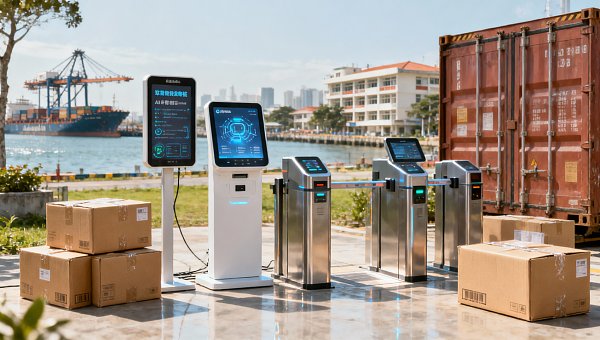
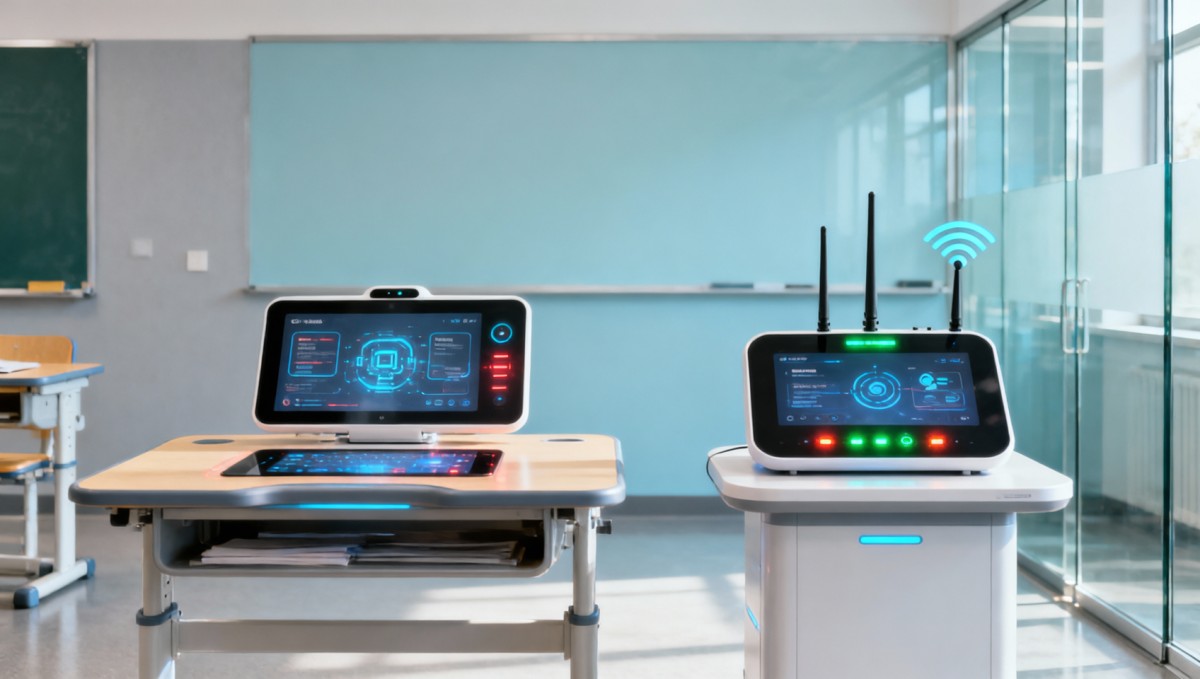
Effective May 20, 2026, the General Administration of Customs of China rolled out the Smart HS Classification Auxiliary System V2.0 across all ports. The system introduces 127 new granular tariff code mapping rules for Smart Campus Tech equipment, including intelligent student desks, AI-powered attendance terminals, and IoT-based classroom control systems. Field testing confirmed that classification accuracy for such education technology products improved from 91.2% to 98.7%.
Industries Affected
Direct Exporters: Companies exporting Smart Campus Tech hardware face lower operational friction — fewer customs rejections, reduced post-clearance audits, and diminished risk of retroactive duty assessments. However, they must now align internal product documentation (e.g., technical specifications, functional descriptions) with the newly codified 127 subheadings to fully leverage the system’s accuracy.
Raw Material & Component Suppliers: Firms supplying sensors, edge AI modules, or embedded OS platforms to Smart Campus Tech OEMs are indirectly affected. While not directly filing HS codes, their component-level compliance documentation (e.g., datasheets, firmware architecture summaries) may now be scrutinized more closely during downstream classification audits — especially where functionality overlaps with dual-use or telecom categories.
Contract Manufacturers & OEMs: These entities bear heightened responsibility for accurate pre-shipment classification. With V2.0’s refined rules, minor design variations (e.g., adding Wi-Fi 6 vs. Bluetooth-only connectivity) may trigger different HS codes. This increases the need for cross-functional alignment between R&D, engineering, and export compliance teams — particularly when managing multi-market product variants.
Supply Chain Service Providers: Customs brokers, freight forwarders, and trade compliance consultants must update their internal classification databases and training protocols. The 127 new mappings require nuanced interpretation — for example, distinguishing between ‘classroom control systems’ (classified under dedicated edtech headings) and generic ‘industrial controllers’ (falling under broader machinery codes). Failure to reflect these distinctions risks cascading errors across client portfolios.
Key Focus Areas & Recommended Actions
Review and Refine Product Technical Documentation
Exporters and OEMs should audit existing product datasheets, user manuals, and firmware capability statements against the 127 new tariff mappings. Emphasis should be placed on objectively verifiable functional attributes — e.g., whether a device performs real-time facial recognition (triggering AI-specific subheadings) or only stores biometric templates locally (potentially falling under data storage provisions).
Update Internal Classification Workflows
Companies must integrate V2.0’s logic into pre-shipment review checklists. This includes assigning classification ownership to technical staff — not just compliance officers — and instituting version-controlled decision logs for borderline cases (e.g., devices with both educational and general-purpose computing functions).
Engage Proactively with Customs via Pre-Ruling Channels
For products straddling multiple functional domains (e.g., an AI desk also serving as a health-monitoring station), firms should pursue binding advance rulings. The enhanced clarity of V2.0 lowers the evidentiary bar for successful applications — but timing remains critical, as rulings typically take 6–8 weeks to issue.
Editorial Perspective / Industry Observation
Analysis shows this rollout reflects a broader shift: China Customs is moving from reactive verification to proactive harmonization — embedding regulatory logic directly into trade infrastructure. Observably, the 98.7% accuracy rate is not merely a technical milestone; it signals growing reliance on deterministic, function-driven classification criteria over legacy form-based approaches. From an industry perspective, this raises the strategic value of standardized technical disclosure — firms that invest in machine-readable, taxonomy-aligned product metadata gain measurable advantage in classification predictability and audit resilience. Current evidence does not suggest immediate tariff changes, but the structural precision of V2.0 lays groundwork for future policy instruments — such as targeted incentive schemes or export control triggers — tied to specific HS subheadings.
Conclusion
The launch of the Smart HS Classification System V2.0 represents more than an efficiency upgrade — it recalibrates the baseline for compliance rigor in global edtech trade. For stakeholders, the practical implication is clear: classification is no longer a back-office paperwork task, but a cross-functional discipline anchored in engineering transparency and regulatory foresight. A rational conclusion is that competitive differentiation will increasingly hinge on how seamlessly companies embed classification-awareness into product development — not how well they correct errors after submission.
Source Attribution
Official announcement issued by the General Administration of Customs of China (GACC), May 20, 2026; supplementary validation data sourced from GACC’s 2026 Q1 Trade Compliance Pilot Report. Note: Implementation guidance for the 127 new mappings remains under public consultation; final administrative interpretations are pending publication and subject to ongoing observation.
Search News
Hot Articles
- Restaurant FurnitureFast-Casual Restaurant Interiors: Design Choices That Improve Speed and Guest FlowOct 04, 2026
- Outdoor RidesHow to Select Leisure Park Equipment for Safe, High-Throughput Visitor AreasOct 03, 2026
- Fashion & Gem JewelryDiamond Tester Wholesale: How to Vet Accuracy, Calibration, and MOQ Before OrderingOct 02, 2026
Popular Tags
Need ExpertConsultation?
Connect with our specialized leisureengineering team for procurementstrategies.
Recommended News
 Sep 28, 2026How U.S. Schools Can Choose Laboratory Equipment for Safe, Compliant Science LabsSchool laboratory equipment USA: learn how to select safe, compliant lab furniture, ventilation, emergency systems, and durable tools for K–12 science labs.● Institutional Buyer
 Sep 16, 2026How to Source Educational Furniture Worldwide for Safe, Flexible Learning SpacesEducational furniture worldwide: learn how to source safe, flexible, durable learning-space solutions while controlling compliance, logistics, and lifecycle costs.● Institutional Buyer
 Aug 31, 2026How to Plan Smart Classroom Solutions That Improve Learning and IT ManageabilitySmart classroom solutions: learn how to plan secure, scalable teaching spaces that improve learning, simplify IT management, and reduce lifecycle costs.● Institutional Buyer
 Aug 01, 2026How to Specify an EN54 School PA System for Safe, Compliant Campus Voice EvacuationEN54 school PA system specification guide for safer, compliant campus voice evacuation. Learn zoning, intelligibility, monitoring, tender tips, and handover checks.● Institutional Buyer
 Jul 15, 2026Vietnam Tightens Import Rules for Smart Campus TechVietnam Tightens Import Rules for Smart Campus Tech: learn how MOIT’s 2026 data hosting and NEP connection rules may reshape import approval, sourcing timelines, and delivery planning.● Institutional Buyer
 Jul 14, 2026Thailand TISI Tightens Rules for Smart Campus TerminalsThailand TISI tightens rules for smart campus terminals, requiring Thai speech recognition and local biometric data storage. Learn the compliance impact, timeline risks, and what exporters must do now.● Institutional Buyer
 Jul 13, 2026Red Sea Rerouting Lifts Smart Campus Tech Shipping CostsRed Sea rerouting lifts Smart Campus Tech shipping costs, extends Asia-Europe booking lead times, and delays delivery. See what exporters, buyers, and logistics teams should do now.● Institutional Buyer
 Jul 12, 2026Event Technology for Live Venues: What Systems Matter Most for Seamless Operations?Event technology defines how live venues handle ticketing, AV, access, and monitoring. Discover which systems matter most for seamless operations, higher uptime, and better guest experiences.● Institutional Buyer
 Jul 11, 2026What Is a Campus Procurement Platform and How Does It Improve School Purchasing Workflows?Campus procurement platform explained: learn how it streamlines school purchasing workflows, improves approval control, boosts spend visibility, and reduces delays across campus buying.● Institutional Buyer
 Jul 10, 2026Vietnam Raises Smart Campus Tech Import Tariff to 12%Vietnam Raises Smart Campus Tech Import Tariff to 12%: explore how the new Vietnam smart campus tech tariff impacts pricing, sourcing, and local assembly strategies across Southeast Asia.● Institutional Buyer
 Jul 10, 2026Interactive Document Camera vs Webcam: Which Works Better for Smart Classrooms?Interactive document camera vs webcam: discover which delivers clearer content sharing, faster lesson flow, and better hybrid teaching performance for smart classrooms.● Institutional Buyer
 Jul 09, 2026RCEP Rule Adds Carbon Footprint Filings for Smart Campus Tech ExportsRCEP Rule reshapes Smart Campus Tech exports: learn how new carbon footprint filings for Singapore, Thailand, and Vietnam affect customs clearance, lead times, and compliance planning before October 1, 2026.● Institutional Buyer
 Jul 09, 2026Basketball Hoops for Campuses: Which Backboard, Rim, and Mounting Type Fits Your Site?Basketball hoops for campuses: compare backboard, rim, and mounting options by site needs. Learn how to choose safer, longer-lasting systems for outdoor courts, gyms, and multipurpose halls.● Institutional Buyer
 Jul 09, 2026Modular Educational Furniture: What to Check Before Planning Flexible ClassroomsModular educational furniture: learn what to check before planning flexible classrooms, from safety and durability to teaching fit, supplier quality, and long-term value.● Institutional Buyer
 Jul 08, 2026Shenzhen-Yokohama Port Delays Fall to 2.1 DaysShenzhen-Yokohama Port Delays fall to 2.1 days, cutting shipment cycles by 5–7 days for smart campus equipment. See how faster port efficiency can ease Q3 school delivery pressure.● Institutional Buyer
 Jul 07, 2026FBX Slide Pushes Smart Campus Freight Below $980/FEUFBX Slide Pushes Smart Campus Freight Below $980/FEU as Asia-Europe rates tumble. Discover what this means for smart campus shipments, booking risks, and cost-saving opportunities.● Institutional Buyer
 Jul 07, 2026Math Manipulatives Bulk Price Guide: Cost Drivers, Pack Sizes, and School Budget PlanningMath manipulatives bulk price explained: compare cost drivers, pack sizes, landed costs, and school budget planning tips to source smarter and avoid hidden expenses.● Institutional Buyer
 Jul 04, 2026RCEP Update Expands Indonesia Duty-Free Quota for Edu DevicesRCEP Update Expands Indonesia Duty-Free Quota for Edu Devices: learn how the new 80,000-unit quota reshapes export costs, compliance, and school procurement opportunities in Indonesia.● Institutional Buyer
 Jul 03, 2026Indonesia Enforces ID-SNI Labels on Smart Campus ImportsIndonesia Enforces ID-SNI Labels on Smart Campus Imports: learn how the new rule affects labeling, customs clearance, certification, and delivery readiness for compliant market entry.● Institutional Buyer
 Jul 03, 2026How to Choose Indoor School Sports Equipment for Age Groups, Space, and Safety NeedsIndoor school sports equipment buying guide for schools: learn how to match age groups, space limits, and safety standards to choose durable, efficient solutions.● Institutional Buyer
 Jul 02, 2026Chromebook Charging Stations for Schools: Cart vs Cabinet vs Wall-Mount OptionsChromebook charging stations for schools compared: cart, cabinet, and wall-mount options. Discover the best fit for security, space, mobility, and budget before you buy.● Institutional Buyer
 Jul 01, 2026Indonesia Opens RCEP Fast Track for Smart Campus IoTIndonesia opens an RCEP fast track for Smart Campus IoT, cutting Jakarta customs clearance to 12 hours for eligible HS 8517.62 devices. See who qualifies and how to prepare.● Institutional Buyer
 Jun 30, 2026Flexible Learning Spaces for K-12 and Higher Ed: Layout Ideas, Furniture, and Tech NeedsFlexible learning spaces for K-12 and higher ed: explore practical layout ideas, durable furniture, and smart tech strategies that improve teaching, flexibility, and long-term campus value.● Institutional Buyer
 Jun 30, 2026Campus Equipment Procurement Checklist: How to Compare Specs, Warranties, and Total CostCampus equipment procurement made practical: compare specs, warranty terms, supplier reliability, and total cost to avoid hidden expenses and make smarter campus buying decisions.● Institutional Buyer