Why are pa systems for schools failing in large halls?
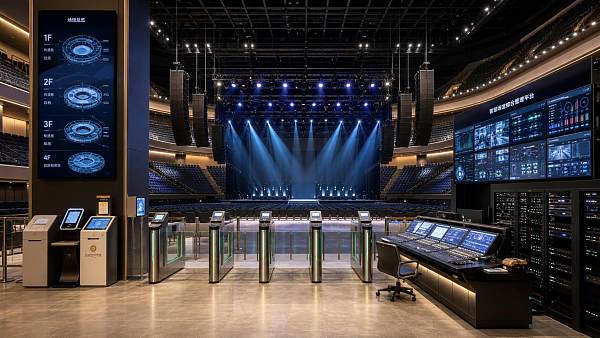
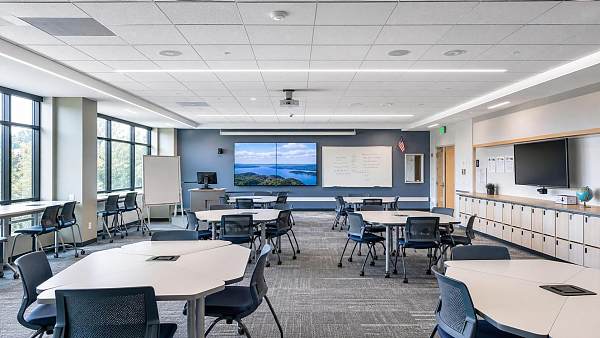
In large school halls, even well-intended pa systems for schools often struggle to deliver clear, consistent sound where it matters most. For project managers and facility decision-makers, these failures can lead to poor speech intelligibility, user complaints, and costly retrofits. Understanding why performance breaks down in big spaces is the first step toward specifying a system that supports assemblies, events, and daily campus communication with confidence.
Why do pa systems for schools break down in large halls?
Most failures are not caused by one defective component. They usually result from a mismatch between room acoustics, loudspeaker placement, amplifier headroom, microphone technique, and the actual use pattern of the hall.
A school hall is rarely a single-purpose room. It may host morning briefings, exams, performances, sports activities, parent meetings, and emergency announcements. That mixed-use reality puts pressure on pa systems for schools in ways that small classrooms do not.
- Long reverberation time causes speech to smear, so words overlap and become hard to understand at the back of the hall.
- Incorrect speaker coverage creates hot spots near the front and dead zones along the sides or under balconies.
- Underpowered amplification leads operators to push volume too high, increasing distortion instead of improving clarity.
- Poor microphone selection or user handling introduces feedback, low speech pickup, or unstable performance during events.
- Weak integration with evacuation, bell, paging, or media playback systems limits reliability during daily operations.
For project managers, the key point is simple: a hall that looks large on the drawing set is also acoustically large. If the design process treats it like an oversized classroom, performance gaps are almost guaranteed.
The acoustic problem is usually bigger than the equipment problem
Hard finishes such as concrete, glass, steel roof decks, and painted walls reflect sound energy. In large halls, those reflections return late enough to reduce intelligibility but early enough to mask the direct voice signal.
This is why replacing one mixer or one speaker seldom fixes the issue. The system may need better aiming, distributed loudspeaker zoning, DSP tuning, or acoustic treatment before any equipment upgrade delivers value.
Which hall conditions most often cause poor speech intelligibility?
Before choosing new pa systems for schools, project teams should identify the physical conditions driving complaints. The table below highlights common hall conditions and their likely impact on day-to-day communication.
This comparison helps explain why many upgrade projects fail after buying “more powerful” gear. Power alone does not solve acoustic spread, reflection control, or operator workflow.
Noise and occupancy also change system performance
A hall full of students absorbs sound differently from an empty hall. Ventilation noise, movable seating, retractable bleachers, and open access doors also change the usable signal-to-noise ratio during operation.
Project leaders should therefore request testing assumptions that reflect real occupancy conditions rather than idealized commissioning scenarios conducted in an empty room.
What design mistakes make pa systems for schools underperform?
In procurement reviews across educational and commercial projects, several design mistakes appear again and again. They often begin at planning stage, when budget pressure encourages specification shortcuts.
Common specification errors
- Using a single speaker cluster to cover a deep or wide hall without considering throw distance, pattern control, and delay timing.
- Selecting loudspeakers based on wattage claims instead of coverage angle, sensitivity, voicing, and intelligibility performance.
- Ignoring DSP functions such as equalization, delay, feedback suppression, limiter settings, and user presets.
- Failing to separate routine paging needs from event sound reinforcement needs, even though both require different operating priorities.
- Leaving no allowance for future expansion, such as additional zones, hearing assistance interfaces, or digital input sources.
These errors are especially costly for public-sector or campus projects because correction often happens after installation, when access windows are tighter and change orders become harder to justify.
Why budget-driven simplification often backfires
Project teams sometimes cut distributed speakers, DSP capacity, or commissioning hours to stay inside the capex target. The result looks cheaper on paper, but the hall then requires higher operating volume, causes more complaints, and may need additional works later.
For school estates and broader commercial environments, lifecycle cost matters more than entry price. Better design coordination at the start typically costs less than retrofitting after handover.
How should project managers evaluate solution options?
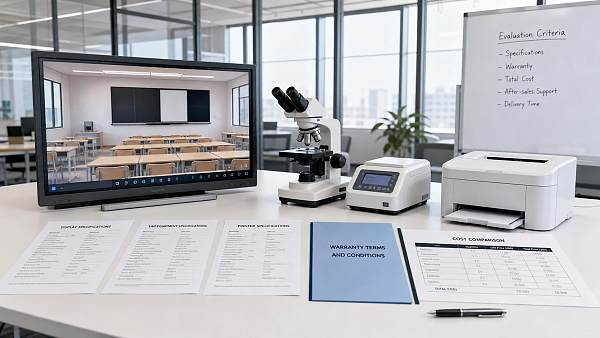
When comparing pa systems for schools, it helps to assess options against the hall’s function, not just the product brochure. The table below provides a practical evaluation framework for procurement teams.
This type of matrix supports a more defensible purchase decision. It also helps project managers compare suppliers on engineering depth, not only on headline cost.
Minimum information to request from suppliers
- Proposed loudspeaker layout with mounting positions and aiming notes.
- Amplification and DSP architecture, including zones, presets, and limiter strategy.
- Recommended microphones for lecterns, handheld use, and stage activities.
- Commissioning scope, operator training, and as-built documentation deliverables.
- Maintenance plan, spare parts path, and expected support response process.
What technical features matter most in large-school-hall audio?
Not every project needs the same system architecture, but some technical priorities are consistently important when pa systems for schools are used in large halls.
Critical performance priorities
First, intelligibility must take priority over raw loudness. A clear voice at moderate level is more useful than a loud but blurred signal. Second, coverage consistency matters because large differences in SPL across seats encourage staff to compensate incorrectly.
Third, control workflow should match real campus use. If the interface is confusing, users bypass settings, misuse microphones, or leave the system in the wrong mode for the next event.
Useful technical elements to consider
- Directional loudspeakers or column-style solutions where speech control is more important than broad music dispersion.
- Digital signal processing for EQ, delay alignment, feedback management, and role-based presets.
- Zoned paging capability for assemblies, sectional use, or emergency messaging pathways.
- Flexible input support for lecterns, wireless microphones, media players, and external presentation devices.
- Monitoring and fault indication to help facilities teams identify problems quickly.
In integrated campus projects, these features also support smoother coordination with IT, facilities, security, and event teams.
How can procurement teams avoid retrofit costs later?
Retrofit costs usually appear when the project brief is too general. A better approach is to define operating scenarios before tendering and convert them into measurable system requirements.
A practical procurement checklist
- List all hall uses: speeches, drama, awards, exams, music playback, sports, and emergency communication.
- Map coverage expectations by audience zone, including floor seating, side areas, and stage positions.
- Define who operates the system: technicians, teachers, admin staff, or external event users.
- Clarify interfaces with fire alarm, bell systems, recording, streaming, or assistive listening if applicable.
- Require commissioning, training, and handover documentation as part of the procurement package.
This process reduces ambiguity for bidders and gives the school a better basis for evaluating whether proposed pa systems for schools are genuinely fit for purpose.
The value of sourcing intelligence in multi-vendor projects
Large education projects often involve consultants, contractors, AV integrators, and procurement officers working to different timelines. Global Commercial Trade supports these environments by connecting market insight, category knowledge, and supplier evaluation across office and educational supplies as well as pro audio sectors.
That cross-sector perspective is useful when a hall is part of a wider smart campus, where aesthetics, compliance, delivery reliability, and long-term support matter as much as the audio specification itself.
What standards, compliance points, and documentation should be reviewed?
Requirements vary by country and project type, but school buyers should still review basic compliance areas early. Delays often happen when electrical approvals, emergency interfaces, or installation methods are considered too late.
- Electrical safety and local installation code alignment for amplifiers, racks, cabling, and power distribution.
- Fire and emergency system interface expectations where voice announcement pathways are relevant.
- Mounting and structural review for suspended speakers, brackets, and ceiling loads.
- EMC considerations in halls with dense wireless microphone or networked equipment usage.
- Operation manuals, as-built drawings, signal flow diagrams, and maintenance instructions at handover.
A well-documented project lowers future service costs because school staff can troubleshoot issues faster and replacement planning becomes easier.
FAQ: what do project managers ask most about pa systems for schools?
Should a large school hall use one powerful speaker system or several distributed speakers?
In many halls, distributed coverage performs better for speech because it brings sound closer to listeners and reduces the need for extreme front-to-back throw. The right answer depends on hall geometry, stage use, and acoustic conditions, but relying on one powerful point source is often a compromise.
Why do users complain even when the system seems loud enough?
Because loudness is not clarity. Reflections, poor aiming, bad microphone pickup, and distortion can all make speech hard to understand even at high SPL. This is one of the most common misconceptions around pa systems for schools.
What is the most overlooked part of the project budget?
Commissioning and user training. Without proper tuning and simple operational presets, even well-selected hardware can fail in daily use. For large halls, post-install optimization is not optional; it is part of the solution.
How early should audio planning start in a hall project?
Ideally during concept or schematic planning, especially if ceiling height, wall finishes, cable pathways, equipment rooms, and emergency interfaces are still open for coordination. Early planning reduces rework and improves system outcomes.
Why choose us for sourcing and specification support?
For project managers handling large halls, the challenge is not only finding pa systems for schools. It is finding a sourcing path that balances performance, compliance, project timing, and long-term serviceability.
Global Commercial Trade helps buyers navigate that decision with focused insight across educational supply and pro audio categories. Our editorial and sourcing perspective is built for commercial environments where technical suitability, procurement confidence, and supplier reliability all matter.
- We can help clarify parameter priorities for large hall speech and mixed-use audio requirements.
- We can support product selection comparisons across coverage strategy, control logic, and integration needs.
- We can assist with delivery-cycle discussions, supplier screening, and documentation expectations for tenders.
- We can help review customization paths, including zoning, microphone packages, rack configuration, and future expansion planning.
- We can support conversations around certification requirements, sample evaluation, and quotation alignment for institutional procurement.
If your large hall project is facing uneven coverage, unclear specifications, or pressure to avoid a costly retrofit, this is the right time to discuss the brief in detail. A better outcome usually starts with sharper questions, clearer performance targets, and a sourcing strategy built around real use conditions.
Search News
Hot Articles
- Restaurant FurnitureFast-Casual Restaurant Interiors: Design Choices That Improve Speed and Guest FlowOct 04, 2026
- Outdoor RidesHow to Select Leisure Park Equipment for Safe, High-Throughput Visitor AreasOct 03, 2026
- Fashion & Gem JewelryDiamond Tester Wholesale: How to Vet Accuracy, Calibration, and MOQ Before OrderingOct 02, 2026
Popular Tags
Need ExpertConsultation?
Connect with our specialized leisureengineering team for procurementstrategies.
Recommended News
 Sep 28, 2026How U.S. Schools Can Choose Laboratory Equipment for Safe, Compliant Science LabsSchool laboratory equipment USA: learn how to select safe, compliant lab furniture, ventilation, emergency systems, and durable tools for K–12 science labs.● Institutional Buyer
 Sep 16, 2026How to Source Educational Furniture Worldwide for Safe, Flexible Learning SpacesEducational furniture worldwide: learn how to source safe, flexible, durable learning-space solutions while controlling compliance, logistics, and lifecycle costs.● Institutional Buyer
 Aug 31, 2026How to Plan Smart Classroom Solutions That Improve Learning and IT ManageabilitySmart classroom solutions: learn how to plan secure, scalable teaching spaces that improve learning, simplify IT management, and reduce lifecycle costs.● Institutional Buyer
 Aug 01, 2026How to Specify an EN54 School PA System for Safe, Compliant Campus Voice EvacuationEN54 school PA system specification guide for safer, compliant campus voice evacuation. Learn zoning, intelligibility, monitoring, tender tips, and handover checks.● Institutional Buyer
 Jul 15, 2026Vietnam Tightens Import Rules for Smart Campus TechVietnam Tightens Import Rules for Smart Campus Tech: learn how MOIT’s 2026 data hosting and NEP connection rules may reshape import approval, sourcing timelines, and delivery planning.● Institutional Buyer
 Jul 14, 2026Thailand TISI Tightens Rules for Smart Campus TerminalsThailand TISI tightens rules for smart campus terminals, requiring Thai speech recognition and local biometric data storage. Learn the compliance impact, timeline risks, and what exporters must do now.● Institutional Buyer
 Jul 13, 2026Red Sea Rerouting Lifts Smart Campus Tech Shipping CostsRed Sea rerouting lifts Smart Campus Tech shipping costs, extends Asia-Europe booking lead times, and delays delivery. See what exporters, buyers, and logistics teams should do now.● Institutional Buyer
 Jul 12, 2026Event Technology for Live Venues: What Systems Matter Most for Seamless Operations?Event technology defines how live venues handle ticketing, AV, access, and monitoring. Discover which systems matter most for seamless operations, higher uptime, and better guest experiences.● Institutional Buyer
 Jul 11, 2026What Is a Campus Procurement Platform and How Does It Improve School Purchasing Workflows?Campus procurement platform explained: learn how it streamlines school purchasing workflows, improves approval control, boosts spend visibility, and reduces delays across campus buying.● Institutional Buyer
 Jul 10, 2026Vietnam Raises Smart Campus Tech Import Tariff to 12%Vietnam Raises Smart Campus Tech Import Tariff to 12%: explore how the new Vietnam smart campus tech tariff impacts pricing, sourcing, and local assembly strategies across Southeast Asia.● Institutional Buyer
 Jul 10, 2026Interactive Document Camera vs Webcam: Which Works Better for Smart Classrooms?Interactive document camera vs webcam: discover which delivers clearer content sharing, faster lesson flow, and better hybrid teaching performance for smart classrooms.● Institutional Buyer
 Jul 09, 2026RCEP Rule Adds Carbon Footprint Filings for Smart Campus Tech ExportsRCEP Rule reshapes Smart Campus Tech exports: learn how new carbon footprint filings for Singapore, Thailand, and Vietnam affect customs clearance, lead times, and compliance planning before October 1, 2026.● Institutional Buyer
 Jul 09, 2026Basketball Hoops for Campuses: Which Backboard, Rim, and Mounting Type Fits Your Site?Basketball hoops for campuses: compare backboard, rim, and mounting options by site needs. Learn how to choose safer, longer-lasting systems for outdoor courts, gyms, and multipurpose halls.● Institutional Buyer
 Jul 09, 2026Modular Educational Furniture: What to Check Before Planning Flexible ClassroomsModular educational furniture: learn what to check before planning flexible classrooms, from safety and durability to teaching fit, supplier quality, and long-term value.● Institutional Buyer
 Jul 08, 2026Shenzhen-Yokohama Port Delays Fall to 2.1 DaysShenzhen-Yokohama Port Delays fall to 2.1 days, cutting shipment cycles by 5–7 days for smart campus equipment. See how faster port efficiency can ease Q3 school delivery pressure.● Institutional Buyer
 Jul 07, 2026FBX Slide Pushes Smart Campus Freight Below $980/FEUFBX Slide Pushes Smart Campus Freight Below $980/FEU as Asia-Europe rates tumble. Discover what this means for smart campus shipments, booking risks, and cost-saving opportunities.● Institutional Buyer
 Jul 07, 2026Math Manipulatives Bulk Price Guide: Cost Drivers, Pack Sizes, and School Budget PlanningMath manipulatives bulk price explained: compare cost drivers, pack sizes, landed costs, and school budget planning tips to source smarter and avoid hidden expenses.● Institutional Buyer
 Jul 04, 2026RCEP Update Expands Indonesia Duty-Free Quota for Edu DevicesRCEP Update Expands Indonesia Duty-Free Quota for Edu Devices: learn how the new 80,000-unit quota reshapes export costs, compliance, and school procurement opportunities in Indonesia.● Institutional Buyer
 Jul 03, 2026Indonesia Enforces ID-SNI Labels on Smart Campus ImportsIndonesia Enforces ID-SNI Labels on Smart Campus Imports: learn how the new rule affects labeling, customs clearance, certification, and delivery readiness for compliant market entry.● Institutional Buyer
 Jul 03, 2026How to Choose Indoor School Sports Equipment for Age Groups, Space, and Safety NeedsIndoor school sports equipment buying guide for schools: learn how to match age groups, space limits, and safety standards to choose durable, efficient solutions.● Institutional Buyer
 Jul 02, 2026Chromebook Charging Stations for Schools: Cart vs Cabinet vs Wall-Mount OptionsChromebook charging stations for schools compared: cart, cabinet, and wall-mount options. Discover the best fit for security, space, mobility, and budget before you buy.● Institutional Buyer
 Jul 01, 2026Indonesia Opens RCEP Fast Track for Smart Campus IoTIndonesia opens an RCEP fast track for Smart Campus IoT, cutting Jakarta customs clearance to 12 hours for eligible HS 8517.62 devices. See who qualifies and how to prepare.● Institutional Buyer
 Jun 30, 2026Flexible Learning Spaces for K-12 and Higher Ed: Layout Ideas, Furniture, and Tech NeedsFlexible learning spaces for K-12 and higher ed: explore practical layout ideas, durable furniture, and smart tech strategies that improve teaching, flexibility, and long-term campus value.● Institutional Buyer
 Jun 30, 2026Campus Equipment Procurement Checklist: How to Compare Specs, Warranties, and Total CostCampus equipment procurement made practical: compare specs, warranty terms, supplier reliability, and total cost to avoid hidden expenses and make smarter campus buying decisions.● Institutional Buyer