GCC Enforces Bilingual Arabic-Chinese Labeling for Musical Instruments
Gulf Cooperation Council (GSO) has introduced a mandatory bilingual labeling requirement for musical instruments entering GCC markets — effective 1 June 2026. Announced on 20 May 2026, the updated GSO 2533:2026 standard mandates Arabic–Chinese safety warnings on both product units and outer packaging, directly impacting global exporters, manufacturers, and logistics providers serving the Gulf region.
Event Overview
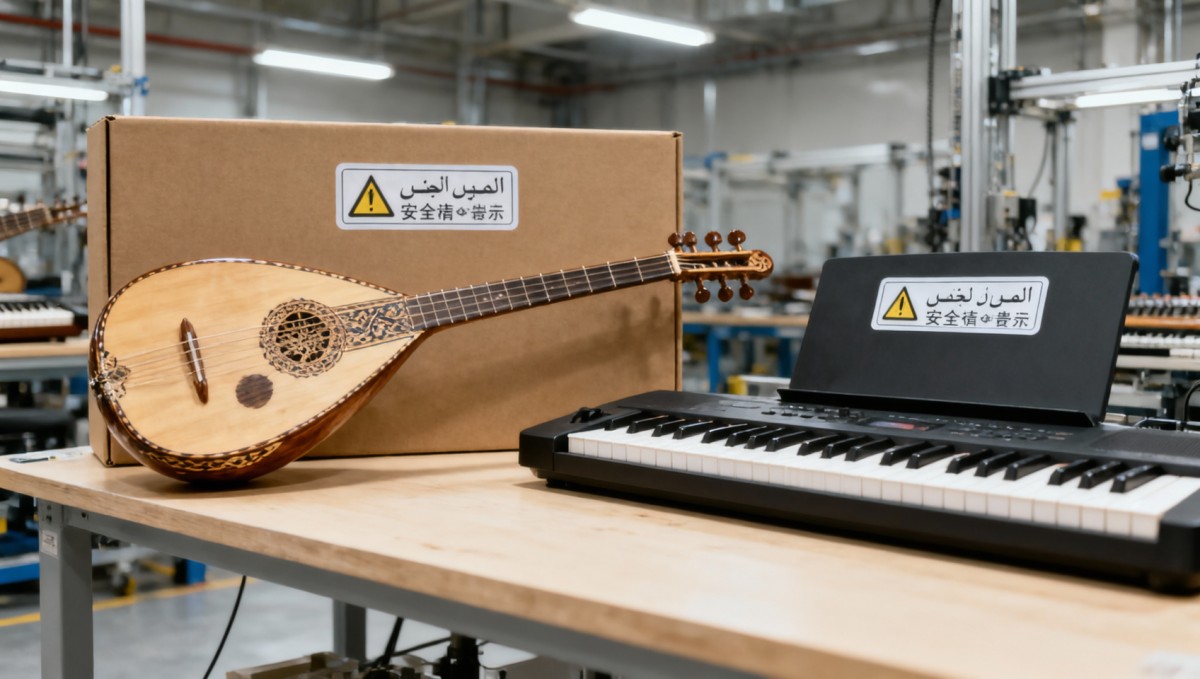
The Gulf Standardization Organization (GSO) issued revision GSO 2533:2026 on 20 May 2026, amending the safety and labeling requirements for musical instruments. The regulation requires all imported musical instruments to display safety warnings in both Arabic and Chinese on the product itself and its retail/transport packaging. Warnings must cover three specific hazards: string tension risks (for bowed and plucked string instruments), battery-related hazards (for electronic instruments), and age/size suitability guidance (for children’s instruments). Enforcement begins 1 June 2026; non-compliant shipments will be rejected at Jebel Ali Port in Dubai.
Industries Affected
Direct Trading Enterprises: Exporters shipping to GCC countries — especially those without in-house multilingual compliance teams — face immediate customs clearance risk. Impact manifests in delayed deliveries, port storage fees, rework costs for label reprinting, and potential contract penalties if delivery timelines are missed. Notably, small- and medium-sized enterprises (SMEs) with limited regional regulatory oversight capacity are disproportionately exposed.
Raw Material Procurement Enterprises: Suppliers of components such as lithium batteries (for digital pianos, synthesizers, or tuners), synthetic strings, or child-safe plastics may see revised order specifications. Buyers now require traceable documentation confirming that upstream materials support bilingual hazard communication — e.g., battery datasheets with Arabic–Chinese safety notes — adding verification layers to procurement workflows.
Manufacturing Enterprises: Instrument OEMs and ODMs — particularly those based in China, Indonesia, Vietnam, and Turkey — must revise production line labeling protocols. This includes updating printing plates, revising packaging artwork approval workflows, and integrating bilingual warning validation into final QA checks. For assembled products (e.g., keyboards with bundled accessories), warnings must appear on each component where relevant — not only the main unit.
Supply Chain Service Providers: Freight forwarders, customs brokers, and third-party logistics (3PL) firms handling GCC-bound consignments must now verify label compliance pre-shipment. Some are introducing pre-clearance label audits as a value-added service; others report rising demand for Arabic–Chinese bilingual technical documentation support, including certified translations of user manuals and safety inserts.
Key Focus Areas and Recommended Actions
Verify label placement scope
Compliance applies to both the instrument body and outer packaging — including master cartons used for sea freight. Labels must remain legible after normal handling and storage; peelable or adhesive labels must meet GSO’s durability testing criteria (per Annex C of GSO 2533:2026).
Confirm language accuracy and regulatory alignment
Arabic text must conform to Modern Standard Arabic (MSA) and follow GSO’s official terminology glossary (published separately in April 2026). Chinese translations must use simplified characters and avoid colloquialisms; GSO explicitly references GB/T 20001.2–2015 as the benchmark for technical translation quality.
Update internal compliance documentation
Manufacturers must retain records proving bilingual label implementation — including artwork sign-offs, print batch logs, and supplier declarations for pre-printed packaging. These documents may be requested during GSO market surveillance audits, which began pilot sampling in Q3 2026.
Assess impact on existing inventory
Stock produced before 1 June 2026 but shipped or cleared post-enforcement remains subject to rejection. Enterprises holding GCC-bound inventory should prioritize relabeling or repackaging — noting that GSO does not recognize ‘sticker-over-label’ solutions unless the overlay is permanent, tamper-evident, and meets contrast/legibility thresholds.
Editorial Perspective / Industry Observation
Observably, this requirement signals a broader shift in GCC regulatory strategy: moving from harmonized English–Arabic frameworks toward multi-lingual consumer protection models targeting high-volume trading partners. While Chinese is not an official GCC language, its inclusion reflects both import volume trends — China accounts for ~68% of GCC musical instrument imports (2025 GSO Trade Data Snapshot) — and growing emphasis on end-user comprehension over distributor intermediation. Analysis shows this is less about linguistic inclusivity and more about reducing post-import liability exposure for local retailers and educators.
From industry perspective, the timing — just one week between publication and enforcement — suggests GSO prioritized administrative efficiency over phased adoption. That pace may strain smaller suppliers’ ability to validate translations independently, increasing reliance on certified translation agencies accredited by the UAE Ministry of Justice or Saudi Standards, Metrology and Quality Organization (SASO).
Conclusion
This regulation underscores how regional standardization bodies are increasingly leveraging labeling mandates as de facto trade gatekeepers — especially in sectors where product safety perception outweighs technical complexity. For musical instrument stakeholders, compliance is no longer optional due diligence; it is a prerequisite for physical market access. A rational interpretation is that future GSO updates may extend similar bilingual requirements to adjacent categories — such as audio interfaces, studio monitors, or music education software — particularly where Chinese manufacturing dominance intersects with GCC consumer safety priorities.
Source Attribution
Official source: Gulf Standardization Organization (GSO), GSO 2533:2026 Musical Instruments – Safety and Labeling Requirements, published 20 May 2026. Full text available via GSO e-Standard Portal (login required). Annex D contains the mandatory bilingual warning templates.
Supplementary reference: GSO Circular No. GSO/REG/2026/047 (“Implementation Guidance for Bilingual Labeling under GSO 2533”), issued 15 May 2026.
Note: GSO has indicated plans to publish a publicly accessible Arabic–Chinese terminology database by Q4 2026 — currently under development and subject to revision.
Search News
Hot Articles
- Outdoor RidesHow to Select Leisure Park Equipment for Safe, High-Throughput Visitor AreasOct 03, 2026
- Fashion & Gem JewelryDiamond Tester Wholesale: How to Vet Accuracy, Calibration, and MOQ Before OrderingOct 02, 2026
- Hotel Room AmenitiesHow Hotels Can Choose Amenity Bottles That Balance Brand Image and Refill CostsOct 01, 2026
Popular Tags
Need ExpertConsultation?
Connect with our specialized leisureengineering team for procurementstrategies.
Recommended News
 Sep 11, 2026How to Choose Touring Instrument Cases for Flights, Trucks, and Daily Load-InsInstrument cases for touring: learn how to balance flight protection, truck durability, weight, fit, and serviceable hardware for safer, faster load-ins.● Pro Audio Engineer
 Sep 07, 2026How to Choose Wood Frame Tambourines for Sound Quality and Long-Term UseWood frame tambourines: learn how to compare frame construction, jingle tone, head options, durability, and supplier quality for reliable long-term performance.● Pro Audio Engineer
 Sep 05, 2026How Often Should Music Education Equipment Be Serviced?How often should music education equipment be serviced? Explore practical schedules, maintenance tips, and lifecycle planning to keep instruments and audio systems reliable.● Pro Audio Engineer
 Aug 21, 2026How to Choose Marching Band Drums for Sound Projection, Weight, and DurabilityMarching band drums buying guide: learn how to balance sound projection, weight, and durability for better field performance, easier carrying, and longer-lasting value.● Pro Audio Engineer
 Aug 09, 2026How to Evaluate a MIDI Cable Manufacturer for Audio Quality and OEM ReliabilityMIDI cable manufacturer evaluation guide: learn how to assess signal stability, connector quality, OEM process control, and batch consistency to reduce failures and source with confidence.● Pro Audio Engineer
 Aug 08, 2026How to Evaluate a Trumpets OEM Manufacturer for Quality, MOQ, and Custom DesignTrumpets OEM manufacturer selection starts with quality, MOQ, and custom design control. Learn how to compare suppliers, reduce sourcing risk, and choose a reliable long-term factory partner.● Pro Audio Engineer
 Jul 27, 2026How to Source Conga Drums in Bulk for Schools, Bands, and Event ProgramsConga drums bulk sourcing for schools, bands, and event programs made easier. Learn how to compare quality, durability, compliance, and total cost before you place a large order.● Pro Audio Engineer
 Jul 24, 2026How to Choose Low Dust Violin Rosin for Cleaner Practice and Better Bow ControlLow dust violin rosin buying guide: learn how to compare formula, climate fit, grip, and string compatibility for cleaner practice, better bow control, and smarter purchase decisions.● Pro Audio Engineer
 Jul 15, 2026Plastic Tambourines Bulk Buying Guide: Sizes, Materials, and MOQ QuestionsPlastic tambourines bulk buying guide covering sizes, ABS vs PP materials, sound consistency, customization, and MOQ questions to help buyers cut risk and choose the right supplier.● Pro Audio Engineer
 Jul 13, 2026Acoustic Guitars Wholesale China: How to Evaluate Build Quality and OEM OptionsAcoustic guitars wholesale China guide: learn how to assess build quality, factory consistency, and OEM options to choose reliable suppliers and reduce sourcing risk.● Pro Audio Engineer
 Jul 12, 2026Mini Effect Pedals Wholesale: MOQ, OEM Options, Testing, and Supplier ComparisonMini effect pedals wholesale guide covering MOQ, OEM options, testing standards, and supplier comparison to help buyers reduce risk, improve margins, and choose reliable partners.● Pro Audio Engineer
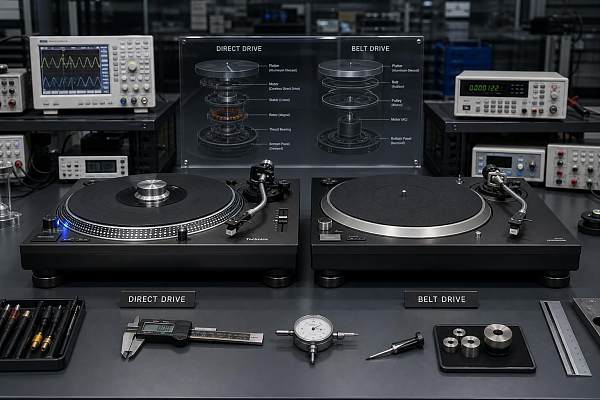
 Jul 11, 2026DJ Turntables OEM Guide: Key Torque, Drive, and Build Specs to CompareDJ turntables OEM guide covering torque, drive type, speed stability, platter build, and manufacturing consistency. Compare the specs that impact performance, reliability, and sourcing confidence.● Pro Audio Engineer
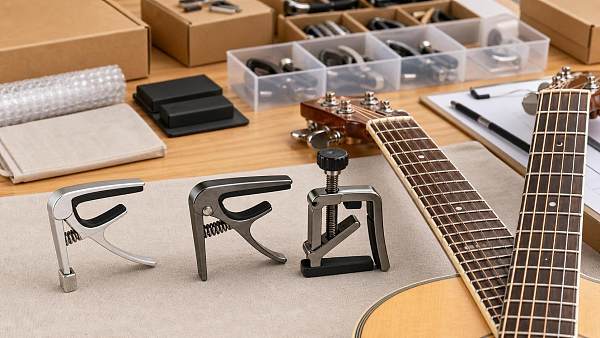
 Jul 08, 2026Guitar Capos Wholesale: What Materials, Clamp Types, and MOQ Terms Should You Compare?Guitar capos wholesale buying starts with more than price. Compare materials, clamp types, quality checks, and MOQ terms to reduce returns, protect margins, and choose a supplier with confidence.● Pro Audio Engineer
 Jul 07, 2026Birch Drum Kits Manufacturer Comparison: Shell Construction, Hardware Quality, and OEM OptionsBirch drum kits manufacturer comparison covering shell construction, hardware quality, and OEM options to help buyers reduce sourcing risk and choose reliable suppliers.● Pro Audio Engineer
 Jul 06, 2026Spruce Top Acoustic Guitars Explained: Tone, Wood Grades, and Who They Suit BestSpruce top acoustic guitars explained: compare tone, wood grades, and build quality to find the best fit for players, retailers, and commercial buyers.● Pro Audio Engineer
 Jun 30, 2026Xylophones and Glockenspiels: Key Differences in Range, Tone, and Classroom UseXylophones and glockenspiels compared: discover key differences in range, tone, durability, and classroom use to choose the right instrument for teaching, buying, or school programs.● Pro Audio Engineer
 Jun 25, 2026Musical Instrument Industry Report: Key Market Segments, Demand Drivers, and Price TrendsMusical instrument industry report covering key market segments, demand drivers, and price trends. Explore sourcing risks, premium growth, and where buyer demand is shifting next.● Pro Audio Engineer
 Jun 23, 2026Metronomes and Tuners Explained: Types, Key Features, and Who Needs BothMetronomes and tuners explained: compare types, key features, and who needs both. Learn how to choose the right tool for better timing, pitch, and practical daily use.● Pro Audio Engineer
 Jun 22, 2026How the Musical Instrument Industry Supply Chain Affects Lead Times, Cost, and QualityMusical instrument industry supply chain trends now shape lead times, cost, and quality. Discover how smarter sourcing and supplier transparency reduce risk and improve buying outcomes.● Pro Audio Engineer
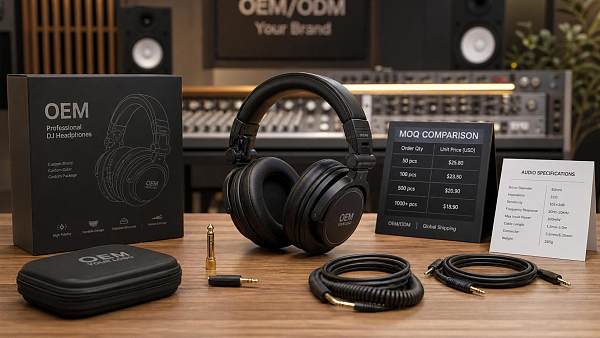
 Jun 20, 2026DJ Headphones Wholesale Buying Guide: OEM Options, MOQ, and Audio Specs to CompareDJ headphones wholesale guide covering OEM options, MOQ strategy, and key audio specs. Compare build quality, compliance, and total cost to source smarter and reduce returns.● Pro Audio Engineer
 Jun 19, 2026Acoustic Guitars Wholesale: 7 Specs Buyers Should Compare Before Placing an OrderAcoustic guitars wholesale buyers can compare 7 key specs before ordering, from tonewoods and playability to OEM, packaging, and QC, to reduce risk and protect margins.● Pro Audio Engineer
 Jun 15, 2026Tambourines Bulk Buying Guide: Materials, Sound Quality, and Pack Size DifferencesTambourines bulk buying guide covering material choices, sound consistency, and pack size differences. Compare suppliers smarter, reduce risk, and choose the best fit for schools, retail, and events.● Pro Audio Engineer
 Jun 14, 2026Professional Musical Instruments Explained: Types, Skill Levels, and Buying CriteriaProfessional musical instruments explained: discover key types, ideal skill levels, and practical buying criteria to choose reliable, high-performance instruments with confidence.● Pro Audio Engineer
 Jun 10, 2026Drum Kits Manufacturer Comparison: What to Check Before OEM or Bulk OrdersDrum kits manufacturer comparison guide for OEM and bulk buyers: check quality, compliance, lead times, packaging, and true cost before placing large orders.● Pro Audio Engineer