VR Simulator Rides: Why Repeat Visits Drop After the First Month
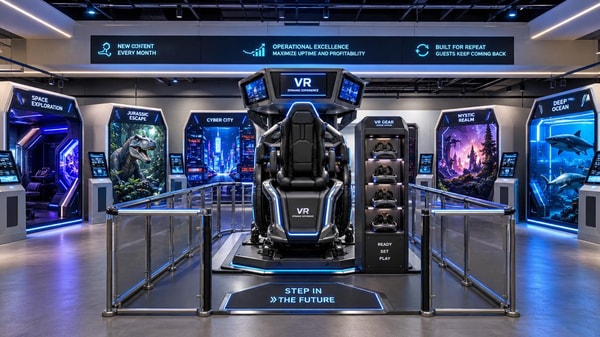
VR simulator rides often attract strong curiosity at launch, yet many venues see repeat visits decline after the first month. For researchers evaluating attraction performance, the key question is not only why initial demand fades, but which operational, content, and experience factors limit long-term engagement. Understanding these patterns helps buyers and operators make smarter investment decisions.
In the amusement and leisure market, first-month traction can be misleading. A VR attraction may post strong occupancy during its opening 2–4 weeks because novelty, social sharing, and launch campaigns compress demand into a short period. After that window, performance depends less on the technology headline and more on throughput, content refresh cadence, comfort design, maintenance discipline, and pricing logic.
For B2B buyers, this makes vr simulator rides a category that should be evaluated beyond demo-day excitement. Whether the installation is planned for a family entertainment center, shopping mall, resort, arcade, museum, or mixed-use leisure venue, the real question is not “Will it attract attention?” but “Can it sustain repeatable revenue after 30, 60, and 90 days?”
This article examines why repeat visits often decline after the first month, what signals indicate structural underperformance, and how operators can specify attractions with better long-term retention potential. The focus is practical: procurement criteria, operating risks, content strategy, and lifecycle planning relevant to commercial buyers and market researchers.
Why early demand for VR simulator rides fades so quickly
The most common reason repeat visits decline is simple: the first ride answers the visitor’s main question. Once customers have tested the motion platform, headset immersion, and visual spectacle, many discover that the experience does not change enough from session to session. In practical terms, a venue may see strong trial traffic in days 1–30, then a noticeable slowdown in days 31–60 if the attraction offers only 1–3 core scenarios.
Novelty has a short commercial half-life
Novelty is powerful but fragile. In many locations, especially malls and tourist-driven sites, launch traffic is driven by passersby, influencers, and bundled promotions. If the ride experience is largely identical on the second visit, the perceived value drops sharply. Unlike redemption games or social bowling formats that support skill progression, many vr simulator rides are consumed as one-time experiences rather than habits.
This issue becomes more visible when the attraction relies on a single “wow moment” such as a drop sequence, racing burst, or horror jump scare. Those moments are effective once, sometimes twice, but rarely support 6–8 repeat sessions unless the content system offers branching paths, score-based competition, or seasonal updates.
Throughput and queue friction weaken return intent
Another overlooked factor is capacity. If a unit seats 2–4 riders and the total cycle time is 6–10 minutes including loading, calibration, sanitation, and unloading, hourly throughput may be lower than expected. Long visible queues can help initial buzz, but they often reduce repeat demand because guests remember the wait more than the ride.
A guest who spends 18 minutes waiting for a 4-minute experience is less likely to return than one who gets a 5-minute experience after a 5-minute queue. In repeat-visit economics, perceived convenience is often as important as content quality.
Comfort barriers shrink the addressable audience
VR motion sickness, headset hygiene concerns, and physical accessibility all influence repeat behavior. Even when only 10%–20% of users report moderate discomfort, the word-of-mouth effect can be wider. Families may avoid rebooking if one member felt dizzy, and premium venues may see lower satisfaction if sanitization between sessions appears inconsistent.
In commercial settings such as hotels, mixed-use resorts, and branded leisure spaces, comfort standards are not optional details. Headset weight, seat ergonomics, ventilation, facial interface cleaning time, and staff assistance protocols all shape whether visitors remember the attraction as exciting or tiring.
The table below summarizes the operational reasons first-month performance can mask weak retention in vr simulator rides.
The key takeaway is that first-month demand often measures curiosity, not loyalty. For procurement teams, that means performance evaluation should include a 90-day retention view, not only launch-month sales or test-center feedback.
The content and design limits that reduce repeat visits
Not all vr simulator rides fail at retention, but weak repeat performance usually traces back to design choices made before purchase. Buyers often focus on hardware specifications such as motion base type, seat count, or display resolution, while underweighting content architecture and replay structure. In commercial reality, software depth often determines whether the attraction remains relevant after week 5.
Too few scenarios, too little progression
A content library of 2–4 films may be acceptable for a temporary installation, but it is usually weak for a permanent venue. Repeat-friendly systems typically need at least 6–10 varied scenarios over time, ideally across different intensity levels such as family, adventure, educational, and thrill. If every ride uses the same motion language, soundtrack pattern, and story rhythm, even technically polished content begins to feel repetitive.
What stronger replay design looks like
- Multiple routes or branching outcomes within the same title
- Leaderboards, timed challenges, or cooperative team scoring
- Age-tiered difficulty options for family versus teen audiences
- Seasonal overlays or themed events refreshed every 8–12 weeks
- Localized content that fits venue identity, such as resort, science, or adventure themes
Mismatch between attraction type and venue audience
A mall arcade serving teenagers behaves differently from a hotel recreation zone or museum annex. When the attraction profile does not match audience visit patterns, repeat usage drops. For example, a high-intensity horror simulator may generate launch traffic in an urban entertainment center, but it is less suitable for family-heavy resort environments where mixed-age participation matters more than adrenaline peaks.
This is one reason buyers should not evaluate vr simulator rides as a single category. The correct question is which format aligns with average dwell time, group composition, ticketing model, and surrounding tenant mix.
The following comparison helps researchers assess which ride characteristics are more likely to support repeat traffic across different venue profiles.
A strong attraction fit does not guarantee repeat visits, but a weak fit almost guarantees erosion after the novelty period. That is why venue context should be treated as a primary buying criterion, not a secondary marketing issue.
Operational signals that predict long-term underperformance
Researchers and buyers should track several indicators before concluding that the technology itself is the problem. Often, retention failure comes from execution gaps that can be seen within the first 30–45 days. The challenge is identifying them early enough to adjust staffing, pricing, or content scheduling.
Five warning signs during the first 60 days
- Repeat riders account for less than 15%–20% of weekly transactions after the opening month.
- Average queue time exceeds 12 minutes while ride duration stays under 5 minutes.
- Only 1 or 2 content titles represent more than 70% of sessions.
- Staff intervention is required in more than 3 steps of the guest journey, slowing turnover.
- Downtime for recalibration, headset replacement, or motion system checks exceeds planned maintenance windows.
Maintenance and service discipline matter more than many buyers expect
In commercial leisure operations, even minor downtime breaks demand momentum. If a ride is unavailable during peak periods on 2 or 3 consecutive weekends, customer trust falls quickly. Unlike large anchor attractions, compact VR units are often judged harshly because visitors assume digital systems should restart instantly.
Buyers should therefore evaluate preventive service plans, spare parts availability, remote support response windows, and operator training. A platform with lower headline specifications but easier maintenance may outperform a more advanced system over a 12-month operating cycle.
Core procurement checks before approval
- How many content titles are included at launch, and how often are new titles released?
- What is the average reset time between riders: 1 minute, 3 minutes, or longer?
- Can the supplier support remote diagnostics within 24 hours?
- What consumables require monthly replacement or cleaning rotation?
- Is the ride comfortable for a broad age and body-size range?
- What staff training is needed for safe daily operation?
These checks are especially important for organizations sourcing through multi-site commercial projects. When a leisure concept is rolled out across 3, 5, or 10 locations, small service inefficiencies multiply into larger labor and uptime costs.
How buyers can choose VR simulator rides with better retention potential
The goal is not to avoid vr simulator rides altogether. It is to buy systems that are designed for sustained commercial use rather than short-lived novelty. In procurement terms, long-term performance comes from balancing 4 dimensions: content depth, operational efficiency, user comfort, and venue fit.
A practical evaluation framework
Before final selection, buyers can score each candidate ride from 1 to 5 across a structured matrix. This is more reliable than relying on showroom demos, where controlled conditions often hide queue friction, maintenance demands, and content fatigue.
When buyers use this framework, they usually find that retention is less about one standout specification and more about system balance. A commercially durable attraction is not just immersive; it is repeatable, manageable, and adaptable.
Implementation recommendations for operators
Even the right system can underperform without good launch planning. Operators should consider a 3-stage activation cycle: opening campaign in weeks 1–4, content rotation in weeks 5–8, and repeat-visit incentives in weeks 9–12. This helps prevent the common drop-off that occurs when the attraction receives no new narrative after launch.
Retention can also improve when the ride is integrated into broader venue economics. Examples include bundled family tickets, weekday replay pricing, loyalty stamps after 3 sessions, or cross-promotion with food, retail, or adjacent attractions. These are not substitutes for good ride design, but they can extend value perception once novelty begins to normalize.
Common buying mistakes to avoid
- Choosing based only on visual impact during a short demo
- Underestimating sanitation and headset turnover time
- Accepting a limited content roadmap with no update schedule
- Ignoring spectator visibility and external merchandising appeal
- Assuming all venues need the same motion intensity profile
For commercial sourcing teams, the broader lesson is clear. Vr simulator rides should be assessed as ongoing experience platforms, not one-time equipment purchases. Buyers who align content strategy, service capability, and venue audience from the start are better positioned to achieve steadier utilization beyond the first month.
If you are evaluating VR attractions for leisure parks, hospitality venues, mixed-use commercial spaces, or specialty entertainment projects, a disciplined sourcing process can reduce risk and improve long-term returns. Global Commercial Trade supports buyers with structured market intelligence, supplier evaluation perspectives, and sourcing guidance tailored to commercial experience environments. To discuss a project brief, compare solution pathways, or explore retention-oriented attraction planning, contact us to get a customized sourcing strategy and learn more solutions.
Search News
Hot Articles
Popular Tags
Need ExpertConsultation?
Connect with our specialized leisureengineering team for procurementstrategies.
Recommended News
 May 07, 2026EU Tightens Phthalates Testing for VR Sportswear, REACH Rescreening Hits Chinese ExportsEU tightens phthalates testing for VR sportswear—REACH rescreening impacts Chinese OEMs. Act now to avoid Q3 2026 export delays & penalties.● Theme Park Strategist
 May 07, 2026VR Simulator Rides: Why Repeat Visits Drop After the First MonthVR simulator rides often lose repeat traffic after launch. Discover the real causes behind the first-month drop and how buyers can choose higher-retention, revenue-ready attractions.● Theme Park Strategist
 May 07, 2026Arcade Game Machines Wholesale: Which Units Need Less Service?Arcade game machines wholesale guide: discover which units need less service, reduce downtime, cut maintenance costs, and choose reliable machines for better long-term ROI.● Theme Park Strategist
 May 07, 20269D VR Cinema Equipment That Looks Impressive but Ages Fast9D VR cinema equipment may wow at first, but some systems age fast. Discover how to avoid high maintenance, outdated features, and weak ROI before you buy.● Theme Park Strategist
 May 07, 2026Laser Tag Equipment OEM: What to Confirm Before Custom ProductionLaser tag equipment OEM buyers should confirm hardware durability, software integration, RF reliability, compliance, and service support before custom production. Read the key checks now.● Theme Park Strategist
 May 07, 2026Claw Crane Machines That Earn Well Often Share These TraitsClaw crane machines that earn well often share durable hardware, smart settings, strong visual appeal, and prize strategies that boost replay, traffic, and long-term revenue.● Theme Park Strategist
 May 07, 2026What Makes a Surf Simulator Machine Expensive to Maintain?Surf simulator machine maintenance costs come from pumps, water systems, wear parts, safety checks, and spare parts access. Learn how to compare suppliers and reduce long-term operating risk.● Theme Park Strategist
 May 07, 2026VR Simulator Rides: Why Repeat Visits Drop After the First MonthVR simulator rides often lose repeat traffic after launch. Discover the real causes behind the first-month drop and how buyers can choose higher-retention, revenue-ready attractions.● Theme Park Strategist
 May 07, 2026Arcade Game Machines Wholesale: Which Units Need Less Service?Arcade game machines wholesale guide: discover which units need less service, reduce downtime, cut maintenance costs, and choose reliable machines for better long-term ROI.● Theme Park Strategist
 May 07, 20269D VR Cinema Equipment That Looks Impressive but Ages Fast9D VR cinema equipment may wow at first, but some systems age fast. Discover how to avoid high maintenance, outdated features, and weak ROI before you buy.● Theme Park Strategist
 May 07, 2026Laser Tag Equipment OEM: What to Confirm Before Custom ProductionLaser tag equipment OEM buyers should confirm hardware durability, software integration, RF reliability, compliance, and service support before custom production. Read the key checks now.● Theme Park Strategist
 May 07, 2026Claw Crane Machines That Earn Well Often Share These TraitsClaw crane machines that earn well often share durable hardware, smart settings, strong visual appeal, and prize strategies that boost replay, traffic, and long-term revenue.● Theme Park Strategist
 May 07, 2026What Makes a Surf Simulator Machine Expensive to Maintain?Surf simulator machine maintenance costs come from pumps, water systems, wear parts, safety checks, and spare parts access. Learn how to compare suppliers and reduce long-term operating risk.● Theme Park Strategist
 May 06, 2026EU Proposes Stricter Phthalate Testing for VR Haptic SuitsEU proposes stricter phthalate testing for VR haptic suits—DEHP, BBP, DBP, DIBP limits now target smart athletic apparel. Act now to avoid EU shipment delays & rejections.● Theme Park Strategist
 May 05, 2026EU Tightens REACH Rules for Sportswear Colorfastness & PhthalatesEU tightens REACH rules for sportswear: stricter phthalates limits (0.01%) & mandatory colorfastness testing — critical for VR haptic suits, smart athletic apparel & esports wear exporters.● Theme Park Strategist
 May 04, 2026Tianma Sports’ 0.42‰ Complaint Rate Sets New B2B Quality BenchmarkTianma Sports’ 0.42‰ complaint rate redefines B2B quality in sportswear—backed by pre-shipment risk control, QR traceability & 3-tier QC. See why global buyers are benchmarking against it.● Theme Park Strategist
 May 03, 2026NBA VR Viewing Pods Face NTSC Compatibility Demand in Latin AmericaNBA VR viewing pods face urgent NTSC compatibility demands in Latin America—learn how manufacturers, certifiers, and channel partners can respond fast.● Theme Park Strategist
 May 03, 2026Guangdong Super League VR Booth Drives SEA InquiriesGuangdong Super League VR booth sparks 17 SEA distributor inquiries—focus on Tagalog/Vietnamese UI, offline stability & PSE/PSB certification readiness.● Theme Park Strategist
 May 02, 2026Langlangshan VR Attractions Seek PEGI 12+ Certification After Annecy NominationLanglangshan VR Attractions seek PEGI 12+ certification after Annecy nomination—key for EU theme parks, VR hardware vendors & IP licensors targeting compliant immersive experiences.● Theme Park Strategist
 May 02, 2026Wu Yize’s World Snooker Championship Run Boosts VR Viewing Pod DemandVR viewing pod demand surges 210% amid Wu Yize’s World Snooker Championship semi-final run — key for hotels, bars & esports venues seeking certified immersive solutions.● Theme Park Strategist
 May 01, 2026Langlangshan VR Rides Gain IP Licensing Momentum After Annecy InclusionLanglangshan VR Rides: IP licensing surges after Annecy 2026 selection—unlock co-dev opportunities for VR arcade & motion-based systems in SEA/LATAM.● Theme Park Strategist
 May 01, 2026Volvo China Open Boosts Golf Simulator Exports to Middle EastVolvo China Open drives Middle East demand for certified golf simulators — USGA/EGF-compliant, Arabic UI, and rapid-delivery indoor simulation systems now in high inquiry.● Theme Park Strategist
 May 01, 2026Wu Yize vs. Selby Sparks VR Viewing Booth Export SurgeWu Yize vs. Selby Sparks VR Viewing Booth Export Surge: CE/UKCA-compliant VR cabins see 210% export inquiry surge amid snooker-driven global demand.● Theme Park Strategist
 Apr 30, 2026VR Sports Viewing Capsules Face New EU Latency Rules Post-PSG–Bayern MatchVR Sports Viewing Capsules face new EU latency rules after PSG–Bayern’s record 12-goal match — discover how ≤80ms RED compliance impacts exporters, OEMs & AI-driven live sports tech.● Theme Park Strategist