Laser Tag Equipment OEM: What to Confirm Before Custom Production
Choosing a reliable laser tag equipment OEM is not just about pricing or design flexibility. For technical evaluators, custom production demands a clear review of hardware stability, software integration, safety compliance, RF performance, and long-term maintenance support. Before committing to any supplier, it is essential to confirm the engineering details that directly affect product consistency, user experience, and operational reliability.
Why scenario differences matter in laser tag equipment OEM projects
A laser tag equipment OEM project rarely serves a single universal use case. A family entertainment center, an indoor trampoline park, a shopping mall attraction, a tourism venue, and a mobile event operator may all request “custom laser tag equipment,” but their technical priorities are very different. Technical evaluators who ignore these differences often end up approving designs that look competitive on paper yet fail in live operation.
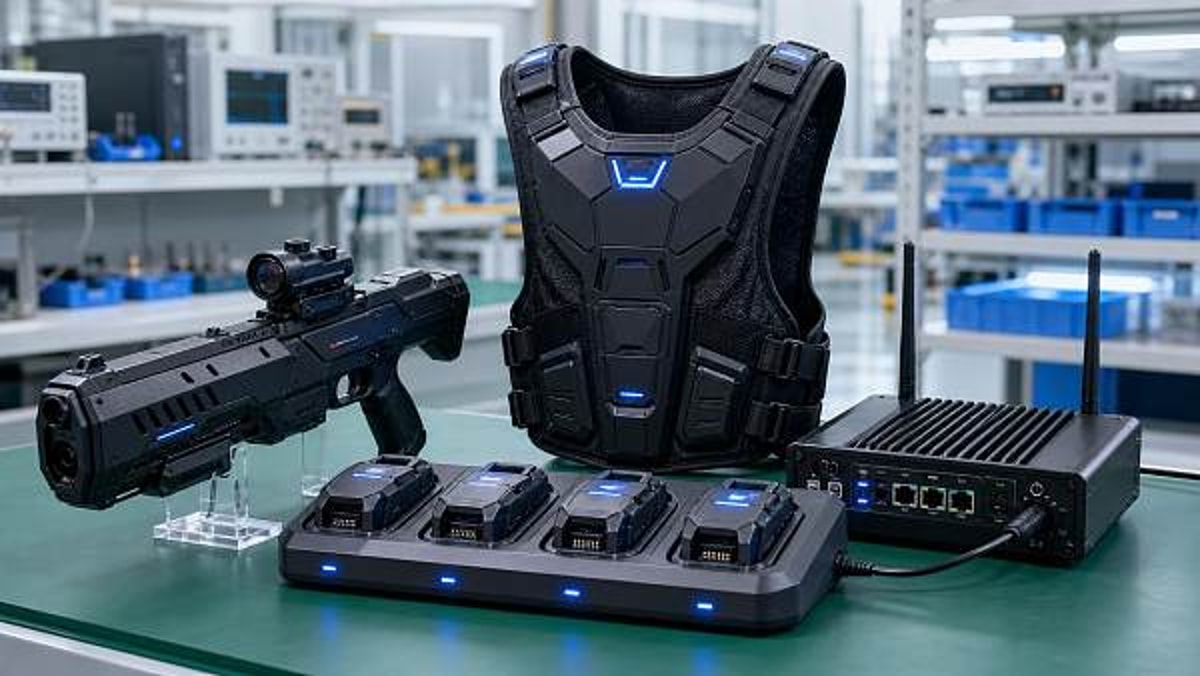
In commercial sourcing, the right question is not simply whether a supplier can manufacture taggers, vests, bases, and control software. The real question is whether the laser tag equipment OEM partner can align the product architecture with the intended business model, play intensity, user profile, maintenance capacity, and local compliance requirements. That is especially important for operators seeking durable assets, repeatable gameplay quality, and easy future upgrades.
For technical teams evaluating suppliers through a B2B sourcing lens, scenario-based confirmation helps separate standard OEM capability from true custom engineering capacity. It also reduces hidden costs related to returns, software instability, battery failure, signal interference, and replacement part delays.
Where laser tag equipment OEM is most commonly used
Before comparing factories, map the intended deployment environment. In practice, laser tag equipment OEM demand usually appears in several commercial scenarios, each with its own performance threshold and design logic.
Indoor family entertainment centers
These venues prioritize uptime, ease of operation, low maintenance complexity, and safe use across mixed age groups. Equipment must tolerate high daily turnover and repeated impacts while remaining lightweight and intuitive.
Theme parks and branded attractions
Here, immersion matters as much as game performance. Buyers often require housing customization, synchronized lighting, themed sound effects, and integration with attraction control systems. A laser tag equipment OEM supplier must therefore support both functional engineering and industrial design consistency.
Mobile event and rental operators
Portability, rapid setup, battery endurance, and transport durability become the top priorities. Equipment that performs well in a fixed arena may fail commercially if it is too fragile, too heavy, or too dependent on complex calibration.
Educational, corporate, and team-building programs
This scenario needs stable software, flexible scoring logic, and simplified administration rather than only high-action combat features. Safety settings, training modes, and game customization are often more important than aggressive aesthetics.
Outdoor leisure parks and hybrid venues
Outdoor conditions introduce a very different engineering challenge. IR sensitivity, sunlight resistance, enclosure sealing, wireless range, and battery temperature performance all need closer scrutiny. Not every laser tag equipment OEM vendor that succeeds indoors can support rugged outdoor deployment.
Scenario comparison: what technical evaluators should confirm first
The table below helps technical evaluators identify which confirmations should be prioritized in each business scenario before custom production begins.
Core confirmations before approving a laser tag equipment OEM supplier
1. Hardware architecture must match usage intensity
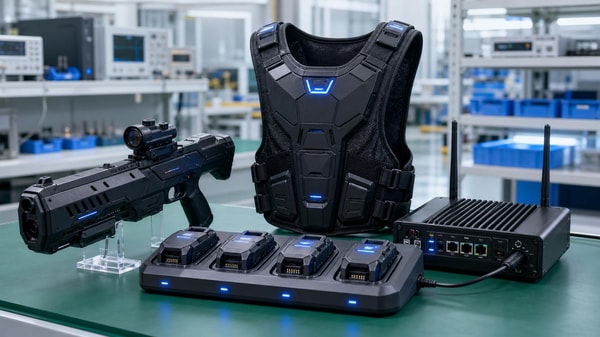
Ask whether the supplier is using consumer-grade boards adapted for entertainment use or purpose-built commercial hardware. For high-throughput venues, internal connector quality, shell material, trigger lifespan, lens protection, and battery locking structure are more important than appearance alone. A credible laser tag equipment OEM partner should provide BOM logic, not necessarily every confidential component brand, but at least the design rationale and expected service life of wear parts.
For rough-use scenarios, request evidence of impact testing, charging cycle validation, and replacement module design. If a factory cannot explain how field maintenance is handled, the risk is high even if prototypes look polished.
2. Software integration should be reviewed by actual operating scenario
Software requirements vary sharply by venue type. A small fixed arena may only need stable scorekeeping and player assignment. A branded attraction may need central dashboard integration, lighting control, membership linkage, or multilingual UI. Technical evaluators should confirm whether the laser tag equipment OEM vendor offers closed software, configurable software, or open integration options.
Important questions include firmware update method, rollback mechanism, server dependency, offline operation, data export format, and permission hierarchy. Custom production without software scope control often causes project delays later than hardware changes do.
3. RF and signal performance should be tested in realistic environments
Many sourcing failures happen because lab demonstrations do not reflect live venue conditions. Metal structures, reflective décor, network congestion, and outdoor sunlight can all affect performance. For a serious laser tag equipment OEM program, ask for test protocols that simulate your exact use case: indoor maze, open field, multi-floor layout, or temporary event setup.
Confirm operating range, packet loss handling, latency tolerance, interference resistance, and behavior when the network is partially interrupted. If the system depends on continuous stable communication, the supplier should clearly explain fail-safe logic and recovery behavior.
4. Compliance and safety must be location-specific
For global buyers, safety confirmation is not one generic checklist. Battery transport rules, CE or FCC requirements, RoHS compliance, charger certification, plastic flammability considerations, and child-use design details may all vary by market. In a laser tag equipment OEM project, compliance must be confirmed at the design stage, not only after samples are approved.
Technical evaluators should also review ergonomics. Weight balance, strap design, sensor exposure, edge treatment, and charging contact protection directly influence operational safety and product life in public venues.
5. Serviceability is a commercial requirement, not an afterthought
The best laser tag equipment OEM arrangement is one that remains maintainable after deployment. Ask how fast spare parts can be shipped, whether critical modules are standardized, whether diagnostics can be performed remotely, and whether local technicians can replace triggers, sensors, boards, or battery packs without factory return.
This matters even more for buyers operating across multiple sites. If every service issue requires custom troubleshooting through one engineer at the factory, scaling becomes risky.
How requirements change by buyer type
Not all technical evaluators work for the same organization structure. The decision criteria for a startup operator differ from those of a group procurement team or a design-led attraction developer.
Common misjudgments in custom production
One frequent mistake is treating cosmetic customization as proof of OEM strength. A supplier may be able to change shell color, logo, or LED effect, but that does not prove competency in software adaptation, RF redesign, or structural reliability. Another common error is approving samples without confirming production consistency. In a laser tag equipment OEM program, sample success and batch stability are not the same thing.
Buyers also underestimate charging infrastructure. In high-frequency venues, charging racks, dock connectors, heat management, and swap speed affect revenue almost as much as gameplay quality. Finally, many teams fail to define ownership of firmware revisions, bug fixes, and documentation updates. That creates confusion later when the system evolves or requires compliance revalidation.
Practical scenario-based checklist before moving to production
Before placing a tooling or pilot order, technical evaluators should confirm a short but rigorous list tied to their real deployment scenario.
- Define whether the equipment is for fixed indoor, portable, themed, educational, or outdoor use.
- Request reliability evidence for the most failure-prone modules in that scenario.
- Validate software functions using the exact operator workflow, not a generic demo mode.
- Confirm market-specific compliance, battery transport, and charger certification early.
- Check spare part strategy, diagnostic process, and version control for future batches.
- Run field tests in realistic venue conditions before finalizing the laser tag equipment OEM specification.
FAQ for technical evaluators reviewing laser tag equipment OEM options
How do I know if a supplier is truly OEM-capable?
Look beyond branding changes. A true laser tag equipment OEM supplier should discuss electronics architecture, firmware logic, tooling modifications, validation methods, and batch quality control with confidence and documentation.
Is outdoor use a minor variation of indoor equipment?
Usually no. Outdoor deployment often requires different sensor tuning, enclosure protection, signal strategy, and power management. It should be evaluated as a separate application scenario.
What is the most overlooked issue in custom laser tag production?
Long-term maintainability. Many buyers focus on prototype appearance and initial function but do not verify parts availability, software update responsibility, and repair workflow.
Final recommendation: match the OEM decision to the operating reality
A successful laser tag equipment OEM decision is always scenario-driven. The right supplier for a themed attraction may not be the right fit for a mobile rental fleet, and a factory strong in low-cost standard units may not support the documentation depth needed by institutional or multi-site buyers. Technical evaluators should therefore build the review process around real application conditions, expected throughput, integration needs, compliance targets, and maintenance capacity.
If your team is comparing vendors, start by defining the exact operating scenario and then ask each laser tag equipment OEM candidate to prove suitability against that use case. That approach produces clearer sourcing decisions, lower lifecycle risk, and stronger commercial performance after launch.
Search News
Hot Articles
Popular Tags
Need ExpertConsultation?
Connect with our specialized leisureengineering team for procurementstrategies.
Recommended News
 May 07, 2026EU Tightens Phthalates Testing for VR Sportswear, REACH Rescreening Hits Chinese ExportsEU tightens phthalates testing for VR sportswear—REACH rescreening impacts Chinese OEMs. Act now to avoid Q3 2026 export delays & penalties.● Theme Park Strategist
 May 07, 2026VR Simulator Rides: Why Repeat Visits Drop After the First MonthVR simulator rides often lose repeat traffic after launch. Discover the real causes behind the first-month drop and how buyers can choose higher-retention, revenue-ready attractions.● Theme Park Strategist
 May 07, 2026Arcade Game Machines Wholesale: Which Units Need Less Service?Arcade game machines wholesale guide: discover which units need less service, reduce downtime, cut maintenance costs, and choose reliable machines for better long-term ROI.● Theme Park Strategist
 May 07, 20269D VR Cinema Equipment That Looks Impressive but Ages Fast9D VR cinema equipment may wow at first, but some systems age fast. Discover how to avoid high maintenance, outdated features, and weak ROI before you buy.● Theme Park Strategist
 May 07, 2026Laser Tag Equipment OEM: What to Confirm Before Custom ProductionLaser tag equipment OEM buyers should confirm hardware durability, software integration, RF reliability, compliance, and service support before custom production. Read the key checks now.● Theme Park Strategist
 May 07, 2026Claw Crane Machines That Earn Well Often Share These TraitsClaw crane machines that earn well often share durable hardware, smart settings, strong visual appeal, and prize strategies that boost replay, traffic, and long-term revenue.● Theme Park Strategist
 May 07, 2026What Makes a Surf Simulator Machine Expensive to Maintain?Surf simulator machine maintenance costs come from pumps, water systems, wear parts, safety checks, and spare parts access. Learn how to compare suppliers and reduce long-term operating risk.● Theme Park Strategist
 May 07, 2026VR Simulator Rides: Why Repeat Visits Drop After the First MonthVR simulator rides often lose repeat traffic after launch. Discover the real causes behind the first-month drop and how buyers can choose higher-retention, revenue-ready attractions.● Theme Park Strategist
 May 07, 2026Arcade Game Machines Wholesale: Which Units Need Less Service?Arcade game machines wholesale guide: discover which units need less service, reduce downtime, cut maintenance costs, and choose reliable machines for better long-term ROI.● Theme Park Strategist
 May 07, 20269D VR Cinema Equipment That Looks Impressive but Ages Fast9D VR cinema equipment may wow at first, but some systems age fast. Discover how to avoid high maintenance, outdated features, and weak ROI before you buy.● Theme Park Strategist
 May 07, 2026Laser Tag Equipment OEM: What to Confirm Before Custom ProductionLaser tag equipment OEM buyers should confirm hardware durability, software integration, RF reliability, compliance, and service support before custom production. Read the key checks now.● Theme Park Strategist
 May 07, 2026Claw Crane Machines That Earn Well Often Share These TraitsClaw crane machines that earn well often share durable hardware, smart settings, strong visual appeal, and prize strategies that boost replay, traffic, and long-term revenue.● Theme Park Strategist
 May 07, 2026What Makes a Surf Simulator Machine Expensive to Maintain?Surf simulator machine maintenance costs come from pumps, water systems, wear parts, safety checks, and spare parts access. Learn how to compare suppliers and reduce long-term operating risk.● Theme Park Strategist
 May 06, 2026EU Proposes Stricter Phthalate Testing for VR Haptic SuitsEU proposes stricter phthalate testing for VR haptic suits—DEHP, BBP, DBP, DIBP limits now target smart athletic apparel. Act now to avoid EU shipment delays & rejections.● Theme Park Strategist
 May 05, 2026EU Tightens REACH Rules for Sportswear Colorfastness & PhthalatesEU tightens REACH rules for sportswear: stricter phthalates limits (0.01%) & mandatory colorfastness testing — critical for VR haptic suits, smart athletic apparel & esports wear exporters.● Theme Park Strategist
 May 04, 2026Tianma Sports’ 0.42‰ Complaint Rate Sets New B2B Quality BenchmarkTianma Sports’ 0.42‰ complaint rate redefines B2B quality in sportswear—backed by pre-shipment risk control, QR traceability & 3-tier QC. See why global buyers are benchmarking against it.● Theme Park Strategist
 May 03, 2026NBA VR Viewing Pods Face NTSC Compatibility Demand in Latin AmericaNBA VR viewing pods face urgent NTSC compatibility demands in Latin America—learn how manufacturers, certifiers, and channel partners can respond fast.● Theme Park Strategist
 May 03, 2026Guangdong Super League VR Booth Drives SEA InquiriesGuangdong Super League VR booth sparks 17 SEA distributor inquiries—focus on Tagalog/Vietnamese UI, offline stability & PSE/PSB certification readiness.● Theme Park Strategist
 May 02, 2026Langlangshan VR Attractions Seek PEGI 12+ Certification After Annecy NominationLanglangshan VR Attractions seek PEGI 12+ certification after Annecy nomination—key for EU theme parks, VR hardware vendors & IP licensors targeting compliant immersive experiences.● Theme Park Strategist
 May 02, 2026Wu Yize’s World Snooker Championship Run Boosts VR Viewing Pod DemandVR viewing pod demand surges 210% amid Wu Yize’s World Snooker Championship semi-final run — key for hotels, bars & esports venues seeking certified immersive solutions.● Theme Park Strategist
 May 01, 2026Langlangshan VR Rides Gain IP Licensing Momentum After Annecy InclusionLanglangshan VR Rides: IP licensing surges after Annecy 2026 selection—unlock co-dev opportunities for VR arcade & motion-based systems in SEA/LATAM.● Theme Park Strategist
 May 01, 2026Volvo China Open Boosts Golf Simulator Exports to Middle EastVolvo China Open drives Middle East demand for certified golf simulators — USGA/EGF-compliant, Arabic UI, and rapid-delivery indoor simulation systems now in high inquiry.● Theme Park Strategist
 May 01, 2026Wu Yize vs. Selby Sparks VR Viewing Booth Export SurgeWu Yize vs. Selby Sparks VR Viewing Booth Export Surge: CE/UKCA-compliant VR cabins see 210% export inquiry surge amid snooker-driven global demand.● Theme Park Strategist
 Apr 30, 2026VR Sports Viewing Capsules Face New EU Latency Rules Post-PSG–Bayern MatchVR Sports Viewing Capsules face new EU latency rules after PSG–Bayern’s record 12-goal match — discover how ≤80ms RED compliance impacts exporters, OEMs & AI-driven live sports tech.● Theme Park Strategist