A common problem in hotel projects is that procurement is treated as a late-stage buying task instead of an operational control process. Teams focus on comparing unit prices for furniture, kitchen equipment, linens, lighting, tableware, or guest room systems, then run into delays, compliance gaps, inconsistent quality, and supplier disputes once orders are already moving.
That is why understanding the real scope of global hospitality procurement matters. It covers supplier screening, specification alignment, compliance checks, logistics planning, installation coordination, documentation control, and long-term supply continuity across different regions. If you are responsible for sourcing decisions, the question is not only what to buy, but how to buy in a way that lowers risk before problems become expensive.
Why the scope of global hospitality procurement is often misunderstood
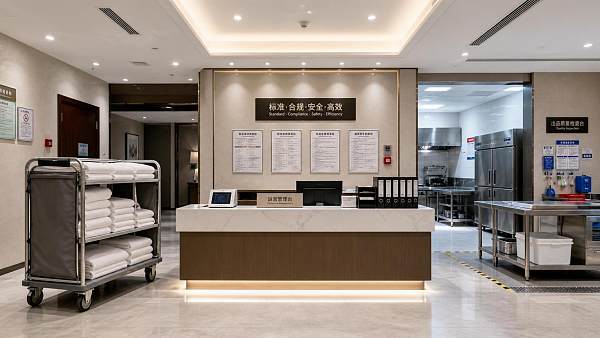
Many buyers first encounter trouble when a project seems straightforward on paper. A hotel needs guest room casegoods, bathroom fittings, bedding, buffet equipment, housekeeping carts, restaurant seating, and back-of-house supplies. On a spreadsheet, these look like separate purchase categories with separate suppliers. In practice, they are connected by design intent, operating standards, shipping schedules, site readiness, and local import requirements.
The misunderstanding usually starts with one assumption: procurement equals purchasing. In hospitality, that assumption is too narrow. Procurement includes the full chain of decision-making that turns a specification into a usable, compliant, and deliverable product. Once the order crosses borders, the margin for error gets smaller. A mismatch in finish, voltage, material standard, packaging method, or lead time can affect opening schedules and create avoidable replacement costs.
This is especially relevant in global hospitality procurement because the buyer is often coordinating multiple stakeholders at once: owners, operators, designers, project managers, quantity surveyors, and local contractors. Each group may define value differently. The operator may care about durability and replenishment. The designer may care about finish consistency. The finance team may care about landed cost. If procurement is not structured to balance those priorities early, risk spreads across the project.
What global hospitality procurement actually covers
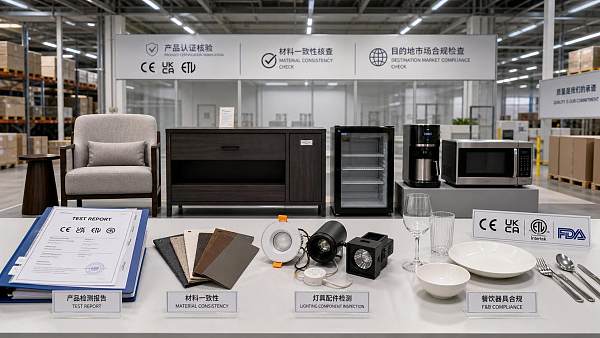
At a practical level, global hospitality procurement covers far more than ordering hotel supplies. It usually includes category planning, supplier identification, quotation management, technical review, sample validation, factory capability checks, quality assurance arrangements, shipping coordination, customs documentation support, delivery tracking, and after-sales issue handling.
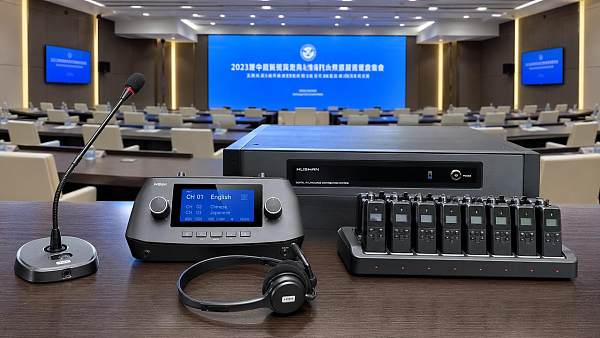
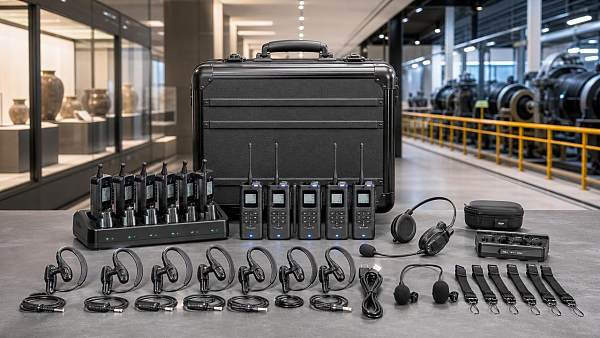
For hospitality projects, the scope often extends across FF&E, OS&E, and selected MEP-related or operational support items depending on how the project is organized. That means procurement may touch everything from lobby furniture and banquet tables to kitchen smallwares, guest amenities, in-room appliances, uniforms, and service equipment. Some items are design-led and low-volume. Others are repetitive operational purchases where replenishment matters more than initial appearance.earance.
Global sourcing also adds another layer: supplier market intelligence. A buyer may need to understand which regions are stronger for custom millwork, which manufacturers have export experience for fire-rated or hospitality-grade products, and which suppliers can maintain specification discipline across repeated orders. That research step is part of procurement, not a separate exercise.
For teams that need broader sourcing visibility, an industry platform such as Global Commercial Trade can be useful as a research input rather than a substitute for due diligence. A curated sourcing hub can help buyers compare manufacturing categories, understand supplier positioning, and narrow the field before entering formal qualification. The key is to treat any platform as an information source inside your process, not as proof that a supplier is automatically suitable.
Where sourcing risk usually starts
Most sourcing risk does not begin with a dramatic failure. It starts with small shortcuts that seem harmless when the schedule is tight. One common example is approving quotations before specifications are fully frozen. Another is sending inconsistent documents to different suppliers and assuming the quotes are still comparable. A third is relying on photos and brochures where a sample review or technical clarification is needed.
There are also structural reasons risk shows up in global hospitality procurement:
- Suppliers may be strong in manufacturing but weak in export documentation.
- Factories may accept custom requests without clearly confirming tolerances, materials, or testing expectations.
- Buyers may compare ex-works pricing from one source against delivered pricing from another without realizing it.
- Project teams may not distinguish between prototype approval, production approval, and shipment approval.
- Replacement and spare-part planning may be ignored because the focus stays on the opening date.
None of these issues are rare. They are common enough that experienced procurement teams build controls around them. The lesson is simple: risk reduction is less about reacting well and more about setting gates before commitment.
How to assess supplier risk before you issue a purchase order
If you are trying to reduce sourcing risk, the most useful shift is to evaluate suppliers on suitability, not only price. A low quotation can still become a high-cost purchase if the supplier misses documentation, cannot repeat finish quality, or fails to package goods correctly for long-distance transport.
A practical pre-order review usually includes five checks.
- Capability fit: Confirm the supplier has actual experience with the type of hospitality product you need. Custom joinery, seating, bedding, buffet equipment, and decorative lighting all require different manufacturing controls.
- Specification clarity: Make sure drawings, material descriptions, dimensions, finish references, electrical requirements, and packaging expectations are all aligned. If details are vague, the risk sits with the buyer even when the supplier seems cooperative.
- Compliance readiness: Check what documents, declarations, labels, or product-specific standards are required for your destination market. The important point is not to assume every export-capable factory is ready for every country or project type.
- Production discipline: Ask how samples, pre-production approvals, quality checks, and change requests are handled. A supplier with a clear approval workflow is usually easier to manage than one that negotiates every detail informally.
- Commercial reliability: Review payment terms, lead-time assumptions, warranty handling, spare-part support, and escalation contacts. These details become important when something goes wrong, not when everything goes smoothly.
Buyers often skip one of these checks because the supplier appears responsive. Responsiveness is useful, but it is not the same as operational reliability. In hospitality, consistency matters more than a strong first impression.
A practical process to reduce sourcing risk in global hospitality procurement
When teams want a more controlled approach, it helps to use a process that follows the way hospitality projects actually move. The goal is not to create more paperwork. The goal is to make sure every decision has a verification point before it affects cost, time, or guest-facing quality.
- Start with a category map. Break purchases into groups such as custom FF&E, standard OS&E, operational consumables, and technical items. Each group carries different risk. Custom and visible items need tighter approval. Repeat operational items need better replenishment planning.lanning.
- Create one controlled specification set. Use a master document pack so all suppliers quote from the same information. If there are revisions, issue them clearly. This avoids false price comparisons and later claims that assumptions were different.
- Shortlist suppliers through evidence, not claims. Review product range, export familiarity, production communication, sample responsiveness, and documentation quality. This is where market intelligence sources can help you identify candidates, but qualification still needs direct verification.
- Request samples or mock-up confirmation where risk is visible. For finish-sensitive or guest-facing items, sample approval matters. Photos alone are rarely enough when texture, color tone, stitching, hardware quality, or build detail affects the final impression.
- Align commercial terms with project reality. Confirm incoterms, production milestones, inspection timing, packaging standards, and liability for damage or shortages. If terms are vague, disputes become harder to resolve.
- Use staged quality control. For higher-risk categories, do not wait until goods arrive on site to discover issues. Build in pre-production checks, in-process reviews where appropriate, and final inspection before shipment.
- Plan logistics as part of procurement, not after procurement. Large, fragile, or mixed-category shipments need packaging coordination, labeling consistency, loading logic, and delivery sequence planning. Hospitality openings often fail at this handoff point.
- Document every approved change. Design adjustments, quantity shifts, substitute materials, and revised lead times should be recorded formally. Informal approvals are one of the fastest ways to lose commercial control.
This process is not complicated, but it does require discipline. Most procurement delays come from unclear ownership between specification, approval, and shipment readiness. Once those boundaries are defined, risk usually becomes easier to manage.
Common mistakes buyers make when comparing suppliers
One of the most expensive mistakes is comparing quotations that are not actually comparable. This happens when one supplier includes tooling, export packaging, testing support, or spare units while another does not. On paper, the second offer looks cheaper. In execution, it may create more variation orders and more operational friction.
Another mistake is overvaluing flexibility in the early conversation. A supplier that says yes to every custom request may still lack the engineering, sourcing control, or production planning to deliver consistent output. In hospitality projects, a measured and specific reply is often more trustworthy than a quick promise.
Buyers also run into trouble when they mix strategic and transactional categories in the same decision model. A standard back-of-house item can often be bought with heavier price pressure. A custom headboard system for multiple room types should not be awarded on the same basis. The cost of rework, mismatch, or replacement is different.
Finally, many teams do not evaluate continuity. Opening-day procurement gets most of the attention, but hotels continue to buy after launch. If the original supplier cannot support reorders, parts, or finish matching later, the initial savings may not hold up over time.
How to build a lower-risk supplier shortlist
If you are working from a large pool of potential vendors, a shortlist should narrow choices using operating criteria, not just reputation or search visibility. A useful shortlist for global hospitality procurement usually answers these questions:
- Does the supplier understand hospitality use conditions, not just residential or generic commercial use?
- Can they work accurately from specification packs, finish schedules, and approval matrices?
- Do they communicate clearly about limits, substitutions, and production assumptions?
- Can they support packaging, shipping, and documentation for the destination market?
- Will they still be workable when there is a punch-list issue, shortage claim, or repeat order request?
This is where structured research becomes valuable. Buyers often need a way to scan categories, compare sourcing regions, and identify manufacturers that fit hospitality-grade requirements without starting every search from zero. A specialized B2B information source can save time at the front end, provided the shortlist is still tested through samples, specifications, and commercial review.
Common Questions
Is global hospitality procurement only relevant for large hotel chains?
No. The process matters for independent hotels, serviced apartments, resorts, and mixed-use projects as well. The scale changes, but the same risks around specifications, supplier reliability, and logistics still apply.
What is the first thing to check when a quote looks unusually competitive?
Check scope consistency. Confirm whether the quote includes the same materials, finishes, packaging, accessories, documentation, lead time assumptions, and delivery terms as the other offers. Price differences often come from missing scope rather than real efficiency.
How many suppliers should be on a shortlist?
There is no fixed number, but the shortlist should be small enough to compare properly and broad enough to avoid dependence on one option. The important point is not quantity. It is whether each shortlisted supplier has passed a meaningful suitability review.
Do I always need samples before ordering?
Not for every item. For standard low-risk categories, samples may not be necessary. For custom, finish-sensitive, guest-facing, or high-value items, sample approval is usually one of the simplest ways to prevent later disputes.
Can a sourcing platform replace supplier due diligence?
No. A sourcing platform can support research, market scanning, and early comparison, but qualification still depends on your own review of specifications, production fit, documentation readiness, and commercial terms.
Conclusion
Global hospitality procurement covers the entire path from identifying the right supplier to getting the right product delivered in the right condition, with the right documentation, at the right point in the project. When buyers reduce that job to simple price shopping, risk usually appears later in the form of delays, inconsistencies, and avoidable replacement cost.
A better approach is to treat procurement as a control system: define scope clearly, compare suppliers on operational fit, verify quality before shipment, and plan logistics as part of the sourcing decision. For teams managing multiple categories or markets, reliable sector intelligence can help narrow options early, but the strongest results still come from disciplined qualification and clear internal approval steps.