How to Evaluate Commercial Product Compliance for Hospitality Procurement
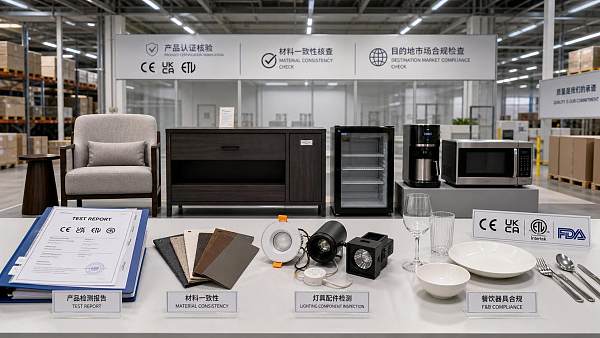
Evaluating commercial product compliance in hospitality procurement is one of those tasks that looks administrative on paper but directly affects guest safety, project timelines, and long-term operating cost. A product can be visually correct, competitively priced, and available on time, yet still create serious problems if it cannot pass fire safety, electrical, food-contact, chemical, or destination-market requirements. For procurement teams, the challenge is not simply collecting certificates. It is understanding whether the documentation matches the exact product configuration, the intended use, and the country where the item will be installed or operated.
That distinction matters more in hospitality than in many other sectors. Hotels, resorts, restaurants, and catering operations buy across a wide range of categories: furniture, textiles, lighting, small appliances, kitchen equipment, utensils, storage systems, cleaning tools, and specialty operational supplies. Each category can trigger different compliance checks. A supplier may be fully legitimate and still provide a product that is unsuitable for a specific project because the testing scope is too narrow, the certification belongs to an older version, or the approval applies only to a different market.
What compliance really means in hospitality sourcing
In procurement practice, compliance is not a single certificate. It is the alignment of product design, materials, test results, labeling, and supply documentation with the regulatory and contractual requirements of the buyer. For hospitality procurement, that usually includes safety performance, material restrictions, durability expectations, and market-specific approval rules.
A hotel chair, for example, may need different proof depending on where it will be used. Indoor lounge seating, banquet seating, and guestroom furniture can each be governed by different fire resistance or flammability expectations. The same logic applies to catering equipment: a hot cabinet, blender, commercial oven, or food-contact accessory can trigger different electrical, hygiene, and material-compliance checks. The product category matters, but so does the use case.
This is why many procurement teams get into trouble when they ask only, “Do you have the certificate?” A better question is: “Does this certificate cover this exact product, material composition, and destination market?”
The compliance areas buyers should verify early
For hospitality procurement, the most common risk areas tend to cluster around a few practical checks.
Safety and performance standards are the first layer. Depending on the product, this may involve fire performance, electrical safety, structural stability, load-bearing capacity, or hygiene-related requirements. Products used in guest-facing spaces should be tested for the conditions they will actually face, not only for generic laboratory settings.
Material and chemical restrictions are often underestimated. Upholstery, coatings, adhesives, plastics, textiles, and food-contact components may need verification for restricted substances, odor control, stain resistance, or food-safety compatibility. A product can look premium while still failing a buyer’s internal material standard or an importing country’s regulatory limit.
Labeling and traceability are equally important. The product should be traceable to a production batch, model number, or documented specification. If labeling is inconsistent across sample, quotation, and shipment, procurement teams should treat that as a warning sign. It often indicates weak process control, especially in outsourced or multi-factory supply chains.
Country-specific approvals can be a hidden cost driver. A product approved in one market may require additional testing or administrative steps elsewhere. Buyers sourcing internationally need to confirm whether a certificate is globally recognized, regionally accepted, or only valid for a limited destination. Relying on a supplier’s verbal assurance here can delay customs clearance or installation.
How to judge whether a supplier’s documents are credible
In commercial product compliance hospitality sourcing, the quality of the documentation often matters as much as the document itself. Procurement teams should not stop at receiving a PDF file with a logo and test number. The practical check is whether the evidence is internally consistent and independently verifiable.
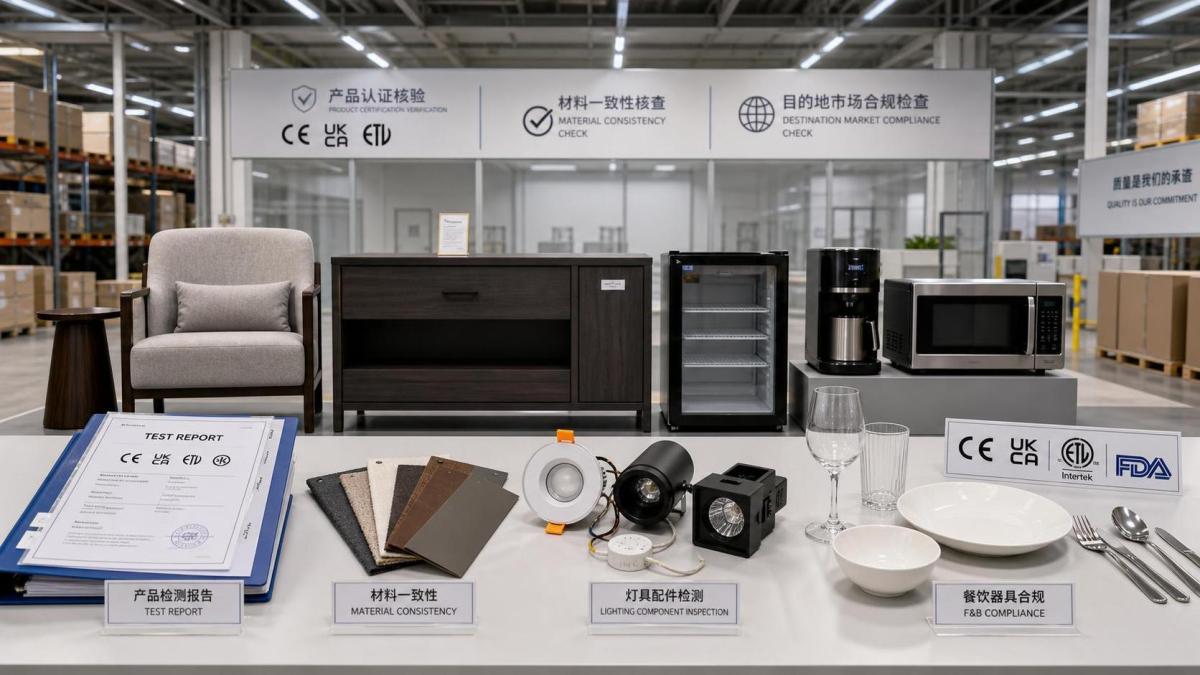
Start by matching the product name, model, material specification, and photo on the certificate or test report with the actual item being quoted. If the report is for a family of products, confirm that the exact SKU is included. If the report is for a sample, ask whether the production version changed afterward. Small changes in foam, coating, wiring, or dimensions can invalidate the relevance of the original test.
Then review who issued the document. A report from an accredited and recognized laboratory carries more weight than a generic internal statement. That does not mean every purchase requires the same level of third-party testing, but the higher the risk category, the less value there is in self-declared compliance alone. Procurement teams should also check issue dates, scope of testing, and whether the standard cited is still current.
One common mistake is treating expired or partial documentation as acceptable because the supplier has “used it before.” That may work until a project audit, insurance review, guest incident, or customs inspection forces a stricter review. In hospitality, the cost of discovering a compliance gap after deployment is far higher than the cost of checking it before purchase.
Where procurement teams should be extra cautious
Certain hospitality products create more compliance risk than others because they are exposed to heat, electricity, heavy traffic, or food contact. These categories deserve tighter review.
Lighting and electrical items should be checked for electrical safety, plug compatibility, voltage suitability, and installation requirements. A visually attractive fixture can become a project delay if it is not suitable for the destination electrical environment.
Furniture and upholstered products need close attention to material consistency, fire-related requirements, and durability claims. For hotel projects, the issue is not only guest safety but also lifecycle cost. A cheaper chair that degrades quickly or fails a site inspection may end up costing more than a compliant, longer-lasting alternative.
Kitchen and catering equipment should be reviewed for hygiene, food-contact safety, energy performance where applicable, and serviceability. Buyers should also consider whether local technicians can support maintenance, because compliance is not only about initial approval. Equipment that cannot be repaired locally often creates indirect operational loss.
Cleaning and operational supplies are sometimes overlooked because they seem low value. Yet chemicals, dispensers, disposable items, and storage tools can create serious issues if they are not suitable for the materials, surfaces, or hygiene procedures used by the property. In a hospitality environment, small product mistakes can scale quickly across multiple rooms or outlets.
How to compare compliant products on cost, not just price
For procurement teams, the lowest quoted price is rarely the lowest real cost. Compliance affects total cost through testing fees, rework, customs delays, replacement cycles, and supplier management overhead. A product that appears cheaper upfront may require more internal follow-up or carry a higher failure risk during rollout.
A useful way to compare options is to ask what the compliance burden shifts onto the buyer. If the supplier provides complete, current, destination-specific documentation, the buyer saves time and reduces project risk. If the supplier only offers partial evidence, the buyer may need to spend more on third-party review, additional sampling, and repeated clarification. That hidden effort is part of the real cost.
This is also where supplier reliability becomes part of compliance evaluation. A supplier who can support one successful sample shipment is not necessarily a dependable long-term source for multi-property hospitality programs. Buyers should assess whether the supplier can maintain material consistency, keep test records updated, and communicate changes before shipment. In large hotel rollouts, those capabilities are often more valuable than small unit-price differences.
Questions that help buyers avoid weak compliance claims
Procurement teams usually get better answers when they ask operational questions instead of generic certification requests. Useful questions include: Which exact standard was tested? Which model, material, or configuration does the report cover? Has the product changed since testing? Which market is the certificate valid for? Can the supplier provide traceability documents from the factory or authorized distributor? Is there a current declaration of conformity or equivalent statement where relevant?
If a supplier cannot answer these questions clearly, that does not automatically mean the product is non-compliant. But it does suggest that the compliance process may not be mature enough for a hospitality project where downtime, rework, and reputation loss are expensive.
Buyers should also avoid assuming that a well-known brand name guarantees compliance in every market. Even reputable suppliers may have different product versions for different regions, or they may source certain components from multiple plants. Compliance has to be checked at the SKU and project level, not just at the brand level.
A practical procurement approach for hospitality projects
The most effective review process is usually simple and disciplined. Define the destination market, the installation environment, and the product’s actual function before requesting quotes. Ask suppliers for the exact documentation set tied to the offered specification, not a general brochure. Compare the document scope with the project requirement, and flag any mismatch before sample approval or purchase order release.
For higher-risk categories, add a verification step through an internal quality team, consultant, or third-party specialist. That extra review is often far cheaper than dealing with non-conforming goods after shipping. It also helps procurement teams build a supplier database that distinguishes truly reliable vendors from those who only look compliant at the quotation stage.
Over time, the strongest procurement programs do not just collect certificates. They build a repeatable compliance standard for each product category and region. That makes sourcing faster, reduces negotiation friction, and improves consistency across properties. In hospitality, where brand experience depends on the reliability of hundreds of small product decisions, that discipline is a competitive advantage.
Search News
Hot Articles
- Outdoor RidesHow to Select Leisure Park Equipment for Safe, High-Throughput Visitor AreasOct 03, 2026
- Fashion & Gem JewelryDiamond Tester Wholesale: How to Vet Accuracy, Calibration, and MOQ Before OrderingOct 02, 2026
- Hotel Room AmenitiesHow Hotels Can Choose Amenity Bottles That Balance Brand Image and Refill CostsOct 01, 2026
Popular Tags
Need ExpertConsultation?
Connect with our specialized leisureengineering team for procurementstrategies.
Recommended News
 Aug 19, 2026How to Choose Commercial Carpet Tiles for Hospitality Projects by Traffic and Maintenance NeedsCommercial carpet tiles hospitality buyers trust should match traffic, maintenance, and lifecycle cost. Learn how to specify durable, guest-ready flooring with confidence.● Hospitality Sourcing Dir
 Aug 15, 2026How to Evaluate Commercial Product Compliance for Hospitality Procurementcommercial product compliance hospitality guide to evaluating supplier documents, reducing risk, and choosing compliant products that protect guest safety and project timelines.● Hospitality Sourcing Dir
 Aug 10, 2026What Does Global Hospitality Procurement Cover and How to Reduce Sourcing Risk?Global hospitality procurement covers supplier screening, compliance, quality control, and logistics. Learn practical ways to reduce sourcing risk, avoid delays, and protect hotel project outcomes.● Hospitality Sourcing Dir
 Aug 07, 2026Hotel Operations Standards Explained: Key SOPs, Audits, and Compliance BasicsHotel operations standards explained clearly: learn the key SOPs, audit methods, and compliance basics that help hotels reduce risk, improve consistency, and strengthen guest experience.● Hospitality Sourcing Dir
 Jul 13, 2026Hotel Operations Metrics That Matter: Occupancy, ADR, RevPAR, and Labor CostHotel operations metrics explained: learn how occupancy, ADR, RevPAR, and labor cost shape revenue, staffing efficiency, and smarter hotel performance decisions.● Hospitality Sourcing Dir
 Jun 27, 2026Hotel Operations Management Basics: Key Departments, KPIs, and Daily WorkflowsHotel operations management made simple: explore key hotel departments, essential KPIs, and daily workflows that improve guest satisfaction, efficiency, and profitability.● Hospitality Sourcing Dir
 Jun 24, 2026Commercial Hospitality Procurement: What to Source First for Hotel OpeningsCommercial hospitality procurement starts with the right categories. Learn what hotels should source first to protect timelines, compliance, and opening readiness.● Hospitality Sourcing Dir
 Jun 05, 2026Safari Tents Wholesale: How to Compare Frame Materials, Sizes, and MOQSafari tents wholesale guide: compare frame materials, tent sizes, and MOQ to reduce sourcing risk, control costs, and choose a scalable supplier for profitable hospitality projects.● Hospitality Sourcing Dir
 May 18, 2026How to judge simultaneous interpretation equipment qualitySimultaneous interpretation equipment quality affects clarity, stability, and event success. Learn the key checklist, testing points, and sourcing tips to choose with confidence.● Hospitality Sourcing Dir
 May 18, 2026What to check before choosing tour guide systems wholesaleTour guide systems wholesale: learn what to check before buying, from audio stability and certifications to battery life, customization, and supplier support.● Hospitality Sourcing Dir
 May 13, 2026China's MCT Launches 'Travel Services' Overseas Compliance GuideChina's MCT Travel Services Compliance Guide: Essential for sports tourism, study-abroad & customized tour operators expanding to EU/US markets under GDPR, CCPA & CSDDD.● Hospitality Sourcing Dir
 May 09, 2026Inflatable clear bubble tents and the privacy trade-offInflatable clear bubble tents offer immersive appeal, but is the privacy trade-off worth it? Explore scenario-based insights for resorts, events, dining, and public spaces.● Hospitality Sourcing Dir
 May 09, 2026Camping glamping tents: what guests notice before anything elseCamping glamping tents guests love start with first impressions—space, privacy, materials, light, and comfort. Discover what buyers should prioritize to boost appeal and bookings.● Hospitality Sourcing Dir
 May 09, 2026Safari tents wholesale and the weatherproofing details that matterSafari tents wholesale buyers now prioritize weatherproofing. Learn which waterproof, windproof, ventilation, and corrosion details reduce risk, protect uptime, and improve long-term value.● Hospitality Sourcing Dir
 May 09, 2026Geodesic dome tents: are they practical for year-round stays?Geodesic dome tents can work for year-round stays—but only with the right insulation, ventilation, and structural planning. Discover what makes them practical, comfortable, and cost-effective.● Hospitality Sourcing Dir
 May 09, 2026Inflatable paddle boards commercial buyers often overlook thisInflatable paddle boards commercial buyers often miss the factors that drive long-term value—durability, safety, compliance, and supplier consistency. Learn what to check before you buy.● Hospitality Sourcing Dir
 May 09, 2026Why ski resort equipment budgets often miss hidden costsSki resort equipment budgets often miss freight, installation, compliance, and service costs. Learn the hidden drivers behind overruns and budget smarter for stronger ROI.● Hospitality Sourcing Dir
 May 09, 2026Artificial snow mats vs real snow for beginner ski zonesArtificial snow mats vs real snow: discover which option gives beginner ski zones safer training, longer seasons, lower operating risk, and stronger commercial value.● Hospitality Sourcing Dir
 Apr 25, 2026Discover the Best of the Silk Road: Top Xi'an Hot Tourism Routes for 2026● Hospitality Sourcing Dir
 Apr 22, 2026Peak of China: The Ultimate 7-Day Central Plains Heritage Odyssey 2026Plan a 7-day Henan heritage tour in 2026 with Luoyang, Shaolin Temple and Kaifeng highlights, plus visa-free transit and rail tips.● Hospitality Sourcing Dir