Safari Tents Wholesale: How to Compare Frame Materials, Sizes, and MOQ
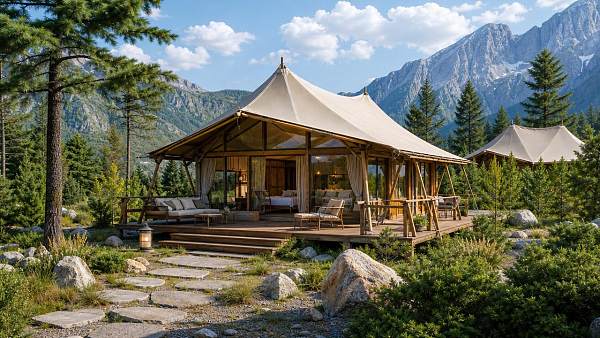
Choosing the right safari tents wholesale partner goes beyond price alone. Procurement teams must compare frame materials, tent sizes, and MOQ requirements to balance durability, project scope, and budget control. This guide helps buyers evaluate key specifications, reduce sourcing risks, and identify suppliers that can support reliable, scalable, and commercially viable safari tent projects.
For resort developers, glamping operators, leisure park buyers, and hospitality sourcing teams, safari tent procurement often sits at the intersection of design, engineering, logistics, and guest experience. A tent that looks attractive on paper may still create long-term issues if the frame corrodes in coastal climates, the size does not match the site plan, or the supplier’s MOQ locks up working capital.
In safari tents wholesale sourcing, the best decision usually comes from comparing 4 core factors together: structural material, usable footprint, minimum order quantity, and production capability. Buyers who review these variables early can shorten approval cycles, avoid specification mismatches, and negotiate from a more informed position.
Why Frame Material Is the First Procurement Filter
In most safari tents wholesale projects, frame material affects more than strength. It influences shipping weight, corrosion resistance, maintenance frequency, installation labor, and service life. For commercial use, buyers should evaluate expected operating years, climate exposure, and local safety requirements before discussing decorative finishes.
As a practical benchmark, procurement teams often compare structures across a 3-year, 5-year, or 10-year ownership horizon. A lower upfront frame cost may become less competitive if repainting, replacement parts, or structural reinforcement are required every 12 to 24 months in harsh environments.
Common frame options in safari tents wholesale
The market generally centers on galvanized steel, powder-coated steel, and aluminum alloy. Some suppliers also offer solid wood or hybrid wood-steel structures for premium hospitality settings, but these usually require tighter control of moisture, pests, and maintenance scheduling.
The table below highlights the procurement implications of the most common frame materials used in safari tents wholesale projects.
For most buyers, galvanized or powder-coated steel remains the mainstream choice because it balances cost and structural reliability. Aluminum becomes more attractive when freight efficiency, corrosion resistance, or repeat relocation matters. Wood-based systems serve a narrower but higher-value segment where guest perception justifies additional upkeep.
What procurement teams should verify with suppliers
- Metal thickness range, such as 1.5 mm to 3.0 mm for key structural parts
- Surface treatment method and expected anti-rust performance period
- Wind load and snow load design assumptions for the target market
- Replacement part availability within 7 to 30 days
- Packaging protection for sea freight and inland transport
These checkpoints help convert general quotations into comparable sourcing data. In safari tents wholesale buying, unclear frame specifications are one of the fastest ways to create disputes after delivery, especially when multiple suppliers use similar visual designs but very different structural standards.
How to Compare Tent Sizes for Commercial Use
Size comparison should start with business use, not catalog images. A 25 square meter unit may work for basic guest accommodation, while a 40 to 60 square meter layout may be necessary for premium resort suites, family occupancy, or mixed-use hospitality programs that include sleeping, lounge, and bathroom zones.
In safari tents wholesale projects, size also drives 5 major cost variables: frame material volume, fabric consumption, flooring area, container loading efficiency, and installation time. Even a 10 square meter increase can change both the landed cost and the site utility plan.
Typical size categories and buyer priorities
Commercial buyers usually evaluate size by occupancy target, guest positioning, and land yield. The table below can be used as a practical starting point during safari tents wholesale discussions with manufacturers.
For procurement teams managing multiple locations, the 26 to 40 m² category often offers the best balance between occupancy comfort and rollout efficiency. Larger models can improve room rate positioning, but they increase structural loads, utility routing complexity, and lead time for custom details such as bathrooms, decks, or glass doors.
Three size mistakes that raise project costs
- Selecting by exterior footprint only and ignoring usable interior height
- Ordering identical sizes for all plots when terrain and access vary by zone
- Skipping furniture layout checks before approving production drawings
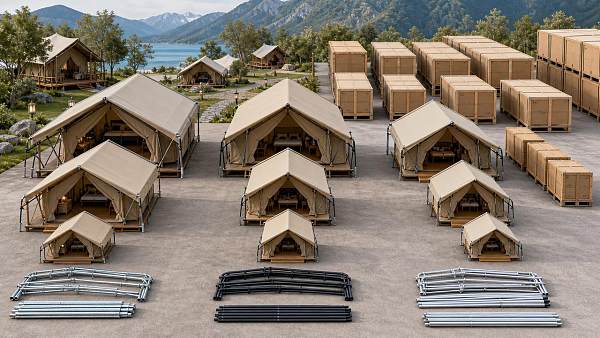
A reliable safari tents wholesale supplier should provide layout drawings, anchor point guidance, and packing dimensions before deposit. Buyers should also ask how many units fit into a 20-foot or 40-foot container, because transport efficiency can materially change the total project budget.
MOQ, Lead Time, and Production Flexibility
MOQ is not just a purchasing threshold. In safari tents wholesale, it signals how a supplier organizes raw materials, labor scheduling, color customization, and shipping batches. A low MOQ may help test a market, but it can limit customization options or increase the cost per unit.
Typical MOQ structures range from 1 to 5 units for standard designs and 10 to 30 units for customized frame colors, private labeling, or non-standard interiors. Buyers should separate sample MOQ, trial order MOQ, and mass production MOQ during negotiation, because these are often quoted differently.
How MOQ affects commercial procurement
A supplier with a flexible MOQ can support phased development. This matters for resort groups, park operators, and destination investors that want to launch 6 units first, validate occupancy performance over one season, and then expand to 20 or 50 units after market testing.
However, buyers should not assume that lower MOQ always means lower risk. Very small orders may receive less favorable production scheduling, weaker packaging attention, or longer lead times of 30 to 45 days compared with 20 to 30 days for repeat standard batches.
Questions to ask before accepting MOQ terms
- Does MOQ change if fabric color, door style, or platform fittings are modified?
- Can one container mix 2 or 3 tent sizes under a combined order?
- Is there a price break at 10, 20, or 50 units?
- What is the standard lead time for repeat orders during peak season?
- Are spare parts bundled at a fixed ratio, such as 2% to 5% of hardware quantity?
These details are especially important for procurement departments that need predictable rollout schedules. In safari tents wholesale, an attractive unit price can lose value quickly if MOQ, accessories, and production windows are not aligned with the actual launch calendar.
A Practical Supplier Comparison Framework
Once frame material, size, and MOQ are defined, buyers need a shortlisting method that moves beyond brochure claims. A practical approach is to compare suppliers across 5 dimensions: engineering clarity, customization control, production capacity, logistics readiness, and after-sales responsiveness.
The matrix below helps procurement teams turn safari tents wholesale quotations into a decision tool that can be reviewed internally by operations, finance, and project management teams.
A strong safari tents wholesale supplier does not need to be the cheapest on every line item. More often, the better partner is the one that provides clearer documentation, better change control, and faster support when site realities shift after shipment or during installation.
Recommended sourcing workflow for procurement teams
- Define project use case, climate, and target occupancy
- Shortlist 3 to 5 suppliers based on technical fit, not price alone
- Request drawings, packing plans, MOQ structure, and lead time by batch
- Compare total landed cost, spare parts plan, and installation needs
- Approve phased rollout or pilot order before scaling
This 5-step process is especially useful when safari tents wholesale procurement supports resorts, leisure parks, or hospitality expansion programs where each delay can affect opening schedules and seasonal revenue capture.
Common Risks and Smart Buying Tips
The most common purchasing mistakes are usually preventable. Buyers often underestimate the impact of local climate, over-focus on visible aesthetics, or treat a tent as a simple commodity rather than a semi-engineered hospitality asset. In safari tents wholesale, these errors usually appear later as water ingress, unstable anchoring, delayed installation, or spare part shortages.
Red flags during quotation review
- No breakdown between frame, membrane, accessories, and packaging
- Lead time quoted without clarifying production start conditions
- MOQ stated, but no explanation for customization thresholds
- No spare parts recommendation for the first 12 months of operation
- No installation manual or remote support process
Buying tips for better commercial outcomes
Ask suppliers to quote one standard option and one optimized option. For example, compare a baseline 30 m² steel-frame model with an upgraded corrosion-resistant version. This side-by-side structure makes internal approvals easier and gives finance teams visibility into the cost of performance improvements.
If the project is new, consider a pilot order of 2 to 6 units before full rollout. That approach allows teams to test guest flow, installation efficiency, and maintenance needs under real operating conditions. For buyers planning multi-site deployment, securing reorder terms at the initial negotiation stage can also protect future margins.
Safari tents wholesale sourcing works best when technical detail and commercial planning move together. Frame material determines durability and maintenance exposure. Size affects guest usability, freight, and site economics. MOQ shapes cash flow, rollout speed, and customization flexibility. Buyers who compare these factors together are far more likely to choose a supplier that supports long-term project performance rather than short-term price optics.
For procurement teams seeking dependable safari tent solutions for hospitality, leisure, or destination development projects, a structured sourcing review can reduce risk and improve decision quality. Contact us today to discuss your specifications, request a tailored comparison, or explore more commercial sourcing solutions for safari tents wholesale.
Search News
Hot Articles
- Indoor PlaygroundTurnkey Playground Installation: What's Included and What Costs Extra?Oct 18, 2026
- Musical InstrumentsProfessional String Instruments: How to Evaluate Tone, Response, and ProjectionOct 17, 2026
- Restaurant FurnitureBuying Hotel Lobby Furniture Wholesale: MOQs, Freight Costs, and Lead TimesOct 16, 2026
Popular Tags
Need ExpertConsultation?
Connect with our specialized leisureengineering team for procurementstrategies.
Recommended News
 Aug 19, 2026How to Choose Commercial Carpet Tiles for Hospitality Projects by Traffic and Maintenance NeedsCommercial carpet tiles hospitality buyers trust should match traffic, maintenance, and lifecycle cost. Learn how to specify durable, guest-ready flooring with confidence.● Hospitality Sourcing Dir
 Aug 15, 2026How to Evaluate Commercial Product Compliance for Hospitality Procurementcommercial product compliance hospitality guide to evaluating supplier documents, reducing risk, and choosing compliant products that protect guest safety and project timelines.● Hospitality Sourcing Dir
 Aug 10, 2026What Does Global Hospitality Procurement Cover and How to Reduce Sourcing Risk?Global hospitality procurement covers supplier screening, compliance, quality control, and logistics. Learn practical ways to reduce sourcing risk, avoid delays, and protect hotel project outcomes.● Hospitality Sourcing Dir
 Aug 07, 2026Hotel Operations Standards Explained: Key SOPs, Audits, and Compliance BasicsHotel operations standards explained clearly: learn the key SOPs, audit methods, and compliance basics that help hotels reduce risk, improve consistency, and strengthen guest experience.● Hospitality Sourcing Dir
 Jul 13, 2026Hotel Operations Metrics That Matter: Occupancy, ADR, RevPAR, and Labor CostHotel operations metrics explained: learn how occupancy, ADR, RevPAR, and labor cost shape revenue, staffing efficiency, and smarter hotel performance decisions.● Hospitality Sourcing Dir
 Jun 27, 2026Hotel Operations Management Basics: Key Departments, KPIs, and Daily WorkflowsHotel operations management made simple: explore key hotel departments, essential KPIs, and daily workflows that improve guest satisfaction, efficiency, and profitability.● Hospitality Sourcing Dir
 Jun 24, 2026Commercial Hospitality Procurement: What to Source First for Hotel OpeningsCommercial hospitality procurement starts with the right categories. Learn what hotels should source first to protect timelines, compliance, and opening readiness.● Hospitality Sourcing Dir
 Jun 05, 2026Safari Tents Wholesale: How to Compare Frame Materials, Sizes, and MOQSafari tents wholesale guide: compare frame materials, tent sizes, and MOQ to reduce sourcing risk, control costs, and choose a scalable supplier for profitable hospitality projects.● Hospitality Sourcing Dir
 May 18, 2026How to judge simultaneous interpretation equipment qualitySimultaneous interpretation equipment quality affects clarity, stability, and event success. Learn the key checklist, testing points, and sourcing tips to choose with confidence.● Hospitality Sourcing Dir
 May 18, 2026What to check before choosing tour guide systems wholesaleTour guide systems wholesale: learn what to check before buying, from audio stability and certifications to battery life, customization, and supplier support.● Hospitality Sourcing Dir
 May 13, 2026China's MCT Launches 'Travel Services' Overseas Compliance GuideChina's MCT Travel Services Compliance Guide: Essential for sports tourism, study-abroad & customized tour operators expanding to EU/US markets under GDPR, CCPA & CSDDD.● Hospitality Sourcing Dir
 May 09, 2026Inflatable clear bubble tents and the privacy trade-offInflatable clear bubble tents offer immersive appeal, but is the privacy trade-off worth it? Explore scenario-based insights for resorts, events, dining, and public spaces.● Hospitality Sourcing Dir
 May 09, 2026Camping glamping tents: what guests notice before anything elseCamping glamping tents guests love start with first impressions—space, privacy, materials, light, and comfort. Discover what buyers should prioritize to boost appeal and bookings.● Hospitality Sourcing Dir
 May 09, 2026Safari tents wholesale and the weatherproofing details that matterSafari tents wholesale buyers now prioritize weatherproofing. Learn which waterproof, windproof, ventilation, and corrosion details reduce risk, protect uptime, and improve long-term value.● Hospitality Sourcing Dir
 May 09, 2026Geodesic dome tents: are they practical for year-round stays?Geodesic dome tents can work for year-round stays—but only with the right insulation, ventilation, and structural planning. Discover what makes them practical, comfortable, and cost-effective.● Hospitality Sourcing Dir
 May 09, 2026Inflatable paddle boards commercial buyers often overlook thisInflatable paddle boards commercial buyers often miss the factors that drive long-term value—durability, safety, compliance, and supplier consistency. Learn what to check before you buy.● Hospitality Sourcing Dir
 May 09, 2026Why ski resort equipment budgets often miss hidden costsSki resort equipment budgets often miss freight, installation, compliance, and service costs. Learn the hidden drivers behind overruns and budget smarter for stronger ROI.● Hospitality Sourcing Dir
 May 09, 2026Artificial snow mats vs real snow for beginner ski zonesArtificial snow mats vs real snow: discover which option gives beginner ski zones safer training, longer seasons, lower operating risk, and stronger commercial value.● Hospitality Sourcing Dir
 Apr 25, 2026Discover the Best of the Silk Road: Top Xi'an Hot Tourism Routes for 2026● Hospitality Sourcing Dir
 Apr 22, 2026Peak of China: The Ultimate 7-Day Central Plains Heritage Odyssey 2026Plan a 7-day Henan heritage tour in 2026 with Luoyang, Shaolin Temple and Kaifeng highlights, plus visa-free transit and rail tips.● Hospitality Sourcing Dir