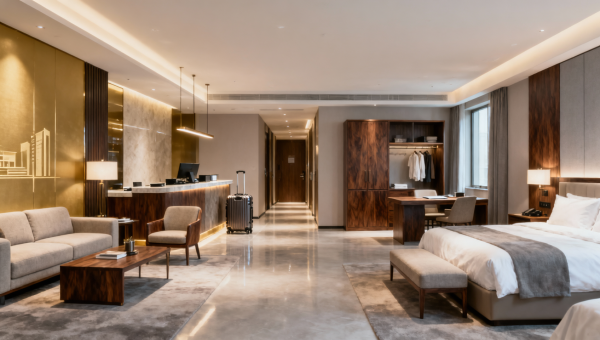
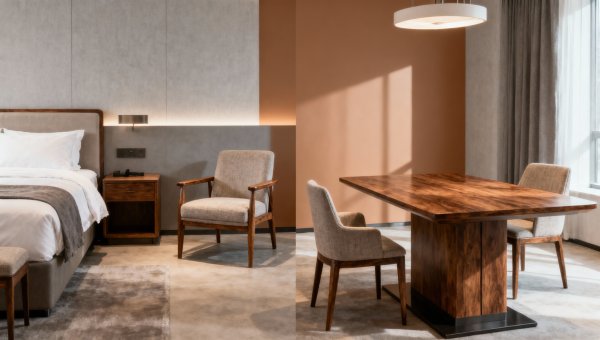
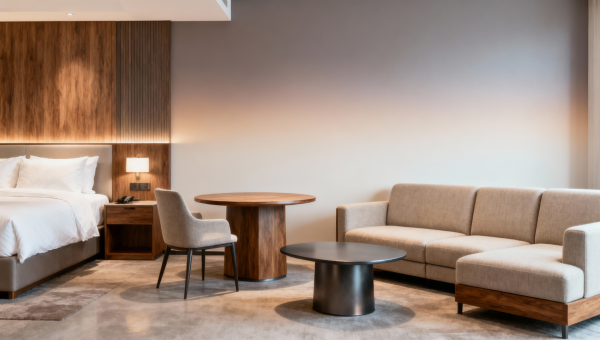
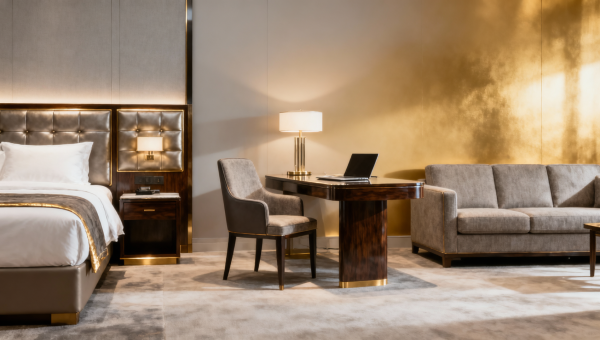
Luxury furniture or standard lines for boutique hotels?
For boutique hotels, choosing between luxury furniture and standard lines affects far more than style—it shapes guest perception, operating efficiency, and brand positioning. From hotel beds, hotel chairs, and hotel tables to hotel desks, hotel sofas, and hotel wardrobes, the right hotel furniture must balance design, durability, and hospitality procurement goals. This guide explores how commercial furniture decisions align with budget, soundproofing materials, hotel equipment, and evolving boutique hospitality expectations.
For researchers, procurement teams, commercial evaluators, and distributors, the question is rarely whether boutique hotels need quality furniture. The real issue is how to match a property’s positioning, guest profile, room count, and operating model with the right sourcing strategy. A 20-room design-led urban hotel does not evaluate hotel furniture the same way as a 120-key lifestyle resort or a conversion project working within existing building constraints.
In practice, the decision between luxury furniture and standard lines is not binary. Many successful boutique hotel projects combine custom statement pieces in public areas with standardized guestroom furniture systems that simplify maintenance, replacement, and lead-time planning. The commercial value lies in selecting where premium investment generates measurable guest impact and where standardization improves procurement efficiency.
Understanding the Real Difference Between Luxury Furniture and Standard Hotel Lines
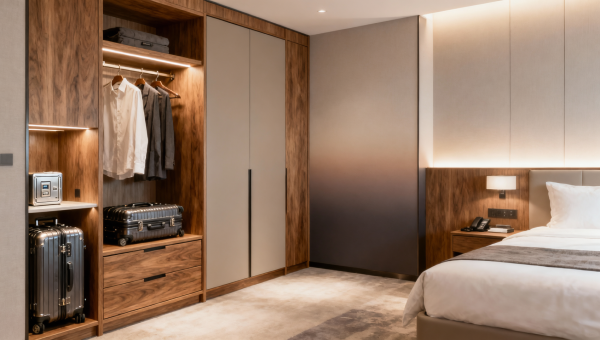
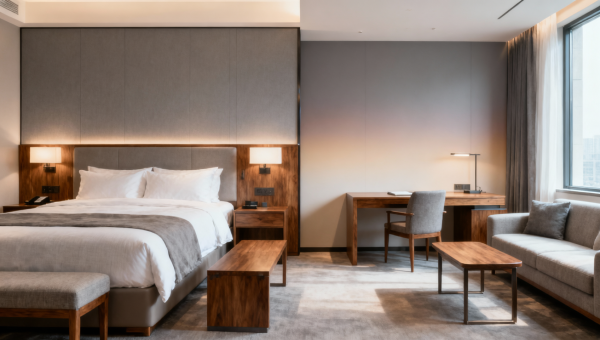
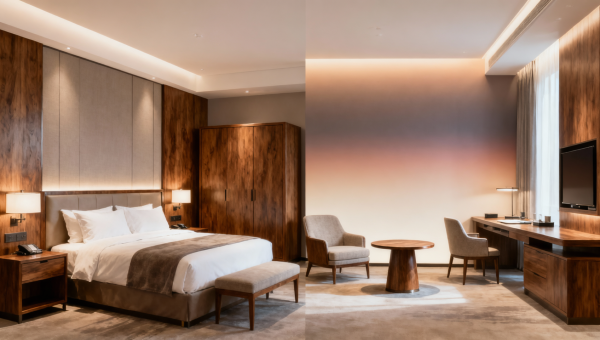
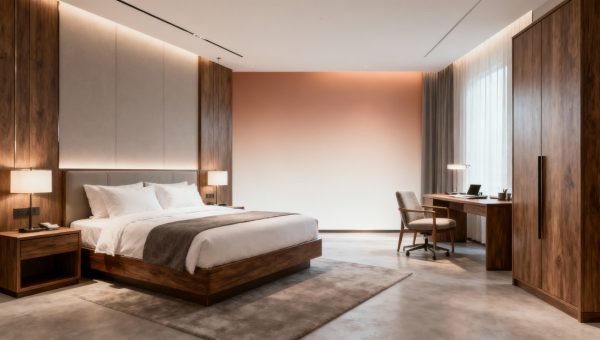
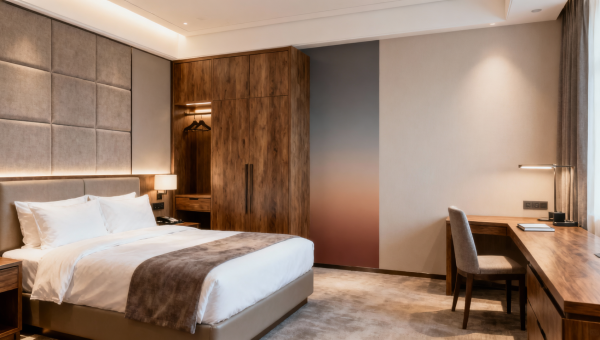
Luxury hotel furniture usually refers to higher-spec materials, more distinctive design language, deeper customization, and tighter detailing. In boutique hospitality, this may include custom hotel beds with upholstered headboards, solid wood or veneer hotel desks, premium-finish hotel wardrobes, and lounge-focused hotel sofas designed around the brand concept. Standard lines, by contrast, are engineered for repeatability, predictable costs, and faster replenishment across multiple rooms or properties.
The difference is also operational. Luxury furniture often involves lower production volume, longer approval cycles, and more complex logistics. A custom bedside table may require 6–10 weeks of production after sample confirmation, while a standard hotel table from an established commercial line may ship in 3–5 weeks depending on quantity and finish availability. For projects with fixed opening dates, this timing gap matters as much as aesthetics.
Another distinction is lifecycle cost. Standard hotel furniture is not automatically lower value. In many boutique hotels, commercial-grade standard lines outperform decorative residential-style products because they are designed for 5–10 years of heavy guest use, easier cleaning, and part replacement. For procurement teams, durability under high turnover is often a better benchmark than showroom appeal alone.
Guest perception, however, cannot be ignored. Boutique hotels compete on identity, not room count. A premium lobby sofa, a signature lounge chair, or a custom writing desk can shape social media visibility and perceived nightly rate. If a hotel aims to command a 15%–30% rate premium over nearby midscale competitors, selective investment in luxury hotel furniture may support that positioning more effectively than an entirely standardized package.
Where the distinction shows up most clearly
- Material depth: engineered panels and laminate in standard lines versus veneer, hardwood accents, leather, stone, or bespoke metalwork in luxury specifications.
- Design flexibility: standard dimensions versus custom room-fit solutions for irregular boutique layouts, heritage buildings, or compact urban footprints.
- Maintenance model: standard products often allow easier replacement by SKU, while luxury pieces may need project-specific remanufacture.
- Per-room investment: depending on category and finish, luxury guestroom furniture packages may run 30%–80% above standard commercial lines.
The table below compares the two approaches from a procurement and operating perspective rather than a purely decorative one.
For most boutique hotel projects, the strongest commercial result comes from balance. Public-facing zones and hero guestroom elements often justify luxury investment, while back-of-house, secondary casegoods, or high-replacement items may be better sourced from robust standard hotel furniture lines.
How Boutique Hotel Positioning Changes the Furniture Decision
Boutique hotels are not a single segment. A heritage property, a coastal retreat, and a compact urban lifestyle hotel can all use premium branding, but their furniture logic differs sharply. Design intent, ADR target, guest turnover, and room size influence whether luxury furniture delivers real return or simply adds cost. Procurement teams should first classify the project by commercial objective, not by mood board alone.
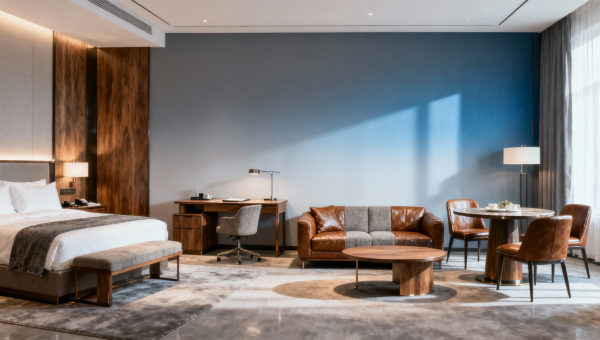
For example, in guestrooms under 22 square meters, oversized luxury furniture may reduce usable circulation and make housekeeping less efficient. In suites above 35 square meters, however, standard hotel chairs and hotel tables can look underscaled and weaken the premium impression. The right specification therefore depends on layout efficiency, not just finish quality.
Boutique hotel operators also need to consider guest stay patterns. Properties with 1–2 night average stays often prioritize immediate visual impact and durable surfaces that support frequent turnover. Hotels with longer leisure stays may place more value on ergonomic hotel desks, larger wardrobes, layered seating, and mattress systems that maintain comfort over several nights. The furniture package should reinforce how the room is actually used.
This is where a sourcing platform such as GCT adds practical value. Buyers do not only need product catalogs; they need supply-side intelligence on manufacturing capability, finish consistency, OEM/ODM flexibility, compliance awareness, and project-scale coordination across hotel beds, seating, casegoods, and related hotel equipment. That information helps separate visually attractive suppliers from commercially reliable ones.
Positioning-based selection framework
The table below offers a practical way to align hotel furniture strategy with boutique positioning and procurement constraints.
The key takeaway is that furniture strategy should mirror revenue strategy. If the hotel’s business model depends on strong visual memorability, premium social content, and rate justification, selective luxury furniture is often essential. If the priority is rollout speed, multi-property consistency, or predictable refurbishment cycles every 5–7 years, standard hotel furniture lines may offer a stronger commercial fit.
Common misalignment risks
- Overspecifying guestroom furniture while underinvesting in lobby seating, where first impressions are formed within the first 3–5 minutes.
- Choosing residential-style luxury pieces that cannot tolerate daily housekeeping chemicals, luggage impact, or 300+ annual occupancy cycles.
- Using standard lines without finish adaptation, causing rooms to feel generic and weakening boutique differentiation.
Procurement Metrics: What Buyers Should Evaluate Beyond Appearance
Commercial furniture procurement for boutique hotels should be measured through a structured matrix. Appearance matters, but buyers also need to review durability, supply continuity, installation complexity, after-sales support, and room-by-room consistency. A beautiful hotel wardrobe that arrives with finish variation or weak hardware can create operational cost long after opening day.
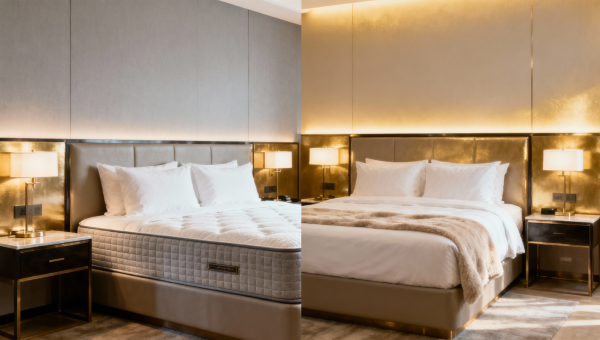
At minimum, procurement teams should review 4 categories: material construction, hospitality-use durability, replacement feasibility, and project delivery reliability. For hotel beds, this includes frame stability, slat or platform support, upholstery wear resistance, and assembly tolerance. For hotel chairs and hotel sofas, check seat structure, fabric rub count range if available, joinery strength, and the practicality of stain management in guest-facing zones.
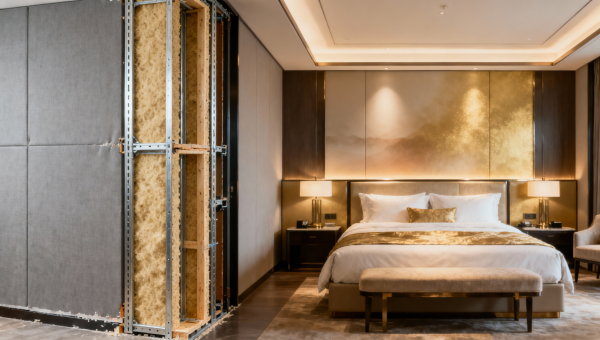
Procurement also intersects with acoustic comfort and integrated hotel equipment. In boutique hotels, furniture often works together with soundproofing materials, wall panels, soft furnishings, and lighting layouts. Upholstered headboards, padded wall sections, and soft-seating density can improve perceived quietness, especially in urban properties. This does not replace architectural acoustic treatment, but it does influence guest comfort in measurable ways.
Commercial evaluators should also ask practical questions: Can a damaged tabletop be refinished on-site? Are spare components available for 2–3 years? Does the supplier support phased delivery for mock-up rooms, full production, and replenishment orders? These factors often determine whether a project stays on budget over a 12–24 month operating horizon.
Core procurement checklist for boutique hotel furniture
- Confirm room-by-room dimensions and tolerance requirements, especially in renovation projects where wall deviation may exceed 10–20 mm.
- Request finish samples under actual lighting conditions, including natural daylight and warm hospitality lighting around 2700K–3000K.
- Clarify assembly method, knock-down packaging, and installation labor requirements before final PO approval.
- Ask for maintenance guidance covering cleaning frequency, touch-up process, and recommended replacement intervals.
- Verify whether the supplier can support repeat orders for at least one refurbishment cycle, commonly 3–5 years.
The following matrix can help buyers compare hotel furniture suppliers with more discipline.
A disciplined evaluation model protects more than procurement budgets. It protects brand consistency, opening schedules, and guest satisfaction scores. In boutique hospitality, one failed furniture package can disrupt reviews, maintenance workload, and distributor confidence at the same time.
A Practical Mixed Strategy: Where to Use Luxury Pieces and Where to Standardize
Many boutique hotels achieve the best result through a tiered furniture strategy. Instead of treating the entire project as either luxury or standard, they identify high-visibility touchpoints where design differentiation drives value, then standardize pieces that need fast replacement, easy service, or cost discipline. This is especially effective for owners balancing design ambition with opening deadlines and capex control.
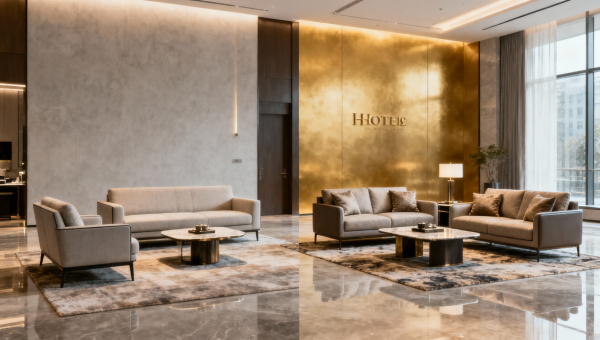
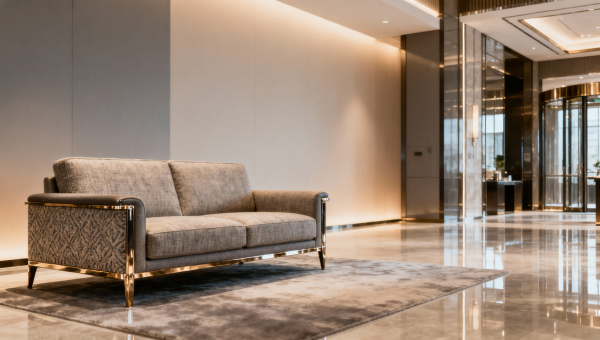
Public areas are usually the first candidate for elevated investment. Reception counters, lobby sofas, lounge chairs, communal hotel tables, and bar-adjacent seating create the visual identity guests remember. These zones support photography, social sharing, and first impressions. A custom seating cluster or signature table can influence perceived brand quality more than upgrading every wardrobe interior in every room.
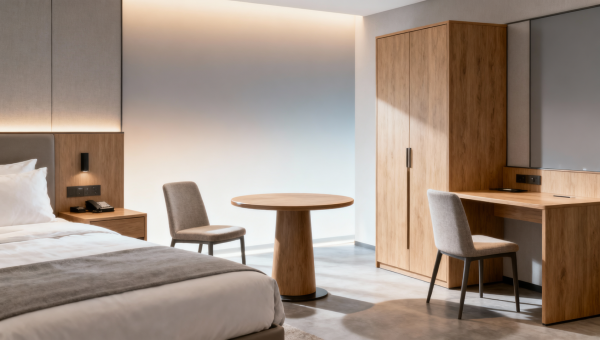
Guestrooms, by contrast, benefit from selective premium detailing and standardized foundations. A boutique hotel may choose custom headboards, accent chairs, and vanity mirrors while using modular nightstands, luggage benches, and wardrobe carcasses with repeatable dimensions. This approach can reduce procurement complexity by 20%–40% depending on SKU count, while still preserving a bespoke guest-facing impression.
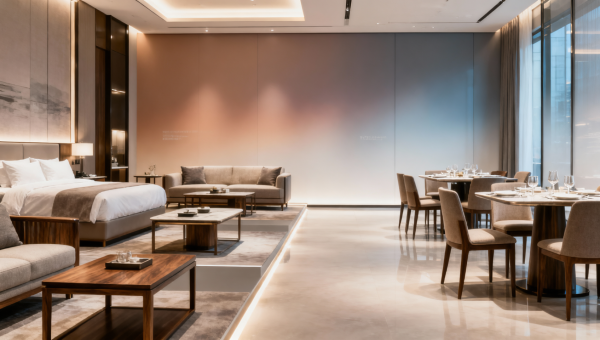
Food-and-beverage zones need especially careful judgment. Restaurant chairs and café tables in boutique hotels face high daily wear, movement, and cleaning frequency. Standard commercial seating with tested durability often outperforms decorative luxury seating that photographs well but loosens, stains, or chips within 12–18 months of heavy use.
Recommended allocation by area
- Lobby and lounge: prioritize luxury furniture, custom upholstery, statement tables, and branded finishes.
- Guestroom sleep zone: invest in bed comfort, headboard design, and acoustic-friendly soft elements.
- Guestroom storage and casegoods: consider standard hotel furniture lines for wardrobes, internal shelving, and side units.
- Restaurant and breakfast spaces: favor commercial durability and easy-clean surfaces over fragile prestige materials.
- Back-of-house or staff-use zones: standardize aggressively to control cost and simplify maintenance.
Implementation in 3 stages
- Create a room and area matrix listing all furniture categories, quantities, and visibility priority from 1 to 3.
- Assign premium specifications only to items that affect guest perception, pricing power, or brand identity.
- Lock standard SKUs for repeat-use components and align them with spare stock planning at 2%–5% of project quantity.
This mixed strategy is particularly useful for distributors and sourcing partners. It allows them to build a more resilient supply package by combining specialist manufacturers for feature pieces with reliable volume suppliers for standard hotel furniture lines. That creates better pricing flexibility without undermining the design concept.
Lead Times, Delivery Risk, and Long-Term Maintenance in Hotel Furniture Projects
A boutique hotel furniture decision is only successful if it survives manufacturing, shipping, installation, and daily operations. Lead time risk is often underestimated during design approval, especially when multiple finishes, custom upholstery, and phased room completion are involved. Even a 2-week delay in hotel beds or wardrobes can affect soft opening plans, snagging schedules, and final room release.
Luxury furniture carries more approval steps. Typical project flow may include concept review, shop drawing approval, material sample sign-off, mock-up production, mass production, shipment, and site installation. For imported projects, total project timing can easily reach 10–16 weeks. Standard lines reduce design uncertainty and often shorten the path by removing one or two approval stages.
Maintenance must be considered at the same time as purchase. Boutique hotels often operate with lean engineering and housekeeping teams. Furniture surfaces that require specialist touch-up, delicate stone maintenance, or frequent upholstery care may create hidden opex. Standard hotel furniture lines often perform better when the property needs predictable upkeep with limited labor resources.
Distributors and agents should also pay attention to packaging and installation sequencing. Knock-down furniture reduces freight volume, but it can increase on-site assembly time and error risk. Fully assembled pieces improve finish protection but may create access problems in narrow corridors, elevators, or heritage stairwells. These are not secondary details; they directly affect project cost and handover quality.
Typical delivery and maintenance planning ranges
The table below summarizes common planning ranges for boutique hotel furniture sourcing. Actual timelines vary by market and order complexity, but these ranges are useful for project scoping.
The long-term winner is usually the supplier or sourcing partner who can support both launch and replenishment. Boutique hotels may tolerate complexity during concept development, but once operations begin, they need predictable replacement pathways, responsive communication, and realistic maintenance guidance.
FAQ for buyers and commercial evaluators
How much customization is usually practical for a boutique hotel?
A practical range is to customize 20%–40% of highly visible furniture categories and standardize the remaining volume. This usually captures brand personality without overwhelming the project with long lead times, complex approvals, and difficult replacements.
When do standard hotel furniture lines make the most sense?
They are especially effective for rollout projects, limited renovation windows, hotels with 50+ repeat guestrooms, and operators planning regular replacement cycles. Standard lines also help properties that need dependable spare availability within a 2–6 week window.
What is the biggest mistake in boutique hotel furniture sourcing?
The biggest mistake is buying to a visual concept without validating operational realities such as cleaning, impact resistance, installation constraints, and replacement logic. The result is often beautiful opening photography followed by elevated maintenance cost within the first year.
How should distributors and agents evaluate manufacturing partners?
Look beyond catalogs. Assess finish stability, packaging discipline, sample accuracy, MOQ flexibility, and willingness to support phased orders. A manufacturer that handles mock-ups, production coordination, and after-sales queries within 48–72 hours is often more valuable than one offering lower upfront pricing alone.
For boutique hotels, the best furniture strategy is not simply luxury versus standard. It is a disciplined alignment of brand positioning, guest experience, durability, lead time, and long-term operating logic. Premium statement pieces can elevate perceived value, while standard commercial lines protect budget control, replacement efficiency, and rollout reliability.
For sourcing teams, distributors, and commercial decision-makers, the strongest projects come from combining design ambition with measurable procurement criteria. GCT supports that process by connecting buyers with insight-driven sourcing perspectives across hotel furniture, hotel equipment, compliance awareness, and supplier capability evaluation. If you are planning a boutique hotel project or reviewing your current hotel furniture mix, contact us to discuss tailored sourcing options, compare specification paths, and explore more commercial hospitality solutions.
Search News
Hot Articles
- Stage Lighting & TrussCCTV5 Snooker Broadcast Drives 37% Surge in Stage Lighting Export InquiriesApr 21, 2026
- Indoor PlaygroundVietnam Mandates Child Finger-Trap Sensors for Indoor Play EquipmentApr 21, 2026
- Stage Lighting & TrussGuangdong vs. Shanxi CBA Game Highlights Domestic Smart Arena LightingApr 21, 2026
Popular Tags
Need ExpertConsultation?
Connect with our specialized leisureengineering team for procurementstrategies.
Recommended News
 Apr 10, 2026RCEP Cuts ASEAN Hotel Furniture Tariffs to 0% for Chinese Bamboo ProductsRCEP cuts ASEAN hotel furniture tariffs to 0% for Chinese bamboo products. Explore how this benefits exporters, procurement teams & supply chains in Southeast Asia's booming hospitality sector.● Hospitality Sourcing Dir
 Apr 10, 2026US Hotel Association Updates 2026 Smart Room Tech Guidelines, Mandates UL 2900-2-2 CertificationUS Hotel Association mandates UL 2900-2-2 certification for smart room tech by 2026. Learn how this impacts IoT manufacturers and hotel chains' procurement strategies.● Hospitality Sourcing Dir
 Apr 10, 2026EU Mandates QR Codes for Hotel Linens: China Exporters Must Comply by April 2026EU mandates QR codes for hotel linens by 2026, impacting China's textile exporters. Learn compliance requirements for traceability, sustainability reporting, and supply chain adaptation.● Hospitality Sourcing Dir
 Apr 09, 2026Zibo Launches 'Treasure Shandong Through the Lens' Photo Tour, Themed Homestays Emerge as Cross-Border Marketing ToolDiscover Zibo's 'Treasure Shandong Through the Lens' photo tour featuring 32 themed homestays blending vintage cameras, Hanfu culture & industrial spaces. A groundbreaking cross-border marketing model attracting global influencers & platforms like Rakuten Travel.● Hospitality Sourcing Dir
 Apr 09, 2026Yangzhou Slender West Lake Flower Festival Opens, Blending Heritage and Tech for Luxury TourismDiscover the 2026 Yangzhou Slender West Lake Flower Festival, blending heritage crafts with AR technology for luxury tourism. Experience cultural performances, workshops, and themed stays attracting global travelers. Explore China's new era of experiential tourism.● Hospitality Sourcing Dir
 Apr 09, 2026New Team Travel Contracts Raise Compliance Standards for Overseas AgenciesNew team travel contracts enforce stricter compliance for overseas agencies, requiring rigorous vetting of Chinese suppliers. Learn how these 2026 regulations impact study tours, hotels, and global partnerships.● Hospitality Sourcing Dir
 Apr 09, 2026Shangyou County's Hotel Subsidy Policy Boosts China's MICE Tourism AppealShangyou County's 2026 hotel subsidy policy offers RMB 100 per room for MICE tourism, boosting China's appeal to international buyers. Discover how this strategic move enhances cost-effective accommodations for corporate events and study tours.● Hospitality Sourcing Dir
 Apr 21, 2026Open or closed hotel wardrobes for easier housekeeping?Hotel wardrobes affect housekeeping speed, guest appeal, and hospitality procurement. Compare open vs closed designs for hotel furniture, luxury furniture, and hotel room furniture planning.● Hospitality Sourcing Dir
 Apr 21, 2026Hotel wardrobes that fit luggage without wasting spaceHotel wardrobes that fit luggage smartly without wasting space—explore hotel furniture solutions that elevate hotel room furniture, support hospitality procurement, and enhance guest comfort.● Hospitality Sourcing Dir
 Apr 21, 2026Why hotel room furniture wears unevenly after openingHotel furniture wear starts unevenly from day one. Learn how hotel beds, hotel chairs, hotel desks and hotel room furniture perform in real use, with smart hospitality procurement tips.● Hospitality Sourcing Dir
 Apr 21, 2026Hotel room furniture packages that cut design mismatchHotel room furniture packages align hotel furniture, hotel beds, hotel chairs, hotel tables, and hotel desks with luxury furniture standards—reducing design mismatch and speeding hospitality procurement.● Hospitality Sourcing Dir
 Apr 21, 2026Low seat or deep seat hotel sofas for modern lobbies?Hotel furniture buyers compare low seat and deep seat hotel sofas for modern lobbies. Explore luxury furniture choices that improve comfort, traffic flow, brand image, and hospitality procurement value.● Hospitality Sourcing Dir
 Apr 21, 2026Hotel sofas that keep their shape in high traffic areasHotel sofas, hotel furniture, and hospitality furniture that keep shape in high-traffic areas—discover luxury furniture sourcing tips, durable commercial furniture specs, and smarter hospitality procurement.● Hospitality Sourcing Dir
 Apr 21, 2026Why hospitality furniture needs different specs by zoneHospitality furniture specs vary by zone. Learn how hotel furniture, hotel beds, hotel chairs, hotel tables, and hotel desks improve durability, ROI, and luxury guest experience.● Hospitality Sourcing Dir
 Apr 21, 2026Hospitality furniture that supports faster room turnoverHospitality furniture that speeds room turnover: compare hotel beds, hotel chairs, hotel tables, hotel desks and hotel sofas for easier cleaning, durability, and smarter hospitality procurement.● Hospitality Sourcing Dir
 Apr 21, 2026Where hotel equipment budgets usually go off trackHotel furniture and hotel equipment budgets often fail from hidden scope, logistics, and lifecycle costs. Learn smarter hospitality procurement for hotel beds, chairs, tables, and luxury furniture.● Hospitality Sourcing Dir
 Apr 21, 2026Hotel equipment upgrades that improve guest flow firstHotel equipment upgrades improve guest flow fast with hotel furniture, hotel beds, hotel chairs, catering equipment, and soundproofing materials—boost comfort, efficiency, and procurement ROI.● Hospitality Sourcing Dir
 Apr 21, 2026What shortens the life of commercial furniture in hotelsHotel furniture and commercial furniture wear out fast when hotel beds, hotel chairs, hotel tables, hotel desks, and hotel sofas face heavy use, poor maintenance, and weak materials. Learn smart hospitality procurement tips.● Hospitality Sourcing Dir
 Apr 21, 2026Commercial furniture trends hotels are actually adoptingCommercial furniture trends hotels are adopting: luxury furniture, hotel beds, hotel chairs, hotel tables and hotel sofas that improve hotel furniture sourcing, durability, and hospitality procurement value.● Hospitality Sourcing Dir
 Apr 21, 2026How to spot hotel furniture built for daily wearHotel furniture buying guide: learn how to assess hotel beds, hotel chairs, hotel tables, and hospitality furniture for daily wear, lower maintenance, and smarter hospitality procurement.● Hospitality Sourcing Dir
 Apr 21, 2026Hotel furniture mistakes that age a room too quicklyHotel furniture buying guide: avoid costly hotel beds, hotel chairs, and hotel room furniture mistakes. Discover luxury furniture tips for durable, brand-right hospitality procurement.● Hospitality Sourcing Dir
 Apr 21, 2026Why some soundproofing materials fail after installationLearn why soundproofing materials fail after installation in hotel furniture projects. Explore hotel beds, hotel sofas, hotel wardrobes and hospitality procurement tips for lasting acoustic performance.● Hospitality Sourcing Dir
 Apr 21, 2026Soundproofing materials that work best between guest roomsSoundproofing materials for hotel furniture projects: discover the best systems between guest rooms, from mineral wool to acoustic doors, to improve comfort, protect reviews, and support hospitality procurement.● Hospitality Sourcing Dir
 Apr 21, 2026How firm should hotel beds be for mixed guest profiles?Hotel beds for mixed guest profiles: learn how hotel furniture and hospitality procurement teams balance comfort, durability, and luxury furniture standards to improve guest satisfaction.● Hospitality Sourcing Dir