Why hotel room furniture wears unevenly after opening
After a hotel opens, hotel room furniture rarely ages at the same pace. High-touch zones, guest behavior, cleaning routines, and layout choices can cause hotel beds, hotel chairs, hotel tables, hotel desks, hotel wardrobes, and hotel sofas to wear unevenly. For buyers evaluating hotel furniture, hospitality furniture, and broader commercial furniture solutions, understanding these patterns is essential to smarter hospitality procurement, longer lifecycle value, and more consistent guest experience.
For procurement teams, owners, distributors, and project evaluators, uneven wear is not a cosmetic detail. It affects room downtime, replacement timing, brand standards, operating cost, and guest reviews. In a 100-room property, if even 15 to 20 rooms begin showing visible inconsistency in upholstery, finish, or structural stability within the first 12 to 24 months, the hotel may face fragmented maintenance schedules and avoidable capex pressure.
This matters even more in commercial hospitality sourcing, where furniture is expected to perform under repeated use, frequent cleaning, and variable guest behavior. The issue is rarely caused by one factor alone. It is usually the result of traffic distribution, construction quality, room planning, housekeeping methods, and the mismatch between design intent and operational reality.
Why uneven wear appears so quickly in operating hotels
Hotel room furniture begins aging the moment the property starts real-world operation. Before opening, mock-up rooms and showroom conditions do not fully simulate the daily stress of luggage impact, guest movement, moisture exposure, and chemical cleaning. In practice, one bedside zone may be used 3 to 5 times more often than the other, and one chair may carry far more load cycles than its matching piece.
Guest behavior is one of the biggest variables. Some furniture components are touched dozens of times per day, while others remain mostly decorative. A hotel desk used for dining, laptop work, and baggage placement will deteriorate faster than a desk used only occasionally. Similarly, a hotel sofa positioned near the window may experience more sunlight, fabric fading, and edge compression than the same sofa model in a darker room layout.
Cleaning frequency also creates asymmetry. Housekeeping teams often sanitize handles, headboards, writing surfaces, and chair backs daily, while low-touch surfaces may be cleaned less aggressively. Over 180 to 365 cleaning cycles per year, the difference between neutral cleaners and harsh chemical products becomes visible in veneer dullness, coating wear, seam weakening, and discoloration.
Another driver is room category usage. Standard rooms, family rooms, and long-stay units age differently even within the same hotel. A business traveler may use the desk and chair heavily but barely touch the wardrobe. A leisure guest may use the luggage bench, sofa, and side table more intensively. This means identical hospitality furniture SKUs can show very different wear patterns depending on occupancy mix and stay duration.
Common operational triggers
- Uneven touch frequency between left and right bedside zones, often with a 2:1 or 3:1 use ratio.
- Chair overloading beyond typical design assumptions, especially when used for luggage support of 20 to 35 kg repeatedly.
- Direct UV exposure for 4 to 8 hours per day on window-side hotel sofas, tables, and upholstered panels.
- Daily wet wiping on tops and edges, causing faster finish degradation than dry-dust surfaces.
For sourcing teams, the key lesson is simple: uneven wear is usually predictable. It can be reduced by matching materials and construction methods to actual use intensity, not only to design boards or budget targets.
Which hotel room furniture pieces wear unevenly first
Not all hotel furniture ages in the same sequence. In most operating properties, chairs, desktops, bedside tables, luggage benches, sofa arms, headboards, and wardrobe handles show the earliest visual or structural wear. Beds may remain structurally sound for years, but bed base corners, headboard upholstery, and edge banding can still degrade early in high-contact zones.
Hotel chairs are particularly vulnerable because they are often multi-use items. Guests sit on them, place luggage on them, move them across flooring, and sometimes use them as temporary side tables. As a result, fabric abrasion, loose joints, scratched legs, and seat foam compression can appear within 9 to 18 months if the chair specification is too residential in quality.
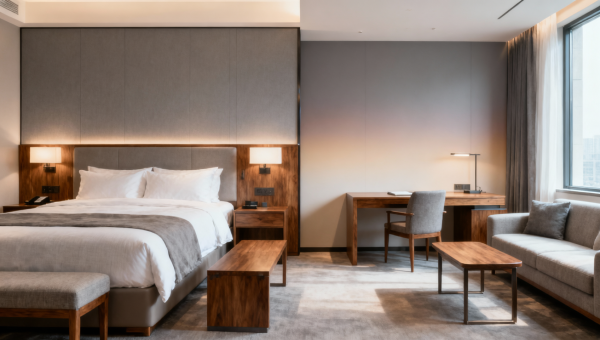
Hotel desks and tables also wear unevenly because use is concentrated around front edges, writing zones, charging areas, and corners exposed to impact. Laminate tops generally resist rings and scratching better than low-grade veneer, but edge integrity, substrate density, and finish thickness matter just as much. A desk that looks premium on delivery may still fail early if its edge profile is thin and frequently hit by hard luggage wheels.
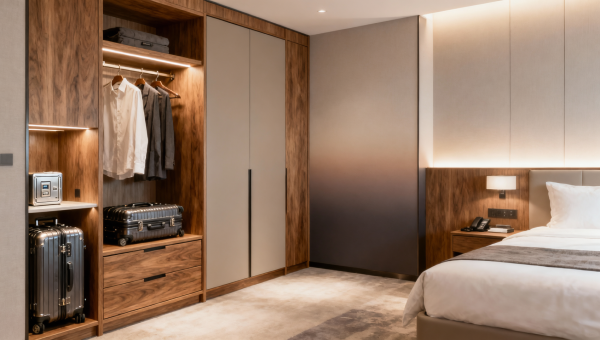
Wardrobes and cabinets show another pattern: hardware wear often appears before panel failure. Handles, hinges, soft-close mechanisms, and lock areas can experience high cycle counts, especially in rooms with 70% to 85% annual occupancy. In these cases, procurement teams should examine hardware durability as carefully as visible finishes.
Priority wear map by furniture type
The table below helps buyers identify where uneven wear usually appears first and what that means for specification review.
The pattern is clear: first-failure zones are usually edge zones, contact points, and moving parts. Buyers comparing hotel furniture suppliers should ask not only what materials are visible, but how the concealed structure supports those stress points over 2 to 5 years of operation.
A practical interpretation for distributors and project evaluators
If two suppliers offer similar visual samples, the better commercial furniture solution is often the one with stronger joinery, higher-density boards, replaceable hardware, and finishes chosen for cleaning resistance rather than showroom appearance. This is especially important in midscale and upscale hotels where consistency across floors matters as much as initial design impact.
Material selection, construction details, and why specifications fail in real use
Uneven wear becomes worse when the hotel furniture specification is based mainly on cost or aesthetics without reference to operating conditions. A veneer surface may be acceptable in a low-touch decorative panel, but a high-contact tabletop may require commercial laminate, compact surface, or a more protective finish system. The same principle applies to upholstery, foam density, edge banding, and hardware cycle performance.
Substrate quality is often underestimated. Lower-density engineered boards may look stable at handover but are more vulnerable to swelling, screw loosening, and corner deformation when exposed to humidity changes, repeated cleaning, and impact. In coastal or high-humidity markets, even a seasonal RH swing of 10% to 20% can accelerate visible movement if the furniture core and finish system are not properly matched.
Upholstered pieces create another gap between expectation and performance. A hotel sofa or chair may appear firm at installation but lose resilience quickly if foam density is too low for commercial use. Fabric choice matters as well. Smooth decorative textiles can look elegant in a sample room yet show pilling, seam stress, or staining faster than performance fabrics designed for repeated cleaning and heavy contact.
Construction detailing is equally important. Rounded corners, reinforced rails, concealed metal brackets, replaceable glides, and moisture-sealed edges can add service life without radically changing appearance. These details may increase unit cost by a modest percentage, but they often reduce replacement frequency across a 3 to 7 year asset cycle.
Specification checkpoints that reduce uneven wear
The table below compares common specification choices and their likely operational effect in hotel rooms.
For hospitality procurement, the takeaway is not that every item needs top-tier materials. It means each furniture component should be matched to its real use intensity. High-touch surfaces and load-bearing pieces deserve stronger specifications than low-contact decorative elements.
Minimum review points before approval
- Check where contact, impact, and moisture will be concentrated in each room type.
- Review whether visible finishes and hidden substrates are both suited to that stress level.
- Ask which components can be repaired or replaced on site within 24 to 72 hours.
- Confirm whether spare parts planning covers at least 2% to 5% of key hardware and upholstery items.
How layout, housekeeping, and maintenance amplify wear differences
Even well-specified hotel room furniture can wear unevenly if room planning and operating procedures are not aligned. Layout determines how guests move, where they place luggage, and which furniture becomes a pressure point. A chair located beside the entry often becomes an unofficial luggage stand. A side table placed too close to the bed may be bumped several times per stay. These are small design decisions with large cumulative effects.
Housekeeping methods also deserve closer attention in hospitality furniture management. If one team uses highly alkaline cleaners and abrasive pads while another uses neutral pH products and microfiber cloths, finish performance will vary across floors. Over a period of 6 to 12 months, the same hotel desk finish can appear glossy in some rooms and dull in others simply because cleaning methods are inconsistent.
Preventive maintenance often focuses on MEP systems, but furniture should be included in routine room inspections. A 10-minute furniture check during deep-clean scheduling can identify loose chair joints, lifting edge bands, unstable table legs, or hinge misalignment before visible damage spreads. This is especially useful in properties with occupancy above 75%, where furniture fatigue accumulates faster.
Replacement strategy matters as well. If hotels replace only the most visibly damaged piece without checking room balance, the result can be inconsistent color, texture, and finish aging. Buyers and operators should think in terms of zones, kits, and batch consistency. Replacing matched touchpoints together often protects brand presentation better than isolated single-item substitution.
Operational practices that help extend lifecycle
- Rotate movable furniture positions every 3 to 6 months where layout allows, especially chairs and accent tables.
- Use protective glides, corner guards, or luggage benches to reduce misuse of seating products.
- Train housekeeping staff on approved cleaners, dwell time, and cloth type for wood-look, laminate, metal, and upholstery surfaces.
- Include furniture inspection in preventive maintenance rounds at least once per quarter for standard rooms and monthly for high-use suites.
Risk signals operators should not ignore
Early warning signs include wobble in less than 10% of room chairs, recurring hinge adjustment needs on the same wardrobe model, noticeable seat collapse in one furniture batch, and localized finish whitening around desk edges. These are not isolated maintenance issues. They often point to a specification gap, operational misuse, or installation inconsistency that will affect more rooms over time.
Procurement strategy: how buyers can reduce lifecycle cost and guest-facing inconsistency
For buyers of hotel furniture and commercial furniture, the most effective way to control uneven wear is to evaluate products by lifecycle performance rather than first cost alone. A lower-priced bedside table that requires replacement after 18 months may be more expensive in practice than a better-specified option lasting 4 to 6 years with only minor touch-up work. The same logic applies to seating, casegoods, and upholstered furniture.
A practical sourcing process should combine sample evaluation, use-case testing, installation review, and spare-part planning. Procurement teams should ask suppliers how each furniture type performs under realistic hotel conditions: repeated cleaning, luggage impact, guest misuse, humidity change, and quick on-site service. This is where experienced sourcing partners and intelligence-led platforms add value by helping buyers compare not just price sheets, but commercial suitability.
Distributors and project consultants can also use uneven wear analysis as a sales and risk-control tool. Instead of discussing finish and style only, they can guide clients through replacement intervals, room-type variation, maintainability, and hardware planning. This creates a more credible proposal and reduces disputes after handover.
For international buyers, another key factor is supply continuity. If a hotel needs replacement parts or matching pieces 12, 24, or 36 months later, finish tolerance, hardware compatibility, and production repeatability become critical. A supplier with poor consistency may turn a minor repair into a visible room mismatch.
Buyer evaluation framework for hotel room furniture
The following framework can help procurement teams, commercial evaluators, and channel partners compare hospitality furniture offers more effectively.
This approach supports better sourcing decisions for hotel groups, owners, and intermediaries alike. It turns furniture selection from a one-time purchase exercise into a managed commercial asset strategy.
FAQ for sourcing and evaluation teams
How soon should hotels review furniture wear after opening?
A practical schedule is 3 months, 6 months, and 12 months after opening. The 3-month review catches installation and early-use issues. The 6-month review shows cleaning-related and traffic-related trends. By 12 months, buyers can usually identify whether the specification is aligned with actual guest behavior and occupancy patterns.
Which items should have spare parts planned in advance?
Focus first on hardware and finish-sensitive items: hinges, drawer slides, glides, handles, touch-up kits, upholstery fabric reserves, and replaceable chair feet. For properties with 80 rooms or more, keeping a small service reserve can significantly reduce the cost and delay of ad hoc repairs.
Is uneven wear always a supplier quality problem?
No. Supplier quality is one factor, but room layout, misuse, housekeeping chemicals, occupancy mix, and delayed maintenance often contribute just as much. A balanced assessment should examine product design, installation, and hotel operations together.
Uneven wear in hotel room furniture is a measurable operational issue, not just a visual annoyance. It affects replacement cycles, maintenance workload, guest impression, and long-term procurement efficiency. By analyzing high-touch zones, matching specifications to real use, improving housekeeping practices, and planning maintenance from the start, buyers can achieve more stable furniture performance across rooms and across time.
For procurement professionals, business evaluators, and channel partners seeking better hotel furniture sourcing outcomes, a lifecycle-based approach delivers stronger commercial value than a price-only comparison. Global Commercial Trade supports this decision process with industry-focused insights, sourcing intelligence, and practical guidance for hospitality projects that demand durability, consistency, and scalable supply confidence.
If you are reviewing hotel furniture specifications, comparing hospitality furniture suppliers, or planning a new fit-out or refurbishment, contact us to discuss your project needs, request a tailored sourcing framework, or explore more commercial furniture solutions built for real hotel operating conditions.
Search News
Hot Articles
- Stage Lighting & TrussCCTV5 Snooker Broadcast Drives 37% Surge in Stage Lighting Export InquiriesApr 21, 2026
- Indoor PlaygroundVietnam Mandates Child Finger-Trap Sensors for Indoor Play EquipmentApr 21, 2026
- Stage Lighting & TrussGuangdong vs. Shanxi CBA Game Highlights Domestic Smart Arena LightingApr 21, 2026
Popular Tags
Need ExpertConsultation?
Connect with our specialized leisureengineering team for procurementstrategies.
Recommended News
 Apr 10, 2026RCEP Cuts ASEAN Hotel Furniture Tariffs to 0% for Chinese Bamboo ProductsRCEP cuts ASEAN hotel furniture tariffs to 0% for Chinese bamboo products. Explore how this benefits exporters, procurement teams & supply chains in Southeast Asia's booming hospitality sector.● Hospitality Sourcing Dir
 Apr 10, 2026US Hotel Association Updates 2026 Smart Room Tech Guidelines, Mandates UL 2900-2-2 CertificationUS Hotel Association mandates UL 2900-2-2 certification for smart room tech by 2026. Learn how this impacts IoT manufacturers and hotel chains' procurement strategies.● Hospitality Sourcing Dir
 Apr 10, 2026EU Mandates QR Codes for Hotel Linens: China Exporters Must Comply by April 2026EU mandates QR codes for hotel linens by 2026, impacting China's textile exporters. Learn compliance requirements for traceability, sustainability reporting, and supply chain adaptation.● Hospitality Sourcing Dir
 Apr 09, 2026Zibo Launches 'Treasure Shandong Through the Lens' Photo Tour, Themed Homestays Emerge as Cross-Border Marketing ToolDiscover Zibo's 'Treasure Shandong Through the Lens' photo tour featuring 32 themed homestays blending vintage cameras, Hanfu culture & industrial spaces. A groundbreaking cross-border marketing model attracting global influencers & platforms like Rakuten Travel.● Hospitality Sourcing Dir
 Apr 09, 2026Yangzhou Slender West Lake Flower Festival Opens, Blending Heritage and Tech for Luxury TourismDiscover the 2026 Yangzhou Slender West Lake Flower Festival, blending heritage crafts with AR technology for luxury tourism. Experience cultural performances, workshops, and themed stays attracting global travelers. Explore China's new era of experiential tourism.● Hospitality Sourcing Dir
 Apr 09, 2026New Team Travel Contracts Raise Compliance Standards for Overseas AgenciesNew team travel contracts enforce stricter compliance for overseas agencies, requiring rigorous vetting of Chinese suppliers. Learn how these 2026 regulations impact study tours, hotels, and global partnerships.● Hospitality Sourcing Dir
 Apr 09, 2026Shangyou County's Hotel Subsidy Policy Boosts China's MICE Tourism AppealShangyou County's 2026 hotel subsidy policy offers RMB 100 per room for MICE tourism, boosting China's appeal to international buyers. Discover how this strategic move enhances cost-effective accommodations for corporate events and study tours.● Hospitality Sourcing Dir
 Apr 21, 2026Open or closed hotel wardrobes for easier housekeeping?Hotel wardrobes affect housekeeping speed, guest appeal, and hospitality procurement. Compare open vs closed designs for hotel furniture, luxury furniture, and hotel room furniture planning.● Hospitality Sourcing Dir
 Apr 21, 2026Hotel wardrobes that fit luggage without wasting spaceHotel wardrobes that fit luggage smartly without wasting space—explore hotel furniture solutions that elevate hotel room furniture, support hospitality procurement, and enhance guest comfort.● Hospitality Sourcing Dir
 Apr 21, 2026Why hotel room furniture wears unevenly after openingHotel furniture wear starts unevenly from day one. Learn how hotel beds, hotel chairs, hotel desks and hotel room furniture perform in real use, with smart hospitality procurement tips.● Hospitality Sourcing Dir
 Apr 21, 2026Hotel room furniture packages that cut design mismatchHotel room furniture packages align hotel furniture, hotel beds, hotel chairs, hotel tables, and hotel desks with luxury furniture standards—reducing design mismatch and speeding hospitality procurement.● Hospitality Sourcing Dir
 Apr 21, 2026Low seat or deep seat hotel sofas for modern lobbies?Hotel furniture buyers compare low seat and deep seat hotel sofas for modern lobbies. Explore luxury furniture choices that improve comfort, traffic flow, brand image, and hospitality procurement value.● Hospitality Sourcing Dir
 Apr 21, 2026Hotel sofas that keep their shape in high traffic areasHotel sofas, hotel furniture, and hospitality furniture that keep shape in high-traffic areas—discover luxury furniture sourcing tips, durable commercial furniture specs, and smarter hospitality procurement.● Hospitality Sourcing Dir
 Apr 21, 2026Why hospitality furniture needs different specs by zoneHospitality furniture specs vary by zone. Learn how hotel furniture, hotel beds, hotel chairs, hotel tables, and hotel desks improve durability, ROI, and luxury guest experience.● Hospitality Sourcing Dir
 Apr 21, 2026Hospitality furniture that supports faster room turnoverHospitality furniture that speeds room turnover: compare hotel beds, hotel chairs, hotel tables, hotel desks and hotel sofas for easier cleaning, durability, and smarter hospitality procurement.● Hospitality Sourcing Dir
 Apr 21, 2026Where hotel equipment budgets usually go off trackHotel furniture and hotel equipment budgets often fail from hidden scope, logistics, and lifecycle costs. Learn smarter hospitality procurement for hotel beds, chairs, tables, and luxury furniture.● Hospitality Sourcing Dir
 Apr 21, 2026Hotel equipment upgrades that improve guest flow firstHotel equipment upgrades improve guest flow fast with hotel furniture, hotel beds, hotel chairs, catering equipment, and soundproofing materials—boost comfort, efficiency, and procurement ROI.● Hospitality Sourcing Dir
 Apr 21, 2026What shortens the life of commercial furniture in hotelsHotel furniture and commercial furniture wear out fast when hotel beds, hotel chairs, hotel tables, hotel desks, and hotel sofas face heavy use, poor maintenance, and weak materials. Learn smart hospitality procurement tips.● Hospitality Sourcing Dir
 Apr 21, 2026Commercial furniture trends hotels are actually adoptingCommercial furniture trends hotels are adopting: luxury furniture, hotel beds, hotel chairs, hotel tables and hotel sofas that improve hotel furniture sourcing, durability, and hospitality procurement value.● Hospitality Sourcing Dir
 Apr 21, 2026How to spot hotel furniture built for daily wearHotel furniture buying guide: learn how to assess hotel beds, hotel chairs, hotel tables, and hospitality furniture for daily wear, lower maintenance, and smarter hospitality procurement.● Hospitality Sourcing Dir
 Apr 21, 2026Hotel furniture mistakes that age a room too quicklyHotel furniture buying guide: avoid costly hotel beds, hotel chairs, and hotel room furniture mistakes. Discover luxury furniture tips for durable, brand-right hospitality procurement.● Hospitality Sourcing Dir
 Apr 21, 2026Why some soundproofing materials fail after installationLearn why soundproofing materials fail after installation in hotel furniture projects. Explore hotel beds, hotel sofas, hotel wardrobes and hospitality procurement tips for lasting acoustic performance.● Hospitality Sourcing Dir
 Apr 21, 2026Soundproofing materials that work best between guest roomsSoundproofing materials for hotel furniture projects: discover the best systems between guest rooms, from mineral wool to acoustic doors, to improve comfort, protect reviews, and support hospitality procurement.● Hospitality Sourcing Dir
 Apr 21, 2026How firm should hotel beds be for mixed guest profiles?Hotel beds for mixed guest profiles: learn how hotel furniture and hospitality procurement teams balance comfort, durability, and luxury furniture standards to improve guest satisfaction.● Hospitality Sourcing Dir