Why hospitality furniture needs different specs by zone
In hospitality procurement, one-size-fits-all specifications rarely work. From hotel beds and hotel sofas in guestrooms to hotel chairs, hotel tables, and hotel desks in public areas, every zone demands different standards for comfort, durability, safety, and design. Understanding how hospitality furniture, hotel room furniture, and broader commercial furniture vary by use helps buyers make smarter sourcing decisions for luxury furniture performance and long-term value.
For buyers, specifiers, and distributors, the core answer is simple: hospitality furniture needs different specs by zone because each area of a property faces different user behavior, cleaning frequency, traffic load, brand expectations, and compliance risks. A guestroom lounge chair, a lobby sofa, a restaurant dining chair, and a poolside table may look aligned visually, but they should not be built to the same performance standard. If the specification is too light, the product fails early. If it is too heavy everywhere, the project overspends without improving outcomes.
The most effective sourcing strategy is zone-based specification. That means matching materials, structure, upholstery, finishes, fire performance, ergonomics, and maintenance requirements to the real operating conditions of each space. For hospitality procurement teams, this reduces replacement costs, avoids avoidable claims, supports brand consistency, and improves lifecycle value.
What buyers are really trying to understand when they compare furniture specs by zone
When procurement teams search for why hospitality furniture requires different specifications, they are usually not looking for theory. They want to know how to make better buying decisions across a hotel, resort, serviced apartment, or mixed-use hospitality project.
The real questions behind the search are often these:
- Which furniture categories need the highest durability and which do not?
- How should hotel room furniture differ from lobby, restaurant, bar, meeting room, and outdoor furniture?
- What specifications actually reduce maintenance and replacement costs?
- Where do safety and compliance risks change by zone?
- How can a property keep a consistent luxury furniture look without over-engineering every piece?
- What should buyers ask OEM or ODM suppliers before approving production?
For information researchers, procurement officers, commercial evaluators, and channel partners, the value is in practical comparison. The right article should help them judge specifications by use case, not just by product type.
Why one furniture specification across the whole property usually creates cost and performance problems
Many projects start with a broad design concept and then try to standardize materials across multiple spaces for speed or budget control. While standardization can simplify sourcing, using the same spec across all zones often creates hidden problems.
Under-specification is common in high-traffic areas. A sofa construction that performs adequately in a guestroom may fail quickly in a lobby where users sit, lean, drop luggage, and use it continuously throughout the day. The result is early sagging, seam stress, finish wear, and higher replacement frequency.
Over-specification is common in lower-impact zones. Some buyers apply heavy-duty restaurant or public-area standards to all hotel room furniture, including accent chairs, side tables, or decorative casegoods that do not face the same stress. This raises cost without meaningful operational benefit.
There is also a brand performance mismatch. Luxury hospitality environments are judged not only by aesthetics at installation, but by how well those aesthetics survive daily use. Furniture that photographs well on opening day but loses form, comfort, or finish quality after months of use damages guest perception and brand credibility.
Zone-based hospitality furniture specifications solve this by aligning engineering with real use conditions. Buyers spend where performance matters most and avoid waste where it does not.
How furniture requirements change from zone to zone in a hospitality project
The clearest way to understand specification differences is to look at the operational demands of each zone.
Guestrooms: comfort, quiet durability, and easy maintenance
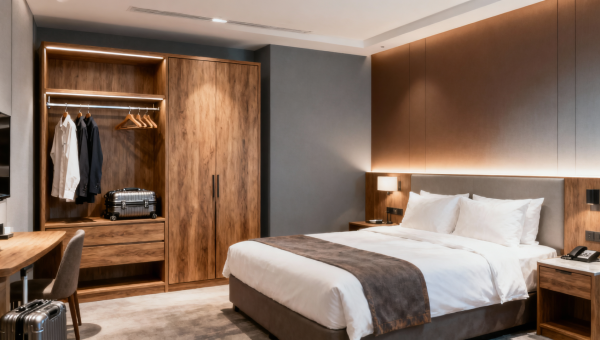
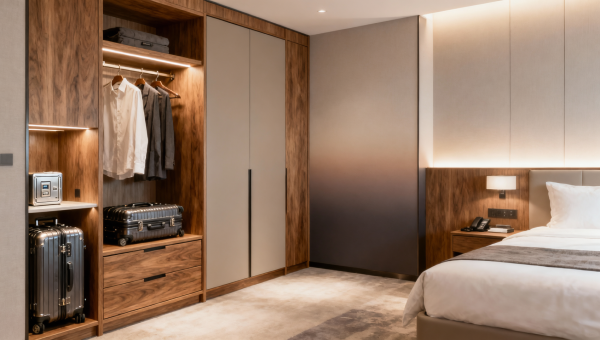
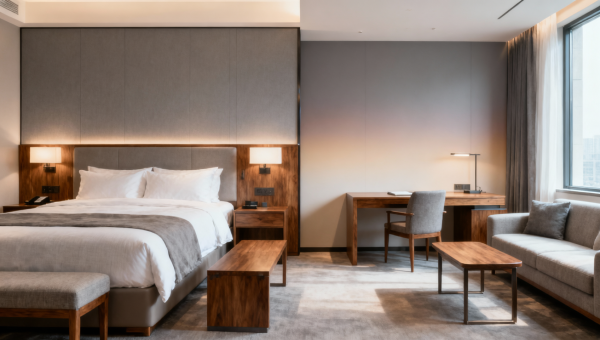
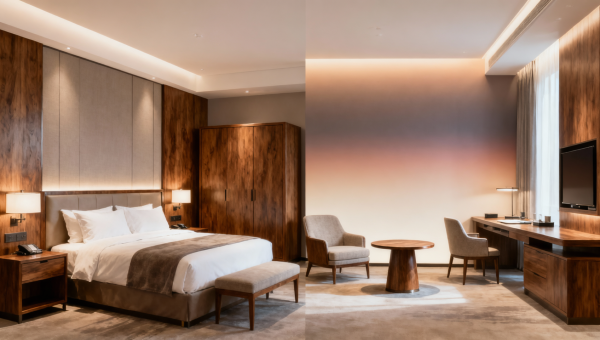
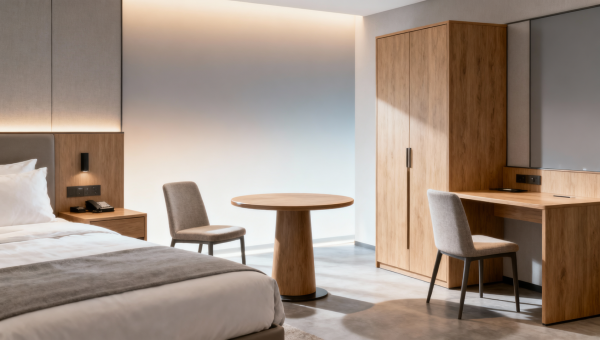
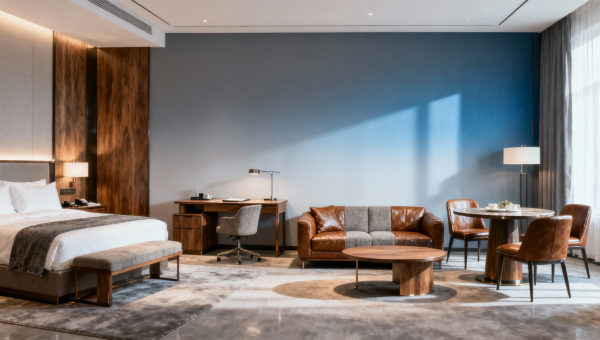
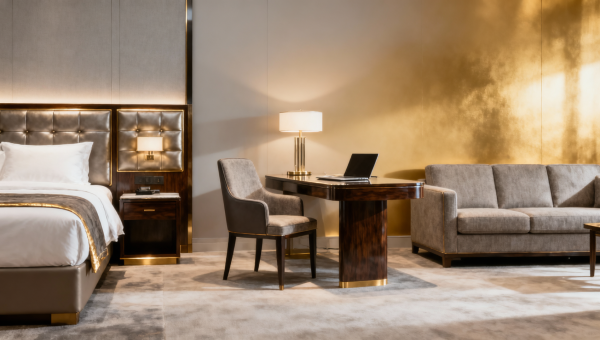
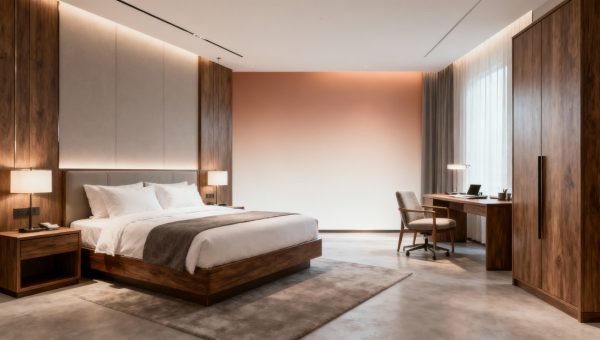
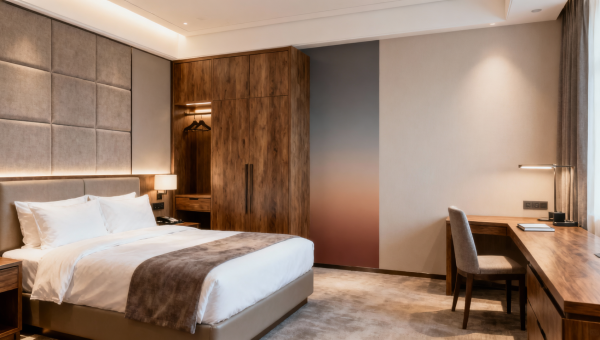
Guestroom furniture usually needs to balance comfort, visual warmth, and moderate-duty durability. Core categories include hotel beds, headboards, nightstands, wardrobes, hotel desks, lounge chairs, and occasionally hotel sofas.
In this zone, buyers should prioritize:
- Comfort and perceived quality
- Scratch and stain resistance for daily housekeeping cycles
- Stable joinery for repeated guest use over years
- Low-noise function for drawers, doors, and movable elements
- Cleanability of upholstered surfaces and touchpoints
- Fire and material compliance according to destination market requirements
Guestroom furniture does not always need the same structural reinforcement as public-area seating, but it does require reliable finish performance and strong consistency across large volumes.
Lobby and reception: heavy traffic, impression value, and structural strength
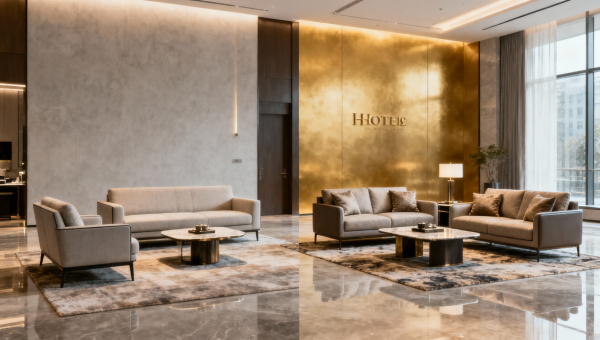
The lobby is one of the highest-visibility zones in a hotel. It is also one of the most demanding. Guests sit with luggage, wait in groups, work on devices, meet casually, and move furniture more often than intended.
Here, specifications should typically emphasize:
- Higher frame strength for sofas, lounge chairs, and occasional tables
- Commercial-grade upholstery with stronger abrasion and seam performance
- Stable table bases and impact-resistant edges
- Finishes that withstand cleaning chemicals and frequent touch
- Design details that maintain visual sharpness under constant use
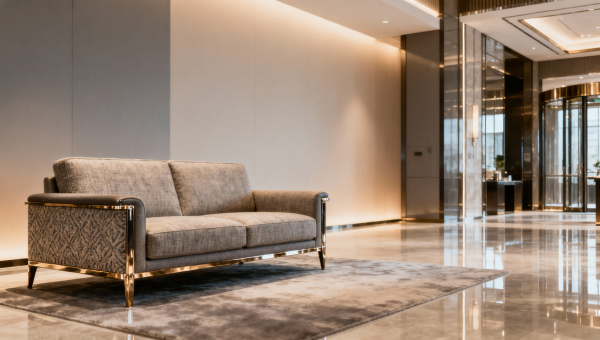
Lobby furniture often carries more image value than guestroom furniture, but it also takes more abuse. That is why hospitality furniture for public zones usually needs a different build standard, even when the design language matches the rooms.
Restaurants and bars: intense wear, hygiene, and turnover efficiency
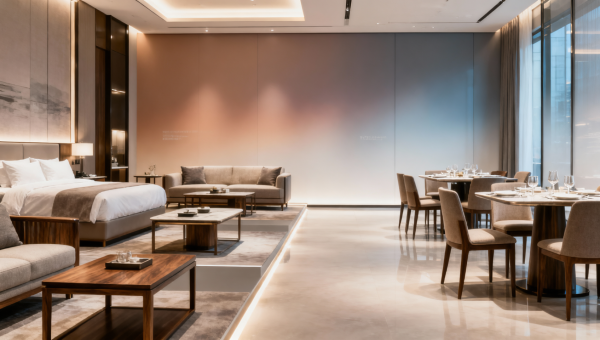
Dining spaces place unique demands on hotel chairs, hotel tables, banquettes, bar stools, and host stands. These pieces face frequent movement, spills, cleaning chemicals, and dense turnover patterns.
Key specification priorities include:
- Stronger joints and anti-racking design for chairs
- Tabletop resistance to heat, moisture, staining, and impact
- Easy-clean upholstery or hard surfaces for hygiene control
- Footrest and leg protection in bar seating
- Replaceable glides and wear components
In these zones, lifecycle maintenance matters as much as initial design. A dining chair that is elegant but difficult to clean or refinish can create long-term operating inefficiency.
Meeting rooms and business areas: flexibility and functional ergonomics
Conference furniture, training tables, hotel desks, and meeting chairs often require frequent reconfiguration. Unlike lounge seating, they need predictable ergonomics and mobility.
Specifications here should focus on:
- Weight balance between portability and durability
- Stackability or nesting performance where needed
- Cable management and technology integration
- Consistent seating comfort for longer sessions
- Surface durability against equipment use and repeated setup
Outdoor, poolside, and terrace zones: weather exposure and safety
Outdoor hospitality furniture is a separate specification category altogether. UV exposure, rain, humidity, salt air, and temperature changes can rapidly damage indoor-grade materials used outside.
Critical requirements include:
- Weather-resistant frames and finishes
- Corrosion control for metal components
- UV-stable materials and textiles
- Quick-dry cushions and mold-resistant construction
- Slip, stability, and safety considerations around wet areas
This is one of the most common sourcing mistakes in commercial furniture projects: selecting products that match the desired style but are not engineered for true exterior hospitality use.
Which technical specifications matter most by zone
For procurement teams and commercial evaluators, it helps to break furniture specifications into practical decision categories.
1. Structural durability
This includes frame construction, joinery, load-bearing capacity, reinforcement, and long-term shape retention. Public seating, dining chairs, and lobby tables generally require stronger structural standards than decorative or low-use guestroom pieces.
2. Surface and finish performance
Casegoods, hotel tables, and hotel desks need finishes suited to their environment. Guestroom tops may need resistance to luggage abrasion and cleaning agents. Restaurant tables may require stronger heat, spill, and scratch performance. Outdoor finishes need weather and UV resistance.
3. Upholstery and textile suitability
Fabric and faux leather choices should match cleaning frequency, stain risk, texture expectations, and flame requirements. A luxury-looking textile may work in a suite headboard but be unsuitable for a high-turnover lounge or family dining zone.
4. Fire, safety, and regional compliance
Compliance requirements vary by market and project type. Buyers should confirm applicable standards for flammability, toxicity, labeling, and installation environment early in the sourcing process. This is particularly important for hotel room furniture, upholstered seating, and public-area applications.
5. Ergonomics and user behavior
A chair used for a 20-minute breakfast seating cycle should not be specified the same way as a lounge chair intended for one-hour waiting periods, or a desk chair meant for work sessions. The zone determines the right comfort profile.
6. Maintenance and replacement logic
Some zones benefit from highly repairable furniture. Others need low-maintenance sealed surfaces. Buyers should think beyond installation and ask: how easily can this item be cleaned, touched up, reupholstered, or replaced in batches?
How zone-based specs improve ROI in hospitality procurement
For business-focused readers, the biggest reason to specify by zone is not only product performance. It is better financial control over the life of the asset.
When specifications match actual use, hotels and hospitality groups typically gain in five areas:
- Lower total cost of ownership: fewer premature replacements and less frequent repair
- More predictable maintenance planning: materials perform according to intended operating conditions
- Better guest experience: comfort and visual quality hold up longer
- Reduced procurement risk: fewer claims related to finish failure, instability, or inappropriate application
- Smarter budget allocation: investment is concentrated in the most exposed zones
This is especially important in luxury furniture sourcing. Premium hospitality projects should not simply spend more across all categories. They should spend precisely where guest touchpoints, brand visibility, and wear intensity justify it.
Common sourcing mistakes when buyers do not define specs by zone
Even experienced teams can make avoidable errors if they organize purchasing around appearance only.
- Specifying by catalog image instead of use case: visually attractive furniture may not suit the operational environment.
- Using residential-grade logic in commercial spaces: hospitality furniture must handle repeated public use and cleaning.
- Ignoring housekeeping realities: difficult-to-clean details create labor and appearance problems.
- Not distinguishing front-of-house and back-of-house demands: exposure, wear, and replacement logic differ.
- Applying the same fabric or finish everywhere: some materials work in guestrooms but fail in dining or lobby settings.
- Approving samples without performance context: mockups should be reviewed against zone-specific requirements, not aesthetics alone.
These mistakes are expensive because they often appear only after occupancy, when replacement becomes more disruptive and costly.
What procurement teams should ask suppliers before approving hospitality furniture
To make better sourcing decisions, buyers should request more than dimensions, finish swatches, and price.
Useful supplier questions include:
- Which zone is this product engineered for: guestroom, lobby, dining, meeting, or outdoor?
- What performance tests or internal standards support that claim?
- What frame materials and joinery methods are used?
- How does the finish perform against abrasion, moisture, heat, or cleaning chemicals?
- What upholstery options are recommended by zone?
- Can wear components such as glides, cushions, or upholstery panels be replaced?
- What compliance documentation is available for the target market?
- What reference projects show this product in similar hospitality use?
- Can the design be adapted under OEM or ODM production for different zones while keeping a unified visual identity?
For distributors and agents, these questions are also useful in supplier qualification. They help distinguish manufacturers that understand commercial application from those offering only generic furniture production.
A practical framework for specifying hotel furniture by zone
If a project team wants a usable method, a simple four-step framework works well.
Map the property by use intensity
List every furniture zone and rank it by traffic, dwell time, movement frequency, cleaning intensity, and guest visibility.
Define performance priorities for each zone
For example, guestrooms may prioritize comfort and finish consistency, while lobby seating prioritizes structural durability and upholstery resilience.
Align aesthetics with technical variation
Design continuity matters, but technical specifications can vary beneath a common visual language. This is how commercial furniture projects preserve brand identity without compromising performance.
Validate with lifecycle thinking
Compare not just unit price, but expected lifespan, maintenance burden, repairability, and replacement impact.
This framework is especially relevant for hospitality groups managing multiple properties, where standard design programs need regional or operational adjustment.
Final takeaway: the best hospitality furniture spec is not universal, but purposeful
Hospitality furniture needs different specs by zone because hospitality spaces do different jobs. Guestrooms support rest and private comfort. Lobbies support constant shared use and first impressions. Restaurants demand hygiene and heavy turnover. Meeting areas require function and flexibility. Outdoor spaces need weather resilience. The right product specification follows those realities.
For procurement professionals, commercial evaluators, and sourcing partners, the goal is not to make every item stronger or more expensive. It is to make every item fit for purpose. When hotel room furniture, hotel chairs, hotel tables, hotel desks, hotel beds, and hotel sofas are specified according to their actual zone, buyers gain better performance, fewer failures, stronger brand consistency, and more reliable long-term value.
In short, smarter hospitality procurement starts with a simple principle: specify by how the space is used, not just by how the furniture looks.
Search News
Hot Articles
- Stage Lighting & TrussCCTV5 Snooker Broadcast Drives 37% Surge in Stage Lighting Export InquiriesApr 21, 2026
- Indoor PlaygroundVietnam Mandates Child Finger-Trap Sensors for Indoor Play EquipmentApr 21, 2026
- Stage Lighting & TrussGuangdong vs. Shanxi CBA Game Highlights Domestic Smart Arena LightingApr 21, 2026
Popular Tags
Need ExpertConsultation?
Connect with our specialized leisureengineering team for procurementstrategies.
Recommended News
 Apr 10, 2026RCEP Cuts ASEAN Hotel Furniture Tariffs to 0% for Chinese Bamboo ProductsRCEP cuts ASEAN hotel furniture tariffs to 0% for Chinese bamboo products. Explore how this benefits exporters, procurement teams & supply chains in Southeast Asia's booming hospitality sector.● Hospitality Sourcing Dir
 Apr 10, 2026US Hotel Association Updates 2026 Smart Room Tech Guidelines, Mandates UL 2900-2-2 CertificationUS Hotel Association mandates UL 2900-2-2 certification for smart room tech by 2026. Learn how this impacts IoT manufacturers and hotel chains' procurement strategies.● Hospitality Sourcing Dir
 Apr 10, 2026EU Mandates QR Codes for Hotel Linens: China Exporters Must Comply by April 2026EU mandates QR codes for hotel linens by 2026, impacting China's textile exporters. Learn compliance requirements for traceability, sustainability reporting, and supply chain adaptation.● Hospitality Sourcing Dir
 Apr 09, 2026Zibo Launches 'Treasure Shandong Through the Lens' Photo Tour, Themed Homestays Emerge as Cross-Border Marketing ToolDiscover Zibo's 'Treasure Shandong Through the Lens' photo tour featuring 32 themed homestays blending vintage cameras, Hanfu culture & industrial spaces. A groundbreaking cross-border marketing model attracting global influencers & platforms like Rakuten Travel.● Hospitality Sourcing Dir
 Apr 09, 2026Yangzhou Slender West Lake Flower Festival Opens, Blending Heritage and Tech for Luxury TourismDiscover the 2026 Yangzhou Slender West Lake Flower Festival, blending heritage crafts with AR technology for luxury tourism. Experience cultural performances, workshops, and themed stays attracting global travelers. Explore China's new era of experiential tourism.● Hospitality Sourcing Dir
 Apr 09, 2026New Team Travel Contracts Raise Compliance Standards for Overseas AgenciesNew team travel contracts enforce stricter compliance for overseas agencies, requiring rigorous vetting of Chinese suppliers. Learn how these 2026 regulations impact study tours, hotels, and global partnerships.● Hospitality Sourcing Dir
 Apr 09, 2026Shangyou County's Hotel Subsidy Policy Boosts China's MICE Tourism AppealShangyou County's 2026 hotel subsidy policy offers RMB 100 per room for MICE tourism, boosting China's appeal to international buyers. Discover how this strategic move enhances cost-effective accommodations for corporate events and study tours.● Hospitality Sourcing Dir
 Apr 21, 2026Open or closed hotel wardrobes for easier housekeeping?Hotel wardrobes affect housekeeping speed, guest appeal, and hospitality procurement. Compare open vs closed designs for hotel furniture, luxury furniture, and hotel room furniture planning.● Hospitality Sourcing Dir
 Apr 21, 2026Hotel wardrobes that fit luggage without wasting spaceHotel wardrobes that fit luggage smartly without wasting space—explore hotel furniture solutions that elevate hotel room furniture, support hospitality procurement, and enhance guest comfort.● Hospitality Sourcing Dir
 Apr 21, 2026Why hotel room furniture wears unevenly after openingHotel furniture wear starts unevenly from day one. Learn how hotel beds, hotel chairs, hotel desks and hotel room furniture perform in real use, with smart hospitality procurement tips.● Hospitality Sourcing Dir
 Apr 21, 2026Hotel room furniture packages that cut design mismatchHotel room furniture packages align hotel furniture, hotel beds, hotel chairs, hotel tables, and hotel desks with luxury furniture standards—reducing design mismatch and speeding hospitality procurement.● Hospitality Sourcing Dir
 Apr 21, 2026Low seat or deep seat hotel sofas for modern lobbies?Hotel furniture buyers compare low seat and deep seat hotel sofas for modern lobbies. Explore luxury furniture choices that improve comfort, traffic flow, brand image, and hospitality procurement value.● Hospitality Sourcing Dir
 Apr 21, 2026Hotel sofas that keep their shape in high traffic areasHotel sofas, hotel furniture, and hospitality furniture that keep shape in high-traffic areas—discover luxury furniture sourcing tips, durable commercial furniture specs, and smarter hospitality procurement.● Hospitality Sourcing Dir
 Apr 21, 2026Why hospitality furniture needs different specs by zoneHospitality furniture specs vary by zone. Learn how hotel furniture, hotel beds, hotel chairs, hotel tables, and hotel desks improve durability, ROI, and luxury guest experience.● Hospitality Sourcing Dir
 Apr 21, 2026Hospitality furniture that supports faster room turnoverHospitality furniture that speeds room turnover: compare hotel beds, hotel chairs, hotel tables, hotel desks and hotel sofas for easier cleaning, durability, and smarter hospitality procurement.● Hospitality Sourcing Dir
 Apr 21, 2026Where hotel equipment budgets usually go off trackHotel furniture and hotel equipment budgets often fail from hidden scope, logistics, and lifecycle costs. Learn smarter hospitality procurement for hotel beds, chairs, tables, and luxury furniture.● Hospitality Sourcing Dir
 Apr 21, 2026Hotel equipment upgrades that improve guest flow firstHotel equipment upgrades improve guest flow fast with hotel furniture, hotel beds, hotel chairs, catering equipment, and soundproofing materials—boost comfort, efficiency, and procurement ROI.● Hospitality Sourcing Dir
 Apr 21, 2026What shortens the life of commercial furniture in hotelsHotel furniture and commercial furniture wear out fast when hotel beds, hotel chairs, hotel tables, hotel desks, and hotel sofas face heavy use, poor maintenance, and weak materials. Learn smart hospitality procurement tips.● Hospitality Sourcing Dir
 Apr 21, 2026Commercial furniture trends hotels are actually adoptingCommercial furniture trends hotels are adopting: luxury furniture, hotel beds, hotel chairs, hotel tables and hotel sofas that improve hotel furniture sourcing, durability, and hospitality procurement value.● Hospitality Sourcing Dir
 Apr 21, 2026How to spot hotel furniture built for daily wearHotel furniture buying guide: learn how to assess hotel beds, hotel chairs, hotel tables, and hospitality furniture for daily wear, lower maintenance, and smarter hospitality procurement.● Hospitality Sourcing Dir
 Apr 21, 2026Hotel furniture mistakes that age a room too quicklyHotel furniture buying guide: avoid costly hotel beds, hotel chairs, and hotel room furniture mistakes. Discover luxury furniture tips for durable, brand-right hospitality procurement.● Hospitality Sourcing Dir
 Apr 21, 2026Why some soundproofing materials fail after installationLearn why soundproofing materials fail after installation in hotel furniture projects. Explore hotel beds, hotel sofas, hotel wardrobes and hospitality procurement tips for lasting acoustic performance.● Hospitality Sourcing Dir
 Apr 21, 2026Soundproofing materials that work best between guest roomsSoundproofing materials for hotel furniture projects: discover the best systems between guest rooms, from mineral wool to acoustic doors, to improve comfort, protect reviews, and support hospitality procurement.● Hospitality Sourcing Dir
 Apr 21, 2026How firm should hotel beds be for mixed guest profiles?Hotel beds for mixed guest profiles: learn how hotel furniture and hospitality procurement teams balance comfort, durability, and luxury furniture standards to improve guest satisfaction.● Hospitality Sourcing Dir