Hospitality furniture that supports faster room turnover
In hospitality operations, faster room turnover depends on more than staffing—it starts with hospitality furniture designed for durability, easy cleaning, and rapid reset. From hotel beds, hotel chairs, and hotel tables to hotel desks, hotel sofas, and hotel wardrobes, the right hotel room furniture helps properties improve efficiency without sacrificing guest comfort. This guide explores how hotel furniture and commercial furniture choices support smarter hospitality procurement for high-performance hotels.
Why room turnover starts with furniture design, not just housekeeping speed
Many hotel teams try to improve room turnaround by adding labor, tightening SOPs, or compressing inspection time. Those steps matter, but they rarely solve the root cause when hotel furniture creates friction. If a housekeeping attendant needs 3–5 extra minutes to move a heavy chair, clean around a low-clearance bed base, or reset a cluttered desk, that delay multiplies across 80, 150, or 300 rooms.
Well-specified hospitality furniture reduces touchpoints, cleaning complexity, and reset errors. Beds with accessible underframe clearance, hotel tables with easy-wipe surfaces, and hotel sofas with stain-resistant upholstery make a visible operational difference. For procurement teams, this turns furniture from a design-only decision into an efficiency asset that supports occupancy pressure, service consistency, and labor control.
This is especially relevant for business hotels, airport hotels, city-center properties, and limited-service brands where room turnover windows may fall within 20–40 minutes during peak periods. In these environments, furniture that resists damage and supports quick reset helps reduce out-of-service rooms, delayed check-ins, and maintenance callbacks.
For information researchers and commercial evaluators, the key shift is simple: hotel room furniture should be assessed not only by appearance and unit cost, but by how it performs across cleaning cycles, guest turnover frequency, and replacement planning over 3–7 years.
What operationally efficient hotel furniture usually includes
- Smooth, non-porous or sealed surfaces that can be cleaned quickly without specialized chemicals or excessive drying time.
- Frames, legs, and joints designed to reduce dust traps, fabric sagging, and hard-to-reach corners around hotel beds and hotel desks.
- Commercial-grade materials that tolerate repeated wiping, luggage impact, moisture exposure, and daily guest use in high-traffic properties.
- Modular or standardized components that simplify replacement of panels, upholstery sections, hardware, and casegoods during maintenance cycles.
Which furniture categories have the biggest impact on faster room turnover?
Not every item in a guest room contributes equally to operational speed. In most projects, procurement teams get the strongest efficiency gains by focusing on six core categories: hotel beds, hotel chairs, hotel tables, hotel desks, hotel sofas, and hotel wardrobes. These pieces influence cleaning time, room reset sequence, maintenance frequency, and staff ergonomics more than decorative accessories do.
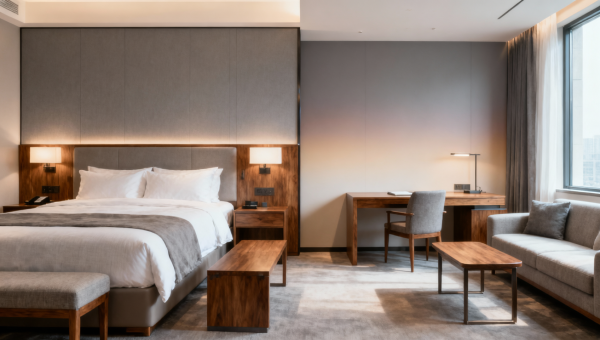
Hotel beds are usually the top priority because they affect linen changes, floor access, and visual presentation. A bed base with either adequate clearance or a sealed plinth can be easier to manage than an inconsistent hybrid design that traps dust and debris. For housekeeping teams, predictability matters more than novelty.
Hotel chairs and hotel tables also deserve close evaluation. Lightweight but stable seating helps attendants move and reset furniture in seconds rather than minutes. Tables with rounded edges, durable laminates, or compact stone-look commercial surfaces can reduce both cleaning effort and visible damage over time.
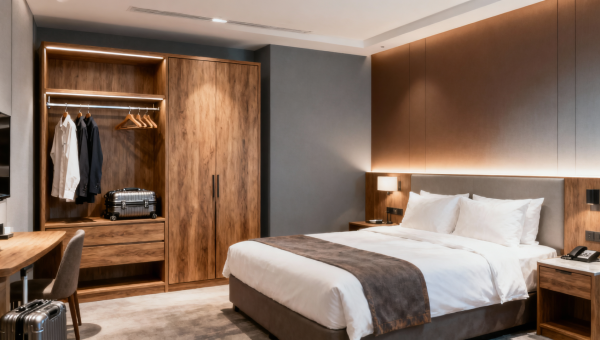
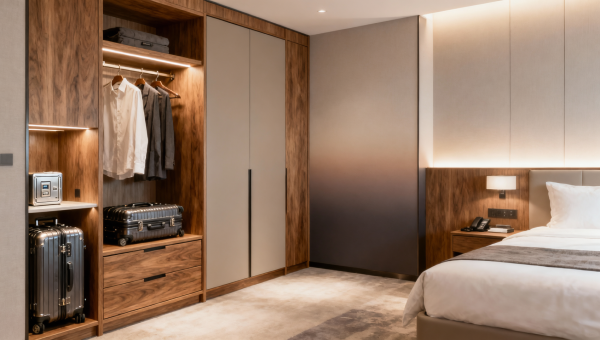
Storage pieces such as hotel wardrobes and integrated luggage benches influence guest behavior as well. When storage is intuitive and durable, guests are less likely to place luggage on sofas, writing desks, or beds, which lowers wear, shortens reset time, and keeps the room layout consistent between departures.
The table below shows how common hotel furniture categories affect room turnover in practical procurement terms.
For purchasing teams, this comparison helps prioritize specification review. Instead of treating all guest room pieces equally, buyers can focus on the furniture that most directly affects cleaning cycle length, maintenance calls, and visible room readiness during high-arrival periods.
A practical way to rank furniture by operational importance
- Start with items touched in every turnover: bed, bedside surfaces, desk, chair, bathroom-adjacent surfaces.
- Next assess pieces frequently damaged by luggage or movement: benches, wardrobe bases, table edges, sofa arms.
- Then review items with the longest replacement lead times, often 4–10 weeks depending on finish, upholstery, and OEM production complexity.
How to compare hotel furniture options for durability, cleaning, and reset speed
Buyers often face a familiar problem: two hotel furniture programs may look similar in renderings, yet perform very differently after 6–12 months of operation. That is why comparison should move beyond style boards. Procurement teams need a structured review of material behavior, labor impact, maintenance access, and replacement practicality.
For example, a highly textured surface may photograph well but slow down wiping and hold visible residue. A decorative metal detail may enhance perceived value but create more touchpoints for fingerprints and corrosion in humid locations. Likewise, oversized lounge seating may suit resort suites but hinder daily room reset in compact urban guest rooms.
Commercial furniture selection also changes by property type. A limited-service hotel usually values simplified upkeep and standardized dimensions. A luxury property may still require premium finishes, but it should aim for concealed durability, service-friendly construction, and consistent replacement pathways for custom parts.
The comparison table below can help sourcing teams, distributors, and project evaluators assess which furniture specification better supports faster room turnover without creating downstream maintenance pressure.
A comparison like this helps reduce false savings. A lower-priced hotel room furniture package may cost more over a 24–36 month period if cleaning time rises, damage becomes visible sooner, or spare components are difficult to source across multiple markets.
Three technical questions buyers should ask suppliers
1. How does the finish behave under repeated cleaning cycles?
Ask whether the supplier has practical maintenance guidance for daily, weekly, and deep-clean routines. A finish that performs well under occasional cleaning may still degrade under daily turnover conditions, especially in hotels with high occupancy and limited drying time between stays.
2. Which components are replaceable on site?
This matters for wardrobes, desks, and sofas. Replaceable glides, panels, upholstery sections, and handles can reduce downtime. For regional chains or distributors, standardized spare parts are often more valuable than purely custom construction.
3. What is the normal production and replenishment window?
Typical lead times vary by material and customization level, often ranging from 4–8 weeks for standard programs and 8–12 weeks for customized casegoods or upholstery. Early clarification helps project planners align opening schedules and replacement stock strategy.
What procurement teams should check before approving a hotel room furniture program
In hotel furniture sourcing, the fastest mistake is approving samples based only on visual finish. Procurement, operations, and design teams should review the same package through different lenses: guest perception, housekeeping workflow, engineering access, and commercial lifecycle value. When those perspectives are aligned early, room turnover performance improves with fewer compromises after installation.
A practical approval process usually includes 4 steps: sample review, mock-up room validation, compliance and packaging confirmation, then production sign-off. Each stage should filter out different risks. For example, mock-up validation should test drawer operation, chair movement, cleaning access, and whether the bed base interferes with actual housekeeping tools used on site.
For dealers and agents, consistency is just as important as quality. If a supplier can reproduce finish, hardware, and construction across repeated orders, it becomes easier to support multi-property rollouts and after-sales maintenance. In hospitality procurement, repeatability often has more value than one impressive showroom sample.
Global Commercial Trade supports this evaluation process by connecting buyers with sourcing intelligence, category-specific guidance, and manufacturing assessment perspectives that go beyond pricing sheets. That is useful when a project needs OEM or ODM flexibility but still requires disciplined review of durability, compliance, and supply continuity.
Five checkpoints before placing a purchase order
- Confirm dimensions against actual room plans, circulation paths, and housekeeping clearance zones rather than concept drawings alone.
- Review material specifications for high-contact areas such as desk tops, chair arms, wardrobe handles, and bed corners.
- Check packing method, labeling accuracy, and phased delivery sequencing for projects opening in 2–3 installation stages.
- Clarify spare parts policy, replenishment quantities, and whether replacement components can be ordered in small batches.
- Verify applicable compliance items, which may include fire performance expectations, material safety documentation, or local market import requirements.
Common compliance and service considerations
Hotel furniture projects often involve practical compliance questions rather than a single universal certification. Depending on the market, buyers may need to review flammability expectations for upholstery, formaldehyde or emission considerations for panel materials, and general product safety documentation. Requirements should always be checked against destination market rules and project specifications.
Service capability matters too. A hotel opening in phases may require sample approval in 7–15 days, production confirmation in 2–4 weeks, and installation coordination across several delivery windows. Suppliers who understand these commercial milestones are easier to integrate into real hospitality timelines.
Where do buyers make the wrong trade-offs on cost, customization, and lifecycle value?
One of the most common procurement mistakes is chasing the lowest initial package price while underestimating maintenance, replacement, and labor effects. In hotel room furniture, the cheapest option may use finishes that show wear in under a year, soft structures that deform with luggage impact, or decorative details that slow every cleaning cycle. Those hidden costs rarely appear in the first quotation.
Another mistake is over-customization. Bespoke wardrobes, highly unique desks, or non-standard hardware can strengthen brand identity, but they can also complicate future replenishment. For chain operators, a hybrid strategy often works better: customize visual touchpoints while standardizing internal structures, hardware families, and maintenance-sensitive components.
This is where commercial sourcing intelligence becomes valuable. Buyers need to know not only whether a supplier can produce custom hospitality furniture, but whether that customization is sustainable across replenishment cycles, regional distribution, and changing room prototypes over 3–5 years.
For distributors and project agents, the strongest offer is often not the broadest catalog. It is a controlled furniture program with clear materials, repeatable production, manageable MOQs, and realistic lead times for both launch orders and reorder support.
A balanced cost strategy for hotel furniture procurement
- Separate visual customization from structural customization so only guest-facing features carry premium complexity.
- Estimate cost over at least 24–36 months, including touch-up, spare parts, and room downtime risk.
- Use mock-up feedback from housekeeping and engineering, not only from designers or owners.
- Keep a defined spare stock plan for high-risk items such as chair glides, wardrobe handles, and upholstery panels.
FAQ: practical questions about hospitality furniture for faster turnover
How should buyers choose hotel beds for easier housekeeping?
Start with cleaning access, linen handling, and edge durability. A bed design should either allow practical floor cleaning beneath it or use a sealed base that prevents dust accumulation. Buyers should also assess corner protection, compatibility with the mattress system, and whether the frame remains visually neat after repeated stripping and remaking during daily operations.
Are upholstered hotel sofas always a bad choice for fast room turnover?
Not necessarily. The issue is not upholstery itself, but fabric performance and construction. A commercial sofa with stain-tolerant textile, stable cushions, and clean seam design can work well in suites and extended-stay properties. Problems usually arise when soft residential-style upholstery is specified for rooms that need rapid daily reset and high durability.
What lead times are common for hotel furniture sourcing?
Typical timelines depend on standardization and customization. Standard commercial furniture programs may move in 4–8 weeks, while customized hotel room furniture often requires 8–12 weeks or longer when samples, special finishes, or multi-market compliance checks are involved. Buyers should also separate production time from shipping and site installation scheduling.
What do procurement teams often overlook during sample approval?
They often overlook movement weight, underside finishing, edge wear points, and actual cleaning behavior. A sample that looks refined under showroom light may still perform poorly if it scratches easily, traps dust, or requires careful handling that does not match a high-turnover operating environment.
Why work with GCT when sourcing hospitality furniture for operational performance?
Hotel furniture sourcing becomes more complex when a project must balance aesthetics, durability, compliance, speed, and supplier reliability at the same time. Global Commercial Trade helps buyers navigate that complexity through focused B2B market intelligence and sourcing support tailored to commercial environments, especially where hospitality performance matters more than simple catalog selection.
For procurement managers, business evaluators, and distribution partners, GCT provides a stronger basis for decision-making by connecting furniture categories to real purchasing criteria: material suitability, OEM or ODM feasibility, delivery coordination, and commercial risk visibility. That makes it easier to compare suppliers on meaningful factors instead of relying on surface-level presentations.
If you are planning a new hotel opening, renovation cycle, or regional distribution strategy, the most useful next step is a targeted specification review. This can include hotel beds, hotel chairs, hotel tables, hotel desks, hotel sofas, hotel wardrobes, and broader commercial furniture packages aligned with your turnover goals, budget range, and project timeline.
Contact GCT to discuss product selection, finish and material confirmation, lead time planning, sample support, customization scope, packaging requirements, and market-specific compliance considerations. When room turnover speed matters, the right sourcing conversation should begin before the purchase order—not after operations discover the hidden cost of the wrong furniture program.
Search News
Hot Articles
- Stage Lighting & TrussCCTV5 Snooker Broadcast Drives 37% Surge in Stage Lighting Export InquiriesApr 21, 2026
- Indoor PlaygroundVietnam Mandates Child Finger-Trap Sensors for Indoor Play EquipmentApr 21, 2026
- Stage Lighting & TrussGuangdong vs. Shanxi CBA Game Highlights Domestic Smart Arena LightingApr 21, 2026
Popular Tags
Need ExpertConsultation?
Connect with our specialized leisureengineering team for procurementstrategies.
Recommended News
 Apr 10, 2026RCEP Cuts ASEAN Hotel Furniture Tariffs to 0% for Chinese Bamboo ProductsRCEP cuts ASEAN hotel furniture tariffs to 0% for Chinese bamboo products. Explore how this benefits exporters, procurement teams & supply chains in Southeast Asia's booming hospitality sector.● Hospitality Sourcing Dir
 Apr 10, 2026US Hotel Association Updates 2026 Smart Room Tech Guidelines, Mandates UL 2900-2-2 CertificationUS Hotel Association mandates UL 2900-2-2 certification for smart room tech by 2026. Learn how this impacts IoT manufacturers and hotel chains' procurement strategies.● Hospitality Sourcing Dir
 Apr 10, 2026EU Mandates QR Codes for Hotel Linens: China Exporters Must Comply by April 2026EU mandates QR codes for hotel linens by 2026, impacting China's textile exporters. Learn compliance requirements for traceability, sustainability reporting, and supply chain adaptation.● Hospitality Sourcing Dir
 Apr 09, 2026Zibo Launches 'Treasure Shandong Through the Lens' Photo Tour, Themed Homestays Emerge as Cross-Border Marketing ToolDiscover Zibo's 'Treasure Shandong Through the Lens' photo tour featuring 32 themed homestays blending vintage cameras, Hanfu culture & industrial spaces. A groundbreaking cross-border marketing model attracting global influencers & platforms like Rakuten Travel.● Hospitality Sourcing Dir
 Apr 09, 2026Yangzhou Slender West Lake Flower Festival Opens, Blending Heritage and Tech for Luxury TourismDiscover the 2026 Yangzhou Slender West Lake Flower Festival, blending heritage crafts with AR technology for luxury tourism. Experience cultural performances, workshops, and themed stays attracting global travelers. Explore China's new era of experiential tourism.● Hospitality Sourcing Dir
 Apr 09, 2026New Team Travel Contracts Raise Compliance Standards for Overseas AgenciesNew team travel contracts enforce stricter compliance for overseas agencies, requiring rigorous vetting of Chinese suppliers. Learn how these 2026 regulations impact study tours, hotels, and global partnerships.● Hospitality Sourcing Dir
 Apr 09, 2026Shangyou County's Hotel Subsidy Policy Boosts China's MICE Tourism AppealShangyou County's 2026 hotel subsidy policy offers RMB 100 per room for MICE tourism, boosting China's appeal to international buyers. Discover how this strategic move enhances cost-effective accommodations for corporate events and study tours.● Hospitality Sourcing Dir
 Apr 21, 2026Open or closed hotel wardrobes for easier housekeeping?Hotel wardrobes affect housekeeping speed, guest appeal, and hospitality procurement. Compare open vs closed designs for hotel furniture, luxury furniture, and hotel room furniture planning.● Hospitality Sourcing Dir
 Apr 21, 2026Hotel wardrobes that fit luggage without wasting spaceHotel wardrobes that fit luggage smartly without wasting space—explore hotel furniture solutions that elevate hotel room furniture, support hospitality procurement, and enhance guest comfort.● Hospitality Sourcing Dir
 Apr 21, 2026Why hotel room furniture wears unevenly after openingHotel furniture wear starts unevenly from day one. Learn how hotel beds, hotel chairs, hotel desks and hotel room furniture perform in real use, with smart hospitality procurement tips.● Hospitality Sourcing Dir
 Apr 21, 2026Hotel room furniture packages that cut design mismatchHotel room furniture packages align hotel furniture, hotel beds, hotel chairs, hotel tables, and hotel desks with luxury furniture standards—reducing design mismatch and speeding hospitality procurement.● Hospitality Sourcing Dir
 Apr 21, 2026Low seat or deep seat hotel sofas for modern lobbies?Hotel furniture buyers compare low seat and deep seat hotel sofas for modern lobbies. Explore luxury furniture choices that improve comfort, traffic flow, brand image, and hospitality procurement value.● Hospitality Sourcing Dir
 Apr 21, 2026Hotel sofas that keep their shape in high traffic areasHotel sofas, hotel furniture, and hospitality furniture that keep shape in high-traffic areas—discover luxury furniture sourcing tips, durable commercial furniture specs, and smarter hospitality procurement.● Hospitality Sourcing Dir
 Apr 21, 2026Why hospitality furniture needs different specs by zoneHospitality furniture specs vary by zone. Learn how hotel furniture, hotel beds, hotel chairs, hotel tables, and hotel desks improve durability, ROI, and luxury guest experience.● Hospitality Sourcing Dir
 Apr 21, 2026Hospitality furniture that supports faster room turnoverHospitality furniture that speeds room turnover: compare hotel beds, hotel chairs, hotel tables, hotel desks and hotel sofas for easier cleaning, durability, and smarter hospitality procurement.● Hospitality Sourcing Dir
 Apr 21, 2026Where hotel equipment budgets usually go off trackHotel furniture and hotel equipment budgets often fail from hidden scope, logistics, and lifecycle costs. Learn smarter hospitality procurement for hotel beds, chairs, tables, and luxury furniture.● Hospitality Sourcing Dir
 Apr 21, 2026Hotel equipment upgrades that improve guest flow firstHotel equipment upgrades improve guest flow fast with hotel furniture, hotel beds, hotel chairs, catering equipment, and soundproofing materials—boost comfort, efficiency, and procurement ROI.● Hospitality Sourcing Dir
 Apr 21, 2026What shortens the life of commercial furniture in hotelsHotel furniture and commercial furniture wear out fast when hotel beds, hotel chairs, hotel tables, hotel desks, and hotel sofas face heavy use, poor maintenance, and weak materials. Learn smart hospitality procurement tips.● Hospitality Sourcing Dir
 Apr 21, 2026Commercial furniture trends hotels are actually adoptingCommercial furniture trends hotels are adopting: luxury furniture, hotel beds, hotel chairs, hotel tables and hotel sofas that improve hotel furniture sourcing, durability, and hospitality procurement value.● Hospitality Sourcing Dir
 Apr 21, 2026How to spot hotel furniture built for daily wearHotel furniture buying guide: learn how to assess hotel beds, hotel chairs, hotel tables, and hospitality furniture for daily wear, lower maintenance, and smarter hospitality procurement.● Hospitality Sourcing Dir
 Apr 21, 2026Hotel furniture mistakes that age a room too quicklyHotel furniture buying guide: avoid costly hotel beds, hotel chairs, and hotel room furniture mistakes. Discover luxury furniture tips for durable, brand-right hospitality procurement.● Hospitality Sourcing Dir
 Apr 21, 2026Why some soundproofing materials fail after installationLearn why soundproofing materials fail after installation in hotel furniture projects. Explore hotel beds, hotel sofas, hotel wardrobes and hospitality procurement tips for lasting acoustic performance.● Hospitality Sourcing Dir
 Apr 21, 2026Soundproofing materials that work best between guest roomsSoundproofing materials for hotel furniture projects: discover the best systems between guest rooms, from mineral wool to acoustic doors, to improve comfort, protect reviews, and support hospitality procurement.● Hospitality Sourcing Dir
 Apr 21, 2026How firm should hotel beds be for mixed guest profiles?Hotel beds for mixed guest profiles: learn how hotel furniture and hospitality procurement teams balance comfort, durability, and luxury furniture standards to improve guest satisfaction.● Hospitality Sourcing Dir