Soundproofing materials that work best between guest rooms
For hotels where guest comfort defines brand value, choosing the right soundproofing materials between rooms is as critical as selecting luxury furniture, hotel beds, and hotel room furniture. For hospitality procurement teams, distributors, and commercial buyers, understanding how acoustic performance affects hotel furniture planning, guest satisfaction, and long-term operational value can directly influence sourcing decisions.
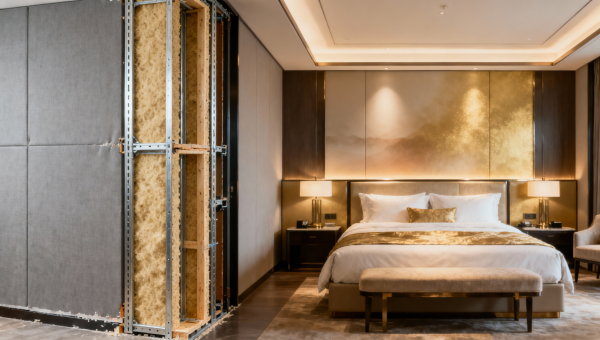
For most hotel projects, the best soundproofing materials between guest rooms are not a single product but a wall-and-floor assembly built around mineral wool insulation, resilient channels or isolation clips, double-layer gypsum board with damping compound, and carefully sealed penetrations. If the project has higher acoustic targets, concrete or double-stud partitions, acoustic underlayments, and upgraded doors and service penetrations become essential. In procurement terms, the right choice depends on target acoustic rating, construction type, renovation constraints, fire and code requirements, installation quality, and lifecycle cost—not just material price.
What hotel buyers are really trying to solve when they search for soundproofing between guest rooms
Search intent around this topic is usually practical and commercial. Buyers, specifiers, and channel partners are not looking for generic noise-control advice. They want to know which materials actually reduce guest complaints, which systems are suitable for new-build versus renovation, what delivers the best value at different hotel tiers, and how to avoid paying for products that look good in a brochure but fail on-site.
Between guest rooms, the main problem is rarely one type of noise alone. Hotels typically need to control:
- Airborne noise, such as TV sound, speech, music, and phone conversations
- Impact noise, especially from upper floors, moving furniture, footsteps, and luggage
- Flanking noise, where sound bypasses the wall through floors, ceilings, ducts, outlets, and service gaps
This is why procurement decisions should focus on complete acoustic assemblies rather than isolated materials. A premium insulation product in a poorly detailed wall will often underperform compared with a balanced system installed correctly.
Which soundproofing materials work best in real hotel applications
The most effective materials between guest rooms are those that add mass, absorb cavity noise, reduce vibration transfer, and seal air leaks. In hospitality projects, the following materials typically provide the most reliable results.
1. Mineral wool insulation
Mineral wool is one of the most dependable cavity-fill materials for guest room partition walls. It performs better acoustically than many basic fiberglass products because of its density and sound absorption properties. It also supports fire resistance goals, which is important in hotel construction.
Best use: Inside metal stud or double-stud partitions between guestrooms.
Why buyers choose it: Good acoustic value, broad code acceptance, non-combustibility, and wide supplier availability.
2. Double-layer gypsum board
Adding extra gypsum board layers increases wall mass, which helps reduce airborne sound transfer. In many hospitality specifications, two layers on one or both sides of the partition are more effective than simply upgrading insulation alone.
Best use: Standard guest room separation walls where higher STC performance is needed without fully changing wall structure.
Why buyers choose it: Familiar installation, scalable cost, and strong compatibility with fire-rated assemblies.
3. Damping compound between gypsum layers
Damping compounds convert vibration energy into low-level heat, reducing sound transmission across wall surfaces. They are especially useful when projects want a meaningful acoustic upgrade without dramatically increasing wall thickness.
Best use: Midscale to upscale hotels that need stronger speech and TV noise control.
Why buyers choose it: Better acoustic performance per thickness than mass alone in many applications.
4. Resilient channels or isolation clips
These products reduce direct mechanical connection between the gypsum board and framing, helping limit vibration transfer. When correctly installed, they can significantly improve wall performance. However, poor installation can reduce or even negate benefits.
Best use: Guest room walls and ceilings where vibration isolation matters.
Why buyers choose it: Effective upgrade path for improved STC ratings without moving to much thicker wall systems.
5. Acoustic sealants
Even a high-performance wall can fail if there are gaps around joints, perimeter edges, pipe penetrations, electrical boxes, or back-to-back outlets. Acoustic sealants are low-cost but high-impact materials in hotel soundproofing.
Best use: All perimeter joints, service openings, and transition points.
Why buyers choose it: Excellent return on investment and essential for maintaining tested assembly performance.
6. Acoustic underlayment for floors
Where guest rooms are stacked vertically, floor underlayments are crucial for reducing impact noise. Rubber, cork-rubber composites, foam systems, and other engineered underlayments may be used depending on floor finish and target rating.
Best use: Under LVT, engineered wood, tile, or carpet systems in guestroom floors.
Why buyers choose it: Better control of footfall and moving-object noise from upper floors.
7. Solid-core acoustic doors and perimeter seals
Walls are only part of the equation. Corridor-side and connecting-room doors can become major weak points. In suites and adjoining room layouts, upgrading door cores, drop seals, and frame gasketing may be necessary.
Best use: Connecting doors, suite dividers, premium rooms, and quiet-floor concepts.
Why buyers choose it: Prevents strong acoustic performance from being undermined by door leakage.
Best wall assemblies by hotel project type
Material choice should be driven by the type of project and the acoustic target. A practical procurement approach is to match assembly complexity to hotel positioning and building constraints.
For economy and midscale hotels
A common high-value solution is a metal stud partition with mineral wool insulation, resilient channel on one side, double gypsum board layers, and full acoustic sealing. This often delivers a strong balance of cost, constructability, and guest privacy.
For upscale and full-service hotels
Higher guest expectations typically justify stronger assemblies, such as staggered stud or double-stud walls with mineral wool, multiple gypsum layers, damping compound, and stricter treatment of penetrations and service runs. This is especially important where room rates and review sensitivity are higher.
For luxury hotels and branded residences
Luxury positioning usually requires more aggressive control of both direct and flanking transmission. Concrete structures, isolated wall systems, premium door packages, floating floor details, and ceiling isolation may all be appropriate depending on the building design. At this level, acoustic comfort becomes part of the brand promise, not just a technical requirement.
For renovation and conversion projects
Retrofit work often has limited cavity depth, heritage restrictions, MEP conflicts, and schedule pressure. In these cases, damping compounds, additional gypsum layers, isolation clips, sealed service boxes, and targeted door upgrades can provide meaningful improvement without full wall replacement. However, existing flanking paths should be assessed early, or upgrades may disappoint.
What matters more than product labels: STC, IIC, and assembly performance
Commercial buyers should avoid evaluating materials in isolation. Acoustic success between guest rooms depends on tested system performance.
- STC (Sound Transmission Class) is the main rating for airborne noise through walls.
- IIC (Impact Insulation Class) is important for floor-ceiling assemblies and impact noise from above.
- Field performance may differ from lab performance due to workmanship, penetrations, and flanking paths.
For hotel use, a material vendor claiming “excellent soundproofing” means little unless the full wall or floor assembly has credible tested data. Buyers should ask:
- Is the rating for a complete tested assembly or just a component?
- Does the test reflect comparable stud type, cavity depth, gypsum build-up, and insulation density?
- Are outlets, piping, and HVAC conditions addressed?
- Will real site conditions likely reduce the laboratory value?
For procurement and business evaluation teams, this is one of the most important filters when comparing suppliers.
Common specification mistakes that lead to guest complaints
Many hotel noise issues come from avoidable detailing errors rather than poor material categories. The most frequent problems include:
- Using lightweight partitions without enough mass
- Choosing insulation but ignoring resilient decoupling
- Failing to seal perimeter joints and penetrations
- Installing back-to-back electrical boxes between rooms
- Allowing ducts, pipes, or cable routes to create flanking paths
- Relying on advertised product claims instead of tested assemblies
- Overlooking connecting doors and service risers
- Poor installation of resilient channels or isolation clips
From an operational standpoint, these mistakes are expensive. They can increase guest dissatisfaction, room change requests, online review risk, and future retrofit costs. In other words, acoustic underperformance is not just a construction issue—it is a revenue protection issue.
How procurement teams should evaluate soundproofing materials and suppliers
For hospitality sourcing professionals, the best decision framework combines technical verification with commercial practicality.
1. Start with the acoustic target
Define expected privacy levels by hotel class, room type, and adjacency condition. Guest room to guest room, guest room to corridor, and guest room to service area often require different priorities.
2. Review tested assemblies, not brochures
Request third-party test data, fire ratings, and installation details. If a supplier cannot show how the product performs in a realistic system, their offer is harder to trust.
3. Check code, fire, and durability alignment
Hospitality projects need materials that support fire safety, maintenance practicality, and long replacement cycles. Products that perform acoustically but complicate approvals or maintenance may create hidden costs.
4. Compare installed cost, not unit cost only
A cheaper insulation or board may require more labor, more wall thickness, or later corrective work. Installed cost and lifecycle value give a better picture than upfront unit price.
5. Assess supply stability and specification consistency
For distributors, contractors, and hotel groups working across regions, consistency matters. Products should be available in stable quality with dependable documentation, lead times, and technical support.
6. Consider coordination with hotel furniture and interior planning
Wall build-ups, headboard fixings, MEP locations, and built-in hotel room furniture can affect acoustic integrity. Procurement decisions work best when furniture planning and wall system planning are coordinated, especially in premium guest room designs.
Which materials usually offer the best value for money
For many hotels, the best-value combination is:
- Mineral wool in the wall cavity
- Double gypsum board layers
- Resilient channel or isolation clips where needed
- Acoustic sealant at all perimeter and penetration points
This combination often delivers stronger practical results than spending heavily on a single “high-performance” branded product while neglecting wall mass, decoupling, or sealing. For vertical noise control, acoustic underlayment and floor-ceiling design are usually the best-value additions.
If budget allows, moving from a conventional stud wall to a staggered-stud or double-stud assembly can produce a meaningful improvement in guest privacy, especially in upscale and luxury projects.
Final takeaway for hotel buyers, specifiers, and channel partners
The soundproofing materials that work best between guest rooms are the ones selected as part of a tested, well-detailed assembly. In most hotel applications, mineral wool, multiple gypsum board layers, damping treatment, resilient isolation, acoustic sealants, and floor underlayments offer the strongest real-world performance. The exact mix should be chosen based on hotel positioning, construction type, renovation limits, and risk tolerance for guest complaints.
For commercial decision-makers, the smartest approach is simple: buy acoustic systems, not isolated materials; verify tested performance, not marketing claims; and evaluate value based on guest comfort, brand protection, and long-term operating outcomes. In hospitality, better sound isolation is not just a building feature—it is a measurable part of the guest experience.
Search News
Hot Articles
- Stage Lighting & TrussCCTV5 Snooker Broadcast Drives 37% Surge in Stage Lighting Export InquiriesApr 21, 2026
- Indoor PlaygroundVietnam Mandates Child Finger-Trap Sensors for Indoor Play EquipmentApr 21, 2026
- Stage Lighting & TrussGuangdong vs. Shanxi CBA Game Highlights Domestic Smart Arena LightingApr 21, 2026
Popular Tags
Need ExpertConsultation?
Connect with our specialized leisureengineering team for procurementstrategies.
Recommended News
 Apr 10, 2026RCEP Cuts ASEAN Hotel Furniture Tariffs to 0% for Chinese Bamboo ProductsRCEP cuts ASEAN hotel furniture tariffs to 0% for Chinese bamboo products. Explore how this benefits exporters, procurement teams & supply chains in Southeast Asia's booming hospitality sector.● Hospitality Sourcing Dir
 Apr 10, 2026US Hotel Association Updates 2026 Smart Room Tech Guidelines, Mandates UL 2900-2-2 CertificationUS Hotel Association mandates UL 2900-2-2 certification for smart room tech by 2026. Learn how this impacts IoT manufacturers and hotel chains' procurement strategies.● Hospitality Sourcing Dir
 Apr 10, 2026EU Mandates QR Codes for Hotel Linens: China Exporters Must Comply by April 2026EU mandates QR codes for hotel linens by 2026, impacting China's textile exporters. Learn compliance requirements for traceability, sustainability reporting, and supply chain adaptation.● Hospitality Sourcing Dir
 Apr 09, 2026Zibo Launches 'Treasure Shandong Through the Lens' Photo Tour, Themed Homestays Emerge as Cross-Border Marketing ToolDiscover Zibo's 'Treasure Shandong Through the Lens' photo tour featuring 32 themed homestays blending vintage cameras, Hanfu culture & industrial spaces. A groundbreaking cross-border marketing model attracting global influencers & platforms like Rakuten Travel.● Hospitality Sourcing Dir
 Apr 09, 2026Yangzhou Slender West Lake Flower Festival Opens, Blending Heritage and Tech for Luxury TourismDiscover the 2026 Yangzhou Slender West Lake Flower Festival, blending heritage crafts with AR technology for luxury tourism. Experience cultural performances, workshops, and themed stays attracting global travelers. Explore China's new era of experiential tourism.● Hospitality Sourcing Dir
 Apr 09, 2026New Team Travel Contracts Raise Compliance Standards for Overseas AgenciesNew team travel contracts enforce stricter compliance for overseas agencies, requiring rigorous vetting of Chinese suppliers. Learn how these 2026 regulations impact study tours, hotels, and global partnerships.● Hospitality Sourcing Dir
 Apr 09, 2026Shangyou County's Hotel Subsidy Policy Boosts China's MICE Tourism AppealShangyou County's 2026 hotel subsidy policy offers RMB 100 per room for MICE tourism, boosting China's appeal to international buyers. Discover how this strategic move enhances cost-effective accommodations for corporate events and study tours.● Hospitality Sourcing Dir
 Apr 21, 2026Open or closed hotel wardrobes for easier housekeeping?Hotel wardrobes affect housekeeping speed, guest appeal, and hospitality procurement. Compare open vs closed designs for hotel furniture, luxury furniture, and hotel room furniture planning.● Hospitality Sourcing Dir
 Apr 21, 2026Hotel wardrobes that fit luggage without wasting spaceHotel wardrobes that fit luggage smartly without wasting space—explore hotel furniture solutions that elevate hotel room furniture, support hospitality procurement, and enhance guest comfort.● Hospitality Sourcing Dir
 Apr 21, 2026Why hotel room furniture wears unevenly after openingHotel furniture wear starts unevenly from day one. Learn how hotel beds, hotel chairs, hotel desks and hotel room furniture perform in real use, with smart hospitality procurement tips.● Hospitality Sourcing Dir
 Apr 21, 2026Hotel room furniture packages that cut design mismatchHotel room furniture packages align hotel furniture, hotel beds, hotel chairs, hotel tables, and hotel desks with luxury furniture standards—reducing design mismatch and speeding hospitality procurement.● Hospitality Sourcing Dir
 Apr 21, 2026Low seat or deep seat hotel sofas for modern lobbies?Hotel furniture buyers compare low seat and deep seat hotel sofas for modern lobbies. Explore luxury furniture choices that improve comfort, traffic flow, brand image, and hospitality procurement value.● Hospitality Sourcing Dir
 Apr 21, 2026Hotel sofas that keep their shape in high traffic areasHotel sofas, hotel furniture, and hospitality furniture that keep shape in high-traffic areas—discover luxury furniture sourcing tips, durable commercial furniture specs, and smarter hospitality procurement.● Hospitality Sourcing Dir
 Apr 21, 2026Why hospitality furniture needs different specs by zoneHospitality furniture specs vary by zone. Learn how hotel furniture, hotel beds, hotel chairs, hotel tables, and hotel desks improve durability, ROI, and luxury guest experience.● Hospitality Sourcing Dir
 Apr 21, 2026Hospitality furniture that supports faster room turnoverHospitality furniture that speeds room turnover: compare hotel beds, hotel chairs, hotel tables, hotel desks and hotel sofas for easier cleaning, durability, and smarter hospitality procurement.● Hospitality Sourcing Dir
 Apr 21, 2026Where hotel equipment budgets usually go off trackHotel furniture and hotel equipment budgets often fail from hidden scope, logistics, and lifecycle costs. Learn smarter hospitality procurement for hotel beds, chairs, tables, and luxury furniture.● Hospitality Sourcing Dir
 Apr 21, 2026Hotel equipment upgrades that improve guest flow firstHotel equipment upgrades improve guest flow fast with hotel furniture, hotel beds, hotel chairs, catering equipment, and soundproofing materials—boost comfort, efficiency, and procurement ROI.● Hospitality Sourcing Dir
 Apr 21, 2026What shortens the life of commercial furniture in hotelsHotel furniture and commercial furniture wear out fast when hotel beds, hotel chairs, hotel tables, hotel desks, and hotel sofas face heavy use, poor maintenance, and weak materials. Learn smart hospitality procurement tips.● Hospitality Sourcing Dir
 Apr 21, 2026Commercial furniture trends hotels are actually adoptingCommercial furniture trends hotels are adopting: luxury furniture, hotel beds, hotel chairs, hotel tables and hotel sofas that improve hotel furniture sourcing, durability, and hospitality procurement value.● Hospitality Sourcing Dir
 Apr 21, 2026How to spot hotel furniture built for daily wearHotel furniture buying guide: learn how to assess hotel beds, hotel chairs, hotel tables, and hospitality furniture for daily wear, lower maintenance, and smarter hospitality procurement.● Hospitality Sourcing Dir
 Apr 21, 2026Hotel furniture mistakes that age a room too quicklyHotel furniture buying guide: avoid costly hotel beds, hotel chairs, and hotel room furniture mistakes. Discover luxury furniture tips for durable, brand-right hospitality procurement.● Hospitality Sourcing Dir
 Apr 21, 2026Why some soundproofing materials fail after installationLearn why soundproofing materials fail after installation in hotel furniture projects. Explore hotel beds, hotel sofas, hotel wardrobes and hospitality procurement tips for lasting acoustic performance.● Hospitality Sourcing Dir
 Apr 21, 2026Soundproofing materials that work best between guest roomsSoundproofing materials for hotel furniture projects: discover the best systems between guest rooms, from mineral wool to acoustic doors, to improve comfort, protect reviews, and support hospitality procurement.● Hospitality Sourcing Dir
 Apr 21, 2026How firm should hotel beds be for mixed guest profiles?Hotel beds for mixed guest profiles: learn how hotel furniture and hospitality procurement teams balance comfort, durability, and luxury furniture standards to improve guest satisfaction.● Hospitality Sourcing Dir