Hospitality procurement delays often start with approvals
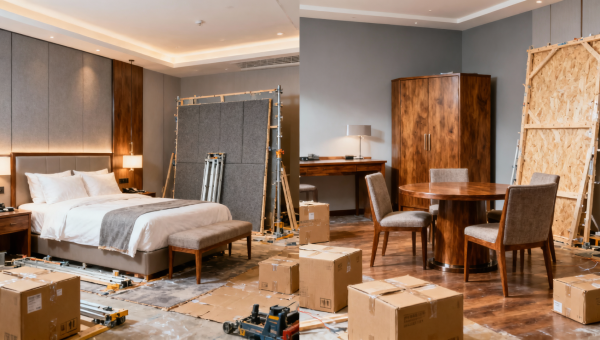
Hospitality procurement delays rarely begin at the factory—they often start in approval chains. For buyers sourcing hotel furniture, luxury furniture, hotel beds, hotel chairs, hotel tables, and other commercial furniture, slow sign-offs can disrupt budgets, timelines, and guest-ready standards. This article explores why approval bottlenecks matter, how they affect hotel equipment and hotel room furniture sourcing, and what procurement teams can do to keep projects moving efficiently.
In hotel furniture projects, a delay of 5 days at the approval stage can easily turn into 2–3 weeks of schedule drift once production slots, material booking, shipping windows, and installation sequencing are affected. This is especially true for custom FF&E programs involving guest room casegoods, upholstered seating, lobby furniture, restaurant tables, banquet chairs, and back-of-house commercial furniture packages.
For procurement teams, distributors, and commercial evaluators, approval management is not a soft administrative issue. It is a measurable cost, quality, and delivery risk. In practice, hotel furniture sourcing often fails not because suppliers cannot produce, but because stakeholders approve drawings, samples, budgets, finishes, and compliance documents too slowly or in the wrong sequence.
Why approval bottlenecks hit hotel furniture projects so hard
Hotel furniture procurement usually involves more decision layers than standard commercial purchasing. A single guest room furniture package may require sign-off from procurement, ownership, design consultants, operators, and sometimes local project managers. When 4–6 parties review the same hotel bed base, bedside table, lounge chair, or vanity unit, each revision cycle can add 3–7 days.
The impact is larger in hospitality because furniture is tied to opening readiness. Hotel chairs cannot be installed before flooring and wall finishes are protected. Hotel tables for restaurants cannot be finalized until layouts are locked. Luxury furniture for public areas often depends on approved fabric swatches, wood veneer direction, metal finish, and fire-safety documentation. One missing sign-off can stall the entire downstream sequence.
Unlike commodity office furniture, hotel room furniture is rarely fully standard. Even repeatable items such as headboards, wardrobes, and writing desks often require project-specific dimensions, finish matching, power integration, or branding details. That means approval delays directly affect shop drawings, sample confirmation, BOM release, and production planning.
The hidden cost behind “waiting for approval”
When an approval queue pauses for 10 days, the visible cost is only part of the problem. The less visible cost includes re-booking raw materials, losing factory line priority, expediting air freight for urgent replacement items, and compressing installation from 12 days into 6 days. Compressed installation often leads to higher labor rates and more site damage risks.
Approval lag also creates pricing exposure. Veneer, foam, fabric, and metal components may have validity windows of 15–30 days depending on market conditions and supplier terms. If the quotation expires before final sign-off, the hotel furniture buyer may face cost changes across dozens or hundreds of units.
Typical approval points in a hospitality furniture package
- Budget approval for room-by-room FF&E scope, often reviewed in 1–2 rounds.
- Shop drawing approval covering dimensions, tolerances, hardware positions, and finishes.
- Material and sample board approval for laminate, veneer, upholstery, stone, and powder coating.
- Compliance approval for fire-retardant fabrics, load-bearing criteria, and local code requirements.
- Pre-shipment or mock-up approval before full batch production and dispatch.
The table below shows how a short delay at one checkpoint can multiply across the hotel furniture sourcing timeline.
The key takeaway is simple: approvals are not side tasks. In hotel furniture procurement, they are the control points that determine whether production starts on time, whether quality remains consistent, and whether a property opens with fully coordinated rooms and public spaces.
Where delays usually happen in hotel furniture sourcing
Approval bottlenecks typically cluster around five recurring areas: design interpretation, finish selection, compliance checks, budget alignment, and cross-border communication. For hotels sourcing commercial furniture from multiple regions, time zone gaps of 8–12 hours can stretch what should be a 1-day clarification into a 3-day email chain.
Design-driven hospitality projects are especially vulnerable. A luxury lobby sofa may require approval on seat depth, foam density, stitching detail, marble insert tone, and brass finish sample. If these approvals are handled one by one instead of as a coordinated package, the project loses momentum quickly.
Another common problem is fragmented ownership of decisions. Procurement may approve price, designers may approve appearance, operations may approve usability, and engineering may approve durability. If no one defines who has final authority at each gate, the same hotel chair or guest room desk may circulate through 3 separate comment rounds before release.
High-risk categories that often trigger repeated sign-offs
Not all furniture categories carry the same approval risk. Custom upholstered pieces, integrated headboards, fixed banquettes, and room casegoods with built-in lighting usually need more technical review than loose standard tables. Bed bases also require coordination on mattress size, housekeeping clearance, and service life expectations, often 5–8 years in active hotel use.
- Guest room casegoods: frequent changes in dimensions, charging modules, and finish harmonization.
- Hotel beds and headboards: coordination with mattress suppliers, wall conditions, and fire-safe material needs.
- Hotel chairs and banquet seating: stacking, load-bearing, upholstery rub count, and maintenance expectations.
- Hotel tables: edge profile, base stability, stone or laminate specification, and food-service compatibility.
Common delay triggers by furniture type
The following comparison helps buyers identify where approval time should be budgeted more realistically instead of assuming all hotel furniture follows the same lead time.
For distributors and agents, this means quoting hotel furniture lead times without mapping approval complexity is risky. A supplier may honestly state an 8-week production cycle, but if approvals consume 3 weeks before manufacturing starts, the practical project duration becomes 11 weeks or more.
A disciplined sourcing team therefore separates three calendars: approval calendar, production calendar, and logistics calendar. Combining them into one vague “delivery time” often causes disputes later, especially in cross-border hospitality procurement.
How procurement teams can shorten the approval cycle without sacrificing quality
The fastest way to reduce delays is to treat approvals as a managed workflow rather than a passive waiting period. In practical hotel furniture sourcing, that means setting approval owners, response deadlines, escalation rules, and document formats before suppliers begin sample development or mass production.
A well-run procurement team often uses a 4-stage approval path: commercial approval, technical approval, finish approval, and release-to-production approval. Each stage should have a target turnaround time, such as 48 hours for budget review, 72 hours for drawing review, and 3–5 working days for physical sample confirmation.
For hotel room furniture, one of the most effective methods is batch approval by room type or zone. Instead of approving every bedside table, wardrobe, and desk in isolation, buyers can approve a complete standard king room package, twin room package, or suite package. This reduces fragmented feedback and improves finish consistency.
A practical approval-control checklist
- Define one final approver for cost, one for design, and one for technical compliance before RFQ release.
- Use revision numbers on every drawing and sample reference so old versions are not re-circulated.
- Set response deadlines in the procurement schedule, such as 2 business days for comments and 5 business days for consolidated approval.
- Bundle related furniture items by room set, public area zone, or material family.
- Require suppliers to submit decision-ready documents, not partial files missing dimensions, materials, or hardware details.
What “decision-ready” hotel furniture documentation should include
Many delays happen because documents are not approval-ready. A chair drawing without seat height, a desk drawing without cable cut-out detail, or a headboard sample without fabric code will almost always trigger another review cycle. Procurement teams should insist on complete submissions the first time.
When procurement teams standardize submission quality, approval cycles often shrink by 20%–30% because stakeholders are reviewing complete choices instead of requesting missing basics. This is especially valuable in luxury furniture projects where aesthetic alignment and technical feasibility must move together.
Another effective tactic is to approve a control mock-up early. One fully coordinated guest room or one representative public-area furniture set can resolve dimensional, ergonomic, and finish issues before the remaining 100–300 units proceed into bulk production.
Balancing speed, compliance, and lifecycle value in hospitality furniture approvals
Fast approval should never mean superficial approval. In hotel furniture procurement, rushed sign-offs can create expensive post-delivery problems: uneven veneer tone, low-density seating foam, unstable table bases, or guest room furniture that does not fit MEP conditions on site. The goal is controlled speed, not blind speed.
Procurement teams should assess at least 4 decision dimensions before releasing hotel furniture to production: compliance, durability, maintainability, and aesthetic consistency. For example, a dining chair may look acceptable in a sample room, but if upholstery cleaning performance is weak or frame stability is not suitable for daily high-traffic use, replacement costs can rise within 12–24 months.
This is where commercial evaluators and distributors can add value. They can help compare not only purchase price, but also replacement frequency, spare-part availability, finish repairability, packaging protection, and installation tolerance. In B2B hospitality sourcing, the cheapest approved item is not always the lowest-cost decision over the asset lifecycle.
Approval criteria that support long-term hotel performance
- Structural durability: chair load use, table base stability, and bed frame rigidity under repeated occupancy cycles.
- Finish endurance: scratch resistance, stain response, edge sealing quality, and UV consistency for visible public areas.
- Serviceability: ability to replace glides, touch up surfaces, or reupholster seating without removing the full unit.
- Installation fit: tolerance control for wall-mounted headboards, wardrobe fillers, and stone-topped pieces.
- Operational suitability: housekeeping access, cleaning chemical tolerance, and ease of repositioning.
Frequent approval mistakes to avoid
One common mistake is approving only appearance and ignoring maintenance realities. A pale upholstered hotel chair may satisfy design intent, but if the fabric is unsuitable for high-turnover food-and-beverage use, visible wear can appear within 6–9 months. Another mistake is approving dimensions without reviewing actual room circulation and housekeeping movement.
A second mistake is mixing substitutions into late-stage approvals. If a metal finish, laminate grade, or hinge type changes after the approved mock-up, the team should treat it as a formal re-approval event, not an informal note. Even small substitutions can affect visual consistency across 200 rooms or more.
A third mistake is failing to align logistics with approval release. Hotel equipment and furniture projects often ship in phases, such as mock-up shipment, first-room production batch, and final bulk shipment. If approvals are staggered without a shipping strategy, partially approved goods may sit in storage, raising handling risk and cost.
FAQ for buyers and project teams
How long should hotel furniture approvals normally take?
For a mid-scale hotel project with clear specifications, drawing approval may take 7–10 working days and material approval another 5–7 working days. For luxury furniture with custom detailing, a realistic total approval window is often 3–5 weeks before mass production begins.
Which items should be approved first?
Approve long-lead and high-risk items first: custom headboards, upholstered seating, stone-topped tables, and integrated casegoods. Standard loose furniture can follow later if lead times are shorter and supplier capacity is confirmed.
Should hotel buyers always request full physical samples?
Not always. Full mock-ups are most useful for signature pieces, guest room sets, or items with complex comfort and finish requirements. For repeatable components, finish boards, hardware samples, and detailed shop drawings may be sufficient if specifications are stable.
What is the safest way to handle late design changes?
Use formal revision control with cost, lead-time, and production impact clearly stated. A late change should show whether it adds 3 days, 10 days, or 2 weeks, and whether previously approved hotel room furniture drawings become obsolete.
A smarter sourcing model for buyers, distributors, and commercial evaluators
The most effective hospitality sourcing model is one that connects commercial clarity with technical readiness from day one. Instead of treating furniture sourcing as a simple price comparison, leading teams build an approval roadmap into the RFQ, supplier evaluation, and delivery schedule. This reduces friction across hotel equipment, hotel room furniture, and public-area FF&E packages.
For information researchers and business evaluators, the right question is not only “Who can supply hotel furniture?” but also “Who can support a clean approval process with complete documentation, disciplined revision control, and realistic delivery planning?” That is often the difference between a smooth rollout and a project full of avoidable acceleration costs.
For distributors, agents, and procurement professionals working on multi-property or international developments, structured sourcing intelligence is increasingly valuable. Clear comparison of supplier capabilities, OEM/ODM adaptability, packaging methods, and approval responsiveness helps reduce decision risk long before a purchase order is issued.
Global Commercial Trade supports this approach by focusing on commercial sectors where design, compliance, and supply reliability all matter. In hotel furniture sourcing, that means helping buyers and project stakeholders evaluate not only products, but also the approval discipline and execution readiness behind them.
If your team is planning a hospitality project and wants to reduce approval delays across hotel beds, hotel chairs, hotel tables, luxury furniture, or full hotel room furniture packages, now is the time to refine the process before production starts. Contact GCT to explore sourcing intelligence, compare supplier pathways, and get a more reliable route to on-time hospitality delivery.
Search News
Hot Articles
- Stage Lighting & TrussCCTV5 Snooker Broadcast Drives 37% Surge in Stage Lighting Export InquiriesApr 21, 2026
- Indoor PlaygroundVietnam Mandates Child Finger-Trap Sensors for Indoor Play EquipmentApr 21, 2026
- Stage Lighting & TrussGuangdong vs. Shanxi CBA Game Highlights Domestic Smart Arena LightingApr 21, 2026
Popular Tags
Need ExpertConsultation?
Connect with our specialized leisureengineering team for procurementstrategies.
Recommended News
 Apr 15, 2026SASO Updates Playground Standard SASO 2770:2026 with VR EMC RequirementsSASO 2770:2026 now mandates VR EMC testing for playground equipment — vital for Chinese exporters & VR-integrated system suppliers targeting Saudi Arabia.● Hospitality Sourcing Dir
 Apr 15, 2026Global VR Fitness Equipment Export Prices Up 12% MoMVR fitness equipment export prices surge 12% MoM—driven by XR2 Gen3 chip shortages & TÜV certification costs. Key insights for global trade & manufacturing stakeholders.● Hospitality Sourcing Dir
 Apr 15, 2026Vietnam Requires Local TUV SUD Type Testing for VR Fitness Cabins from Q2 2026VR fitness cabins for Vietnam must pass local TUV SUD Hanoi type testing from July 2026—no more CNAS reports. Act now to avoid delays & extra costs.● Hospitality Sourcing Dir
 Apr 15, 2026FDA Proposes Chinese Label Translation Requirement for Sports Nutrition SupplementsFDA proposes Chinese label translation requirements for sports nutrition supplements—learn how protein powders, creatine & electrolyte drinks are affected and what exporters must do now.● Hospitality Sourcing Dir
 Apr 15, 2026RCEP Round 3 Tariff Cuts Effective: China Optical Lenses 0% Duty to ASEANRCEP Round 3 cuts China optical lenses duty to 0% for ASEAN—boosting exports of sports goggles, ride lenses & stage optics. Faster Pingxiang Port clearance too!● Hospitality Sourcing Dir
 Apr 15, 2026CPSC Proposes New Fitness Tracker RF/Bio-Sensor Compliance RuleCPSC proposes new RF/bio-sensor compliance rule for fitness trackers—learn how heart rate, SpO₂ & exercise algorithm devices must prepare for UL/ETL dual-mode certification.● Hospitality Sourcing Dir
 Apr 21, 2026How hospitality procurement plans reduce replacement costsHospitality procurement cuts replacement costs by sourcing durable hotel furniture, hotel beds, hotel chairs, and hotel tables with long-term planning. Explore smarter commercial furniture strategies.● Hospitality Sourcing Dir
 Apr 21, 2026Hospitality procurement delays often start with approvalsHospitality procurement delays often begin with approvals. Learn how hotel furniture, luxury furniture, hotel beds, hotel chairs, and hotel tables sourcing can stay on schedule.● Hospitality Sourcing Dir
 Apr 21, 2026When catering equipment saves labor but slows serviceExplore how catering equipment can save labor yet slow service in hotel furniture environments. Learn smarter hospitality procurement for luxury furniture, hotel equipment, and smoother guest flow.● Hospitality Sourcing Dir
 Apr 21, 2026Catering equipment costs that often get missed at launchCatering equipment costs often missed at launch: uncover hidden expenses in hotel furniture, hotel beds, hotel chairs, soundproofing materials, and hospitality procurement to avoid delays and overspending.● Hospitality Sourcing Dir
 Apr 18, 2026FDA Proposes Chinese Label Translation Requirement for US Sports SupplementsFDA proposes Chinese label translation requirements for US sports supplements—impacting protein powders, BCAAs & energy gels. Learn compliance steps, costs, and what brands must do before April 2026.● Hospitality Sourcing Dir
 Apr 18, 2026Catering equipment with dual-voltage capability: A real flexibility boost or just extra wiring?Dual-voltage catering equipment delivers real flexibility for leisure parks, theme park rides & hotels—cutting downtime, simplifying custom furniture integration, and boosting ROI. Discover if it’s worth the premium.● Hospitality Sourcing Dir
 Apr 18, 2026Catering equipment that fails quietly—why noise isn’t the only red flagCatering equipment, hotel beds, playground structures & theme park rides can fail silently—discover hidden risks in soundproofing materials, custom furniture & instrument cables.● Hospitality Sourcing Dir
 Apr 17, 2026Commercial kitchen furniture vs. office furniture: Why load ratings differ so muchCommercial furniture load ratings ensure safety for playground borders, sensory playgrounds, amusement equipment & hotel tables—discover why they far exceed office standards.● Hospitality Sourcing Dir
 Apr 15, 2026Commercial kitchen furniture that handles steam, spills, and 18-hour shiftsCommercial furniture built for steam, spills & 18-hour shifts—ideal for playground borders, sensory playgrounds, hotel tables, amusement equipment & more.● Hospitality Sourcing Dir
 Apr 12, 2026Catering equipment that survives festival chaos—what commercial kitchens won’t tell youOutdoor playgrounds, theme park rides & inclusive playgrounds demand rugged catering equipment—discover NSF-certified, soundproofing-ready, modular solutions built for festival chaos.● Hospitality Sourcing Dir
 Apr 12, 2026Catering equipment rated for indoor use—why it fails fast when moved outdoorsOutdoor playground & theme park rides need certified outdoor catering equipment—not indoor-rated gear. Avoid failures with UV-, salt-, and thermal-resistant solutions for playground structures, inclusive playgrounds, and custom furniture.● Hospitality Sourcing Dir
 Apr 10, 2026Commercial sound systems with Dante support—do they require certified switches to avoid dropouts?Discover why commercial sound systems with Dante support need certified switches—plus pro audio equipment, microphone systems, and soundproofing materials for drop-free live sound.● Hospitality Sourcing Dir
 Apr 10, 2026Commercial sound systems rated for 10,000 sq ft—but what happens at 35°C ambient temperature?Discover thermal-resilient commercial sound systems, pro audio equipment & soundproofing materials engineered for 35°C—plus instrument cables, microphone systems, and music production tools tested to 96-hour IEC standards.● Hospitality Sourcing Dir
 Apr 07, 2026Catering equipment energy labels: Why kWh/year doesn’t reflect peak-load realityCatering equipment energy labels mislead—discover why kWh/year fails luxury retail. Explore real-world peak-load insights for hotel furniture, soundproofing materials & custom furniture.● Hospitality Sourcing Dir
 Apr 07, 2026Catering equipment specs that get overlooked in commercial kitchen layout planningDiscover overlooked catering equipment specs critical for luxury retail—outdoor playground safety, custom furniture integration, soundproofing materials, hotel chairs & more.● Hospitality Sourcing Dir
 Apr 04, 2026Commercial Kitchen Equipment Orders Include More Office Supplies Than You’d Expect — Here’s the PatternOffice supplies supplier? Discover how top office supplies wholesalers & OEM manufacturers win commercial kitchen-linked orders—get cross-category verified now!● Hospitality Sourcing Dir
 Apr 02, 2026The hidden cost of choosing cheaper soundproofing materials for high-occupancy hotel corridorsDiscover why budget soundproofing materials undermine hotel furniture, hospitality procurement, and guest satisfaction—learn the true ROI of premium acoustic solutions.● Hospitality Sourcing Dir
") Apr 02, 2026Soundproofing materials that pass fire codes—and ones that don’t (but still get installed)Discover fire-code-compliant soundproofing materials for hotel furniture, recording studio gear & outdoor play structures—plus risky non-compliant picks still in use.● Hospitality Sourcing Dir
Apr 02, 2026Soundproofing materials that pass fire codes—and ones that don’t (but still get installed)Discover fire-code-compliant soundproofing materials for hotel furniture, recording studio gear & outdoor play structures—plus risky non-compliant picks still in use.● Hospitality Sourcing Dir