What Is Inclusive Sensory Play and Which Equipment Works Best for Mixed-Ability Children?
Inclusive sensory play is no longer a niche topic in education or therapy. It now shapes how schools, leisure venues, and child-focused commercial spaces design environments that welcome different physical, cognitive, and sensory needs.
At its best, inclusive sensory play gives children shared ways to explore touch, sound, movement, light, and social interaction. The real challenge is not adding more equipment. It is choosing pieces that remain accessible, safe, durable, and meaningful for mixed-ability use.
That matters across the wider commercial landscape tracked by Global Commercial Trade, where experience-led design, compliance, and sourcing quality increasingly influence buying decisions in educational and leisure environments.
What inclusive sensory play really means
Inclusive sensory play refers to play experiences designed so children with different abilities can participate together, rather than in parallel but separate ways.
The sensory element includes how children process movement, sound, texture, visual input, pressure, and spatial awareness. The inclusive element means barriers are reduced without flattening the experience for everyone.
This is important because mixed-ability groups are common in mainstream schools, therapy-informed classrooms, public play zones, family attractions, and hospitality spaces with child engagement areas.
A strong inclusive sensory play setup supports children who seek stimulation, children who avoid it, and children who shift between both patterns depending on stress, fatigue, or context.
Why the category is getting more attention
Commercial and institutional buyers are paying closer attention because expectations have changed. Families and educators increasingly look for environments that are visibly welcoming, not merely compliant.
There is also a practical reason. Good inclusive sensory play equipment can serve recreation, regulation, and developmental support at the same time, which improves space efficiency.
From a sourcing perspective, this pushes decision-making beyond color and price. Materials, cleaning performance, impact resistance, certification, installation constraints, and long-term maintenance now carry more weight.
That broader lens aligns with GCT’s focus on commercial experiences where design quality and operational reliability have to work together.
What mixed-ability children usually need from the environment
No single product can serve every child equally well. Even so, the most effective inclusive sensory play environments tend to meet several needs at once.
- Clear access for wheelchairs, walkers, and assisted movement.
- Choices between active stimulation and low-input retreat.
- Equipment that supports solitary, parallel, and cooperative play.
- Predictable sensory responses rather than chaotic overload.
- Age-appropriate challenge without hidden safety risks.
In actual use, flexibility matters more than novelty. A mixed-ability space works better when children can choose how deeply they engage, instead of being pushed into one fixed mode.
Which equipment works best in practice
The strongest equipment mix usually combines movement, tactile input, visual feedback, and calming options. The goal is a balanced environment, not a room full of special effects.
Movement-based equipment
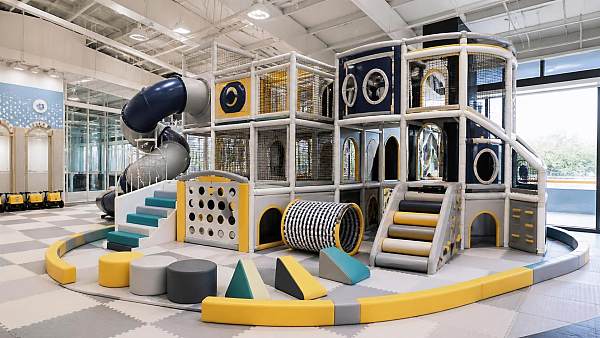
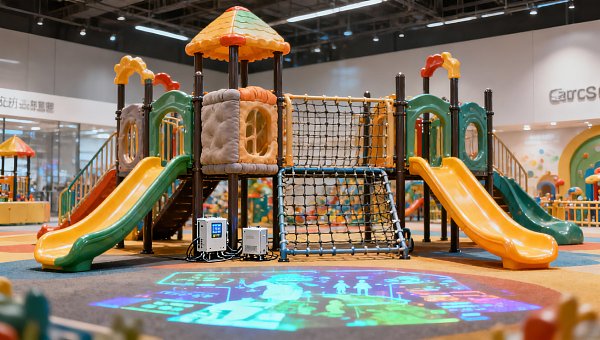
Adaptive swings, platform swings, rocking units, and low-gradient ramps often perform well. They offer vestibular input and body awareness while allowing varied levels of physical support.
Wide slides with assisted transfer points can also work, provided the landing zone remains safe and circulation around the unit is easy to manage.
Tactile and manipulative equipment
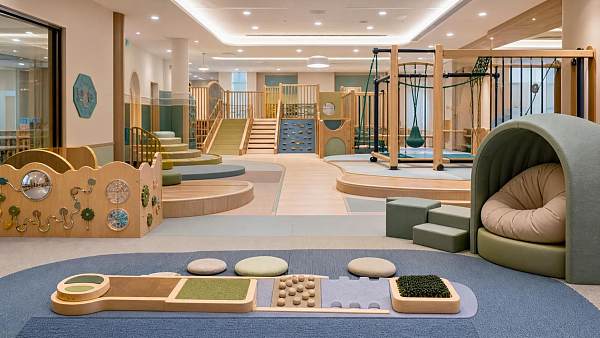
Textured wall panels, sensory paths, sand and water tables, and large-format interactive boards are dependable choices for inclusive sensory play.
These pieces are useful because they can engage fine motor skills, curiosity, and shared attention without demanding advanced language or high physical mobility.
Audio and visual equipment
Light tubes, soft projection systems, musical panels, and cause-and-effect switches can be effective if the output is adjustable.
The key is control. If sound levels spike or lighting flickers unpredictably, the same equipment can quickly become excluding rather than inclusive.
Calming and regulation zones
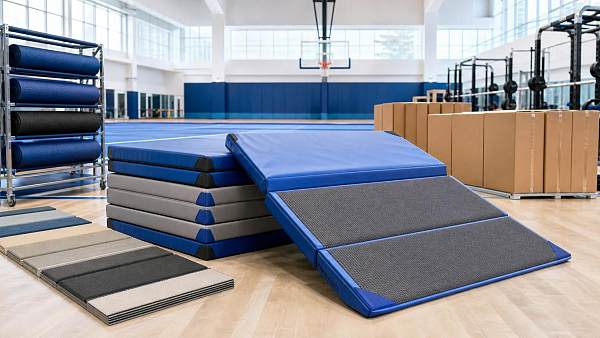
Soft seating pods, crash mats, weighted elements, enclosed nooks, and quiet corners often determine whether an inclusive sensory play area truly works.
Children do not only need stimulation. They also need ways to pause, regulate, and rejoin activity on their own terms.
Choosing equipment for commercial and educational settings
Different sites need different answers. A therapy room can support more targeted sensory programming. A public leisure venue needs stronger durability, simpler instructions, and easier supervision.
In schools, inclusive sensory play often succeeds when equipment supports both structured sessions and spontaneous use during transitions or breaks.
In amusement, hospitality, and family entertainment settings, the equipment must also fit the visitor journey. It should feel inviting, not medicalized or isolated from the rest of the space.
That is where commercial sourcing becomes more complex. Buyers need equipment that satisfies developmental intent while also meeting branding, cleaning, warranty, and lifecycle expectations.
What to check before making a sourcing decision
A visually appealing setup can still fail in daily use. The most useful evaluation criteria are usually practical.
- Accessibility: entry points, reach ranges, transfer support, and circulation width.
- Safety: rounded edges, impact absorption, anti-slip finishes, and relevant certifications.
- Sensory balance: enough variety without creating visual or acoustic clutter.
- Durability: resistance to heavy use, moisture, repeated cleaning, and vandalism risk.
- Maintenance: spare parts availability, cleaning access, and realistic upkeep costs.
- Inclusivity in use: whether multiple children can engage in different ways at once.
Usually, the best inclusive sensory play equipment is not the most complicated. It is the equipment that keeps working across daily routines, mixed user needs, and long operating cycles.
Common mistakes that weaken inclusive sensory play
One common mistake is treating inclusion as a checklist. Adding one accessible feature does not automatically create a genuinely shared play experience.
Another mistake is overloading the space with bright colors, loud sound, and too many interactive points. High stimulation can exclude children who need predictability or recovery time.
Some spaces also separate sensory equipment into a hidden corner. That can reduce participation and reinforce the idea that support tools are only for a small group.
A better approach is integrated design, where inclusive sensory play is part of the overall environment and not an afterthought.
A practical way to move forward
The most reliable next step is to define the setting before comparing products. Start with user range, supervision model, cleaning demands, traffic volume, and the kinds of sensory input the space should offer.
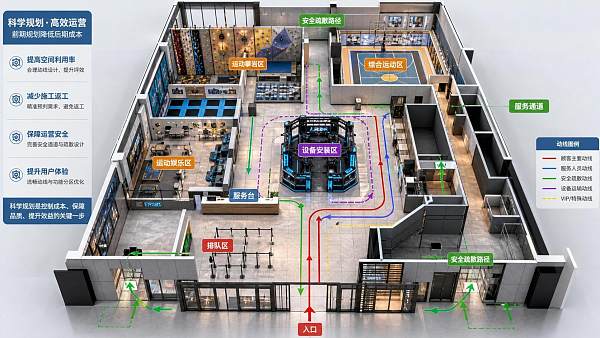
From there, compare equipment as part of a system rather than as isolated items. An effective inclusive sensory play environment usually combines active pieces, tactile stations, and calming zones in a coherent layout.
For commercial decision-making, it also helps to review supplier evidence carefully, including compliance records, customization options, project references, and after-sales support.
Inclusive sensory play works best when the question shifts from “What should we install?” to “What kind of shared experience should this space make possible?” That change in perspective usually leads to better equipment choices and stronger long-term value.
Search News
Hot Articles
- Commercial KitchenHow to Select a Spiral Dough Mixer for Bakery Batch Size and Dough HydrationSep 19, 2026
- Outdoor RidesWhat Drives Animatronic Dinosaur Manufacturer Prices for Theme Park Projects?Sep 18, 2026
- Stationery & UniformsHow to Source Wholesale Packing Tape Without Compromising Carton Seal StrengthSep 17, 2026
Popular Tags
Need ExpertConsultation?
Connect with our specialized leisureengineering team for procurementstrategies.
Recommended News
 Aug 30, 2026Entertainment Venue Master Planning: How to Balance Capacity, Flow, and RevenueEntertainment venue development master planning: balance capacity, guest flow, and revenue with practical strategies for resilient, high-performing venues.● Theme Park Strategist
 Sep 07, 2026What Should Buyers Do When a Supplier Delivers Non-Compliant Products?What to do if a supplier delivers non-compliant commercial products: contain risks, document evidence, protect your project, and secure the right remedy.● Theme Park Strategist
 Sep 02, 2026Waterpark Capacity Management: Balancing Queue Times, Safety, and Guest ThroughputWaterpark capacity management strategies to reduce queue times, protect safety, optimize guest throughput, and build a smoother, more profitable park operation.● Theme Park Strategist
 Sep 01, 2026ASTM F2075 Explained: Testing Engineered Wood Fiber for Playground Impact SafetyASTM F2075 explained: learn how engineered wood fiber supports playground impact safety, smarter sourcing, compliance documentation, and reliable maintenance planning.● Theme Park Strategist
 Aug 24, 2026How to Evaluate an Indoor Ninja Warrior Course Supplier in Europe?indoor ninja warrior course Europe supplier guide: learn how to assess safety, EN compliance, engineering, installation, and maintenance support before you choose.● Theme Park Strategist
 Aug 20, 2026How to Choose Modular Indoor Play Equipment for Different Venue Sizes and Age GroupsModular indoor play equipment buying guide: learn how to match venue size, ceiling height, traffic flow, and age groups to create safer, smarter, and more profitable play spaces.● Theme Park Strategist
 Aug 14, 2026POB Push Lifts Overseas Pre-Registrations 45.74%POB boosts overseas pre-registrations for the 2026 China Sport Show by 45.74%, signaling stronger global buyer interest and smarter sourcing opportunities in sports manufacturing.● Theme Park Strategist
 Aug 02, 2026What to Check Before Buying Thick Gymnastic Mats Wholesale for Schools and GymsThick gymnastic mats wholesale buying guide for schools and gyms: learn how to check foam, cover durability, safety documents, samples, and true long-term value before placing a bulk order.● Theme Park Strategist
 Jul 28, 2026How to Design Inclusive Sensory Play Areas for Different Age Groups and NeedsInclusive sensory play starts with smart zoning, age planning, accessibility, and acoustics. Discover practical design tips to create safer, engaging spaces that truly work.● Theme Park Strategist
 Jul 26, 2026How to Evaluate a Bowling Alley Equipment Factory Before Requesting a QuoteBowling alley equipment factory evaluation starts before price. Learn how to check manufacturing scope, engineering, compliance, spare parts, and installation support to avoid costly sourcing mistakes.● Theme Park Strategist
 Jul 16, 2026EN 1176:2026 Takes Effect for Indoor PlaygroundsEN 1176:2026 takes effect for indoor playgrounds in the EU, making conformity assessment mandatory. Learn how this impacts certification, customs clearance, suppliers, and market access.● Theme Park Strategist
 Jul 15, 2026CPSC Sets New ASTM Impact Test for Indoor Playground Metal PartsCPSC sets new ASTM impact test rules for indoor playground metal parts effective Oct. 1, 2026. Learn how the 15kN requirement may affect compliance, testing timelines, and U.S. export delivery.● Theme Park Strategist
 Jul 14, 2026CPSC Tightens Phthalate Limit for Indoor Playground Soft MaterialsCPSC tightens phthalate limits for indoor playground soft materials from Aug 15, 2026. Learn how DIBP control, CBP detention risk, and testing changes impact sourcing, exports, and compliance.● Theme Park Strategist
 Jul 13, 2026Vietnam Tightens IoT Rule for Indoor Playground ImportsVietnam Tightens IoT Rule for Indoor Playground Imports: learn how VNSS-2025 gateway requirements affect exporters, buyers, installers, and delivery timelines before the 2026 deadline.● Theme Park Strategist
 Jul 13, 2026How a Recreational Facility Planning Company Helps Reduce Layout MistakesRecreational facility planning company insights: learn how early layout strategy reduces costly mistakes, improves flow, compliance, and buildability for smoother project delivery.● Theme Park Strategist
 Jul 12, 2026CPSC Halts Imports of Indoor Playground Soft PartsCPSC halts imports of indoor playground soft parts from China under ASTM F3432-26. Learn the compliance risks, testing requirements, and urgent steps importers must take now.● Theme Park Strategist
 Jul 11, 2026CPSC Import Alert Tightens Fire Test Rule for Indoor Playground PaddingCPSC import alert updates indoor playground padding rules to ASTM F3432-26. See how the new fire test affects foam mats, shipments, and U.S. market access.● Theme Park Strategist
 Jul 11, 2026Ice Bumper Cars Bulk Order Checklist for Indoor Parks: Space, Power, and Safety PointsIce bumper cars bulk order guide for indoor parks: learn how to assess space, power, safety, and throughput before buying, so you can avoid costly mistakes and choose the right fleet with confidence.● Theme Park Strategist
 Jul 10, 2026Commercial Playground Equipment for Campuses: Key Safety Standards and Planning TipsCommercial playground equipment for campuses: explore key safety standards, inclusive layout planning, durable materials, and smart procurement tips to avoid costly mistakes.● Theme Park Strategist
 Jul 09, 2026CPSC Recall Escalates Over Phthalates in Indoor Playground PadsCPSC recall escalates over phthalates in indoor playground pads as affected batches exceed CPSIA limits. Learn the risks, supply chain impact, and what buyers should monitor now.● Theme Park Strategist
 Jul 07, 2026How to Choose Ice Skating Rink Equipment in Europe: Key Systems, Standards, and Budget Factorsice skating rink equipment Europe guide: compare refrigeration, rink floors, boards, EU compliance, and total budget factors to choose a safer, more efficient commercial rink solution.● Theme Park Strategist
 Jul 06, 2026CPSC Flags New Flame Test for Indoor Playground PaddingCPSC flags a new flame test for indoor playground padding under ASTM F1487-23b. Learn how this urgent compliance alert affects materials, testing, imports, and U.S. market access.● Theme Park Strategist
 Jul 05, 2026Vietnam Sets VCA Registration Deadline for Indoor Playground ImportsVietnam Sets VCA Registration Deadline for Indoor Playground Imports: learn the August 15, 2026 VCA registration rule, batch EN 14960 test report requirements, and how to avoid import license delays in Vietnam.● Theme Park Strategist
 Jul 04, 2026EU Rule Tightens Fire Tests for Indoor Playground PaddingIndoor Playground suppliers and buyers must act now as the EU enforces stricter fire and smoke tests under EN 14960:2026+A1:2026. Learn the compliance risks, customs impact, and sourcing priorities.● Theme Park Strategist