Adventure Playground Features That Improve Safety Without Feeling Boring
In today’s adventure playground and indoor playground projects, buyers want safety features that protect users without making play feel restrictive or dull. From smarter layouts and impact-absorbing materials to integrated arcade games and trampoline park concepts, the best designs balance compliance, durability, and excitement—helping procurement teams and distributors evaluate commercial solutions that truly enhance both risk control and visitor appeal.
Why “safe but not boring” has become a core buying standard
For commercial operators, adventure playground design is no longer judged only by visual appeal or equipment count. Buyers now compare how well a site reduces injury risk while still sustaining repeat visits, dwell time, and family satisfaction. In indoor playground, trampoline park, and hybrid amusement projects, the wrong safety approach often creates two problems at once: it weakens compliance and also makes the play route feel flat.
That is why procurement teams usually assess 3 core indicators together: impact protection, traffic flow control, and play engagement. A layout can meet basic guarding expectations, yet still fail commercially if children lose interest after 15–20 minutes. On the other hand, a visually exciting structure may look attractive in a proposal but become difficult to maintain under high daily throughput.
In the sports and entertainment sector, especially in family entertainment centers, shopping mall leisure zones, and hospitality projects, adventure playground features need to support both operational safety and revenue logic. Soft containment, graded challenges, anti-slip access, and clear supervision lines can improve risk control without removing the sense of discovery that drives return traffic.
For information researchers, distributors, and business evaluators, the practical question is not whether safety matters. It is which safety features improve performance without making the playground feel over-managed. This is where structured sourcing intelligence becomes valuable, because the best solution depends on age mix, site footprint, expected throughput, and local compliance requirements.
What commercial buyers are really trying to avoid
- Overbuilt padding and barriers that reduce sightlines, slow circulation, and make the attraction look passive rather than adventurous.
- Low-cost components that pass visual inspection at delivery but wear out after 6–12 months of intensive use.
- Layouts that combine climbing, trampoline, and arcade games without clear zoning, creating cross-traffic and supervision gaps.
- Specifications that ignore spare parts, maintenance intervals, or lead times, which later disrupt operation and warranty handling.
Which adventure playground features improve safety while keeping excitement high?
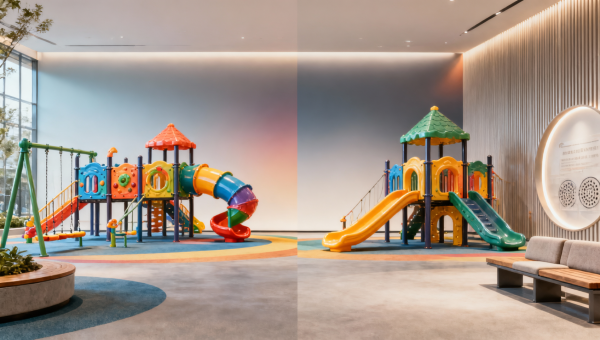
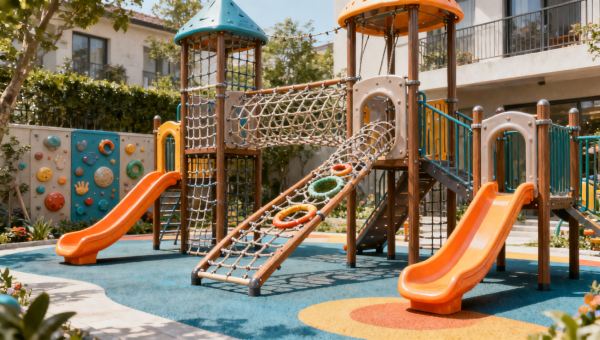
The most effective safety features are usually integrated into the play experience rather than added as obvious restrictions. In a commercial adventure playground, buyers should look for features that guide behavior naturally. Examples include graduated climbing paths, transparent enclosure systems, controlled bounce zones, and color-coded challenge levels. These elements reduce misuse because users instinctively understand how to move through the space.
Impact-absorbing flooring remains one of the most important fundamentals, but procurement should not stop at “soft flooring.” The practical evaluation includes material thickness range, seam quality, cleaning resistance, and compatibility with high-traffic indoor playground use. In many projects, flooring and edge treatment influence both injury mitigation and maintenance cost over a 2–5 year operating horizon.
Another strong design strategy is visual openness. Mesh barriers, tempered transparent panels where suitable, and elevated supervisor sightlines help staff monitor multiple zones without constantly entering play areas. This improves safety response time while preserving a feeling of freedom for users. For mixed-age sites, visibility can be as important as the equipment specification itself.
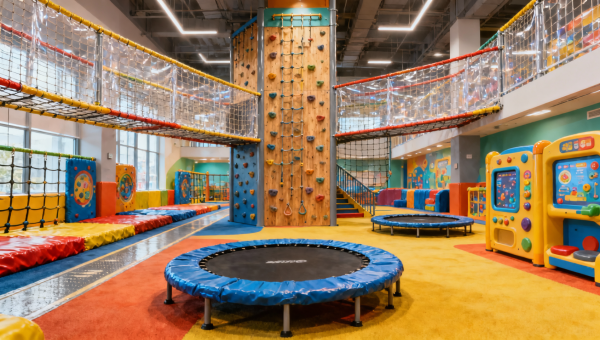
Interactive features can also support safer behavior. Integrated arcade games, projected targets, and timed movement prompts encourage users to follow intended routes instead of creating random congestion. In trampoline park concepts, lane separation, foam pit transition control, and one-way challenge circuits are often more effective than simply adding more warning signs.
Feature categories buyers should compare
The table below helps procurement teams compare adventure playground features based on safety contribution, user experience, and operational fit. It is especially useful when reviewing proposals from multiple suppliers or deciding between a soft play concept and a more active hybrid leisure model.
A useful buying lesson is that no single feature solves everything. Strong projects usually combine at least 4 layers of control: surface protection, route logic, visibility, and user guidance. This creates safer play without removing challenge, which is critical for commercial venues that rely on positive reviews and repeat visits.
Safety features that often work best in hybrid indoor leisure projects
- Separated entry and exit points for trampoline and climbing zones, reducing stop-and-go congestion during peak 2–3 hour operating windows.
- Soft perimeter framing around arcade games placed near active areas, which lowers collision risk without visually isolating the gaming zone.
- Low-height play modules for younger children placed within direct guardian sightlines, helping operators manage mixed-age traffic.
- Rest pockets and decompression corners that reduce overexcitement and help distribute users more evenly across the site.
How should buyers evaluate layout, materials, and compliance together?
Many sourcing mistakes happen because buyers evaluate playground equipment in isolated categories. A structure may appear compliant on paper, but once installed into a compact site with poor traffic planning, it becomes harder to supervise and less safe in real operation. Commercial assessment should therefore connect layout, materials, user mix, and local installation conditions from the start.
For adventure playground and indoor playground procurement, a practical review often includes 5 checkpoints: age zoning, fall-risk areas, line-of-sight coverage, wear-intensive components, and maintenance access. These checkpoints matter whether the project is a shopping mall play center, a resort family zone, or a distributor-led multi-site rollout. A visually exciting concept should still support routine inspection every week and planned maintenance every month or quarter.
Material selection deserves close scrutiny. Buyers often compare coated foam, rotationally molded plastic, steel framing, net systems, and anti-slip surface finishes. The question is not which material is universally best, but which combination fits the expected duty cycle. A venue operating 7 days a week with high weekend peaks needs stronger wear resistance than a lower-frequency institutional recreation space.
Compliance review should also remain practical. Depending on region and application, commercial buyers may need to align with common playground or amusement-related standards, fire performance requirements, indoor material safety expectations, and installation records. Procurement teams should request documentation that clarifies what is included at component level, installation level, and final-site level, because these are not always the same.
A procurement comparison table for decision-making
The following table supports business evaluators comparing proposals across safety, entertainment value, and long-term operating practicality. It is especially helpful when choosing between lower upfront cost and stronger lifecycle value.
This comparison shows why price alone is not a reliable selection method. A lower-cost offer may create avoidable lifecycle expenses if supervision is poor, consumable parts fail quickly, or compliance files are incomplete. Commercial buyers usually get better results when they score offers against 4–6 weighted criteria before final negotiation.
A simple 4-step review process
- Define the operating model: age range, daily throughput, supervision level, and whether arcade games or trampoline park elements are included.
- Screen the layout first, not the color theme first. Poor circulation is expensive to correct after manufacturing begins.
- Review material and maintenance details for the highest-use zones, especially landings, entry steps, grip surfaces, and enclosure edges.
- Confirm documentation, spare parts support, and estimated production timelines, which in many custom projects can run 4–8 weeks before shipment.
Which solutions fit different commercial scenarios?
Not every adventure playground needs the same safety architecture. A hotel family recreation area, a shopping mall indoor playground, and a regional distributor project all face different user patterns. The best commercial sourcing decision starts with scenario fit. Buyers who skip this step often overbuy features they do not need or under-specify critical details for high-intensity environments.
For compact hospitality sites, the priority is usually quiet supervision, premium aesthetics, and low-disruption maintenance. In those projects, soft-contour structures, muted enclosure systems, and modular play elements often outperform louder, denser configurations. The site must feel attractive to families while staying consistent with the brand environment of a resort or mixed-use destination.
For high-traffic retail entertainment centers, buyers often need stronger route management, zoned challenge intensity, and faster cleaning turnaround. Here, layered play circuits, dedicated toddler areas, and integrated digital engagement can keep user flow stable during weekend peaks. In many cases, clear operational logic delivers more value than simply increasing equipment complexity.
Distributors and agents evaluating repeatable product lines should prioritize modularity, spare parts continuity, and certification clarity across multiple markets. A slightly simplified platform that can be adapted across 3–5 venue types may be commercially stronger than a heavily customized one-off solution with long replacement lead times.
Scenario-based recommendations
- For hotel and resort family zones: choose low-noise surfaces, visually refined safety barriers, and equipment footprints that preserve adult circulation around the play area.
- For shopping mall indoor playgrounds: focus on queue handling, sightline control, high-frequency cleaning, and impact zones near entrances and slides.
- For trampoline park hybrids: separate bounce, climb, and game areas with clear transitions, especially when operating in timed sessions of 60–90 minutes.
- For distributors: request configurable modules, replacement part commitments, and installation documentation suitable for local partner networks.
Common misconceptions that hurt project performance
One common misconception is that more padding always means a safer adventure playground. In reality, excessive padding can hide structural transitions, reduce visual clarity, and make the environment feel younger than the target age group expects. Effective safety is about controlled risk, not visual overprotection.
Another mistake is treating interactive elements like arcade games as separate from safety planning. When placed intelligently, they influence direction, spacing, and user tempo. When placed poorly, they create crowding around active zones. Buyers should therefore assess them as part of the circulation strategy, not just an entertainment add-on.
A third issue is underestimating maintenance. Even well-designed indoor playground equipment can lose safety value if fasteners loosen, surfaces wear smooth, or netting tension changes over time. A strong procurement brief should cover inspection rhythm, replacement protocols, and who supports the site after handover.
FAQ for procurement teams, evaluators, and channel partners
How do we choose adventure playground features for mixed-age users?
Start with zoning, not equipment catalog pages. Mixed-age projects need at least 3 distinctions: toddler-safe activity, mid-level exploratory play, and higher-challenge elements for older children. Add route separation, visual supervision, and age-appropriate height progression. If trampoline park functions or arcade games are included, place them so they do not force younger users through high-energy traffic areas.
What are the most important items to confirm before placing an order?
Most buyers should confirm 5 items before deposit: layout drawings, material details, compliance documentation scope, spare parts support, and production lead time. For custom indoor playground projects, sampling and technical review can take 7–15 days, while manufacturing and pre-shipment preparation may require several additional weeks depending on complexity and season.
Are interactive features like arcade games good for safety or only for entertainment?
They can support both if integrated correctly. Arcade-style interactive prompts can channel movement, reduce random stopping points, and create turn-based behavior. However, if these features are placed beside landings, slide exits, or trampoline boundaries, they may increase congestion. Placement and zoning matter more than the technology itself.
How long does implementation usually take?
Commercial projects commonly move through 3 stages: design confirmation, production, and installation or site coordination. Smaller standardized projects may move faster, while customized adventure playground builds with hybrid sports and entertainment functions often need longer review cycles. Buyers should also account for approval, freight, and local installation scheduling rather than measuring lead time by factory production alone.
Why work with GCT when evaluating adventure playground sourcing options?
For B2B buyers in sports and entertainment, the challenge is rarely finding suppliers. The real challenge is comparing them with enough structure to avoid hidden risks. Global Commercial Trade supports that process by connecting sourcing decisions with commercial-use realities such as aesthetic fit, safety expectations, supply reliability, and multi-market evaluation needs. This is especially relevant for hospitality groups, procurement teams, and distributors managing complex projects.
Because GCT focuses on sectors that shape commercial experiences, buyers can approach adventure playground, indoor playground, trampoline park, and adjacent leisure concepts with a more disciplined framework. Instead of reviewing quotations in isolation, decision-makers can compare compliance scope, customization depth, manufacturing capability, and operational suitability in one sourcing conversation.
If you are assessing suppliers or refining a specification, the most productive next step is a targeted consultation around your actual project variables. That may include layout review, feature selection, sample support, expected lead time, documentation requirements, or distributor-fit analysis for a regional rollout. These are the details that shape real purchasing outcomes.
Contact GCT if you want support with 6 practical areas: parameter confirmation, product selection, custom scheme comparison, delivery timeline planning, certification-related questions, and quotation alignment. For buyers who need commercial clarity before committing budget, that kind of structured sourcing dialogue is often the difference between a safe playground that simply exists and one that performs well in the market.
Search News
Hot Articles
- Stage Lighting & TrussCCTV5 Snooker Broadcast Drives 37% Surge in Stage Lighting Export InquiriesApr 21, 2026
- Indoor PlaygroundVietnam Mandates Child Finger-Trap Sensors for Indoor Play EquipmentApr 21, 2026
- Stage Lighting & TrussGuangdong vs. Shanxi CBA Game Highlights Domestic Smart Arena LightingApr 21, 2026
Popular Tags
Need ExpertConsultation?
Connect with our specialized leisureengineering team for procurementstrategies.
Recommended News
 Apr 20, 2026China's Smart Timing System Gains ITU Certification at Shanghai Bike EventChina's smart timing system wins ITU-T L.1800 certification — the first Chinese sports timing platform approved for UCI-accredited cycling events. Discover how it reshapes reliability, security & global competitiveness in sports tech.● Theme Park Strategist
 Apr 17, 2026Popular Badminton AI Protocol Launched in ChengduPopular Badminton AI protocol launched in Chengdu — a game-changer for smart sports hardware, VR simulators & outdoor ride manufacturers targeting Asian youth academies.● Theme Park Strategist
 Apr 17, 2026EN 1176-7:2026 Enforced: AI Behavior Recognition Required for EU Outdoor Interactive Play EquipmentEN 1176-7:2026 is now enforced — AI behavior recognition is mandatory for EU outdoor interactive play equipment. Ensure CE compliance now.● Theme Park Strategist
 Apr 16, 2026EN 1176-7:2026 Enforces AI Safety Rules for EU Outdoor Interactive Play EquipmentEN 1176-7:2026 enforces AI safety rules for EU outdoor interactive play equipment — mandatory false-trigger ≤0.3% & local-only data processing. Act now to comply.● Theme Park Strategist
 Apr 13, 20262026 CKC China Karting Championship in Macau Sparks Export Interest for Domestic Racing GearThe 2026 CKC China Karting Championship in Macau showcased FIA-compliant racing gear, sparking export interest for domestic timing systems, carbon fiber kits & sustainable tires. Discover how this event opens global opportunities.● Theme Park Strategist
 Apr 13, 2026Japan Revises Sports Equipment Safety Standards: Mandatory Multilingual E-Manuals for Imported Fitness Gear from April 2026Japan's new Sports Equipment Safety Standards mandate multilingual e-manuals for imported fitness gear from 2026. Learn how this impacts global exporters and key compliance strategies for smooth market entry.● Theme Park Strategist
 Apr 10, 2026Middle East Tensions Raise Shipping Risks in Hormuz Strait, Air Freight Costs for Sports Equipment Surge 12%Middle East tensions escalate shipping risks in Hormuz Strait, causing a 12% surge in air freight costs for sports equipment. Learn how this impacts supply chains and strategies to mitigate delays.● Theme Park Strategist
 Apr 22, 2026How to Compare Theme Park RidesCompare theme park rides for safety, capacity, and ROI in a leisure park, while aligning playground structures, inclusive playground zones, and playground swings with smarter sourcing.● Theme Park Strategist
 Apr 22, 2026Is a Leisure Park Worth the InvestmentLeisure park investment guide: compare theme park rides, playground structures, inclusive playground design, swings, soundproofing materials, and custom furniture for stronger returns.● Theme Park Strategist
 Apr 22, 2026Adventure Playground Ideas That Work in Small Outdoor SpacesAdventure playground ideas for small outdoor spaces: compare layouts, indoor playground and trampoline park concepts, plus arcade games and musical instruments features to boost family appeal.● Theme Park Strategist
 Apr 22, 2026Adventure Playground Features That Improve Safety Without Feeling BoringAdventure playground and indoor playground safety features that keep fun high—compare trampoline park layouts, arcade games, and smart design tips for safer, more engaging venues.● Theme Park Strategist
 Apr 18, 20262026 Shanghai Sailing Open Adopts Domestic Smart Timing System2026 Shanghai Sailing Open adopts China's first ITU-R M.2412–certified smart timing system — a game-changer for marine sports exporters, integrators & event organizers worldwide.● Theme Park Strategist
 Apr 18, 2026EN 1176-7:2026 Enforced: AI Behavior Recognition Mandatory for EU Outdoor Play EquipmentEN 1176-7:2026 is now mandatory — AI behavior recognition required for EU outdoor play equipment. Ensure CE compliance, low-latency certification & market access before shipment.● Theme Park Strategist
 Apr 20, 2026Park benches with bolt corrosion you can’t see until it’s too latePark benches with hidden bolt corrosion risk luxury furniture, hotel furniture & commercial furniture safety—spot invisible degradation before failure.● Theme Park Strategist
 Apr 19, 2026Park benches built for coastal climates—what actually worksDiscover coastal-proof park benches, luxury furniture & custom hotel furniture built to last 25+ years in salt, sun & humidity—engineered for resorts, hotels & commercial spaces.● Theme Park Strategist
 Apr 19, 2026Why park benches fail after two seasons of outdoor usePark benches failing in 2 seasons? Discover why luxury furniture, hotel furniture, and commercial furniture specs matter—and how to choose resilient park benches, hotel chairs, and hotel tables.● Theme Park Strategist
 Apr 19, 2026Outdoor playground shade planning affects more than comfortOutdoor playground shade planning improves safety, durability, and visitor flow for outdoor playground, indoor playground, and trampoline park projects—explore smarter sourcing for swings and more.● Theme Park Strategist
 Apr 19, 2026Why playground swings fail early at busy public sitesPlayground swings at busy public sites fail early due to heavy traffic, weak materials, and poor maintenance. Compare outdoor playground, indoor playground, and trampoline park solutions for safer, longer-lasting performance.● Theme Park Strategist
 Apr 19, 2026Playground swings with fewer maintenance calls over timePlayground swings built for fewer maintenance calls: compare durable options for outdoor playground, indoor playground, and trampoline park projects with smarter lifecycle value.● Theme Park Strategist
 Apr 19, 2026How weather exposure changes outdoor playground safety plansOutdoor playground safety starts with weather planning. Learn how trampoline park, indoor playground, and playground swings buyers reduce risk, protect value, and choose climate-smart equipment.● Theme Park Strategist
 Apr 19, 2026Outdoor playground surfaces that hide higher lifetime costsOutdoor playground surface choices can raise hidden lifetime costs for trampoline park and indoor playground projects. Compare safer, longer-lasting options around playground swings.● Theme Park Strategist
 Apr 18, 2026Playground structures with integrated solar lighting: Is battery life consistent across seasons?Playground structures with integrated solar lighting: Discover seasonal battery performance data for leisure parks, theme park rides & inclusive playgrounds—backed by real-world climate testing and OEM validation.● Theme Park Strategist
 Apr 18, 2026Theme park rides using recycled steel: How does material origin affect fatigue testing?Theme park rides, playground swings & inclusive playground structures using recycled steel demand origin-aware fatigue testing—discover how material provenance impacts safety, durability & compliance.● Theme Park Strategist
 Apr 18, 2026Leisure park shade structures that fade unevenly—UV resistance vs. pigment qualityLeisure park shade structures fading unevenly? Discover why pigment quality—not just UV resistance—dictates longevity, brand integrity & ROI for playground structures, theme park rides & inclusive playgrounds.● Theme Park Strategist